When Do Crappie Spawn in Arkansas
One of the most exciting times to be an angler in Arkansas is when the crappie start to spawn. You've been waiting all year, watching the weather, and hearing whispers from fellow fishermen, but pinpointing that exact moment can feel like trying to catch smoke. This guide is here to demystify the crappie spawn in Arkansas, helping you understand the conditions, timing, and tactics so you can finally hit the water when the bite is hot.
Understanding the Crappie Spawn Cycle in Arkansas
Let's be real, crappie don't check a calendar. Their biological clocks are intricately tied to environmental factors, primarily water temperature and daylight. Knowing these cues is your first step to unlocking some fantastic fishing opportunities. It's not just about a specific month; it's about the subtle shifts in the underwater world.
The Crucial Role of Water Temperature
Water temperature is, without a doubt, the single most important factor dictating when crappie decide to spawn in Arkansas. Forget about the air temperature on your morning drive; what's happening beneath the surface is what truly matters. Crappie are cold-blooded, so their metabolism and reproductive urges are directly linked to how warm or cold the water is. When the water in our lakes and rivers starts to reach that sweet spot, usually after the last lingering cold fronts of winter have passed, that's when the magic begins.
Typically, crappie will start to get active and move towards shallower waters when the water temperature consistently hits around 50-55 degrees Fahrenheit. This is what we call the pre-spawn period. They're staging, feeding heavily to build up energy for the upcoming event. But the actual spawning, where they lay and fertilize eggs, usually kicks off when the water warms further, usually into the 60-68 degree Fahrenheit range. This range is critical; if it dips too low, they might pull back to deeper water, and if it gets too hot too fast, it can shorten the spawn window. Understanding the importance of this range is key to timing your trips perfectly. Monitoring real-time water temperatures on your favorite lake or river, perhaps using a thermometer or your boat's electronics, will be your most valuable tool.
Timing the Spawn in Different Regions of Arkansas
Arkansas is a pretty diverse state, from the Ozarks in the north to the Delta in the east and the Ouachitas in the west. This geographical variety means the crappie spawn doesn't happen uniformly across all our waters. It's not a statewide alarm clock going off simultaneously. Generally, you'll find that the spawn starts earlier in the southern and eastern parts of the state where waters tend to warm up faster due to lower elevations and less influence from cold mountain runoff. Lakes in the Delta region, for instance, might see crappie spawning in late February or early March during a mild year.
As you move north into the cooler, higher elevations of the Ozarks, like around Bull Shoals Lake or Norfork Lake, the spawn usually kicks off a bit later. You might be looking at mid-March into April, or even early May in some years, especially after a prolonged cold spring. Tailwater areas, like below the large dams, can also have delayed spawns due to the colder water released from the depths of the reservoirs. So, if you're planning a trip across the state, don't assume the crappie are biting everywhere just because they are in your local pond. Always consider the specific body of water and its regional climate. For more detailed insights into specific locations, you might want to check out articles like Arkansas Crappie Spring Spawn Pattern or Best Time to Fish DeGray Lake Arkansas for Crappie.
Signs of the Approaching Crappie Spawn
You can read all the articles and check all the weather apps, but sometimes, the best indicators are right there in front of you. Learning to observe the subtle (and not-so-subtle) signs that crappie are getting ready to spawn will give you a significant advantage. It's like deciphering a secret code that Mother Nature sends to observant anglers.
Observing Crappie Behavior and Location
Before the actual spawning begins, crappie undergo a significant shift in behavior. They'll start to move from their deeper wintering haunts towards shallower areas, often staging on secondary points, creek channel edges, or submerged brush piles adjacent to spawning flats. This pre-spawn movement is when they're feeding aggressively to bulk up, making them somewhat easier to locate and catch. You might notice them congregating in areas with a mix of cover and access to open water. As the water warms, they'll push even shallower, often seeking out hard bottom, stumps, laydowns, or dense aquatic vegetation in 1 to 5 feet of water, sometimes even shallower.
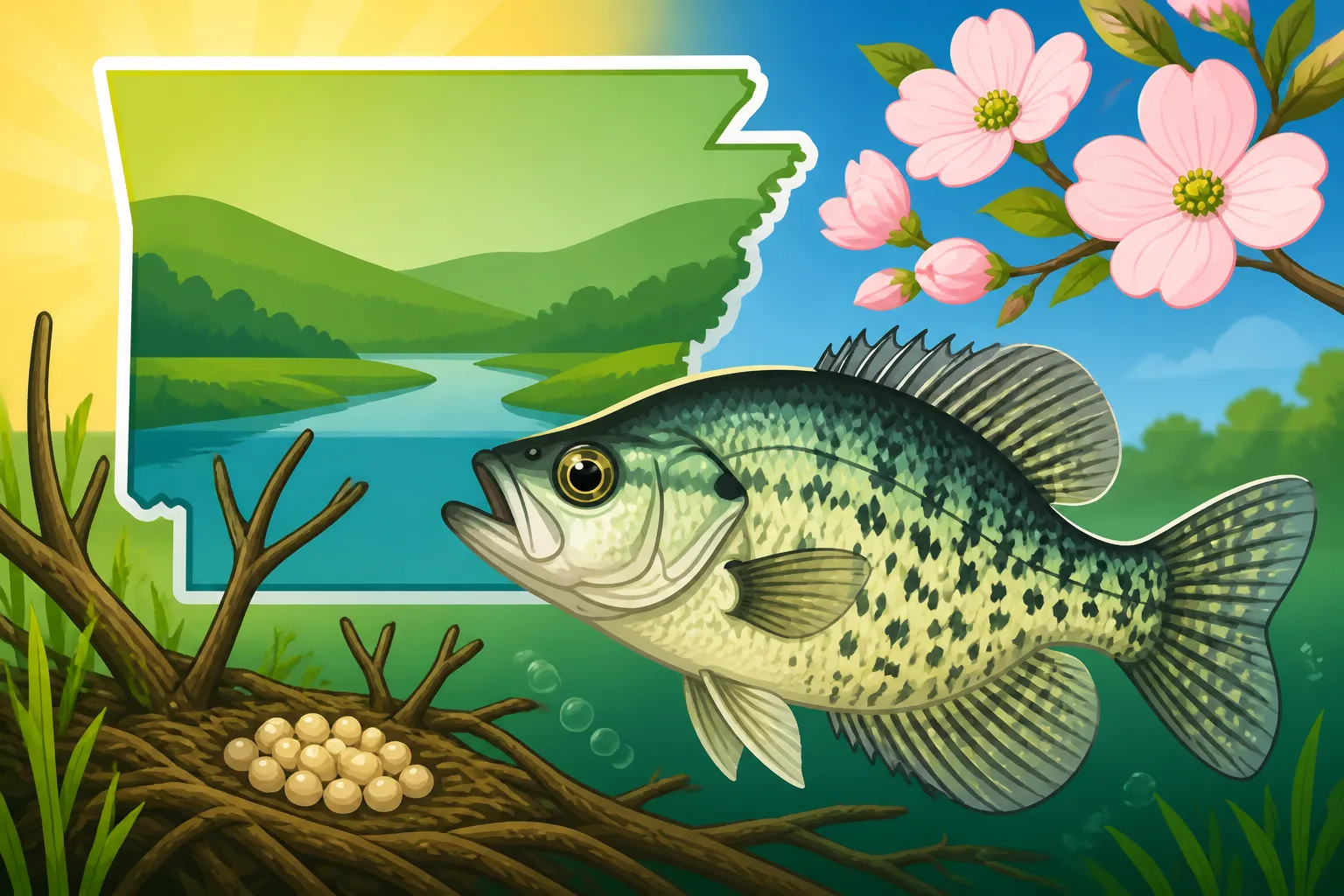
During the actual spawn, you'll find them actively fanning out nests – male crappie are usually the ones you’ll see guarding these saucer-shaped depressions. They become very territorial and will often strike at anything that invades their space. Look for them around cypress trees in slower-moving backwaters, brushy banks, or even under docks and bridges where there's some shade and protection. This is when they are most vulnerable and concentrated. Keep an eye out for these visual cues, and you'll often find a honey hole. For more general crappie advice, consider looking at Arkansas Crappie Fishing Season Guide.
Reading the Environment and Lake Conditions
Beyond water temperature and fish behavior, the overall environmental conditions play a huge role. Pay attention to daylight hours; longer days signal to the crappie that spring is truly here. Water clarity is another big one. Crappie prefer to spawn in water that has some stain to it, not crystal clear, but also not muddy. A slight stain gives them a sense of security from predators while still allowing enough light penetration. After heavy rains, when the water turns chocolate milk, crappie often pull back until the sediment settles.
Wind can also affect where crappie choose to spawn. Sustained winds can push warmer surface water into certain coves or shorelines, creating prime spawning conditions. On the flip side, a strong cold front after a warm spell can send them scattering back to deeper cover, pausing the spawn until stable conditions return. The moon phase is another factor many seasoned anglers consider, with some believing the full moon during the prime temperature window can trigger a stronger bite. While these aren't hard and fast rules, observing these environmental cues alongside temperature and fish behavior will paint a much clearer picture of when and where the crappie spawn is happening.
Maximizing Your Chances During the Crappie Spawn
So, you've identified the signs, the water temperature is perfect, and you're out on your favorite Arkansas lake. Now what? You need the right tools and techniques to capitalize on this incredible window of opportunity. It's not just about luck; it's about being prepared and knowing what works.
Effective Baits and Lures for Spawning Crappie
When crappie are on their beds, they can be aggressive, but also finicky. They're often more concerned with protecting their eggs than with feeding, so presentations that mimic an intruder or are easily accessible tend to work best. Small jigs are probably the most popular choice. Think 1/32 to 1/16 ounce jigs in natural colors like chartreuse, white, or black and blue. You can tip these jigs with small plastic bodies like grub tails, tubes, or small minnow imitations. Brands like Bobby Garland's Stroll'R or Crappie Bites are angler favorites because they offer subtle action that crappie can't resist.
Live minnows, suspended under a slip bobber or tightlined, are also incredibly effective. There's just something about a live, wiggling minnow that triggers a crappie's instinctual strike. Many anglers will also use a combination of both: a jig tipped with a small minnow. This adds scent and live action to your artificial presentation. For those who prefer a simpler setup, a small beetle spin with a chartreuse body can also be deadly, especially when crappie are actively chasing. Remember, during the spawn, crappie are often in shallow water and can be spooked easily, so lighter lines and stealthy approaches are crucial. If you're looking for specifics on rigging, check out How to Rig a Jig for Crappie Fishing or Best Live Bait for Crappie Fishing.
Essential Techniques for Catching Spawning Crappie
Once you've got your bait chosen, how you present it makes all the difference. Because crappie are often in shallow water, precision casting and quiet approaches are vital. One of the most common and effective techniques is simply casting a small jig or minnow rig to likely cover, letting it sink slowly, and retrieving it with a subtle twitching motion. Vertical jigging directly over brush piles or submerged trees where crappie are holding is another fantastic method. This allows you to present your bait right in their strike zone without spooking them.
Spider rigging, where multiple rods are deployed from the front of the boat, each with a different bait or depth, is also very popular, especially for covering larger areas of flats or brush. Many anglers will use a single pole or "dock shooting" technique to cast jigs into tight spaces under docks, overhangs, or dense cover where crappie seek shelter. This method allows you to get your bait into spots other anglers might miss. Remember to keep your boat positioned quietly and maintain a low profile. Patience and persistence are your best friends during the spawn, as sometimes it takes a few casts to entice a bite, even from an aggressive crappie guarding its nest. And don't forget to understand Crappie Size and Daily Limit in Arkansas before you head out!
Respecting Crappie During the Spawn
The crappie spawn offers some of the best fishing of the year, but with great opportunity comes great responsibility. It's crucial that we practice good conservation habits to ensure healthy crappie populations for years to come. We all want to enjoy this fishery, so let's make sure it lasts.
Conservation and Sustainable Fishing Practices
During the spawn, crappie are highly concentrated and can be relatively easy to catch. While it's tempting to fill your cooler, practicing selective harvest is incredibly important. Consider releasing the larger, healthier females to ensure they can contribute to future spawns. Keeping enough for a delicious fish fry is certainly part of the fun, but leaving plenty behind helps maintain a robust population. For example, if you know that Lake Monticello crappie limit drops to 15 fish per day, it’s even more important to be mindful there.
Handle fish gently, especially those you plan to release. Minimize their time out of water, use de-hooking tools when necessary, and avoid squeezing their bellies, particularly if you suspect they are full of eggs. If you're catching a lot of fish in a small area, consider moving to another spot to reduce pressure. We all love fishing, and being mindful during the spawn helps ensure that this incredible natural phenomenon continues to thrive in Arkansas waters. Every angler plays a role in conservation.
Navigating Regulations During the Spawn
Arkansas has specific fishing regulations designed to protect our fish populations, and it's absolutely vital to be aware of them, especially during peak spawning times. These rules can change, so always consult the latest Arkansas Game and Fish Commission (AGFC) regulations before you hit the water. Key things to pay attention to are daily creel limits (how many fish you can keep) and minimum length limits. For instance, Crappie must be 9 inches or longer to keep in Arkansas in most waters, and the Statewide crappie daily limit is 20 fish in most Arkansas waters.
However, some lakes have special regulations. For example, you might find that Are crappie limits different at Lake Monticello and Lake Cargile?. These special regulations are put in place for a reason – usually to manage unique characteristics of a particular fishery and ensure its health. Ignoring these rules can lead to fines and harm the very populations we love to fish. A quick check of the AGFC website or a physical copy of the regulations will keep you compliant and help you contribute to sustainable fishing in Arkansas. Don't let a violation ruin your perfect crappie spawn trip!
Disclaimer
The information provided in this guide is for general informational purposes only and is subject to change. Always consult the latest official regulations from the Arkansas Game and Fish Commission before engaging in any fishing activities. Fishing conditions, including water temperature and fish behavior, can vary widely based on location, time of year, and prevailing weather patterns.