Best Time for Post-Spawn Bass Fishing in Arkansas
It's incredibly frustrating, isn't it? You spend all spring waiting for the bass spawn, anticipating those aggressive bites, only for the action to seemingly shut down the moment the last bed is abandoned. Many anglers feel lost during this post-spawn period, believing the fish have simply vanished. But they haven't; they've just shifted gears, and understanding their new behaviors is key to continued success. This guide will help you decipher the mysteries of post-spawn bass fishing in Arkansas, revealing when and how to target these often-elusive fish.
Understanding the Post-Spawn Shift in Arkansas Bass
After the frenetic energy of the spring spawn, when male bass protect nests and females deposit eggs, these fish enter a recovery phase. It's a critical time in their annual cycle, and their behavior changes dramatically, presenting a whole new challenge for anglers across Arkansas.
The Biology of Post-Spawn Bass Behavior
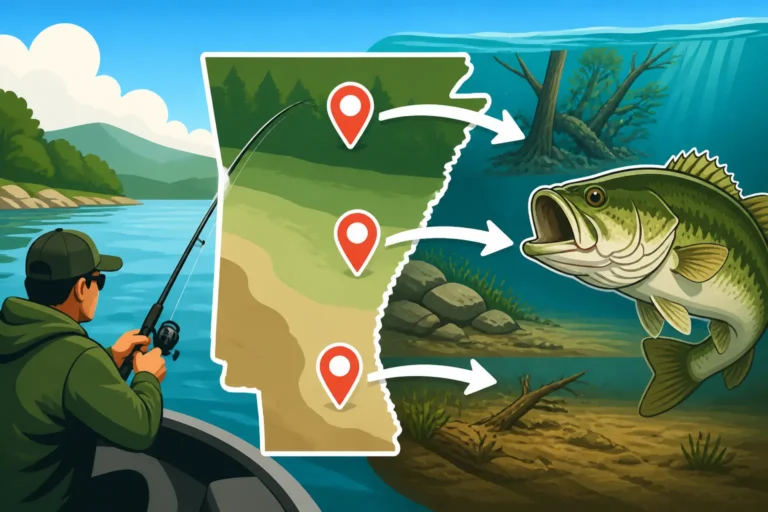
Once the spawning ritual is complete, both male and female bass are exhausted. Think of it like running a marathon; they've expended massive amounts of energy building nests, fending off predators, and in the case of females, producing and laying eggs. Their primary instinct immediately after the spawn is recovery. This means they're not necessarily aggressive or actively feeding in the same way they were during the pre-spawn or spawn phases. Many will migrate from the shallow spawning grounds to slightly deeper, cooler waters where they can recuperate. They often hold near structure like submerged timber, rock piles, or ledges, offering both refuge and proximity to potential food sources. This is a crucial transition period that often leaves anglers scratching their heads, wondering where all the fish have gone. Understanding this biological imperative is the first step to unlocking their post-spawn patterns.
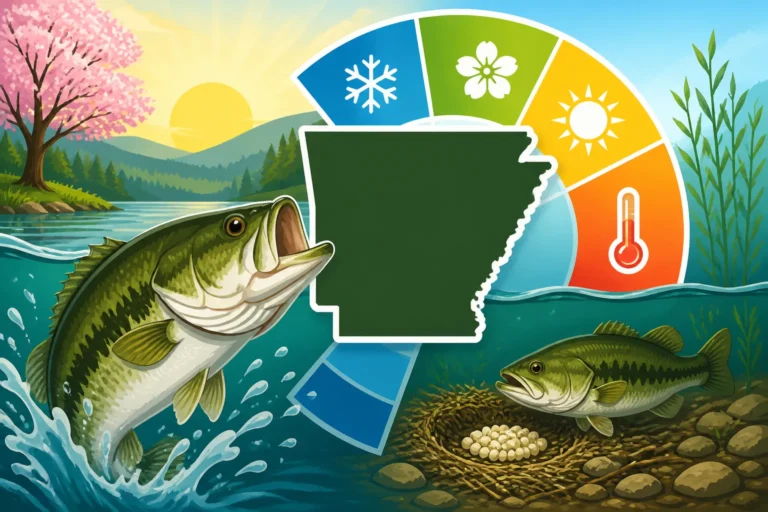
The exact timing of this post-spawn phase depends heavily on water temperature and geographical location within Arkansas. In the southern parts of the state, where waters warm faster, you might see bass moving into post-spawn patterns as early as late April, while in the cooler, northern Ozark lakes and rivers, it might not happen until late May or even early June. Keep an eye on those water temperatures; typically, once they consistently rise above 70 degrees Fahrenheit, you're firmly in the post-spawn transition. As the season progresses, these fish will begin to form schools, especially the females who are trying to regain weight lost during the spawn, and eventually, they'll move into their summer patterns. Knowing how to find post-spawn bass means understanding this transition.
Why Post-Spawn Can Be Challenging
Fishing during the post-spawn period can be notoriously difficult because the bass are in a state of flux, and their feeding patterns are less predictable. During the pre-spawn, they're gorging themselves to prepare for the spawn, and during the spawn itself, they're territorial and easily provoked. Post-spawn, however, their metabolism is slowing down from the exertion, and they're not necessarily chasing down every meal. They might be lethargic, holding tight to cover, or schooling up in open water but not actively feeding. This often leads to frustrating days on the water where you know the fish are there, but you just can't get them to bite. It's easy to get discouraged when you're casting where they should be, based on earlier patterns, only to find an empty spot.
Another challenge comes from the sheer diversity of Arkansas's waters. A technique that works on a sprawling reservoir like Lake Ouachita might be completely ineffective on a river system like the White River or a smaller, timber-filled lake. The transition periods for "When Do Bass Spawn in Arkansas Reservoirs" can vary greatly, leading to a staggered post-spawn across the state. Furthermore, the baitfish population is also exploding during this time, thanks to the recent spawn, meaning bass have an abundance of natural food. This makes your artificial offerings less appealing if they're not presented perfectly or don't mimic the local forage. You're competing with nature's buffet, so your presentation needs to be spot-on.
Prime Time for Post-Spawn Bass Fishing in Arkansas
Despite the challenges, post-spawn can be an incredibly rewarding time to fish in Arkansas if you know what to look for and where to focus your efforts. It's not about blind casting; it's about observation, understanding, and adapting to the bass's renewed behaviors.
Seasonal Timelines Across Arkansas Lakes
The "best" time for post-spawn bass fishing in Arkansas really isn't a single universal date; it's a window that opens differently across the state's diverse geography. Generally, you're looking at late spring through early summer. In the southern delta regions, where lakes like Lake Monticello warm up quickly, the post-spawn can begin in late April and run through May. As you move northward into the Ozarks, to lakes like Beaver Lake or Bull Shoals, the post-spawn period will typically kick off in May and extend well into June. For example, you might find bass already recovering on Lake Conway in late April, while those on Greers Ferry Lake are still in the tail end of their spawn. It pays to keep an eye on local fishing reports and water temperatures for the specific body of water you plan to visit.
This extended timeline means that if you're dedicated, you can follow the post-spawn pattern across the state. Start south, then move north as the water warms. The critical factor is identifying when the majority of fish have finished spawning. Often, the first wave of fish to spawn will be the first to move into a recovery pattern, followed by successive waves. This also means you can encounter fish in various stages of post-spawn recovery, even on the same lake, during this transitional period. For more specific insights, checking out resources like "Best Lakes in Arkansas for Bass, Crappie, and Catfish" can give you a better idea of target locations and their usual patterns.
Key Indicators for Locating Post-Spawn Bass
Successfully locating post-spawn bass hinges on identifying key environmental indicators and understanding their movement patterns. One of the biggest shifts is the bass's migration from shallow spawning flats to transition areas that offer a mix of depth, cover, and proximity to deeper water. Look for secondary points, humps, ledges, and channels that lead out of those shallow spawning coves. These areas provide easy access to deeper, cooler water for recovery while still allowing them to move shallow to feed on emerging fry or baitfish. If you're on a lake like Lake Ouachita, these areas might be abundant with timber, making them prime targets.
Another major clue is the presence of baitfish, especially schools of shad or young-of-the-year forage. Bass, particularly the larger females, will begin to actively feed again to regain lost energy. They often school up and push bait to the surface, creating visible feeding frenzies. Early morning and late evening often provide the best opportunities for this topwater action. Keep an eye on your electronics for schools of baitfish and the tell-tale arches of predatory fish underneath them. Pay close attention to current, especially on river systems like the Arkansas River; bass will often use current breaks as ambush points. Also, consider the impact of recent weather patterns; stable weather and rising barometric pressure often signal a better bite compared to cold fronts.
| Post-Spawn Stage | Typical Location | Bass Behavior | Recommended Lures |
|---|---|---|---|
| Immediate Post-Spawn (Lethargic) | Adjacent deeper water, thick cover (brush piles, docks), main lake points, channel swings | Recovering, less active, tight to cover, might be suspended | Jigs, Texas-rigged worms, Senkos, drop-shots |
| Recovery/Staging | Secondary points, humps, deeper grass lines, deeper brush piles, ledges, timber | Regaining strength, starting to school, feeding opportunistically | Crankbaits (medium to deep), Carolina rigs, swimbaits, jerkbaits |
| Active Feeding (Schooling) | Open water near baitfish schools, main lake points, humps, underwater islands | Actively chasing bait, aggressive, often visible on topwater | Topwater (poppers, walking baits), swimbaits, flukes, spoons, Alabama rigs |
Top Techniques and Lures for Post-Spawn Success
This is where the rubber meets the road. Once you've located these post-spawn bass, you need to present them with something they can't resist, often requiring a subtle approach during the initial recovery phase and a more aggressive one as they become active.
Targeting Different Post-Spawn Stages
The post-spawn isn't a single, uniform period; it has different stages, and your approach needs to adapt. Immediately after the spawn, when bass are most lethargic, they tend to hug tight to heavy cover in slightly deeper water adjacent to their spawning grounds. Think brush piles, submerged timber, or deep boat docks. During this stage, a slow, methodical approach is best. A Texas-rigged worm or a jig pitched into thick cover, allowed to slowly fall and sit, can be incredibly effective. The goal is to present a meal that requires minimal effort from the bass. Look for areas with shade and cooler water, as these provide comfort. This approach requires patience and precision, as the bites can be very subtle.
As bass recover and start to school up, they become more willing to chase. This is when they begin moving to secondary points, humps, and ledges. They're still not always "on fire," but they're actively looking for food. This is a great time for moving baits like medium-diving crankbaits that bump bottom or offshore structure. Carolina rigs can also shine here, allowing you to present a soft plastic bait away from your weight, giving it a natural, enticing action. When you find one, you've often found a school, making these areas highly productive. Remember that these fish are often suspended just off the bottom, so pay attention to your electronics. For deeper dives into how to catch these fish, articles like "How to Find Post-Spawn Bass" offer invaluable insights.
Essential Lures and Gear Recommendations
Choosing the right lures and gear can make or break your post-spawn fishing trip. For those lethargic bass holding tight to cover, soft plastics are king. A 7-inch Zoom Trick Worm or a Gary Yamamoto Senko, rigged weightless or with a light Texas rig, is hard to beat. Darker colors like green pumpkin or junebug often work well in clearer water, while black and blue can be effective in stained conditions. Pair these with a medium-heavy spinning or casting rod for accurate pitches, and at least 15-pound fluorocarbon line or braided line with a fluorocarbon leader for abrasion resistance around cover. Many anglers find great deals on these essential soft plastics on Amazon.
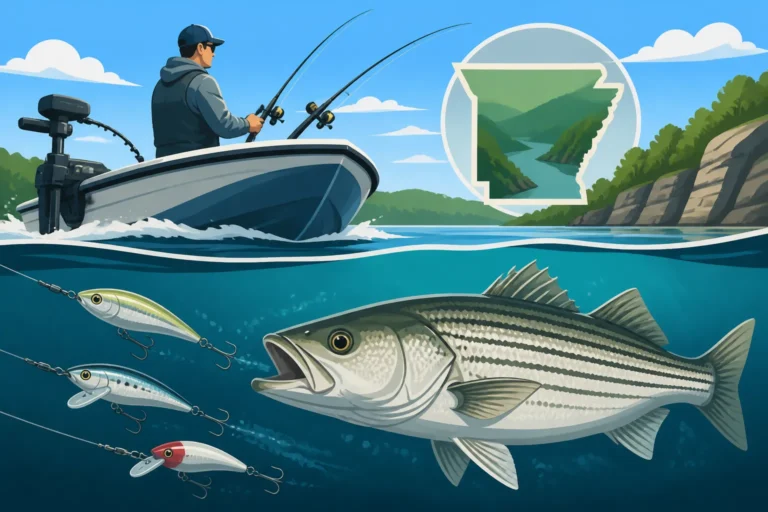
As bass become more active and start chasing bait, you'll want to switch to moving baits. Medium-diving crankbaits from brands like Strike King or Rapala, in shad or crawfish patterns, are excellent for probing ledges and humps. For topwater action, especially during dawn and dusk, a Heddon Super Spook Jr. or a popper can provoke explosive strikes when bass are feeding on the surface. Don't forget swimbaits, either; a Keitech Swing Impact Fat on a lead head can be incredibly versatile for targeting suspended fish or those chasing bait. A good pair of polarized sunglasses, also easily found on Amazon, will help you spot subtle movements or even cruising bass. Having a selection of "Best Lures for Post-Spawn Bass Fishing" ready in your tackle box will prepare you for any situation.
Navigating Arkansas's Diverse Waters During Post-Spawn
Arkansas offers an incredible variety of fishing environments, from vast impoundments to winding rivers. Each presents unique challenges and opportunities during the post-spawn, and a one-size-fits-all approach simply won't cut it.
Lake-Specific Strategies
When you're tackling Arkansas's big reservoirs during the post-spawn, you really need to tailor your approach to the specific lake. Take Lake Ouachita, for instance; it's known for its incredibly clear water and abundant timber. Here, post-spawn bass will often relate to the deepest timber edges and channel swings, sometimes suspending over deep water following baitfish. Vertical presentations like a drop-shot or jigging spoon can be deadly. Conversely, on a lake like Lake Conway, which is shallower and often stained with lots of cypress trees and grass, bass might stay shallower longer, holding in the thicker grass beds or around the base of cypress trees in slightly deeper pockets. Flipping and pitching jigs or heavy Texas-rigged plastics into this dense cover is a go-to strategy.
For lakes like Bull Shoals or Norfork, which are deep, clear, and rocky, post-spawn bass will often transition to main lake points, offshore humps, and steep bluff walls. They'll use these structures to recover and then to ambush passing baitfish. Deep-diving crankbaits, football jigs, and large Texas rigs are excellent choices here. Electronic sonar becomes your best friend on these lakes, helping you pinpoint those crucial offshore structures and suspended schools of fish. Understanding these nuances for each body of water is vital, as the "Best Bass Fishing Spots in Arkansas" are not all alike, especially during this challenging transitional period.
River and Stream Approaches
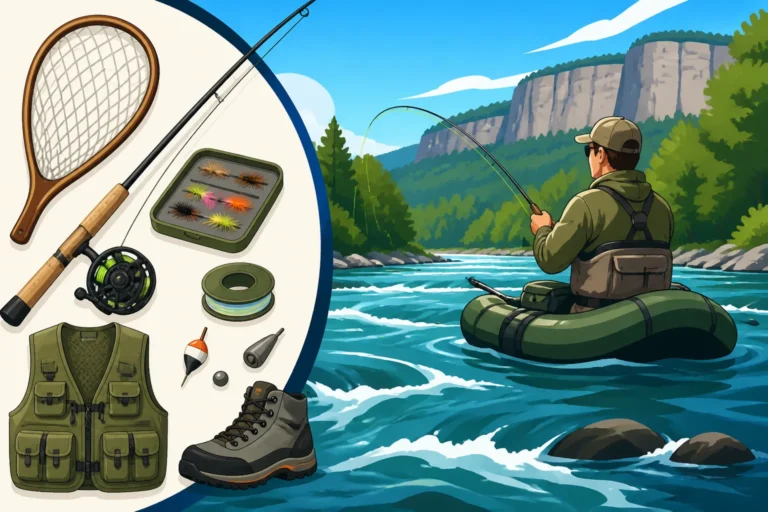
Fishing rivers and streams for post-spawn bass in Arkansas requires a slightly different mindset than lake fishing. River bass, especially smallmouth and spotted bass, are often more current-oriented. After spawning in slower tributaries or eddies, they'll migrate back to the main current to feed. Look for current breaks: downed trees, large boulders, bridge pilings, or even subtle changes in the riverbed that create slack water pockets. Bass will sit just out of the main current, waiting for food to be swept by. On a river like the Spring River, known for its smallmouth bass, a tube jig or a small crankbait worked along these current seams can be highly effective.
In larger river systems like the Arkansas River, which holds excellent largemouth and spotted bass, post-spawn fish will relate to the myriad of wing dams, barge tie-ups, and riprap banks. These structures offer current breaks and ambush points. Spinnerbaits, chatterbaits, and squarebill crankbaits are great choices for covering water and triggering reaction strikes around these features. As the water warms, the fish might also move into deeper holes or oxbows connected to the main channel. Keep in mind that river levels and current speed can fluctuate dramatically, especially after rains, so always check conditions before heading out. Understanding "Largemouth Bass Fishing on Arkansas's White River" and similar river systems will definitely enhance your success during post-spawn.
Disclaimer
Fishing conditions and regulations in Arkansas can change. Always consult the latest Arkansas Game and Fish Commission (AGFC) regulations before heading out on the water. This guide is for informational purposes only and does not supersede official AGFC rules.