Cold Front Fishing Techniques
You've set your alarm, packed your gear, maybe even had a dream about that monster bass you're finally going to land, only to wake up and feel that crisp, sudden drop in temperature. You step outside, and the wind is whipping, the sky is clear, and your heart sinks a little. A cold front has rolled through, and every angler knows that familiar dread: the fish are probably shut down. It's a frustrating scenario that happens far too often in Arkansas, turning what should be a fantastic day on the water into a challenging, often fruitless, endeavor. But don't despair! This guide is all about understanding exactly what happens when those cold fronts hit and, more importantly, equipping you with the techniques to adapt your fishing strategy and still find success, even when the bite seems impossible.
Understanding the Impact of a Cold Front on Arkansas Fishing
Cold fronts are more than just a dip in temperature; they trigger a cascade of changes in the aquatic environment that profoundly affect fish behavior. Knowing why fish act the way they do after a front is the first step to figuring out how to catch them.
The Science Behind the Fish Shutdown
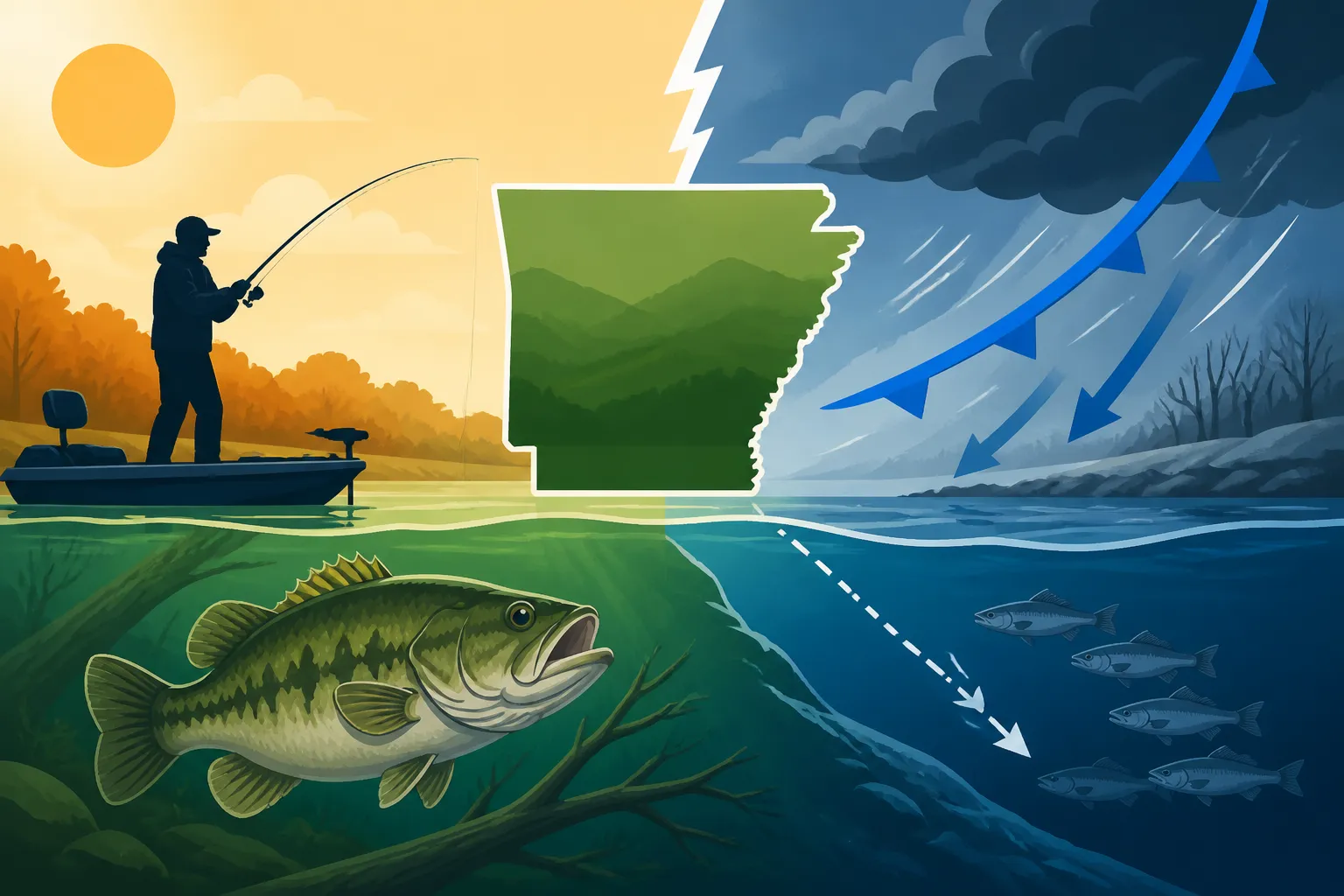
When a cold front moves in, several things happen almost simultaneously. First, there's a significant drop in air temperature, often accompanied by strong winds and a clear, high-pressure sky. This high-pressure system pushes down on the water, literally making fish feel uncomfortable in shallower areas. It's like someone pressing down on your head – you'd want to find a place where the pressure isn't so intense, right? Fish react similarly, often moving to deeper water where the pressure is more stable. This rapid change in barometric pressure can also affect their swim bladder, making them sluggish and less inclined to feed.
Beyond pressure, the sudden temperature drop impacts water temperature, especially in shallower zones. While deeper water might remain relatively stable, the upper layers cool down quickly. This can send cold shockwaves through the fish's metabolism, slowing everything down, including their digestion and their drive to actively hunt. Think of it like us on a really cold day; we're less likely to go jogging or play an intense sport and more likely to hunker down with a warm meal. Fish are cold-blooded, so these environmental changes directly dictate their energy levels and activity.
Identifying a True Cold Front
It's easy to mistake a cool morning for a full-blown cold front, but there are specific indicators that signal a more significant shift. A true cold front typically involves a sharp drop in temperature (often 10-20 degrees Fahrenheit or more) within a 12-24 hour period, a noticeable switch in wind direction (often from south to north or northwest), and a transition from cloudy or rainy conditions to clear, blue skies. The sky clarity, in particular, is a tell-tale sign of high pressure.
Many anglers check their weather apps for temperature and precipitation, but also look for barometric pressure trends. A rapidly rising barometer immediately after a storm or a sustained period of high pressure with clear skies often signals tough fishing conditions. Conversely, a falling barometer, usually associated with an approaching warm front or storm, often means good fishing. Understanding these weather patterns, not just the temperature, is crucial for predicting fish behavior.
Behavioral Shifts in Arkansas Game Fish
When a cold front hits, almost all game fish in Arkansas waters, from the largemouth bass in Lake Ouachita to the trout in the White River, will exhibit predictable behavioral changes. They become lethargic, their metabolism slows, and their feeding windows shrink significantly. Instead of actively chasing bait, they'll become ambush predators, hugging tight to cover or structure, waiting for an easy meal to practically swim into their mouths.
Fish will often migrate to deeper water or seek out dense cover like brush piles, rock formations, or standing timber to find stable temperatures and escape the high pressure and bright light. They're trying to conserve energy and find comfort, making them less willing to expend effort on a meal. This means your typical fast-moving, aggressive presentations won't work. You'll need to think like a "lazy" fish – slow, subtle, and right in their face. This shift in behavior requires a fundamental adjustment in your strategy if you hope to put fish in the boat or on the bank.
Adapting Your Approach: Lures and Baits for Cold Fronts
The number one mistake anglers make after a cold front is continuing to throw the same fast-moving, reaction baits they were using before the front. When fish are lethargic, they aren't going to chase. You need to present something irresistible that requires minimal effort on their part.
Downsizing and Slowing Down
After a cold front, "less is more" often rings true. Downsizing your lures and presenting them very slowly is key. Instead of a large crankbait, reach for a smaller finesse jig or a shaky head worm. For crappie, tiny jigs become even tinier. The idea is to mimic a weak, injured, or easily accessible prey item. Think about a small minnow barely twitching on the bottom, or a sluggish crawfish trying to burrow into the mud.
This often means switching from power fishing techniques to finesse fishing. For bass, think about a Neko rig, a Wacky rig, or a drop shot. These presentations keep your bait in the strike zone longer and offer subtle movements that can entice a bite from a reluctant fish. For instance, a small plastic worm rigged on a light Texas rig or a Ned rig, allowed to sit on the bottom with very minimal movement, can be deadly. You might find a wide variety of these finesse baits, including popular brands like Zoom or Yamamoto, easily available on Amazon if your local tackle shop is out of stock.
The Power of Scent and Natural Baits
When fish aren't actively hunting by sight, their other senses become more important. Scent can be a game-changer after a cold front. Adding a scent attractant to your artificial lures or using natural baits can significantly increase your chances. Products like Berkley Gulp! or various scent sprays can make a plastic worm or jig much more appealing to a fish that's barely moving.
Live bait is often king during these tough conditions. A frisky minnow, a lively nightcrawler, or even a juicy crickets can be irresistible. The natural movement and scent of live bait are hard to beat when fish are finicky. Imagine a bass tucked into a log, not wanting to move, and a struggling minnow swims right past its nose – that's a much easier meal than chasing a fast-moving crankbait. If you're targeting crappie, a live minnow under a bobber, fished extremely slowly near cover, will often outperform jigs.
Color Theory for Challenging Conditions
Under clear, high-pressure skies, fish can be more sensitive to bright, unnatural colors. Often, more subdued, natural colors work best. Think greens, browns, and natural baitfish patterns. However, there's a caveat: sometimes a flash of something bright can trigger an impulse strike from an otherwise inactive fish. This is where experimentation comes in. Start with natural colors, but don't be afraid to try a pop of chartreuse or orange if things aren't working.
The depth you're fishing also influences color. In deeper, darker water, brighter colors like chartreuse or white can actually be more visible, especially if they have some UV enhancement. For surface presentations (which are rare after a front, but can happen in a brief warm spell), a darker silhouette against the bright sky can be effective. Generally, if the water is clear and the skies are bright, lean towards natural, transparent, or subtle patterns, as discussed in Best Lure Colors for Cloudy Days.
Locating Fish After a Cold Front in Arkansas Waters
Fish don't just disappear after a cold front; they relocate to areas where they feel more comfortable and secure. Your job is to find those refuges. This often means abandoning your usual hotspots and thinking about where fish would go to conserve energy and escape adverse conditions.
Targeting Deeper Water and Cover
One of the most common reactions of fish to a cold front is to move deeper. The deeper water provides more stable temperatures and less direct impact from the high barometric pressure and bright sun. Look for drop-offs, ledges, creek channels, and humps in deeper parts of the lake or river. These are the fish's comfort zones. They won't be actively swimming around; they'll be glued to the bottom or tightly packed into the cover.
Furthermore, fish will seek out dense cover within those deeper areas. Think submerged timber, rock piles, brush piles, or even dense weed lines if they extend into deeper water. These provide both shelter from predators and a place to ambush prey without expending much energy. For example, if you're fishing an Arkansas reservoir known for its bass, like Bull Shoals Lake, after a front, forget the shallow docks and start scanning your electronics for structure in 20-30 feet of water. Using a good fish finder is absolutely crucial for this, and many reliable models from brands like Garmin or Humminbird are readily available on Amazon.
Focusing on Transition Zones
Fish often position themselves on "transition zones" – areas where one type of cover or depth meets another. This could be where a flat drops into a creek channel, where a rock bottom meets a mud bottom, or where shallow weeds give way to deeper, open water. These zones offer fish a quick escape to deeper water or cover, while still providing access to potential feeding grounds if conditions briefly improve.
Think of it like this: a bass might sit on the edge of a deep-water brush pile that borders a creek channel. If a minnow wanders by the channel, the bass can quickly dart out for a meal and then retreat back into the safety of the brush pile. These areas are strategic because they offer the best of both worlds: comfort and proximity to food. Your goal is to patiently work these edges and transitions, allowing your bait to sit there for extended periods.
The Importance of Structure
Structure, whether natural or man-made, becomes a magnet for cold-front fish. This includes everything from natural rock formations, ledges, and submerged trees to artificial brush piles, bridge pilings, and dock supports. Fish will often position themselves on the leeward side of these structures, out of the current and wind, or burrow deep into them.
Understanding How to Fish Deep Structure for Bass is particularly important in these situations. Bass might be clinging to the side of a deep rock pile or tucked into the branches of a submerged tree. Crappie will often stack up tight in brush piles, sometimes suspended just above the branches. The key is to be precise with your casts and allow your bait to get right into their hiding spots. They won't move far to eat, so your bait needs to be presented directly to them.
Strategic Presentation: Retrieval Techniques for Finicky Fish
Once you've found the fish (or at least where they should be), the next challenge is convincing them to bite. Aggressive retrieves and fast movements will likely spook them or simply be ignored. This is where patience and subtle presentation truly pay off.
Ultra-Slow Retrieves and Deadsticking
When fish are lethargic due to a cold front, your retrieve needs to match their mood: slow, slower, and even slower. Often, the best retrieve is barely a retrieve at all. This technique is known as "deadsticking," where you cast your lure out, let it sink to the bottom (or desired depth), and then literally do nothing for several seconds, or even a minute. Let the subtle currents or boat movement impart a tiny bit of action.
After a long pause, a very slight twitch of the rod tip, followed by another long pause, is often all it takes. The idea is to make the bait look like it's struggling, dying, or completely vulnerable – an easy meal for a fish that doesn't want to exert itself. This works particularly well with soft plastics, jigs, and even some slow-sinking jerkbaits. Many anglers struggle with this because it requires immense patience, but it's often the difference between catching fish and getting skunked.
Subtle Twitches and Pauses
While deadsticking involves minimal movement, subtle twitches and pauses are another vital part of cold front fishing. Instead of a continuous retrieve, think in terms of short, sharp twitches of your rod tip, followed by long pauses. This imparts just enough action to draw attention to your bait without making it appear too energetic or difficult to catch. For instance, with a jig or a shaky head, you might lift your rod tip a few inches, let the bait fall back to the bottom on a slack line, and then let it sit for 5-10 seconds before repeating.
This "lift and drop" or "twitch and pause" method is incredibly effective because it keeps the bait in the strike zone longer. Fish get a chance to inspect it, decide if it's worth the effort, and then often commit during the pause. The bite itself might feel like nothing more than a slight "thump" or simply added weight to your line, so pay close attention to any abnormalities. A quality, sensitive rod, like those from St. Croix or Fenwick, will help you detect these subtle takes.
Varying Depth and Angle
Fish can be incredibly finicky about their depth after a cold front. They might be suspended just a few feet off the bottom, or glued directly to it. They might be on one side of a brush pile but not the other. This means you need to vary your depth and casting angles until you find the sweet spot. If you're using a drop shot, try different leader lengths. If you're jigging, let your bait fall to the bottom, then lift and reel up a few feet, then let it fall again.
Don't be afraid to cast from different angles to the same piece of cover. Sometimes approaching a log or rock pile from a different side can present your bait in a way that finally triggers a strike. This also applies to boat positioning. Often, boat control and subtle adjustments to your drift or trolling path can be more important than the lure itself. Remember, Winter Fishing Patterns on Arkansas Reservoirs often teach us that fish will hold in very specific, often tight, zones when conditions are tough.
Species-Specific Cold Front Tactics in Arkansas
While general principles apply, specific species require tailored approaches. Knowing what each fish typically does during a cold front can help you fine-tune your strategy for maximum success in Arkansas waters.
Largemouth Bass: Less Aggression, More Precision
Largemouth bass are notorious for shutting down after a cold front. Their aggressive nature gives way to extreme lethargy. They'll often tuck into the thickest cover or suspend tightly around deep structure. Forget the topwater blow-ups or crankbait power bites; you'll be looking for subtle taps.
Your best bet for bass is finesse fishing. Think light line, sensitive rods, and small baits. The Ned rig, a Texas-rigged small plastic worm, or a shaky head jig are go-to choices. Work these baits excruciatingly slowly. Cast to likely cover – deep timber, rock piles, or channel swings – and let your bait soak. The bite might feel like a sponge on your line, so watch for any line movement. Sometimes a Carolina rig with a long leader and a small lizard or worm, fished along a deep break line, can also be effective for these sluggish fish.
Crappie: Vertical Jigging in Tight Spaces
Crappie also become very tight-lipped and will often "ball up" in dense schools, hugging tight to vertical structure like bridge pilings, standing timber, or brush piles in deeper water. They might suspend just above the cover, making them difficult to locate without good electronics.
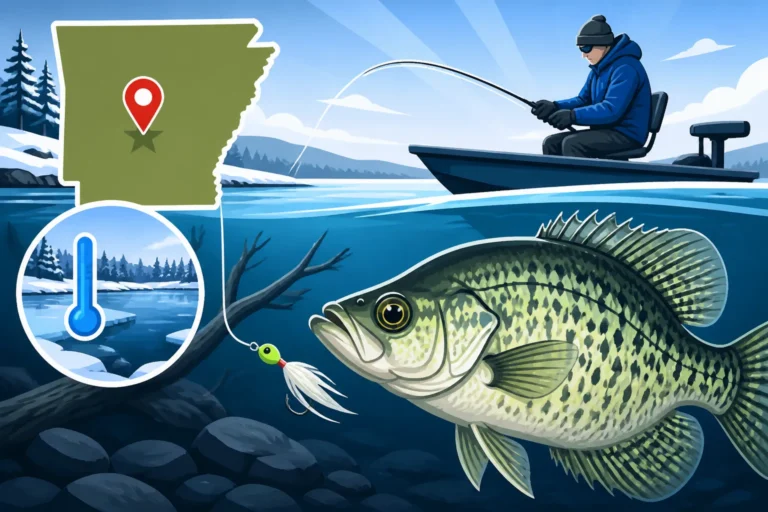
Vertical jigging or tight-lining with small jigs (1/32 to 1/16 ounce) or live minnows is often the most productive method. For example, knowing How to Catch Crappie in Cold Water means focusing on these deeper zones. Use your fish finder to locate schools of crappie, then drop your bait directly into them. Very subtle jigging motions are usually all that's needed. Often, a slight twitch of the rod tip, just enough to make the minnow or jig quiver, is enough to entice a bite. The bite is usually very light, so again, a sensitive rod and light line are crucial. Many anglers even go to specialized "spider rigging" setups to cover more vertical water columns with multiple rods.
Trout: Subtle Presentations on Tailwaters
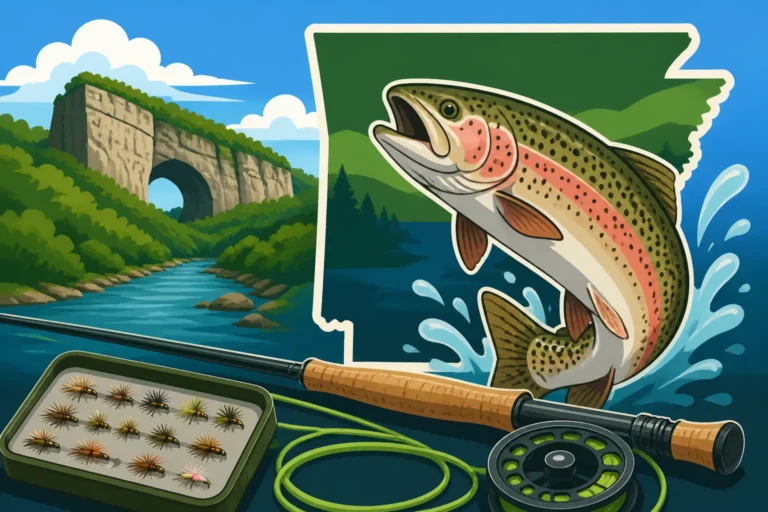
Arkansas's world-class trout fisheries, particularly the White River tailwaters, can still produce after a cold front, but the trout will be much more particular. The consistent cold water from the bottom of the dams means temperature fluctuations aren't as drastic, but the high pressure and clear skies still make fish wary. They'll often hold in deeper runs, behind current breaks, or tight to cover.
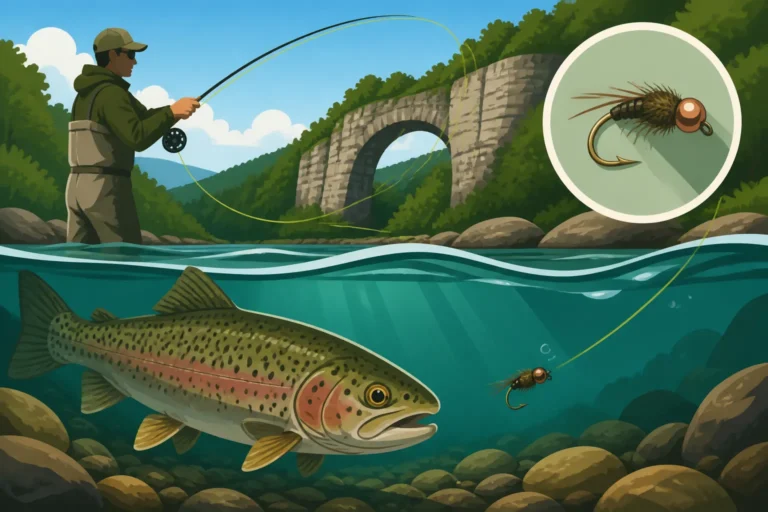
Fly fishing often involves very subtle nymphing techniques, with small flies fished deep under an indicator, or even tight-line nymphing without an indicator. For spin fishing, small, weighted jigs (1/32 to 1/8 ounce) in natural colors, or very small inline spinners, fished slowly along the bottom, can be effective. Consider using a clear float or a small split shot to get your bait down without adding too much visual bulk. Knowing your way around an Arkansas Tailwater Trout Fishing Guide will always be an advantage, regardless of weather, but especially now. Remember, the fish are looking for an easy meal, so subtle presentations mimicking small insects or baitfish are key.
Catfish: Deep Dwellers Still Bite
Catfish are perhaps the most forgiving species during a cold front. They are less affected by changes in barometric pressure and often remain in their deeper haunts. While their activity might slow down, they still need to eat.
Target deep holes, river channels, and outside bends where catfish typically congregate. Bottom fishing with natural baits remains the most effective method. Cut bait (shad, skipjack), chicken livers, or even prepared stink baits will work. The key is to present the bait directly on the bottom, allowing its scent to disperse and attract fish. Patience is vital; let your bait soak for extended periods. Sometimes, simply finding the deepest part of the lake or river channel, casting a few lines with good bait, and waiting it out can be surprisingly productive. While brands like Catfish Pro offer specific catfishing gear, generic hooks, weights, and lines are easily found on Amazon.
| Species | Typical Cold Front Behavior | Recommended Lure/Bait | Retrieval/Presentation | Prime Locations |
|---|---|---|---|---|
| Largemouth Bass | Lethargic, tight to cover, deep | Finesse jigs, shaky heads, Ned rigs, small worms, live minnows | Ultra-slow drag, long pauses, subtle twitches | Deep timber, rock piles, channel swings, ledges |
| Crappie | Stacked in schools, tight to vertical cover, deep | Small jigs (1/32-1/16 oz), live minnows | Vertical jigging, tight-lining, deadsticking | Brush piles, standing timber, bridge pilings |
| Trout | Hold in deeper runs, behind current breaks, wary | Small nymphs, micro jigs, tiny inline spinners | Dead drift, slow retrieve, subtle twitches | Deep runs, current seams, eddies |
| Catfish | Remain in deep holes, channels, less affected by pressure | Cut bait (shad/skipjack), chicken livers, stink baits | Bottom fishing, long soaks, scent dispersal | Deep holes, river channels, outside bends |
Gear Considerations for Cold Front Fishing
Having the right gear won't guarantee success after a cold front, but it will certainly improve your chances. From sensitive rods to warm clothing, preparing adequately can make a huge difference in your comfort and ability to detect subtle bites.
Rod, Reel, and Line for Finesse Fishing
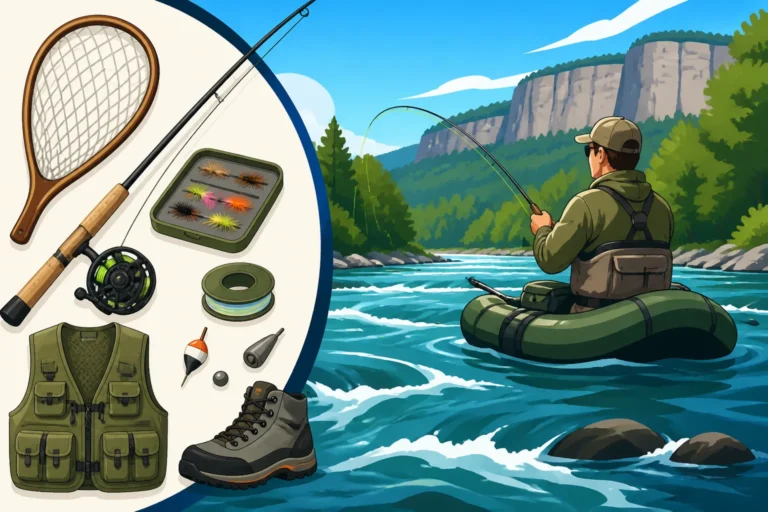
When fish are barely biting, sensitivity is paramount. This means choosing a rod with a fast or extra-fast action tip, usually in a medium-light or medium power. Graphite rods excel in sensitivity, allowing you to feel even the slightest "tick" or added weight on your line. Brands like St. Croix, G. Loomis, or even more affordable options like Ugly Stik offer excellent sensitivity.
Pair this with a spinning reel spooled with light line, typically 6-10 pound fluorocarbon or braided line with a fluorocarbon leader. Fluorocarbon is less visible underwater and has good abrasion resistance, while braid offers incredible sensitivity and casting distance. The choice often comes down to personal preference and the specific technique. For instance, Best Rod Setup for Crappie Jigging would emphasize a lighter, more sensitive setup than what you might use for aggressive bass fishing. Whatever your choice, ensure your drag is set properly for those unexpected surges from a cold-stunned fish.
Essential Cold Weather Apparel
Let's be real: fishing after a cold front usually means fishing in cold weather. Staying warm and dry isn't just about comfort; it's about being able to focus on the subtle details of fishing. Layering is key. Start with a moisture-wicking base layer, add insulating mid-layers (fleece or down), and top it off with a waterproof and windproof outer shell. A good pair of insulated gloves or mittens (perhaps with finger cutouts for knot tying), a warm hat, and waterproof boots are non-negotiables.
Your hands and feet are usually the first to get cold, so invest in quality gear for those extremities. Chemical hand warmers are a lifesaver and can easily be stocked up on Amazon for those unexpected temperature drops. Remember, shivering uncontrollably makes it impossible to feel those light bites, let alone enjoy your time on the water. Don't let discomfort be the reason you miss out on a cold-front bite.
Electronics for Locating Reluctant Fish
In a cold-front scenario, your electronics become your most valuable tool. Forget blind casting; you need to precisely locate fish that are hunkered down. A good fish finder with down imaging, side imaging, and traditional 2D sonar can show you exactly where fish are holding in relation to cover and structure. This saves you valuable time and effort by allowing you to focus your efforts on productive areas.
Learn how to read your sonar for suspended fish in timber, schools of crappie in brush piles, or individual bass tucked into rock formations. GPS functionality is also crucial for marking these spots so you can return to them if you get a bite. Investing time in learning how to interpret your graphs will pay dividends during tough conditions. Without these tools, finding those reluctant fish becomes exponentially harder, turning a challenging day into a needle-in-a-haystack search.
Disclaimer
Please note that fishing regulations, license requirements, and catch limits in Arkansas can change. Always consult the latest official Arkansas Game and Fish Commission (AGFC) regulations before heading out on your fishing trip. This guide is for informational purposes only and does not supersede state laws.