Trotline Fishing Basics
It’s easy to feel overwhelmed by the sheer number of techniques and specialized gear available in the world of fishing today. Sometimes, you just want a reliable, effective method to consistently catch fish, especially those hard-fighting catfish that make for such a delicious meal. That's where trotline fishing comes in – it’s a time-honored tradition that, when done right, can yield impressive results. This comprehensive guide will strip away the mystery and walk you through the basics of trotline fishing in Arkansas, from understanding the rules to setting your first line.
What Exactly is Trotline Fishing?
For many anglers, the image of fishing involves a rod and reel, casting and retrieving. But trotline fishing is a whole different ballgame, offering a more passive yet incredibly effective way to target bottom-dwelling species, particularly catfish. It’s not just about setting it and forgetting it, though; there’s an art and a science to successful trotlining.
Defining the Trotline
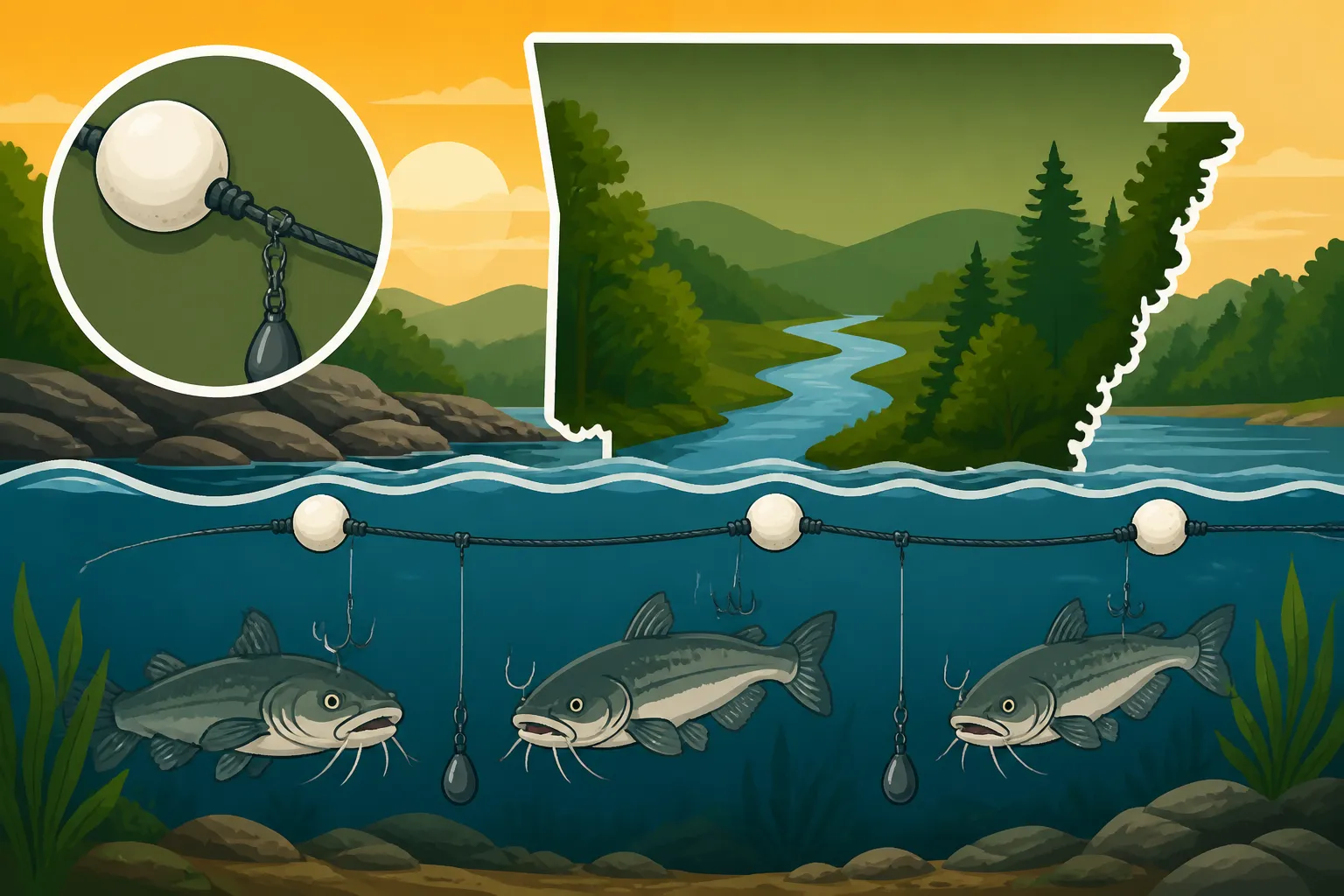
At its core, a trotline is simply a main fishing line, often quite long, stretched across a body of water or anchored at both ends, from which numerous shorter lines, called drop lines or stagings, hang down. Each drop line has a baited hook. Think of it as having dozens of baited hooks working for you simultaneously, rather than just the one or two on a rod and reel. The mainline can be made from sturdy materials like tarred nylon or braided synthetic rope, designed to withstand the pull of large fish and the forces of the water. Drop lines are usually made of a slightly lighter, often monofilament or braided line, and are attached to the mainline at regular intervals. Weights are typically used along the mainline to keep it submerged or at the desired depth, and floats at the ends or along the line help mark its location and keep it properly tensioned. This setup allows you to cover a significant area and present multiple baits at different depths and locations within that area, significantly increasing your chances of a catch.
The beauty of a trotline is its efficiency. While you’re busy with other tasks, your trotline is out there doing the work. This method has been used for generations, passed down through families as a reliable way to put food on the table. It’s especially popular for targeting species like channel catfish, blue catfish, and flathead catfish, which often patrol the bottom in search of food. Unlike a single rod, which demands your constant attention, a well-placed trotline can fish through the night or while you explore other parts of the lake or river.
Advantages and Disadvantages of Trotlining
Like any fishing method, trotlining has its unique set of pros and cons. Understanding these can help you decide if it’s the right approach for your angling goals and how to mitigate some of the challenges.
On the "pro" side, the most obvious advantage is efficiency. With a single trotline, you can deploy anywhere from 25 to 50 hooks at once (depending on Arkansas regulations), dramatically increasing your chances of catching multiple fish compared to a single rod. This makes it a fantastic option for putting a good number of fish in the cooler for a family fish fry or if you're trying to stock up. Secondly, trotlines excel at targeting bigger fish. Because the hooks are often larger and the baits are substantial, you tend to attract the attention of larger, more mature catfish that might ignore smaller offerings on a conventional rod. Many trophy blue catfish and flatheads are caught on trotlines because they offer a consistent, substantial meal. Thirdly, it's a relatively hands-off method once set. You don't need to hold a rod all day; you simply check the line at prescribed intervals, which frees you up for other activities like sightseeing or setting up camp. This makes it appealing for those who want to combine fishing with other outdoor pursuits.
However, trotlining isn't without its challenges. The primary "con" for many is the strict regulatory environment. Trotlines are subject to specific rules regarding length, number of hooks, marking, and checking frequency. Failure to adhere to these can result in hefty fines, as detailed in the Arkansas Fishing License Penalties and Requirements. We’ll dive deeper into Arkansas's specific rules shortly, but suffice it to say, you must know the regulations. Another disadvantage is the potential for bycatch. While trotlines are great for catfish, they can sometimes hook non-target species, and safely releasing them can be tricky, especially if they are deeply hooked. Setup time and effort can also be a factor. Deploying and retrieving a long trotline can be physically demanding and requires a boat. It's not as simple as casting a lure from the bank. Finally, there's the necessity for frequent checking (daily in Arkansas). You can't just leave a trotline out for days on end without consequences – both legally and for the welfare of the fish. Fish can die on the line if left too long, and tangled lines or stolen baits are common frustrations if not maintained. Despite these drawbacks, for many seasoned anglers, the rewards of a successful trotline pull far outweigh the initial investment in time and understanding.
Legal Considerations and Regulations in Arkansas
Before you even think about buying a trotline, understanding the rules and regulations in Arkansas is paramount. Fishing with trotlines is a highly regulated activity, and for good reason—it ensures sustainability, minimizes conflicts with other anglers, and promotes safety. Ignoring these rules can lead to serious legal trouble and a spoiled fishing trip.
Understanding Arkansas's Trotline Laws
Arkansas, through the Arkansas Game and Fish Commission (AGFC), has clear guidelines for trotline usage. You can't just drop a line wherever and however you please. First and foremost, you'll need a valid Arkansas fishing license. If you're wondering How to Buy an Arkansas Fishing License Online, it's a straightforward process you can complete from your home. Beyond the general fishing license, specific regulations apply to trotlines:
- Length Restrictions: A trotline cannot be longer than 50 yards (150 feet). This is a crucial limit to prevent anglers from monopolizing large sections of water and to make lines manageable.
- Hook Limits: Each trotline can have a maximum of 50 hooks. This strikes a balance between efficiency for the angler and preventing overfishing or excessive bycatch.
- Hook Spacing: Hooks must be spaced at least 24 inches apart. This spacing helps prevent entanglement of fish and allows fish to move more freely once hooked, reducing stress.
- Material: Trotlines must be made of cotton, nylon, or other synthetic material. This ensures durability and minimizes environmental impact if a line is lost.
- Location Restrictions: Trotlines are generally prohibited within 100 yards of a public boat dock or swimming area. This is a common-sense rule to prevent accidents and conflicts with recreational users. There are also specific waters where trotlines are entirely prohibited, such as certain trout streams or small public fishing lakes. Always consult the current Arkansas Fishing Regulations Guide to verify restricted areas. For instance, while generally allowed on major lakes like Lake Ouachita or Norfork Lake, you won't find them in small municipal ponds.
- Daily Checking Requirement: This is a big one! All trotlines must be checked at least once every 24 hours. This is critical for fish welfare, ensuring any hooked fish are retrieved in a timely manner, and preventing the line from becoming a source of pollution if abandoned.
These rules aren't just arbitrary hoops to jump through. They are designed to manage the resource effectively, allowing both trotline anglers and rod-and-reel anglers to enjoy Arkansas's abundant waters responsibly. Violating these regulations can result in fines and the confiscation of your gear, which is a situation no one wants to experience.
Permit Requirements and Marking Your Line
Beyond the general rules for construction and placement, Arkansas also has specific requirements for identifying your trotline. This is vital for enforcement, preventing theft, and allowing others on the water to know who owns the gear.
Every trotline must be clearly marked. The AGFC requires that each end of your trotline have a legible tag, buoy, or float displaying your full name and address. If you’re a resident, your Arkansas Game and Fish Commission customer ID number can also be used. This identification serves several purposes. Firstly, it allows game wardens to easily identify the owner of the line and ensure compliance with regulations. If a line is found to be illegally set or unmarked, it can be removed and confiscated. Secondly, it helps other anglers or recreational boaters identify the owner if there’s a problem, such as a line drifting into a restricted area or creating a hazard. Thirdly, it discourages tampering or theft, as an identified line is less likely to be messed with.
In terms of permits, for most recreational trotline fishing in Arkansas, if you possess a valid fishing license, you generally don't need a separate permit specifically for trotlines. However, it is always a good idea to double-check the latest AGFC regulations or contact them directly, as rules can occasionally change or there might be special permits for commercial fishing or unique circumstances. The standard resident or nonresident annual fishing license typically covers trotline use within the stated regulations. Just remember, that basic license is your ticket to legally use these devices. Without it, even a perfectly set and marked trotline is considered illegal. Make sure your license is always current, and you're familiar with any local exceptions or specific lake rules that might apply to your chosen fishing spot.
Essential Gear for Trotline Fishing
Once you’ve got a handle on the rules, it's time to talk gear. You don't need a massive investment to get started, but having the right components is crucial for building a durable, effective, and safe trotline. Quality gear will save you headaches in the long run and increase your chances of success.
Mainline and Drop Lines
The backbone of your entire trotline setup is, naturally, the mainline itself. This needs to be incredibly strong and durable to withstand the constant pull of the water, the thrashing of hooked fish, and the general wear and tear of being submerged.
- Mainline Material: The most common and recommended material for your mainline is tarred nylon trotline cord. This isn't just regular rope. The tar coating offers superior resistance to rot, abrasion, and UV degradation, meaning it will last much longer in the water. It’s also often black, which makes it less visible to fish (though visibility isn’t usually a huge concern for bottom-feeding catfish) and helps it blend into the murky depths. Another option is braided synthetic rope, typically nylon or polyester, chosen for its strength and resistance to stretching. You’ll want a mainline with a high test weight, typically 200-400 pounds test, especially if you're targeting those impressive Trophy Blue Catfish Fishing in Arkansas. The length, as established by Arkansas regulations, can be up to 50 yards (150 feet), so plan for that amount of material. You might find quality mainline materials available on online retailers like Amazon, or at local tackle shops that cater to serious catfishermen.
- Drop Lines (Stagings): These are the shorter lines that connect your hook to the mainline. They need to be strong enough to hold a struggling fish but typically a bit lighter than the mainline. 60-100 pound test monofilament or braided line is common. Mono offers a bit of stretch, which can act as a shock absorber, while braid is very sensitive. The length of each drop line usually ranges from 12 to 24 inches, allowing the bait to sit at a good depth below the mainline. You can attach drop lines to the mainline using specialized crimps, snoods, or even a simple knot if you’re confident in your knot-tying skills. A good swivel at the mainline connection point is highly recommended to prevent the drop line from twisting during a fight, which can weaken the line or cause tangles.
Hooks, Weights, and Floats
These are the business end of your trotline and what ensures it stays put and fishes effectively.
- Hooks: For trotlining, circle hooks are overwhelmingly favored, and for good reason. They are designed to hook fish in the corner of the mouth, minimizing gut-hooking and making for easier, safer release of non-target species or undersized fish. They are also highly effective at holding fish once hooked. Sizes typically range from 4/0 to 10/0, depending on the size of the bait and the target species. Smaller hooks (4/0-6/0) are fine for channel catfish, while larger hooks (8/0-10/0) are better suited for big blue catfish and flatheads. J-hooks can also be used, but you'll need to check your line more frequently to avoid deep hooking.
- Weights: The purpose of weights is to keep your trotline submerged at the desired depth and location, especially in current. You'll need two heavy anchors for the ends of your line and possibly some lighter weights along the mainline itself if you want it to sink uniformly. For end anchors, bricks, heavy rocks, old window weights, or short pieces of rebar (about 1-2 feet long) work well. These should be heavy enough to resist strong currents and the pull of multiple fish. Along the mainline, lighter lead weights or small, dense rocks can be tied on every few feet to keep the line from floating too high. Ensure all weights are securely attached.
- Floats: Floats are essential for marking the ends of your trotline and, in some cases, keeping the mainline at a specific depth if you're fishing suspended. For marking the ends, sturdy jugs (like repurposed plastic milk jugs or bleach bottles), foam buoys, or even commercial trotline floats are used. These must be bright and clearly visible to comply with marking regulations and prevent other boaters from running into your line. Remember, your floats must also display your name and address or AGFC customer ID. You can find robust, visible floats that meet AGFC requirements at outdoor stores or on Amazon.
Other Must-Have Tools
Beyond the core components of the trotline itself, there are several other items that will make your trotlining experience much safer and more enjoyable.
- Heavy-Duty Gloves: This is non-negotiable. Handling lines with multiple hooks, potentially large, slimy, and spiny fish, and sharp anchors requires robust hand protection. Leather or thick rubber-coated gloves are ideal.
- Bait Bucket/Cooler: You'll need a container for your bait, especially if using cut bait or live bait. A cooler will keep cut bait fresh, and an aerated bait bucket is essential for keeping live bait healthy.
- Sharp Knife: Indispensable for cutting bait, lines, or freeing snags. Keep it handy and sharp.
- Pliers/Hook Remover: Sometimes, fish get hooked deeply or are difficult to unhook. A good pair of long-nosed pliers or a dedicated hook remover is crucial for safe and quick unhooking.
- Measuring Tape: To ensure your fish meet the legal Arkansas Fish Size and Daily Limits.
- Flashlight/Headlamp: If you're checking your lines at dawn or dusk, or engaging in Night Fishing Techniques for Catfish, a reliable light source is critical for safety and efficiency.
- First Aid Kit: Accidents happen, especially when handling sharp hooks. A basic first aid kit for cuts and punctures is always a good idea.
- Boat: While not gear for the trotline itself, a boat is practically essential for safely and effectively deploying, checking, and retrieving a trotline, especially a 50-yard one.
Having these tools readily available will not only streamline your trotline operations but also ensure you're prepared for any situation that arises on the water.
Setting Up Your Trotline: A Step-by-Step Guide
Now that you have all your gear and understand the rules, it’s time for the exciting part: setting up your trotline. This isn’t a task to be rushed; proper setup is key to both success and safety.
Choosing the Right Location
Selecting the perfect spot is arguably the most critical step in trotline fishing. Catfish aren't everywhere; they prefer specific types of habitats. Your goal is to place your line where the fish are actively feeding or resting.
-
Targeting Catfish: In Arkansas, you'll primarily be targeting channel catfish, blue catfish, and flathead catfish. Each has slightly different preferences, though there's overlap.
- Channel Catfish: Often found in rivers and lakes, they prefer areas with moderate current, deeper holes, and structure like submerged logs or brush piles. They're opportunistic feeders and will roam.
- Blue Catfish: These are often found in larger rivers and reservoirs like the Arkansas River or Lake Ouachita. They prefer deep, open water channels, humps, and points, especially those with current. They are schooling fish, so if you find one, there are often more. Learn more about Blue Catfish Fishing in Arkansas.
- Flathead Catfish: The true predators of the catfish world, flatheads prefer slower-moving water, deep holes, logjams, and heavy cover where they can ambush prey. They are almost exclusively live bait eaters. For an in-depth look at these magnificent fish, check out Flathead Catfish in Arkansas Waters and How to Tell Channel, Blue, and Flathead Catfish Apart.
-
Depth and Structure: Look for areas with changes in depth, known as "breaks" or "drop-offs." Catfish often patrol these transitions. Submerged timber, rock piles, old creek channels, or humps in the middle of a lake are prime locations. Use your boat's fish finder or sonar to identify these features.
-
Current: In rivers, current is vital. Catfish often position themselves just out of the main flow, in eddies or behind obstacles, waiting for food to wash by. A moderate current will help disperse the scent of your bait. In lakes, look for subtle currents created by wind or dam releases if applicable. Avoid areas with excessively strong currents that might move your anchors or tangle your line.
-
Safety First: Remember to avoid placing your trotline within 100 yards of public boat docks, swimming areas, or high-traffic boating lanes. This isn't just a regulation; it's a safety measure for everyone on the water.
Anchoring and Spacing Your Hooks
Once you’ve identified your prime fishing spot, the next step is to secure your trotline properly. A well-anchored line will stay in place, fish effectively, and minimize snags.
- Secure Anchors: You'll need a heavy anchor at each end of your 50-yard mainline. Lower one anchor to the bottom first, ensuring it digs in or settles firmly. Then, as you slowly motor away in your boat, carefully deploy your mainline across your chosen area.
- Attaching Drop Lines: As you deploy the mainline, this is when you'll attach your drop lines and baited hooks. Ensure your hooks are baited and ready to go. Remember the legal requirement: hooks must be spaced at least 24 inches apart. This usually means you'll have about 25-30 hooks on a 50-yard line, rather than the maximum 50, to maintain proper spacing. Attach your drop lines using sturdy snaps, crimps, or reliable knots, making sure they can swivel freely to prevent tangles.
- Tensioning the Line: Once you've deployed the entire mainline and attached your hooks, it's time to drop your second anchor. You want the trotline to be taut but not overly stretched. A slight sag in the middle is fine and can help absorb the shock of a fighting fish. If it's too loose, it can get tangled or drift; too tight, and it puts undue stress on the line and anchors. A properly tensioned line will stay put and present your baits effectively.
Deploying and Securing the Line
This step requires coordination and careful execution, especially if you're working alone. A messy deployment leads to tangles and frustration.
- Organized Deployment: The easiest way to deploy a trotline is from a boat. Coil your mainline neatly in a bucket or large tub, keeping your drop lines and hooks separated and organized. Some anglers use a plastic hanger or separate bucket for the baited hooks to prevent them from catching on the mainline during deployment.
- Methodical Process: Start by securely tying one end of your mainline to your first anchor and dropping it. Then, slowly motor your boat along your chosen path. As you go, you'll attach and bait each drop line and hook, dropping them into the water one by one. This prevents tangles. Many commercial trotline setups come with pre-attached drop lines, which simplifies this step considerably.
- Marking Clearly: As you reach the other end of your 50-yard run, secure your second anchor. Before dropping that final anchor, attach your identification buoy or float to the mainline. Ensure the float has your name and address (or AGFC customer ID) clearly written on it. You will need a similar buoy on the first end of the line. Make sure both buoys are highly visible to other boaters. This is not just a regulatory requirement but a courtesy and safety measure. After deploying, take a moment to observe the line. Is it at the right depth? Are the floats visible? Is it securely anchored? A quick check now can save you significant trouble later. Remember, a properly set trotline is an efficient fishing machine, so take your time and do it right the first time.
Baiting and Maintaining Your Trotline for Success
Setting your trotline is only half the battle. What you put on those hooks and how you maintain your line are equally crucial for a productive outing. The right bait can make all the difference, and consistent maintenance ensures your line keeps producing.
Best Baits for Arkansas Trotlines
Catfish are primarily scavengers and predators, and their diet can vary depending on the species and the season. Knowing what bait to use for which type of catfish can dramatically increase your success rate.
- Cut Bait (The Universal Catfish Magnet): For channel and blue catfish, fresh cut bait is king. Shad, particularly gizzard shad or threadfin shad, are excellent choices because they are a natural food source in many Arkansas waters. Other oily fish like skipjack herring (if you can get them) are also incredibly effective. Simply cut the fish into chunks, ensuring each piece has some skin and guts for maximum scent dispersion. The smell of fresh blood and oils dispersing in the water is almost irresistible to foraging catfish. Many anglers will catch their own baitfish with cast nets or sabiki rigs before setting out their trotlines. You can often buy frozen shad, but fresh is always best.
- Stink Baits: Commercial stink baits, dough balls, or even homemade concoctions (think rotten cheese, chicken livers, or blood bait) can be highly effective, especially for channel catfish. These baits are designed to leach strong odors into the water, attracting fish from a distance. Brands like Catfish Charlie or Sonny's Stink Bait are popular choices and can often be found at local bait shops or online. The downside is they can be messy and sometimes don't stay on the hook as well as cut bait, but for sheer odor power, they're hard to beat.
- Live Bait (Flathead Favorites): If you're specifically targeting trophy flathead catfish, live bait is almost non-negotiable. Flatheads are ambush predators and prefer live, struggling prey. Small sunfish (bluegill, green sunfish), small carp, or perch are excellent choices. Hook them through the back or lips to keep them lively on the hook. Make sure your live bait is legal to use and from the same body of water you are fishing to avoid introducing invasive species. This is a critical regulation to follow. For more details on what these fish prefer, read up on Best Bait for Blue Catfish in Arkansas.
- Worms: While not typically used for trotlining specifically for large catfish, a wad of nightcrawlers can catch smaller channel catfish and other bottom feeders. They are easy to come by and often a good "fallback" bait.
Seasonal Considerations: Bait effectiveness can also change with the seasons. In warmer summer months, stronger-smelling baits might perform better due to increased fish metabolism. In colder water, live bait might entice a less active flathead. Experimentation is key to discovering what works best in your specific fishing area.
Checking and Re-baiting Your Line
This is where the "maintenance" part of trotlining comes in. It's not a "set it and forget it" operation; regular checks are critical.
- Frequency: As per Arkansas regulations, you must check your trotline at least once every 24 hours. Many successful trotline anglers check their lines more frequently, often at dawn and dusk, or even throughout the night if conditions allow, especially when using live bait for flatheads. Checking more often ensures fish are retrieved fresh, minimizes stress on hooked fish, and allows you to re-bait as needed.
- The Checking Process: Approach your trotline carefully in your boat. Begin at one end, slowly pulling up the mainline. As you retrieve, check each drop line.
- Retrieve fish: If you have a fish, handle it safely (wearing gloves!), unhook it, and either place it in your cooler or release it if it's undersized or unwanted.
- Re-bait: If a hook is empty, the bait has been eaten, stolen, or fallen off, re-bait it with fresh bait. This is a crucial step; an unbaited hook catches nothing!
- Check for damage/tangles: Inspect the drop line for any fraying or damage, and untangle any lines that have twisted.
- Dealing with "Bait Stealers": Turtles, smaller fish, and even birds can snatch your bait. This is a common frustration. Frequent checks help, as does using tougher baits that are harder to pull off the hook. Sometimes, using slightly larger hooks can help deter smaller bait thieves without deterring your target species.
Troubleshooting Common Trotline Issues
Even with the best preparation, you’ll likely encounter some common problems when trotlining. Knowing how to troubleshoot them can save your fishing trip.
- Snags: This is perhaps the most frequent and frustrating issue. Your line can get hung up on submerged logs, rocks, or other debris.
- Prevention: The best approach is prevention. Choose clear areas without heavy underwater obstacles. Use your sonar to scout the bottom before deployment.
- Resolution: If you get a snag, slowly motor your boat back and forth over the snagged area, trying to pull the line free from different angles. Sometimes, a "snag pole" (a long, sturdy pole with a hook or grappling device on the end) can be used to manually free the line. If all else fails, you may have to cut the line, which can mean losing gear. Always make an effort to retrieve as much of the line as possible to prevent it from becoming marine debris.
- Tangled Lines: Drop lines can get tangled with each other or around the mainline, especially in strong currents or with a struggling fish.
- Prevention: Ensure proper hook spacing (at least 24 inches) and use swivels on your drop lines. Keep your mainline taut during deployment.
- Resolution: During checks, untangle any lines you find. Sometimes, you may need to temporarily remove a fish from the line to untangle its drop line fully.
- Lost Baits: As mentioned, bait stealers or strong currents can strip hooks clean.
- Prevention: Use durable baits and check frequently. Some anglers use bait elastic or thin wire to secure baits more firmly to the hook.
- Resolution: Re-bait all empty hooks during every check. If you're consistently losing bait in a particular spot, consider switching to a tougher bait or a slightly larger hook.
- Predators: Beyond bait stealers, sometimes larger animals like otters or raccoons (if your line is near the bank) can get into your catch. While there's not much you can do to prevent this entirely, keeping your line clear of the bank and checking it regularly can minimize losses.
Proper maintenance and knowing how to deal with these common issues will turn a potentially frustrating experience into a rewarding one, ensuring your trotline remains an effective tool for harvesting delicious Arkansas catfish.
Harvesting and Safety Tips
The culmination of your trotline efforts is the harvest, but it’s important to approach this part with safety and ethical considerations in mind. Handling fish, especially large catfish, requires caution, and responsible stewardship of the resource is paramount.
Handling Your Catch Safely
Successfully landing a big catfish from a trotline is exciting, but these fish can be powerful and have sharp spines that can cause painful injuries.
- Wear Gloves: As mentioned, heavy-duty gloves are essential. They protect your hands from hooks, sharp fins (especially the dorsal and pectoral fins of catfish), and the rough skin of larger fish.
- Control the Fish: For smaller catfish, a firm grip behind the head, avoiding the spines, is usually sufficient. For larger blue or flathead catfish, a lip gripper can be invaluable. These tools allow you to control the fish's head and prevent it from thrashing, significantly reducing the risk of a hook injury. Never try to bear-hug a large, thrashing fish.
- Unhooking: Use long-nosed pliers or a dedicated hook remover to quickly and safely remove the hook. If the fish is destined for the cooler, you can be a bit more aggressive, but if releasing, try to do so with minimal harm. If a fish is deeply gut-hooked and you intend to release it, sometimes cutting the line as close to the hook as possible is better than trying to wrench it out, which can cause fatal internal damage.
- Measure and Keep/Release: Once controlled and unhooked, measure your fish to ensure it meets any minimum size requirements set by the AGFC. If it's legal and you intend to keep it, place it immediately into a cooler with ice. Rapid cooling helps preserve the meat quality. If it's undersized or you prefer to release it, do so gently, supporting its body in the water until it swims away strongly.
Disposing of Unwanted Catch and Line
Responsible angling means not only adhering to regulations but also showing respect for the environment. This includes proper disposal of fish and gear.
- Ethical Release: For any fish you don't intend to keep, release them as quickly and gently as possible. Minimize their time out of water, handle them with wet hands (if not wearing gloves, to protect their slime coat), and avoid squeezing them.
- Proper Disposal of Dead Fish: If you catch a fish that dies on the line or that you cannot legally keep (e.g., undersized, but has died), you have a responsibility to dispose of it properly. Do not just throw it back into the water near shore where it can become a nuisance or pollute the area. Instead, take it with you and dispose of it in a designated trash receptacle or bury it well away from the water.
- Never Abandon Lines or Waste: This is a golden rule of any outdoor activity. Lost or abandoned trotlines, hooks, and weights can become "ghost fishing" hazards, continuing to catch and kill marine life indefinitely. They also contribute to pollution. Always strive to retrieve your entire line, even if it's snagged. If you must cut a line, make every effort to get as much of it as possible. Similarly, all bait containers, food wrappers, and other trash should be packed out and disposed of properly. This aligns with the AGFC's emphasis on clean and responsible fishing practices, including understanding What counts as a fish's final point of storage in Arkansas? which highlights the end-point of your catch management.
Prioritizing Personal Safety on the Water
Trotline fishing often involves working from a boat, sometimes in less than ideal conditions (early morning, late evening, or even Night Fishing Techniques for Catfish). Personal safety must always be your top concern.
- Wear a Life Jacket: This is non-negotiable when working with lines, anchors, and potentially large fish from a boat, especially if you're alone. Accidents can happen quickly, and a life jacket can be a lifesaver.
- Boat Safety: Ensure your boat is in good working order, with all necessary safety equipment (navigation lights, whistle/horn, fire extinguisher, paddle) on board. Know how to operate your boat safely, especially when maneuvering slowly to set or check lines.
- Weather Awareness: Always check the weather forecast before heading out. High winds, sudden storms, or strong currents can make trotline fishing dangerous. If conditions deteriorate, pull your lines and head for shore.
- Inform Others: Let someone know where you are going, what time you expect to be back, and what your plans are. This way, if you don't return, someone knows to raise the alarm.
- First Aid Kit: Always have a well-stocked first aid kit on board for minor cuts, scrapes, or hook punctures.
By following these safety guidelines and adhering to ethical practices, you can ensure that your trotline fishing adventures in Arkansas are not only successful but also safe and enjoyable for everyone.
Common Trotline Baits and Their Best Uses
Choosing the right bait can make a significant difference in your trotline success. Here’s a quick overview of some popular options for Arkansas waters.
| Bait Type | Target Species | Best Use | Pros | Cons |
|---|---|---|---|---|
| Cut Shad | Channel Catfish, Blue Catfish | Fresh, oily, strong scent. Great for most catfish in rivers and lakes. | Highly attractive, natural food source, stays on hook well. | Requires catching or buying fresh bait, can be messy. |
| Prepared Stink Bait | Channel Catfish | Commercial or homemade "stink" mixtures; designed for maximum odor. | Extremely odorous, attracts fish from far distances. | Can be messy, may not stay on hook as well, less effective for flatheads. |
| Live Perch/Sunfish | Flathead Catfish, Large Blue Catfish | Hooked through back or lips; active movement attracts predatory flatheads. | Irresistible to flatheads, can catch very large fish. | Requires keeping bait alive, more effort to obtain, may not be legal in all waters for all species. |
| Chicken Livers | Channel Catfish | Fresh, bloody, strong smell. Widely available. | Easy to find, strong scent, affordable. | Very soft, easily stolen by smaller fish, often fall off hooks easily. |
| Nightcrawlers/Worms | Smaller Channel Catfish, Panfish | Wadded on hook; attracts many species. | Widely available, easy to use, catches many species. | Less effective for larger trophy catfish, prone to bait stealing. |
Disclaimer
The information provided in this guide is for general informational purposes only and is subject to change. Fishing regulations, including those concerning trotlines, are set by the Arkansas Game and Fish Commission (AGFC) and can be modified at any time. It is the responsibility of every angler to consult the most current AGFC fishing regulations guide before engaging in any fishing activity. Failure to do so may result in penalties, fines, or loss of fishing privileges. We recommend checking the official AGFC website or a printed copy of the regulations annually.