Bass Fishing Techniques by Season
We’ve all been there: standing on the bank or idling in the boat, staring at a glassy surface, wondering why the bass just aren't biting. It’s a frustrating reality that what worked last month, or even last week, might be completely useless today. Bass are notoriously fickle, their behavior dictated by the changing seasons, water temperatures, and available forage. This comprehensive guide will walk you through the nuanced world of bass fishing techniques throughout the year in Arkansas, helping you understand how to adapt your approach and put more fish in the boat, regardless of what the calendar says.
Spring Bass Fishing: The Annual Revival
Spring in Arkansas is a magical time for bass anglers. After the long, cold slumber of winter, the bass become increasingly active as water temperatures rise, signaling the start of their annual reproductive cycle. This season is often broken down into distinct phases: pre-spawn, spawn, and post-spawn, each requiring a slightly different strategy to truly maximize your success. If you're looking for a deeper dive into this incredible period, check out our guide on the Arkansas Bass Spawn Fishing Guide.
Pre-Spawn Bass: Hungry and Heading Shallow
As the first hints of spring arrive, usually when water temperatures creep into the upper 40s and low 50s, bass shake off their winter lethargy and begin their migration towards shallower spawning grounds. These fish are often staging in deeper water adjacent to flats, points, and creek channels, packing on calories before the rigors of spawning. They are hungry, aggressive, and often looking for a substantial meal.
During this pre-spawn phase, you'll want to focus on areas that offer easy access to deeper water but are close to potential spawning pockets. Think about main lake points, secondary points inside larger coves, and the edges of creek channels that wind into shallow bays. Bass will often hold on these structures, especially those with cover like brush piles, rock formations, or even old submerged timber. Lures that mimic larger baitfish, like lipless crankbaits, jerkbaits, and spinnerbaits, can be incredibly effective. Cast these lures around cover and along depth changes, trying to elicit a reaction strike from these aggressive, calorie-driven fish. Sometimes, a slow-rolled umbrella rig can also be deadly, presenting a school of baitfish to a territorial pre-spawn bass. Many anglers find great deals on these kinds of lures on platforms like Amazon, stocking up for the season.
The Spawn: Bed Fishing and Protective Instincts
Once water temperatures consistently hit the mid-50s to low 60s, typically from late March through May in many Arkansas lakes like Lake Ouachita or Beaver Lake, the bass move into the extreme shallows to spawn. They build nests (beds) in protected coves, on flat points, or around submerged vegetation, often in less than five feet of water. During this period, their focus shifts from feeding to reproduction and protecting their eggs. This is where "bed fishing" comes into play, a highly debated but often effective technique.
When bass are on beds, they aren't necessarily feeding out of hunger, but rather striking out of pure instinct to protect their nest from intruders. Look for light-colored circular patches on the bottom, often near stumps, docks, or submerged logs. Once you spot a bass on a bed, your goal is to annoy it into striking. Soft plastics, like creature baits, tubes, or senkos, fished on a light Texas rig or a wacky rig, are excellent choices. Cast beyond the bed and slowly drag your bait onto it, letting it sit right in the middle of the nest. The key is patience; you might have to leave the bait there for a minute or more, twitching it occasionally, until the bass eventually gets fed up and attacks. Remember, these fish are vulnerable during this time, so practicing responsible catch-and-release is crucial to maintaining healthy bass populations. For more detailed strategies, our guide on Pre-Spawn Bass Fishing Patterns offers even deeper insights.
Post-Spawn: Recovering and Scattered
Immediately following the spawn, bass enter a recovery phase. They've expended a tremendous amount of energy building nests, laying eggs, and guarding fry, and they're often skinny, tired, and somewhat scattered. Water temperatures continue to rise, pushing some fish out to slightly deeper, cooler waters while others may linger shallow, guarding newly hatched fry. This can be one of the more challenging periods to consistently catch bass, as their patterns are less predictable.
During post-spawn, you'll often find bass holding on the first available cover adjacent to their spawning areas, recuperating. Look for submerged brush piles, boat docks, or even shaded banks. Some fish will move out to secondary points or channel swings, especially as the sun gets higher and water temperatures climb. Focus on baits that require less effort from the fish, like finesse worms on a shaky head, small jigs, or topwater baits during low-light conditions. A weightless fluke or a Carolina rig can also be effective when fish are somewhat suspended or spread out. Targeting shaded areas, especially in the heat of the day, can be incredibly productive as bass seek relief and ambush opportunities. Patience and covering water are key during this period as the fish slowly transition back into a more consistent feeding pattern. Our article on Post-Spawn Bass Fishing Patterns provides further reading on this tricky time.
Summer Bass Fishing: Heat, Depth, and Low Light
Summer in Arkansas means heat, and that means adjusting your bass fishing strategies significantly. As air temperatures soar and water heats up, bass often move deeper to find cooler, more oxygenated water, or they become nocturnal. This doesn't mean fishing is impossible; it just means you need to think smarter and often fish at different times of day or in different locations than you would in spring.
Deep Water Strategies: The Thermocline Advantage
When summer hits its stride, especially in larger reservoirs like Bull Shoals Lake or Greers Ferry Lake, bass often retreat to deeper, cooler waters, congregating near the thermocline. The thermocline is a layer of water where the temperature changes rapidly with depth, and it's where you'll often find baitfish and, consequently, hungry bass. This layer can vary in depth depending on the lake, but it's often in the 15-30 foot range.
To target these deep-dwelling bass, you'll need techniques that get your bait down quickly and efficiently. Drop-shot rigs, deep-diving crankbaits, football jigs, and heavy Carolina rigs are your best friends here. Focus on main lake points, deep ledges, humps, and submerged roadbeds or timber lines. Use your electronics – fish finders and side imaging – to locate schools of baitfish and any significant structure. Don't be afraid to experiment with different depths until you find that productive zone. Vertical jigging spoons can also be incredibly effective when you mark suspended fish over deep water. Remember, these fish are often less active in the heat, so a slower, more methodical presentation can often trigger strikes. For more on how these fish behave, check out our guide on Summer Bass Fishing Patterns.
Topwater and Shallow Water at Low Light
While many bass move deep during the day, don't write off shallow water entirely. During the early morning, late evening, and on cloudy days, bass will often venture into the shallows to feed. These low-light periods are prime time for exciting topwater action! Imagine a chunky largemouth exploding on a frog or a popper – it's one of the most thrilling experiences in bass fishing.
When the sun is low, or even completely gone, focus on areas with plenty of cover like lily pads, matted grass, fallen trees, or shaded boat docks. Topwater lures like hollow-body frogs, poppers, walking baits (like a Heddon Super Spook), and buzzbaits can draw explosive strikes. For slightly submerged fish, a weightless soft plastic like a Senko or a fluke fished around cover can also be incredibly effective. Consider using a swim jig or a vibrating jig through vegetation. As the sun rises, these fish will typically retreat to deeper, cooler water or seek refuge in the densest shade, so timing is everything for this strategy. Investing in a good headlamp from Amazon can extend your low-light fishing window significantly.
Night Fishing for Summer Giants
When the summer sun makes daytime fishing unbearable, consider going nocturnal. Night fishing for bass in Arkansas can be incredibly productive, especially for larger fish that are more active after dark. The water cools, boat traffic subsides, and bass become bolder, moving into areas they might avoid during the day.
During the night, bass often move into shallower areas to hunt for baitfish, crawfish, and other prey. Focus on main lake points, shallow humps, dock lights, and submerged cover. Dark-colored lures tend to work best because they create a stronger silhouette against the moonlight or any ambient light. Large spinnerbaits with Colorado blades, dark-colored jigs with bulky trailers, or slow-rolled worms and creature baits can be deadly. Topwater baits that create a lot of noise, like a Jitterbug or a buzzbait, can also be fantastic, allowing bass to locate them by sound. Dock lights, in particular, can be hotspots, as they attract baitfish and thus, bass. Be sure to have good lights on your boat and use a blacklight for glowing fishing line to detect subtle bites. This is a fantastic way to escape the heat and often catch some of the biggest bass of the year.
Fall Bass Fishing: The Feeding Frenzy
Autumn is a favorite season for many Arkansas bass anglers, and for good reason. As water temperatures begin to drop, signaling the impending winter, bass enter a period often referred to as the "fall feeding frenzy." They become incredibly active, chasing baitfish and trying to pack on as much weight as possible before the cold truly sets in. This aggressive behavior makes for some fantastic fishing opportunities.
The Shad Run: Chasing Baitfish
One of the most defining characteristics of fall bass fishing in Arkansas is the "shad run." As water temperatures cool, schools of baitfish, primarily shad, move from deeper, open water into the backs of creeks and coves, following warmer water and seeking cover. Bass follow them, creating incredible feeding opportunities.
Your strategy during the fall should revolve around finding and imitating these baitfish. Look for active schooling bait on your electronics, or watch for signs of bass busting on the surface. Long, tapering points leading into creek arms, shallow flats, and the mouths of feeder creeks are prime locations. Lures like crankbaits, jerkbaits, and Alabama rigs are highly effective for mimicking schools of shad. Spinnerbaits and lipless crankbaits, particularly in shad patterns, can also draw violent strikes. Cast these baits into the busting schools or along the edges of points where bass are ambushing bait. Remember, fall bass are often actively chasing, so a faster, more erratic retrieve can be more effective than a slow, methodical one. Our detailed guide on Fall Fishing Patterns for Bass and Crappie goes into more depth on this exciting period.
Transitioning to Winter: Slower Presentations
As fall progresses and water temperatures continue to drop, the aggressive feeding frenzy will slowly taper off. Bass will transition from actively chasing baitfish to becoming a bit more lethargic, conserving energy as winter approaches. This is when you'll need to slow down your presentation and often fish slightly deeper.
During this late fall transition, focus on areas where bass might be staging before settling into their winter patterns. Secondary points, channel swings, and deeper bluff walls can hold fish. Jigs, football jigs, and soft plastics fished slowly on the bottom become increasingly effective. You might also find bass relating to vertical cover like standing timber or bridge pilings. A shaky head worm or a drop-shot rig can be very productive for these more finicky fish. The key is to present your bait in a way that’s easy for a less-active bass to eat. Sometimes, a subtle bait, like a small swimbait on a jig head, can still draw strikes. Look for cover in slightly deeper water than you were targeting in early fall, but still close to those creek channels or main lake structures.
Winter Bass Fishing: Cold Water Challenges
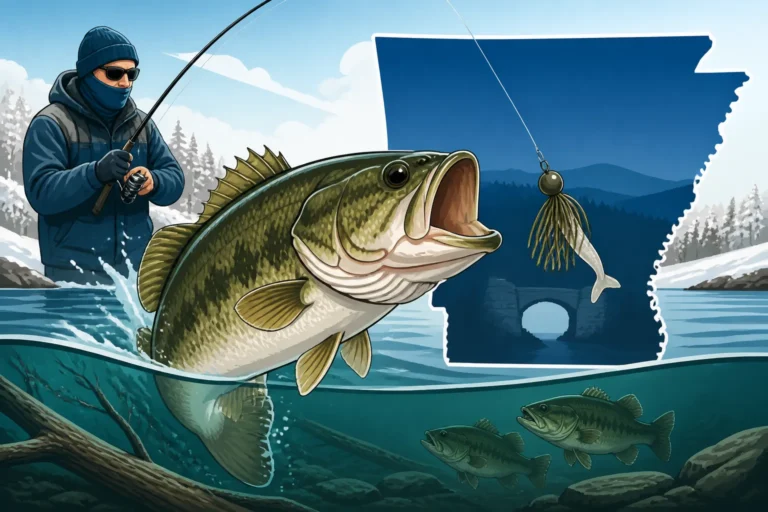
Winter bass fishing in Arkansas can be tough, but it can also be incredibly rewarding if you understand how bass behave in cold water. Gone are the aggressive strikes and frenetic feeding frenzies of spring and fall. Instead, you'll be dealing with sluggish fish that conserve energy, move slowly, and require precise presentations. But fear not, catching a hefty winter bass is a true testament to an angler's skill!
Deep Suspending Bass: Finesse is Key
When water temperatures plummet into the low 40s and even into the 30s, bass often suspend in deep water, typically around baitfish schools or over significant structure like deep points, humps, or channel bends. These fish are not actively chasing, but rather "holding" or "hovering," waiting for an easy meal to come by.
This is where finesse techniques truly shine. Drop-shot rigs, spy baits, and suspending jerkbaits are invaluable. Your goal is to present a bait that stays in the strike zone for an extended period, tempting a lethargic bass into biting. Use your fish finder to locate schools of baitfish and mark any suspended bass. Then, position your boat directly over them or slightly upwind/upcurrent and carefully present your lure. A slow, subtle retrieve is paramount; don't expect a violent strike. Often, it will feel like just a little "tick" or added weight on your line. A good quality fluorocarbon line can also enhance sensitivity in these deep, cold water scenarios, which you can easily find on Amazon. If you're struggling to locate these deeper fish, consider exploring our guide on Winter Fishing Patterns on Arkansas Reservoirs.
Warm Water Discharges and Thermal Refuges
While most of the lake might be frigid, some areas offer a thermal refuge for bass and baitfish alike. Power plants, natural springs, or even sections of rivers with a warmer inflow can create pockets of slightly warmer water. These areas can concentrate fish, making them prime targets during the coldest months.
Look for these warmer water sources, as even a few degrees can make a significant difference. Bass will often stack up in these areas, even if they are relatively shallow. Techniques that work in deep suspending situations can still apply, but also consider slow-rolling spinnerbaits or jigs around cover in these warmer zones. The fish here might be slightly more active than those in other parts of the lake, offering a better chance for a reaction strike. Structure like rip-rap, bridge pilings, or submerged timber in these warmer areas can be especially productive. Don't overlook the importance of finding current breaks, as bass will often position themselves out of the main flow, conserving energy while waiting for prey.
Mastering Seasonal Transitions
Understanding the nuances of each season is crucial, but true bass fishing mastery comes from recognizing and adapting to the transitions between them. Bass don't just flip a switch; their behavior shifts gradually with changes in water temperature, daylight hours, and available forage.
The Role of Water Temperature
Water temperature is arguably the single most important factor influencing bass behavior. It dictates their metabolism, their comfort levels, and ultimately, where they'll be and what they'll eat.
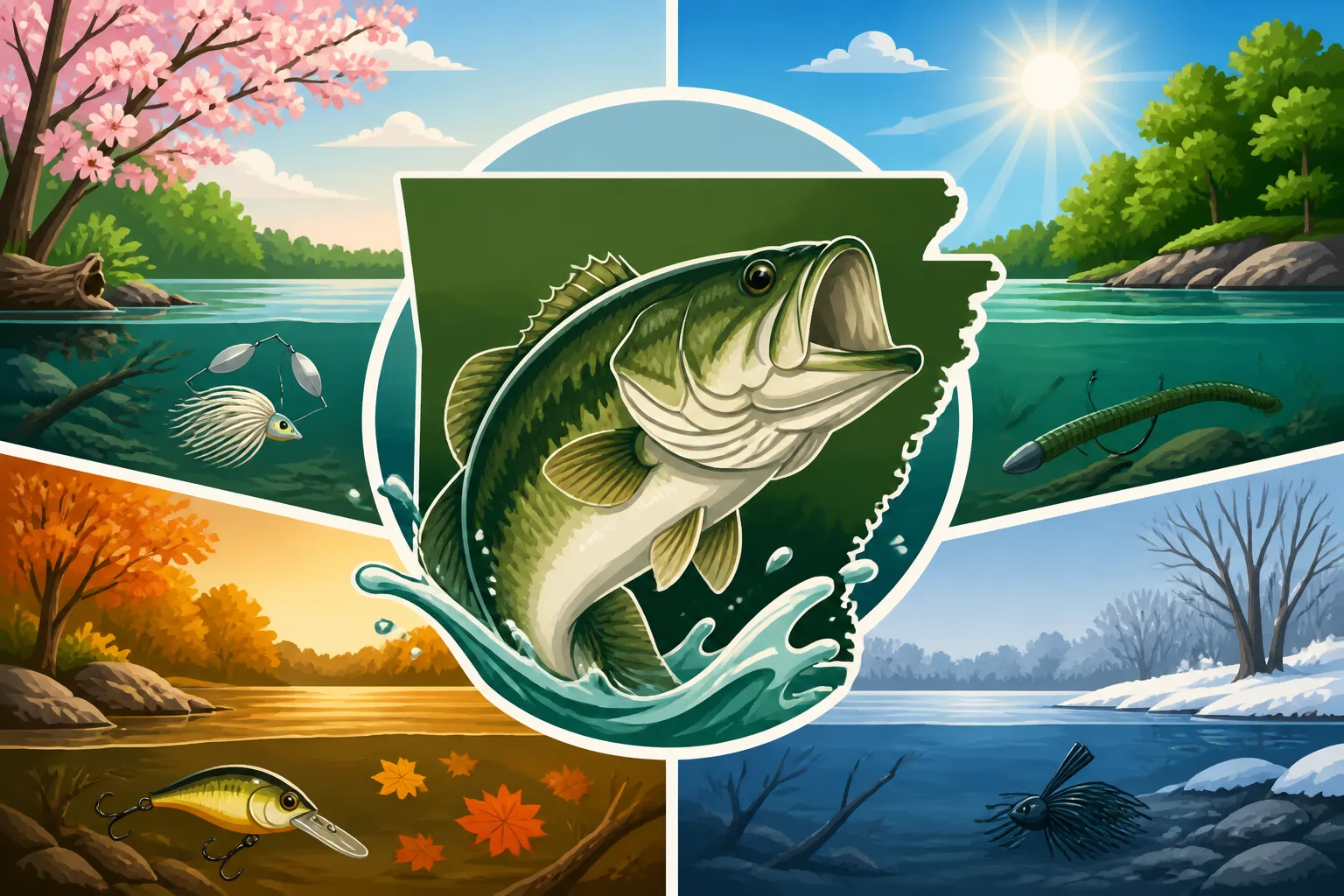
| Season | Typical Water Temperature Range (Fahrenheit) | Key Bass Behavior | Primary Lure Categories |
|---|---|---|---|
| Early Spring (Pre-Spawn) | 45-55 | Staging, feeding aggressively, migrating shallow | Lipless Crankbaits, Jerkbaits, Spinnerbaits, Jigs |
| Late Spring (Spawn) | 55-65 | Bedding, protecting nests, territorial | Soft Plastics (Texas, Wacky rigs), Jigs |
| Early Summer | 65-75 | Post-spawn recovery, moving deeper, some shallow | Finesse Worms, Jigs, Topwater (low light) |
| Mid-Late Summer | 75-85+ | Deep water, thermocline, nocturnal feeding | Deep Crankbaits, Drop-shots, Jigs, Topwater (night) |
| Early Fall (Feeding Frenzy) | 60-70 | Chasing baitfish, aggressive feeding | Crankbaits, Jerkbaits, Spinnerbaits, Alabama Rigs |
| Late Fall (Transition) | 50-60 | Slowing down, seeking deeper cover | Jigs, Finesse Worms, Suspending Jerkbaits |
| Winter | 35-49 | Deep suspending, lethargic, thermal refuges | Drop-shots, Spoons, Suspending Jerkbaits, Jigs |
Keeping an eye on a quality thermometer is perhaps the most valuable tool an angler can have. Many fish finders now integrate water temperature readings, but a simple handheld thermometer can also do the trick. A change of just a few degrees can indicate a shift in patterns, prompting you to change your tactics. This constant monitoring helps you stay ahead of the fish and predict their movements. For general fishing advice across all species, you might also find our guide on the Best Time of Year to Fish in Arkansas incredibly useful.
Reading the Weather and Conditions
Beyond temperature, other weather factors play a huge role. Cold fronts can shut down a bite, pushing fish deeper and making them more sluggish. Warm fronts can energize them, particularly in spring and fall. Overcast days often keep bass shallower for longer, especially in summer. Wind can create current, activate baitfish, and improve fishing, but too much wind can make boat control and casting difficult.
Understanding how these elements interact with the seasonal patterns is what separates good anglers from great ones. For example, a sudden cold front in spring might push pre-spawn bass back out to deeper staging areas, requiring you to switch from shallow crankbaits to deeper jigs or shaky heads. Conversely, a warm, cloudy day in summer might extend the topwater bite well into the morning, defying typical hot-weather expectations. Always pay attention to the forecast, observe the conditions on the water, and be willing to experiment and adapt.
Gear and Equipment Considerations
Having the right gear for each season can also make a huge difference. You wouldn't use a heavy flipping stick for a finesse winter bite, nor a light spinning rod for slinging big swimbaits in the fall.
- Rods and Reels: Match your rod and reel setup to the technique. Heavier baitcasting gear for power fishing (crankbaits, jigs) and lighter spinning gear for finesse presentations (drop-shots, shaky heads). Many anglers find reliable and affordable options for a range of fishing gear on Amazon, ensuring they have the right tool for every job.
- Line: Fluorocarbon offers excellent sensitivity and low visibility for deep or clear water; monofilament is more forgiving for topwater and reaction baits; braided line excels in heavy cover.
- Lure Selection: Stock your tackle box with a variety of lures suitable for each season's primary techniques. Don't forget different sizes and colors, as these can be crucial.
- Electronics: Modern fish finders are invaluable for locating structure, baitfish, and bass, especially in deeper water. Knowing how to interpret what your sonar is telling you will drastically improve your success.
Ultimately, bass fishing in Arkansas, or anywhere for that matter, is a continuous learning process. Each season presents its own set of challenges and rewards. By understanding the fundamental behaviors of bass during each phase of the year and adapting your techniques accordingly, you'll be well on your way to consistent success on the water.
Disclaimer
Fishing conditions and regulations in Arkansas can change. Always consult the latest Arkansas Game and Fish Commission (AGFC) regulations before heading out. This guide provides general information and should not replace official rules and guidelines. Be safe and practice responsible angling.