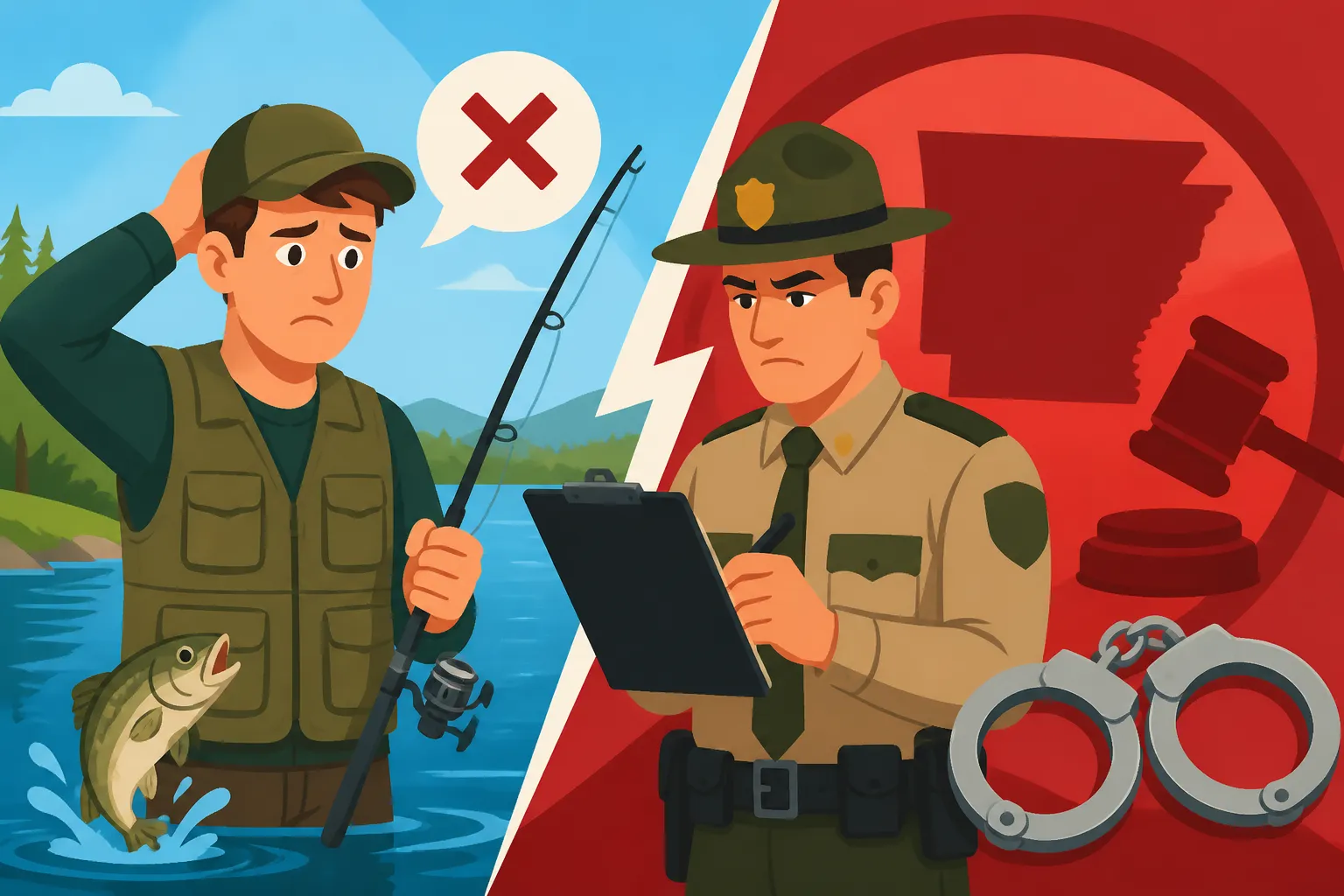
Penalties for Fishing Without a License in Arkansas
There’s nothing quite like the feeling of anticipation when you’re headed out to your favorite fishing spot in Arkansas, rod in hand, ready for a peaceful day on the water. But that idyllic scene can turn into a real headache, and quickly, if you haven't taken care of one simple, yet crucial, detail: your fishing license. Many anglers, especially those new to the state or just getting back into the sport, sometimes overlook this step, only to find themselves facing unexpected and costly penalties. This guide is here to walk you through exactly what can happen if you're caught fishing without a valid license in the Natural State, so you can avoid those frustrating situations and just focus on reeling in the big one.
Why a Fishing License is Absolutely Essential in Arkansas
It might feel like just another fee, another piece of paper, but your fishing license in Arkansas is so much more than that. It's not just about adhering to a rule; it's about supporting the very waters you love to fish and respecting the system that keeps them healthy and abundant for everyone.
Funding Conservation Efforts and Resource Management
Every single dollar collected from fishing license sales in Arkansas goes directly back into the state's incredible fisheries and wildlife. Think about it: that money funds vital programs like fish stocking, habitat restoration projects, research into fish populations, and the enforcement of regulations designed to ensure sustainable fishing for generations to come. Without these funds, the lakes, rivers, and streams we cherish wouldn't be nearly as productive or as enjoyable. It’s a collective investment in the future of Arkansas fishing. When you purchase your license, whether it's an Arkansas Fishing License Rules and Costs or an Arkansas Fishing License Types Explained, you're contributing to healthy ecosystems, which ultimately means better fishing for all of us.
Maintaining Sustainable Fish Populations for Future Anglers
The Arkansas Game and Fish Commission (AGFC) works tirelessly to manage fish populations, setting daily limits, size restrictions, and fishing seasons to prevent overfishing and protect vulnerable species. These regulations, which are directly supported by license sales, are crucial for maintaining balance in our aquatic environments. Imagine if everyone could just take as many fish as they wanted, whenever they wanted, without any oversight. Our lakes like Lake Ouachita or our famed White River would be depleted in no time. Your license is a commitment to responsible angling, ensuring that your grandkids will have just as good a chance to catch a trophy bass or a feisty trout as you do today. It's a small price to pay for such a significant impact.
The Legal Repercussions of Unlicensed Fishing
Getting caught fishing without a license isn't just a slap on the wrist; it's a legal matter that can quickly escalate from an inconvenience to a serious problem. Game wardens in Arkansas are dedicated professionals, and part of their job is ensuring that everyone on the water is playing by the rules.
Understanding Arkansas State Law Regarding Fishing Licenses
In Arkansas, fishing without a valid license is generally classified as a Class C misdemeanor. Now, don't let the word "misdemeanor" fool you into thinking it's minor. A Class C misdemeanor carries potential penalties that can include significant fines, court costs, and even jail time, though jail time is rare for a first offense of this nature. The specifics can vary based on where you are caught, the discretion of the enforcing officer, and whether you're also committing other violations (like fishing out of season or exceeding creel limits). It's not just a warning; it's a legal citation that requires a response, usually a court appearance or payment of a fine. This is why knowing Arkansas Fishing Regulations Guide is so important before you ever cast a line.
How Game Wardens Enforce License Requirements
You might wonder, "Do game wardens check for fishing licenses in Arkansas?" The answer is a resounding yes! Arkansas Game and Fish Commission officers are constantly patrolling public and private waters across the state, from the smallest ponds to the largest reservoirs and rivers. They are trained to identify individuals who may be fishing illegally, and they have the authority to stop and inspect anglers to ensure compliance with all state fishing laws, including license requirements.
It’s not uncommon for a game warden to approach you while you’re fishing from the bank at a state park, or pull alongside your boat on Beaver Lake. They'll politely ask to see your fishing license and photo identification. If you can't produce a valid license, they will proceed with issuing a citation. They aren't trying to ruin your day; they're simply doing their job to protect our natural resources and ensure fair play among all anglers. It's best to always have your physical license or digital proof readily accessible, perhaps in a waterproof pouch you purchased from a brand like Amazon, right alongside your tackle.
Financial Penalties and Fines
Let's talk about the cold, hard cash. Getting caught without a license is going to cost you, and it will almost certainly cost more than the price of the license itself. These financial penalties are designed to deter illegal activity and make sure that those who try to skirt the rules still contribute to the system they’re circumventing.
Base Fines for Fishing Without a License
While the exact fine can vary by jurisdiction and the specific circumstances, most first-time offenses for fishing without a license in Arkansas carry a base fine that typically ranges from $100 to $500. This is just the starting point. For instance, if you were planning a weekend trip and thinking about the Resident Annual Fishing License Cost in Arkansas, which is a modest $10.50, imagine the shock of a $200 fine. That quick calculation shows you it's simply not worth the risk.
Consider this: a Nonresident Annual Fishing License Cost in Arkansas, while higher than a resident one, is still far less than the fine you’d receive for fishing without it. It's an investment, not an expense, when you weigh it against the potential penalties. These fines aren't just arbitrary numbers; they are set to reflect the seriousness of fishing without proper authorization and the direct impact it has on the state's conservation efforts.
Court Costs and Additional Fees
Beyond the base fine, you'll also likely be responsible for court costs and administrative fees. These can add another $50 to $150 (or more!) to your total bill, depending on the county and the specific court involved. Suddenly, that $100 base fine could easily balloon to $250 or more.
If you fail to appear in court or neglect to pay your fine by the due date, you could face even more severe consequences, including additional fines, warrants for your arrest, or even a suspension of your driver's license. It’s a cascading effect that starts with what seems like a small oversight but can quickly become a much larger legal and financial burden. Always remember that ignoring a citation is never the answer.
Here’s a quick overview of potential costs for a first offense:
| Item | Estimated Cost Range (First Offense) |
|---|---|
| Base Fine | $100 – $500 |
| Court Costs | $50 – $150 |
| Total Estimated Cost | $150 – $650+ |
| Compared to: | |
| Resident Annual License | $10.50 |
| Nonresident Annual License | $60.00 |
Escalation for Repeat Offenders
If you're caught fishing without a license more than once, the penalties become significantly steeper. Repeat offenses can lead to much higher fines, mandatory court appearances, and a higher likelihood of license suspension or revocation. The AGFC takes repeat violations seriously, as they demonstrate a pattern of disregard for the state’s conservation laws. You might find yourself facing fines upwards of $500 for a second offense, possibly combined with an enforced period where you are completely prohibited from obtaining any fishing or hunting licenses in Arkansas. It's a strong incentive to get it right the first time and ensure you're always properly licensed.
Non-Monetary Consequences Beyond the Wallet
While the financial hit is often the most immediate concern, fishing without a license can lead to other, less tangible, but equally impactful consequences. These can affect your ability to fish in the future and even your standing in the community.
License Suspension or Revocation
One of the most significant non-monetary penalties is the potential suspension or revocation of your fishing privileges. The Arkansas Game and Fish Commission has the authority to suspend your ability to purchase any hunting or fishing licenses for a set period, often ranging from one to five years, especially if you're a repeat offender. This means no more casting lines on Lake Maumelle or fly-fishing the Little Red River for you, at least not legally, for that duration.
Imagine sitting out an entire bass season, or missing prime trout fishing because of an administrative error or a deliberate choice not to get a license. It’s a frustrating consequence that can be easily avoided. This extends beyond fishing; sometimes, hunting privileges can also be impacted, especially for more severe or multiple violations. This makes getting a simple Arkansas Fishing License Rules and Costs even more paramount.
Confiscation of Gear and Catch
While less common for a simple "no license" offense, in some cases, especially if combined with other violations like exceeding limits or using illegal methods, game wardens have the authority to confiscate your fishing gear (rods, reels, tackle boxes, even your boat in extreme circumstances) and any fish you may have caught. Losing your prized rod or having your day’s catch seized is not only a financial loss but also a deeply disappointing experience. It's a stark reminder that illegal fishing comes with real-time consequences on the water.
Impact on Reputation and Record
A misdemeanor on your record, even a Class C, can have subtle but lasting effects. While fishing without a license isn't a violent crime, it's still a legal infraction that becomes part of your public record. This could potentially come up in certain background checks, though it's unlikely to impact most employment opportunities. More importantly, it can damage your reputation among fellow anglers and within the local community, especially if you're known as someone who respects the outdoors. Many anglers take conservation seriously, and being seen as someone who disregards those efforts can lead to a loss of respect. It’s a good reason to always practice responsible angling and ensure you're squared away with your Arkansas Fishing License Types Explained.
Preventing the Problem: Easy Steps to Stay Legal
Avoiding the stress, fines, and potential legal issues associated with fishing without a license is incredibly easy. It boils down to a few simple habits and being proactive.
How and Where to Purchase Your License
Getting your Arkansas fishing license is a breeze these days. You have several convenient options:
- Online: The easiest and quickest way is through the Arkansas Game and Fish Commission website. You can purchase and print your license from the comfort of your home, or even buy it on your smartphone while you're at the boat ramp. This is often the best route for busy individuals. Learn more about How to Buy an Arkansas Fishing License Online.
- Retailers: Many sporting goods stores, bait shops, and even some large retailers like Walmart and Academy Sports + Outdoors across Arkansas sell fishing licenses. This is a great option if you prefer an in-person transaction or need to grab some last-minute bait and tackle anyway.
- AGFC Offices: You can also purchase licenses directly from any AGFC regional office.
Remember to bring a valid photo ID and proof of residency if you're purchasing a resident license. It's a good idea to keep a digital copy on your phone and a printed copy in your tackle box or wallet. You can even find waterproof cases for your license on Amazon to keep it safe from the elements.
Understanding License Requirements and Exemptions
It's crucial to know who needs a license and who might be exempt.
- Age Requirements: Generally, residents 16 years and older and non-residents 16 years and older must possess a valid fishing license. However, there are nuances. For example, "Do Kids Need a Fishing License in Arkansas?" is a common question, and generally, children under 16 do not, but it's always best to check the most current regulations.
- Senior Exemptions: Arkansas residents 65 years and older have specific rules. They can obtain a special lifetime license or may be exempt from the annual requirement altogether. This is covered in detail in the Senior Exemption from the Fishing License Requirement.
- Special Weekends: Arkansas also hosts an annual Arkansas Free Fishing Weekend Guide, usually the first full weekend of June, where residents and non-residents can fish without a license. This is a fantastic opportunity to try fishing or introduce someone new to the sport, but remember it's only for a limited time!
- Trout Permits: If you plan on keeping trout in certain waters, you'll also need to purchase an Arkansas Trout Permit in addition to your regular fishing license. This is a common oversight for many anglers.
Always take a moment to double-check the current regulations, as they can sometimes change from year to year. A quick visit to the AGFC website can clear up any confusion.
Keeping Your License Current and Accessible
An expired license is just as bad as no license at all. Make it a habit to check the expiration date on your license each year. Many anglers choose to purchase an annual license that runs for 12 months from the date of purchase, rather than a calendar year, to simplify things. You can even set a reminder on your phone or mark your calendar to ensure you renew it well before your next fishing trip. Options like Renewing an Arkansas Fishing License, online make this process effortless.
Beyond being current, make sure your license is always with you when you're fishing. Keep it protected, perhaps laminated or in a waterproof holder. If a game warden asks to see it, being able to produce it quickly and clearly will make the interaction smooth and pleasant. It’s all about being prepared and showing that you respect the rules and the valuable resources we all share.
Common Misconceptions About Fishing Licenses
There are a few myths and misunderstandings floating around about fishing licenses in Arkansas that often lead anglers into trouble. Let's clear some of these up.
"I'm Just Catch and Release, I Don't Need a License"
This is a really common misconception, but it's absolutely false. In Arkansas, if you are actively attempting to catch fish, regardless of whether you intend to keep them or immediately release them, you are required to have a valid fishing license. The act of fishing itself, which includes casting a line, setting a trap, or any other method of attempting to harvest fish, triggers the license requirement.
Whether you're practicing ethical catch-and-release fly-fishing on the White River or simply enjoying a relaxing afternoon with a bobber and worm, if your hook is in the water, your license needs to be current. The AGFC's regulations are designed to manage angling pressure and collect conservation funds from anyone participating in the sport, not just those harvesting fish.
"No One Ever Checks Anyway"
Another dangerous assumption! As we discussed, Arkansas Game and Fish Commission officers are highly visible and active across the state. They patrol popular fishing spots, boat ramps, state parks, and even remote areas. Their presence isn't always immediately obvious, but they are out there, ensuring compliance.
It's not a matter of "if" you'll get checked, but "when." Relying on the hope that you won't be seen or asked for your license is a gamble with expensive consequences. It’s far better to invest the small amount of time and money to ensure you’re legal, rather than risk a run-in with law enforcement that can turn your peaceful fishing day into a costly legal hassle.
"My Friend Has a License, So I'm Covered"
This is another common mistake, especially for groups fishing together. A fishing license is an individual document and is not transferable. Each person actively fishing, who is old enough to require a license, must have their own valid license. You cannot share a license with a friend, spouse, or family member, even if you are fishing from the same boat or bank.
If you're out with a buddy, and only one of you has a license, the unlicensed individual is still subject to the full penalties if caught. This applies even if you're just "helping" someone cast or retrieve a line if you don't have your own. Ensure everyone in your party who is participating in angling has their own Arkansas Fishing License Rules and Costs. It’s the only way to guarantee a worry-free day for everyone.
Getting out on the water in Arkansas is a privilege, and holding a valid fishing license is your way of honoring that privilege and contributing to the amazing natural resources we all enjoy. The penalties for fishing without a license are real, ranging from significant fines and court costs to the potential loss of your fishing privileges. But all of this is easily avoidable with a little planning and a small investment. So, before you head out to your favorite spot, take a moment to ensure your license is current and with you. That way, you can focus on the tug on your line, the beauty of the Natural State, and the pure joy of a day spent fishing, rather than worrying about an unexpected visit from a game warden.
Disclaimer
The information provided in this guide is for general informational purposes only and does not constitute legal advice. While we strive to provide accurate and up-to-date information, fishing regulations and penalties can change. Always consult the official Arkansas Game and Fish Commission (AGFC) website or contact them directly for the most current and specific legal requirements before engaging in any fishing activities.