Crappie Fishing Tips for Arkansas Timber Lakes
Ever feel like those beautiful, timber-filled lakes in Arkansas are just laughing at you as you try to fish for crappie? It’s a common frustration – you know those slabs are in there, nestled deep within the flooded timber and brush piles, but getting to them without snagging every other cast feels like an impossible mission. This guide is going to walk you through exactly how to tackle those challenging but incredibly rewarding timber lakes, turning frustration into fish on the stringer, especially when targeting crappie.
Understanding Arkansas's Timber Lakes and Crappie Behavior
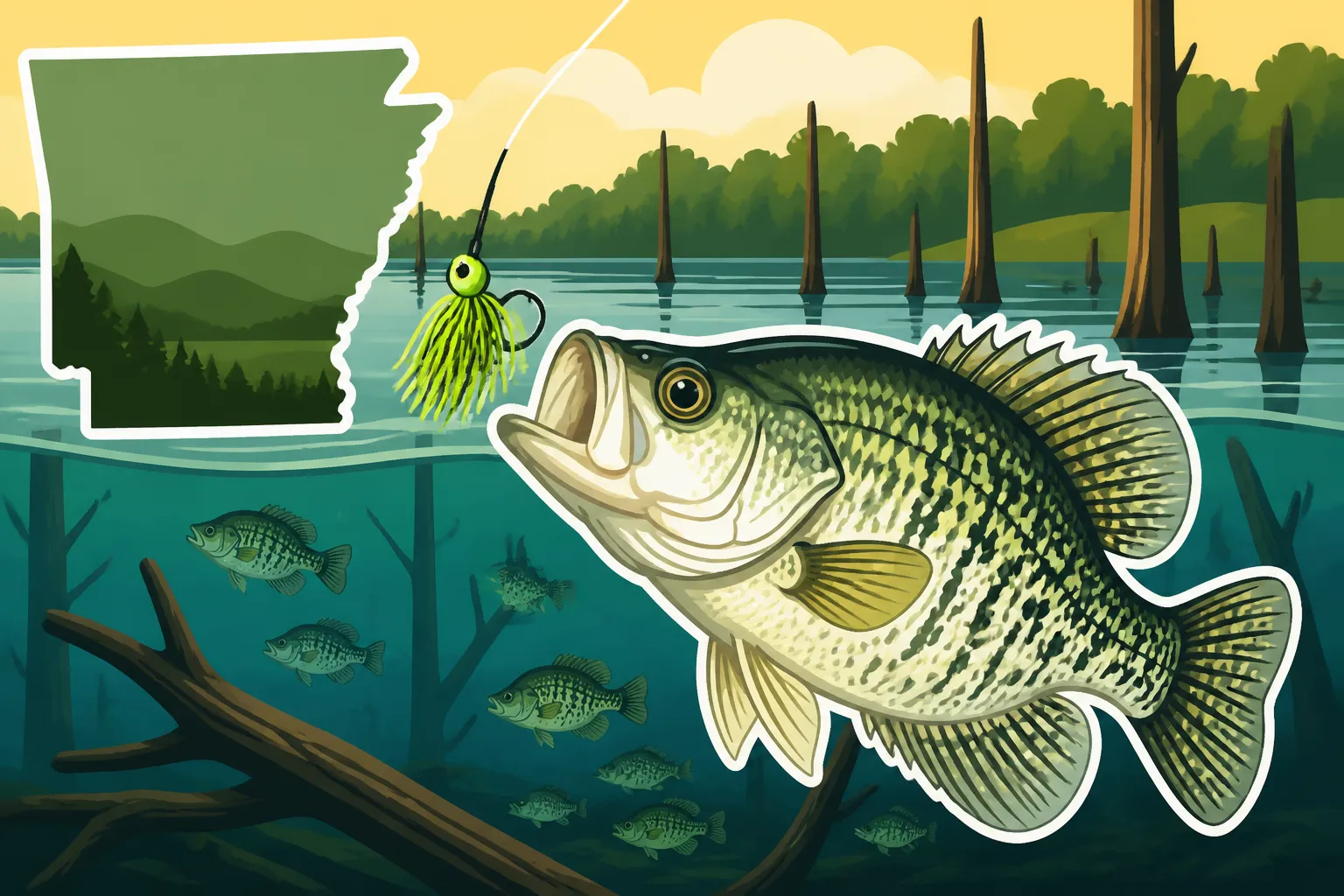
Arkansas is blessed with countless reservoirs and natural lakes, many of which were formed by damming rivers, leaving vast expanses of standing timber, submerged stumps, and brush piles. These aren't just pretty backdrops; they're vital habitats that crappie absolutely love. Understanding why crappie flock to these areas is the first step in learning how to effectively fish them.
Why Crappie Love Wood
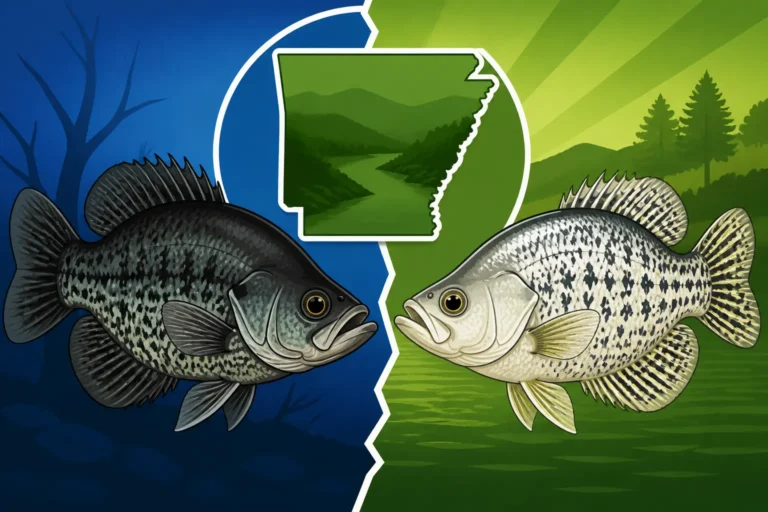
Crappie, both black and white, are ambush predators and structure-loving fish. That dense underwater forest of timber, stumps, and brush offers everything they need: protection from larger predators, shade from the sun, and an abundance of baitfish that also seek refuge in the cover. In short, it’s their safe haven and their dinner table all rolled into one. During colder months, these structures offer thermal refuge, and in warmer periods, they provide crucial shade and deeper, cooler water. It's a year-round attraction.
Imagine you're a crappie, and a bald eagle or a big largemouth bass is looking for a meal. Where would you hide? Among the dense branches of a submerged tree, of course! That's precisely why these areas are crappie magnets. They feel secure, and they know baitfish like shad and minnows are going to be there, hiding in the same cover. This constant supply of food and shelter means if you can figure out how to navigate and fish these tricky spots, you're often rewarded with some of the best crappie fishing available.
Navigating the Underwater Forest
Fishing timber lakes successfully isn't just about finding the fish; it's about being able to get your boat (or kayak) into position and present your lure effectively without constantly getting hung up. This is where patience and observation come into play. Look for subtle cues on the water's surface that indicate submerged timber – changes in current, swirling water, or even patches of calmer water that might suggest an obstruction below. Many anglers use their electronics extensively, but even without fancy graphs, you can learn to "read" the water.
When you're approaching an area with visible timber, or where you suspect timber, slow down considerably. Use a trolling motor if you have one, or paddle carefully if you're in a kayak. The goal is to move quietly and deliberately, disturbing the fish as little as possible. Trying to rush through dense timber will inevitably lead to snags, frustration, and potentially spooking the very crappie you're trying to catch. It's a slow dance, not a sprint, and mastering this navigation is as crucial as mastering your casting technique.
Essential Gear for Timber Lake Crappie Fishing
You can't go into a timber lake battle with the wrong tools. The right gear choice makes all the difference between spending your day tying on new jigs and actually catching fish. From rods and reels to lines and lures, every component plays a role in navigating the snags and pulling out those big slabs.
Rods and Reels for the Fight
For timber fishing, you'll want a rod with a bit more backbone than your typical ultralight crappie setup. A medium-light or even a medium-power spinning rod, around 6.5 to 7.5 feet in length, is ideal. This extra power helps you pull crappie out of the thick cover and, crucially, helps you free your jig when it inevitably gets snagged. A faster action tip is still beneficial for detecting those subtle crappie bites, but the stronger mid-section is your friend in the timber.
Pair this with a reliable spinning reel in the 1000 to 2500 size range. The reel should have a smooth drag system, which is paramount for fighting fish that immediately try to bury themselves deeper into the brush. While you might be tempted by ultralight gear, remember you're often trying to horse fish away from snags, so a little extra strength in your setup is a wise investment. You can find many durable and affordable options on Amazon, perfect for handling the rough conditions of timber fishing.
Line Choices to Beat the Snags
This is perhaps the most critical gear decision for timber fishing. You need line that can withstand abrasion, has good sensitivity, and enough strength to pull out of minor snags.
| Line Type | Pros | Cons | Ideal Timber Use |
|---|---|---|---|
| Monofilament | Stretchy (forgiveness on hard bites), good knot strength, floats, inexpensive | Lower sensitivity, moderate abrasion resistance, more memory | Great for slip bobber setups where stretch can prevent hook pulls; good for beginners due to its forgiving nature. |
| Fluorocarbon | High sensitivity, low stretch, nearly invisible underwater, excellent abrasion resistance | More expensive, sinks quickly, less forgiving on hooksets | Excellent as a leader material for braided line, or as a main line in clearer water where invisibility is key. Good for vertical jigging. |
| Braided Line | Extremely strong for its diameter, zero stretch (max sensitivity), superior abrasion resistance | Highly visible, no stretch (can pull hooks), can fray on sharp objects | Best for main line applications when fishing directly in heavy timber; allows you to feel the lightest bite and often "saw" through minor snags. |
Many experienced timber anglers opt for a main line of 10-15 lb braided line. This strong, no-stretch line gives you excellent feel for those subtle crappie bites and the power to often rip jigs free from minor snags. Because braided line is highly visible, you'll want to tie on a 12-24 inch leader of 6-8 lb fluorocarbon. The fluorocarbon provides invisibility near the bait and still offers good abrasion resistance. You can find bulk spools of both braided line and fluorocarbon leader material on Amazon. Don't skimp on line; it's your direct connection to the fish and your defense against the timber.
Jigs and Bobbers for Timber Success
When it comes to lures, jigs are king for crappie in timber. Small marabou jigs, tube jigs, or soft plastic grubs in sizes from 1/32 oz to 1/8 oz are standard. The key is to have a variety of colors, from natural browns and greens to brighter chartreuse and pink, because crappie can be picky about color on any given day. Carry plenty, because you will lose some in the timber.
For deep timber, a vertical jigging approach with a heavier 1/8 oz jig can be effective. If fish are suspended higher, a slip bobber setup is invaluable. A slip bobber allows you to set your bait depth precisely, even in areas with overhead cover, and easily cast into tight spots. Choose a bobber that is sensitive enough to show light bites but can also support the weight of your jig and any live bait you might be using. How to Rig a Jig for Crappie Fishing will give you some excellent starting points for your jigging setups.
Key Techniques for Fishing Crappie in Wood
Now that you've got the right gear, it's time to talk strategy. Fishing timber for crappie isn't about casting wildly; it's about precision, patience, and understanding how to coax fish out of their woody fortresses.
Vertical Jigging Through the Structure
One of the most effective techniques for timber crappie, especially when they're holding tight to vertical structure like standing trees, is vertical jigging. This means positioning your boat directly over or very close to the timber you want to fish. With your trolling motor, slowly move along the edge of a timber line or through a sparse patch of flooded trees.
Drop your jig straight down, letting it fall until it's just above or within the crappie's suspected depth. Watch your line closely for any hesitation or twitch as the jig falls; crappie often hit on the drop. Once at depth, impart a subtle jigging motion – small lifts and drops of the rod tip, just enough to make the jig dance enticingly. Remember, you're not trying to cover a lot of water with this technique; you're trying to present a lure directly in front of a crappie that's tucked into the wood. How to Find Crappie in Deep Water can offer more insights into pinpointing those submerged honey holes.
The Art of the Slip Bobber
Slip bobbers are a timber angler's best friend, particularly when crappie are suspended in the water column or around horizontal cover like sunken logs or brush piles. The beauty of a slip bobber is its adjustability. You can quickly change the depth of your jig or minnow by sliding the bobber stop up or down your line. This is crucial when crappie are holding at a specific depth or when you need to clear varying levels of submerged branches.
To use a slip bobber, cast your baited hook or jig past the cover you want to fish, then slowly reel it back towards the timber. Let your offering slowly descend right into those fishy pockets. The bobber will sit on the surface, indicating bites even if they're light. When a crappie takes the bait, the bobber will dip, lay flat, or disappear entirely. Setting the hook promptly is key. This method is also fantastic for kids, as watching the bobber go down is half the fun! Learn more about this versatile setup in How to Slip Bobber Fish for Crappie.
Casting into Pockets and Openings
While vertical presentations are often key, sometimes crappie are holding just outside the densest timber, or in small openings within the wood. This is where precision casting comes into play. Look for lanes of slightly clearer water, small eddies, or gaps between standing trees. Use a light jig and try to cast it accurately into these open pockets.
The trick here is to make minimal noise and disturbance. A quiet entry of your jig into the water, followed by a slow retrieve or a patient soak, can draw crappie out of the adjacent cover. If you're using a small boat or kayak, you might even be able to gently paddle into these areas. Practice your casting accuracy, and remember that sometimes the fish aren't in the absolute thickest stuff, but rather on the edges, waiting for an easy meal to pass by.
Seasonal Strategies for Timber-Bound Crappie
Crappie don't just sit in the same spot year-round in timber lakes. Their behavior changes with water temperature, light conditions, and spawning cycles. Understanding these seasonal shifts will help you predict where the crappie will be hiding within the wood.
Spring: The Spawn and Pre-Spawn Frenzy
Spring is arguably the most exciting time for crappie fishing in timber lakes. As water temperatures begin to rise into the high 50s and low 60s, crappie move from deeper wintering holes towards shallower timber and brush piles to stage for the spawn. They'll congregate heavily around submerged wood, often in water depths of 5-15 feet.
During this pre-spawn period, crappie are actively feeding, bulking up for the energy-intensive spawning process. Focus on the timber closest to deeper water access points. Both vertical jigging and slip bobbers with live minnows or small jigs are highly effective. Once the water hits the mid-60s, crappie will move even shallower, often into 2-6 feet of water, seeking out submerged stumps, roots, and brush to lay their eggs. This is when you can find them tightly packed in the densest cover. Check out When Do Crappie Spawn in Arkansas for more details on timing.
Summer: Deeper Timber and Shade
As the scorching Arkansas summer sets in and water temperatures climb, crappie retreat to the cooler, deeper parts of the timber. They'll often suspend in the shade of the submerged trees, frequently found anywhere from 10 to 25 feet deep, depending on the lake and specific timber structure. Look for the densest, tallest timber stands that provide the most shade and cooler water.
Vertical jigging becomes absolutely crucial during the summer. Using your fish finder to locate schools of crappie suspended within the timber is invaluable. Drop small jigs or live minnows directly to their depth. Early mornings, late evenings, or even night fishing can also be productive during summer, as crappie may move slightly shallower under low light conditions. You might also find them congregated around specific structures like bridge pilings or deep brush piles that offer both cover and depth.
Fall: Migration and Feeding Activity
Fall brings a refreshing cool-down to Arkansas waters, and with it, a renewed feeding frenzy for crappie. As water temperatures start to drop from the 70s into the 60s, crappie begin to move out of their deep summer haunts and scatter throughout the timber, aggressively feeding to build up fat reserves for winter. They can often be found in a wider range of depths, from shallower cover in the mornings and evenings to slightly deeper timber during midday.
This is a great time to experiment with both vertical presentations and casting into timber pockets. Crappie are often more aggressive, making them more willing to chase a jig. Look for timber at various depths, particularly where baitfish are congregating. The cooling water stimulates their metabolism, and they'll be actively hunting. Best Time to Catch Crappie in Arkansas offers general guidance that applies well to timber fishing during this productive season.
Winter: Deep and Concentrated
Don't put away your crappie gear just because it's cold! Winter can be one of the most rewarding times to fish timber lakes, though it requires patience. Crappie become much less active in cold water, but they also tend to stack up in very specific, deep timber locations. Look for the deepest, most vertical timber stands, often near old river channels or sharp drop-offs, in depths of 20-40 feet or even more.
The key to winter timber crappie is precise boat positioning and a subtle presentation. Vertical jigging with very small jigs (1/32 oz or 1/16 oz) or tiny live minnows is almost always the most effective method. Crappie bites can be incredibly light – sometimes feeling like just a slight pressure or the line going "mushy." Pay close attention to your electronics to pinpoint those deep schools, and then present your bait directly to them. While challenging, catching a limit of thick winter crappie from deep timber is an incredibly satisfying experience.
Timber Lake Hot Spots and Smart Fishing Practices
Knowing where to look within a timber lake can significantly increase your chances of success. It's not just any timber, but specific types of timber and related structure that crappie prefer. Beyond location, practicing smart fishing techniques ensures both your safety and the health of the fishery.
Identifying Crappie Magnets within Timber Lakes
Not all timber is created equal for crappie. While any submerged wood can hold fish, certain features tend to concentrate them:
- Old River Channels: When lakes are impounded, old river channels often become submerged. Where these channels intersect with standing timber, or where timber lines the channel edges, you'll find prime crappie habitat. The channel provides deeper water access, and the timber provides cover.
- Tree Lines and Edges: Crappie often position themselves along the visible or submerged edges of dense timber patches. These edges offer easy access to open water for feeding, while still providing quick escape to safety.
- Brush Piles: Many anglers and wildlife agencies intentionally sink brush piles in timber lakes. These piles, often made of cedar or other long-lasting wood, are crappie condos. Learn how to identify them on your sonar or by looking for subtle markers on shore.
- Timber with Deeper Access: Crappie will use timber at various depths, but especially during colder or warmer months, they'll favor timber that has immediate access to deeper water. This allows them to quickly move up or down the water column as conditions change. Fish Species Found in Timber-Filled Refuge Lakes provides additional insights into common habitats.
Safety and Conservation in Timber Lakes
Fishing heavy timber can be challenging, and safety should always be your top priority. Navigating areas with submerged timber can be hazardous for boat props and lower units. Always proceed slowly and cautiously, especially in unfamiliar waters. Wear your life vest, and tell someone where you're going and when you expect to return.
From a conservation standpoint, remember to adhere to all Arkansas Fish Size and Daily Limits for crappie, which might include specific exceptions for certain lakes like Lake Monticello Crappie Limit Drops to 15 Fish Per Day or Lake Cargile Crappie Limit Rules. Selective harvest is a great practice – keep enough for a meal, but consider releasing the largest breeding females to maintain healthy crappie populations. Using appropriate gear, like braided line, can also help you retrieve snagged lures, reducing underwater debris. Respect the lake, the fish, and other anglers, and your time on the water will be much more enjoyable.
Disclaimer
This article is for general informational purposes only and does not constitute professional advice. Laws, prices and regulations vary by location and change over time. Consult a qualified professional for guidance on your specific situation.