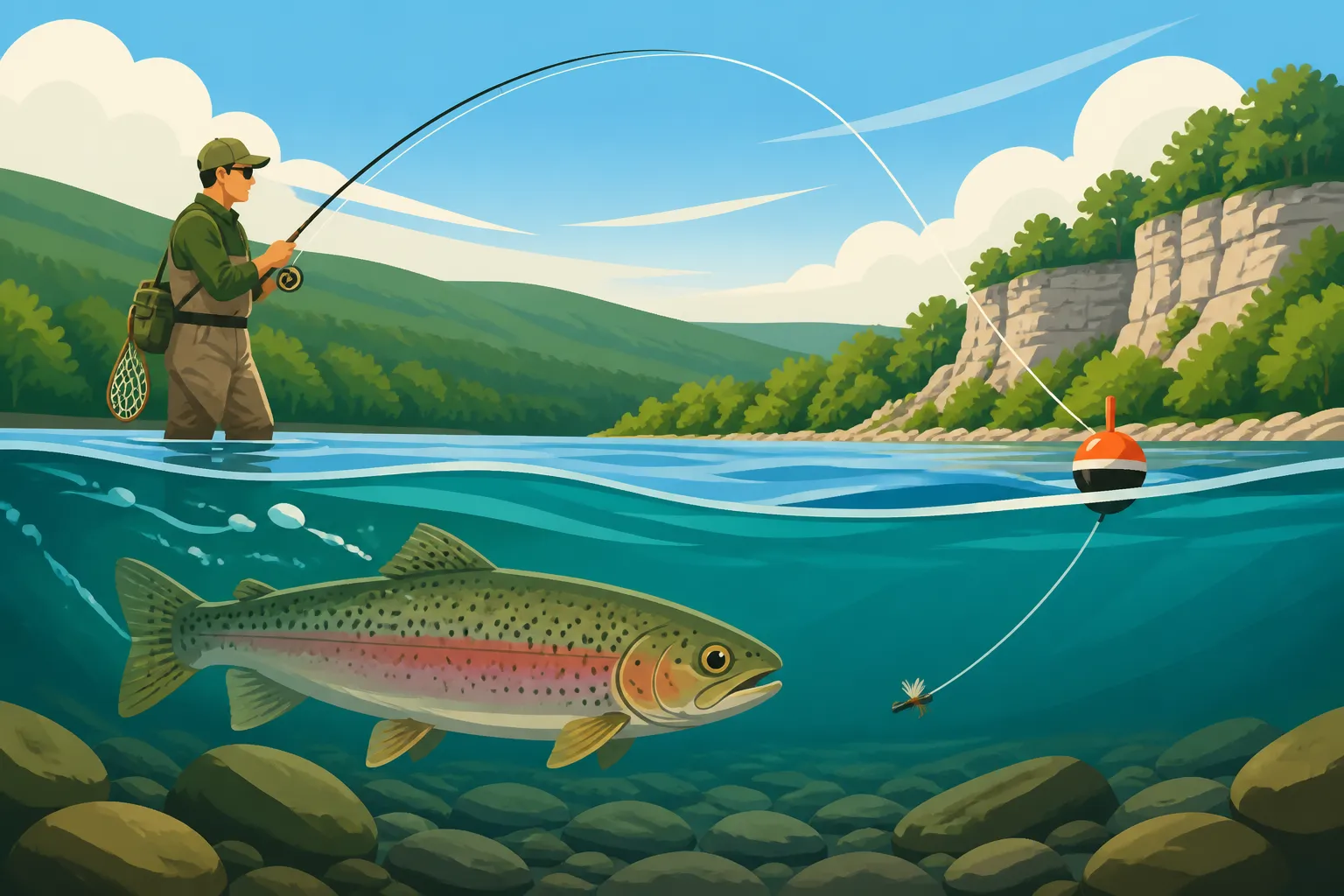
Float Fishing Techniques for Tailwaters
The relentless currents and crystal-clear waters of Arkansas's famed tailwaters can be incredibly intimidating for many anglers. It feels like fish see everything, and getting your bait or lure down to them in a natural way, without spooking them, often feels like an impossible puzzle. This guide is all about simplifying that puzzle, showing you exactly how float fishing can be your secret weapon to present offerings perfectly and consistently catch more fish in these challenging environments.
Understanding Arkansas's Tailwater Fisheries
Arkansas is blessed with some truly world-class tailwater fisheries, primarily known for their incredible trout populations. These unique river systems, formed below large dams like Bull Shoals, Norfork, and Beaver, offer distinct challenges and opportunities for anglers. The constant cold water releases from these dams create an ideal habitat for trout, but also unique conditions you need to master.
The Dynamics of Tailwater Environments
Tailwaters are characterized by their consistent cold water temperatures, which is fantastic for trout but also means the fish are often more active year-round. However, the water levels can fluctuate dramatically and rapidly depending on the dam's power generation schedule. One minute you could be wading in knee-deep water, the next, it's waist-deep and ripping. This variability makes it crucial to stay alert and understand the flow patterns. The clarity of the water is another major factor; it’s often so clear you can see individual rocks on the bottom, which means the fish can easily see your line, your float, and even you if you're not careful. This clarity demands a finesse approach and a natural presentation to entice wary trout.
You'll find incredible fishing on rivers like the White River below Bull Shoals Dam or the Norfork River below Norfork Dam. These areas are truly unique and require a different approach than still-water lakes or smaller streams. Understanding how these dams impact the river — from dissolved oxygen levels to insect hatches — is the first step to becoming a successful tailwater angler.
Why Float Fishing Excels in Tailwaters
Float fishing, also known as bobber fishing to some, is more than just a casual technique in tailwaters; it's often the most effective way to present a bait or lure. The primary reason is its ability to suspend your offering at a precise depth, allowing it to drift naturally with the current, mimicking free-floating food items. Unlike bottom fishing where your bait might drag or snag, or spin fishing where your lure might not stay in the strike zone long enough, a float provides controlled drift.
This natural presentation is absolutely critical in clear tailwater environments where trout are notoriously finicky. They see a lot of artificial presentations, and anything that looks unnatural, whether it's a drag on the line or an incorrect drift, will often be ignored. A properly executed float rig virtually eliminates line drag on your offering, making it look like an easy meal flowing by, exactly what these opportunistic feeders are looking for. Plus, it gives you a clear visual indicator of even the most subtle bites.
The Fundamentals of Float Fishing
Before we dive into the nitty-gritty, let's establish what float fishing truly is and why it's such a game-changer for tailwater anglers in Arkansas. It’s not just sticking a bobber on your line; it’s about a deliberate setup that allows for maximum stealth and natural movement.
What is Float Fishing
At its core, float fishing involves using a buoyant indicator (the float) attached to your fishing line to suspend a bait or lure at a specific depth in the water column. The float acts as both a depth control device and a strike indicator. As your offering drifts with the current, the float bobs along the surface, and any hesitation, dip, or pull signals a bite. This method is incredibly versatile, allowing you to fish everything from tiny nymphs to small crankbaits, all while maintaining a natural, current-driven presentation.
The genius of float fishing, particularly in tailwaters, lies in its ability to present your bait without the fish ever seeing your main line. By using a long leader between your float and your hook, and by choosing a float that is just buoyant enough to support your weight, you achieve a "dead drift." This is where your bait or lure moves at the exact same speed as the current, free from any unnatural drag caused by your line or reel. This is what fools those wary trout time and time again.
Advantages Over Other Methods
When you’re standing on the banks of the White River or the Norfork, watching currents swirl and eddies form, you quickly realize that traditional cast-and-retrieve methods or even bottom-bouncing can be frustrating. Float fishing offers several distinct advantages.
First, precise depth control. You can adjust your float to fish just inches off the bottom, or suspend your bait mid-water, perfectly targeting fish holding at specific depths. This is incredibly hard to do consistently with other methods, especially in varying current speeds. Second, the natural presentation is unparalleled. Your bait drifts freely, looking unattached and irresistible. Third, bite detection is often superior. Even the slightest nibble can cause your float to twitch or dip, alerting you to a strike that you might otherwise miss with a tight-line method. Fourth, it reduces snags. By keeping your bait suspended, you significantly lessen the chances of getting hung up on rocks or debris on the riverbed, which is a common headache in rocky tailwaters. Finally, it allows for long drifts, covering more water and increasing your chances of finding actively feeding fish. This is particularly useful in expansive rivers like the White, where fish might be spread out.
Essential Gear for Arkansas Tailwater Float Fishing
Having the right equipment makes all the difference when you're float fishing in the challenging environments of Arkansas's tailwaters. While some gear might seem familiar, there are specific characteristics that make certain items ideal for this technique.
Rods and Reels for Optimal Control
For float fishing in tailwaters, you generally want a longer rod than what you might use for typical spin fishing. A rod in the 9- to 13-foot range, with a medium-light or medium action, is often preferred. The extra length gives you several key advantages: it helps with casting lighter floats and baits a greater distance, allows for better line control (especially when mending your line, which we'll discuss later), and provides excellent shock absorption for fighting strong trout on light lines. Some anglers even opt for specialized float rods, which are designed for this specific technique, offering a parabolic bend that protects light leaders and absorbs the sudden surges of a big fish. You can find some excellent purpose-built float rods on Amazon, often from brands like Raven or Lamiglas.
When it comes to reels, a reliable spinning reel in the 2000-3000 series is usually perfect. The key is a smooth drag system and a good line capacity. You'll be using lighter lines, often in the 4-8 pound test range, and a smooth drag is essential to prevent break-offs when a feisty rainbow trout decides to run. Some anglers even use centerpin reels for the ultimate free-drift, but these have a steeper learning curve and are not strictly necessary for successful float fishing. Just make sure your reel can handle thin diameter line and has a consistent retrieve.
Float Types and Weights
The float itself is the namesake of this technique, and choosing the right one is paramount. You'll encounter various types, but for tailwaters, slip floats and fixed floats are the most common.
- Slip Floats: These floats slide freely on your main line between a bobber stop (a small piece of string or rubber) and a weight or swivel. They are invaluable when you need to fish deeper than your rod length, as they allow you to cast easily even with a long leader. Imagine trying to cast a fixed float with 15 feet of line below it – it’s a nightmare! A slip float allows the line to pass through it during the cast, then stops at your predetermined depth. Brands like Thill and Drennan offer great slip floats, readily available from online retailers or local tackle shops.
- Fixed Floats: These floats attach securely to your line at both the top and bottom. They are best for shallower water, typically up to your rod length in depth. They offer a more direct connection to your bait and can be very sensitive.
The key to both types is choosing a float that is just heavy enough to support your bait and any added split shot or weights, without being overly large or buoyant. A smaller, more sensitive float will give you better bite detection. For weights, an assortment of split shot (small, pinch-on weights) is essential. You’ll use these to balance your float, making it stand upright and sensitive to subtle bites, and to get your bait down to depth quickly. A good rule of thumb is to add just enough weight so that only the top third of your float is visible above the water.
Line, Leaders, and Terminal Tackle
Your line choice is critical for stealth and performance.
- Main Line: Many anglers prefer a high-visibility monofilament (6-8 lb test) for their main line. The visibility helps you track your float and detect subtle drifts. Some opt for braided line with a fluorocarbon leader for increased sensitivity and casting distance, but the lack of stretch in braid can sometimes lead to break-offs on light leaders.
- Leader Material: This is where stealth comes in. A fluorocarbon leader (4-6 lb test, sometimes even 2 lb test in ultra-clear water) is highly recommended. Fluorocarbon is nearly invisible underwater and is more abrasion-resistant than mono, which is a huge plus when fishing around rocks. The length of your leader will vary, but often ranges from 2-6 feet, depending on water clarity and how spooky the fish are. When buying leader material, look for brands like Seaguar or Berkley Trilene 100% Fluorocarbon – you can find them easily on Amazon or at your local Cabela's.
- Hooks: Small, sharp hooks are key for trout. Size 10-16 single hooks are common, depending on your bait. For live bait, an Aberdeen style hook is often preferred. For artificials like nymphs, specialized jig hooks are best. Always ensure your hooks are razor-sharp.
- Swivels: A small barrel swivel or a three-way swivel can be used to connect your main line to your leader, and also to help prevent line twist.
- Bobber Stops: If you're using slip floats, you'll need bobber stops. These tiny knots or beads create an adjustable stop for your float, allowing you to quickly change your fishing depth.
Having a selection of these terminal tackle items in a small box is crucial, as you'll often need to adjust your rig based on conditions. For instance, if you're fishing the Norfork Tailwater Trout Rules and Season and the water is low and super clear, you'll want to downsize your leader and hook to be as subtle as possible.
Mastering Float Fishing Techniques
Now that we've covered the gear, let's dive into the actual techniques that will make you a more successful float angler on Arkansas's tailwaters. It's all about presentation, control, and patience.
Rigging Your Float Fishing Setup
Proper rigging is fundamental to effective float fishing. Here’s a step-by-step breakdown:
- Attach Bobber Stop (for Slip Floats): Thread your main line through the loop of the bobber stop, then slide the knot onto your main line. Don't pull it too tight yet, as you'll need to adjust it. Follow this with a small bead, which protects the knot from being pulled into the float.
- Attach Float: Thread your main line through the eyelet at the bottom of your slip float (or attach your fixed float securely).
- Attach Swivel/Leader: Tie your main line to one end of a small barrel swivel. Then, tie your fluorocarbon leader (2-6 feet) to the other end of the swivel. If you're using a fixed float for shallow water, you might attach your leader directly to your main line with a blood knot or double uni knot, bypassing the swivel.
- Add Weights: This is crucial. Crimp several small split shot onto your leader, usually starting about 12-18 inches above your hook. The goal is to add just enough weight so that your float stands upright in the water with only the top portion visible. This makes it super sensitive to bites. Experiment with the placement of your split shot; sometimes scattering a few small ones (a "shot pattern") can allow for a more natural fall of your bait, while a single heavier shot (a "bulk shot") will get your bait down faster in stronger currents.
- Attach Hook/Lure: Finally, tie your chosen hook or jig to the end of your leader. For trout in Arkansas tailwaters, popular choices include small live worms, power bait, salmon eggs, or small artificial jigs and nymphs. Remember, you might need a Arkansas Trout Permit Rules to keep trout in these waters.
Getting this rig dialed in for current conditions is an art form. You'll spend a bit of time adjusting weights and depth, but it's worth it for that perfect drift.
Casting and Drifting Like a Pro
Casting a float rig, especially a long one, requires a slightly different approach than a typical overhead cast. A gentle, sweeping sidearm cast or a lob cast is often better to prevent tangles and safely launch your sometimes delicate bait.
Once your float hits the water, the real work begins. The goal is a dead drift, meaning your float and bait move at the exact same speed as the current, without any unnatural drag. This is where "mending" your line comes in. As your float drifts downstream, the current will often create a belly in your fishing line, pulling on your float and making your bait move faster than the natural current. To counteract this, you need to "mend" your line. This involves quickly lifting your rod tip and flipping or throwing the slack line upstream of your float, essentially repositioning the line so it's directly upstream and allowing the float to continue its unhindered drift. This takes practice but is an absolutely vital skill for tailwater float fishing.
Watch your float intently. It's not just a depth indicator; it's a window into what your bait is doing. If it's speeding up or slowing down unnaturally, you need to mend. If it hesitates, dips, or darts sideways, set the hook! The subtle movements often indicate a trout has taken your offering.
Reading the Water for Success
Understanding where fish hold in tailwaters is just as important as your rigging and casting. Trout are opportunistic but also energy-efficient, so they'll position themselves in places where food is delivered to them with minimal effort, and where they feel safe.
- Seams: Look for "seams" in the current—where fast water meets slow water. Trout often hold in the slower water, waiting for food to drift out of the faster current. Drifting your float along these seams is incredibly effective.
- Eddies: Eddies are areas where the current swirls back upstream or creates a slower, circular flow. Food often collects here, making them prime spots.
- Riffles and Runs: Shallower, faster water (riffles) leading into deeper, smoother sections (runs) are classic trout habitat. Fish will often hold at the transition points or in the deeper parts of the runs.
- Structure: Submerged rocks, fallen trees, or even subtle changes in the riverbed can create current breaks where trout will hide. Your float rig allows you to precisely target these areas.
Remember that the Arkansas Fishing Regulations Guide provides specific details on where and how you can fish, including any special regulations for certain tailwater sections. For instance, some areas may be "catch-and-release" only or have restrictions on bait types. Always check the latest guide before you head out.
Troubleshooting Common Float Fishing Challenges
Even with the best gear and technique, you'll encounter challenges while float fishing Arkansas's tailwaters. It's part of the game, but knowing how to overcome them will keep you catching fish when others get frustrated.
Dealing with Strong Currents and Eddies
Strong, fluctuating currents are perhaps the biggest headache in tailwater float fishing. They can make your float speed up, slow down, or veer off course, ruining your perfect dead drift.
- Adjusting Weight: If your float is moving too fast and your bait isn't getting down, you might need to add more split shot. Conversely, if your float is sinking or moving unnaturally slow, you might have too much weight or need a larger float.
- Mending More Aggressively: In strong currents, you'll need to mend your line more frequently and with greater authority. A good way to visualize this is to pretend you're pulling your float back upstream without moving it. This removes the belly in your line.
- Positioning: Sometimes, the best solution is to reposition yourself. Moving upstream or downstream, or changing your casting angle, can allow you to find a more manageable current lane.
- Longer Rods: This is where a longer rod really shines. The extra length gives you more leverage to keep your line off the water and out of conflicting currents, allowing for a cleaner drift.
Eddies can also be tricky. While they hold fish, they often create conflicting currents that can tangle your line or make your float spin unnaturally. Try to cast your float so it enters the eddy smoothly, and be ready to mend or retrieve quickly if the currents become too chaotic. Sometimes, a smaller, more streamlined float can help cut through the conflicting currents more effectively.
Preventing Snags and Line Twist
Nothing is more frustrating than a snag, especially in cold, clear tailwaters where every lost rig feels like a missed opportunity. Line twist can also weaken your line and lead to annoying tangles.
- Depth Adjustment: The most common cause of snags is fishing too deep. If you’re consistently hitting the bottom, lift your bobber stop (for slip floats) or shorten your leader (for fixed floats) by a few inches at a time until you're just above the snags.
- Weight Placement: If you're using a bulk shot, try switching to a shot pattern with smaller split shot spread out. This can allow your bait to "swim" over obstructions rather than snagging.
- Reading the Bottom: As you drift, try to visualize the bottom. If you see darker patches or sudden drop-offs, anticipate snags and be ready to reel up slightly or lift your rod tip.
- Using Quality Swivels: To prevent line twist, always use a good quality barrel swivel between your main line and leader, especially if you're using baits that might spin in the current.
- Checking Your Line: Regularly inspect your line, especially the leader, for nicks or abrasions that can lead to break-offs. A quick knot check after fighting a fish or after a snag is also a good habit.
- Avoiding Overly Aggressive Retrieves: If you're retrieving a float rig, do so smoothly to avoid putting excessive twist on your line.
Remember, a little proactive maintenance goes a long way in preventing these common frustrations. Keeping a small tackle box with extra split shot, swivels, and leader material, perhaps from a selection you got on Amazon, is always a good idea.
Dealing with Picky Fish and Subtle Bites
Trout in frequently fished tailwaters can be incredibly wary. They see a lot of lures and baits, and often become very selective. This means you might get very subtle bites, or they might simply refuse your offering.
- Downsize Everything: When fish are picky, the first thing to do is downsize. Go to a lighter fluorocarbon leader (e.g., from 4lb to 2lb), a smaller hook (size 14 or 16), and a smaller, more natural bait or nymph. Sometimes, even changing the color of your PowerBait or the profile of your nymph can make a difference.
- Perfect Your Drift: Re-evaluate your dead drift. Any unnatural drag, however slight, can put off a wary trout. Focus on constant mending and ensuring your float and bait are moving at precisely the current's speed.
- Patience and Observation: Sometimes, you just need to wait. Keep drifting through productive water. Also, observe other anglers. What are they using? Are they having success with a particular bait or depth?
- Sensitivity is Key: Ensure your float is properly balanced and sensitive. If too much of your float is riding above the water, you might miss those barely-there takes. Aim for just the tip of your float being visible.
- Vary Your Presentation: If a dead drift isn't working, try a very subtle twitch or pause with your rod tip. This can sometimes trigger a reluctant strike. However, do this sparingly, as the strength of float fishing is the natural drift.
- Know Your Bait: If you're using live bait like worms, ensure they are lively on the hook. For PowerBait, mold it securely around the hook to ensure it looks natural. Check out our guide on Best Bait for Rainbow Trout Below Bull Shoals Dam for more specific bait recommendations.
Ultimately, dealing with picky fish requires a combination of finesse, observation, and a willingness to adapt. Don't be afraid to change things up if what you're doing isn't working.
Advanced Tips for Tailwater Float Fishing Success
Once you've got the basics down, it's time to refine your approach and truly become a master of float fishing in Arkansas's tailwaters. These advanced tips will help you maximize your catch rate and enjoy your time on the water even more.
Adjusting to Water Levels and Flows
Arkansas's tailwaters are regulated by dams, meaning water levels and flows can change dramatically throughout the day. A river that's a gentle wade in the morning could be a raging torrent by afternoon. This variability impacts everything from fish location to your rigging.
- Low Water: During low flows, fish tend to spread out and become extra wary due to the increased clarity and shallower conditions. This is when going to lighter leaders (2-4lb fluorocarbon), smaller hooks, and smaller, more natural baits is critical. Focus on longer casts and perfect dead drifts in the deeper runs and pools. Wading becomes easier, but stealth is paramount.
- Rising Water/High Flow: When water is released from the dam, the current strengthens, and the water might become a bit off-color, especially if heavy rains have occurred. Fish often move closer to the banks, seeking refuge from the main current and looking for new food sources washed in. You’ll need to increase your weight to get your bait down in the stronger current and possibly use a slightly larger, more buoyant float. Focus your drifts closer to shorelines, submerged structure, and areas where the current breaks. The fish may be less spooky, so you might get away with slightly heavier tackle.
- Stable Flows: This is often the ideal scenario. When flows are consistent, fish settle into predictable patterns. This allows you to really dial in your depth and presentation in specific holes and runs.
Always check the generation schedule for dams like Bull Shoals or Norfork before you go. This information is usually available online from the Army Corps of Engineers and can help you plan your day around optimal fishing conditions. Knowing when the water will rise or fall is a huge advantage.
Selecting the Right Bait or Lure for the Season
Just like other forms of fishing, what works best on a float rig in Arkansas's tailwaters can vary greatly with the season and water temperature. Trout are opportunistic, but their preferences can shift.
- Spring: As water temperatures begin to rise slightly, insect hatches become more prevalent. Nymph patterns that mimic natural insects (like midges, caddis, or mayflies) fished under a float can be deadly. Small worms and salmon eggs are also highly effective as trout become more active after winter.
- Summer: Warmer surface temperatures might push trout into deeper, cooler water. Nightcrawlers, PowerBait, or small minnows fished deeper under a slip float can be very productive. Early morning and late evening often provide the best bite. Consider exploring different sections; for example, the Best Time to Fish the White River in Arkansas for Trout might be different than the lower, wider sections.
- Fall: This is a fantastic time for aggressive trout. Many species begin their spawning rituals. Streamers or larger nymph patterns, along with traditional baits, can work well. The fish are often feeding heavily in preparation for winter, so they might be less picky.
- Winter: With colder water, trout metabolism slows down, and they might become lethargic. Focus on presenting smaller baits, like tiny nymphs, midges, or single salmon eggs, very slowly and precisely. Fish will often concentrate in deeper, slower pools. A subtle bite indicator and a perfect dead drift are crucial.
Consider what natural food sources are available in the river. If you see specific insects hatching, try to match them with your artificial offerings. Don't forget that Arkansas Fishing License Requirements for Out-of-State Anglers apply year-round, so always ensure you have the proper permits.
Combining Float Fishing with Other Techniques
Float fishing doesn't have to be your only technique. Savvy anglers often combine it with other methods to maximize their success.
- Float and Fly: This is a popular and highly effective technique, especially in cooler months. Instead of a bait or traditional lure, you suspend a small fly (often a midge, nymph, or small streamer) under a very sensitive float. The float provides the weight for casting and bite detection, while the fly provides the natural presentation. This is particularly effective in areas where trout are accustomed to seeing flies, or when they are keying in on specific insect hatches. It's a great stepping stone from spin fishing to something closer to Trout Fly Fishing Basics for Tailwaters.
- Drift Fishing: Sometimes, particularly in wider, less turbulent sections, you can combine float fishing with a more active drift. Instead of a dead drift, you might impart a very subtle jigging motion to your float, causing your bait to rise and fall slightly, mimicking an injured insect or a struggling minnow. This can sometimes trigger strikes from reluctant fish.
- Scouting with Spin Fishing: Before committing to a full float rig, some anglers might use a simple spin-fishing setup with a small inline spinner (like a Panther Martin or a Rooster Tail, which you can easily grab on Amazon) to quickly cover water and locate active fish. Once fish are located, they'll switch to a more precise float rig to target those areas more effectively. This is especially useful if you're exploring a new stretch of river or if you're unsure of fish locations. However, be aware that Best Lures for Spin Fishing Trout might not always be the most effective in ultra-clear, heavily pressured tailwaters where a natural float presentation often wins.
By understanding these nuances and adapting your approach, you'll find that float fishing isn't just a method, it's a versatile strategy that can unlock incredible fishing opportunities in Arkansas's diverse tailwater environments. Always remember to check your Arkansas Fishing License Rules and Costs before heading out on any fishing adventure!
Disclaimer
The information provided in this guide is for general informational purposes only and is not intended as legal advice. Fishing regulations, license requirements, and local conditions can change frequently. Always consult the official Arkansas Game and Fish Commission website or publications for the most current and accurate regulations before engaging in any fishing activities.