Fly Fishing Techniques for Beginners
Stepping into the world of fly fishing can feel a bit like learning a new language – there's so much jargon, specialized gear, and what seems like an endless list of techniques. It's easy to get overwhelmed before you even cast a line, especially when you dream of those pristine Arkansas waters. This comprehensive guide is here to break down the essentials, validating your initial hesitations while empowering you with the foundational knowledge to confidently begin your fly-fishing journey.
The Allure of Fly Fishing in Arkansas: Why It's Worth Learning
For many, fly fishing isn't just about catching fish; it's a deeply immersive experience that connects you with nature in a way traditional spin fishing sometimes doesn't. In Arkansas, with our incredible variety of coldwater and warmwater fisheries, the appeal of fly fishing is particularly strong. The state offers diverse opportunities, from the famous White River tailwaters to smaller Ozark streams and even local ponds.
Connecting with Nature and the Fish
When you're fly fishing, you're not just throwing a lure out and reeling it in. You're actively observing your surroundings, deciphering what the fish are eating, and trying to "match the hatch" – that is, presenting an imitation of the insects or baitfish prevalent in the water at that specific time. This keen observation forces you to slow down, notice the subtle currents, the rise forms of feeding fish, and the insect life buzzing around you. It's a meditative process that makes every moment on the water feel intentional and connected. The sounds of the river, the rustle of leaves, and the focused rhythm of your cast become a symphony, far removed from the hustle and bustle of everyday life.
There's a unique satisfaction in successfully mimicking a natural food source and fooling a wary fish on a tiny fly. It’s a testament to your patience, observation skills, and developing technique. The delicate presentation required often means you're closer to the water, perhaps wading in, feeling the chill of the stream, and immersing yourself fully in the fish's environment. This intimacy with the surroundings fosters a profound appreciation for Arkansas's natural beauty and the delicate ecosystems that support our incredible fisheries. Many veteran anglers find that the real reward isn't just the fish, but the entire experience of being out there, learning, and interacting with the wild.
The Thrill of the "Catch" on a Fly
The feeling of a fish taking your fly is distinctly different from a typical lure strike. Because fly fishing often involves lighter lines and more sensitive rods, even smaller fish provide a thrilling fight. You're holding a long, flexible rod that acts as an extension of your arm, allowing you to feel every head shake, every dart, and every run the fish makes. It's a more dynamic and engaging battle, where your rod control and line management become crucial. This makes the experience incredibly exciting, even with fish that might seem mundane on heavier gear.
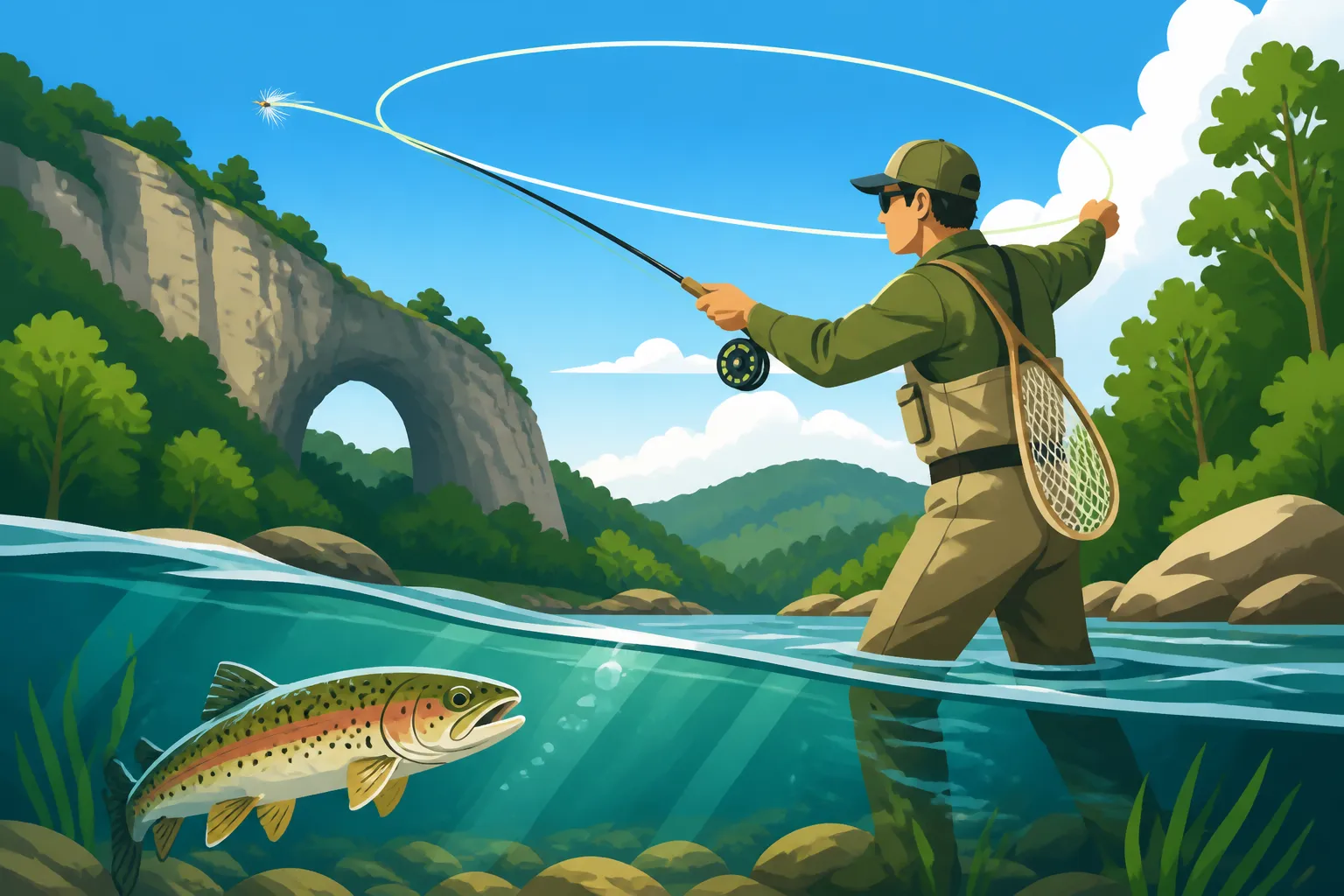
Imagine standing in a clear section of the White River, carefully presenting a tiny dry fly, and watching a beautiful brown trout rise from the depths to sip it off the surface. The visual strike, followed by the immediate bend in your rod and the scream of your reel, is an adrenaline rush unlike any other. It’s a moment of pure, unadulterated joy that captures the essence of the sport. The finesse involved in getting that perfect drift, managing your line, and then skillfully bringing the fish to hand is what keeps so many anglers coming back for more. This visceral connection makes the reward of a successful catch incredibly fulfilling, proving that even with delicate gear, you can still land impressive fish.
Essential Gear for Your First Arkansas Fly Fishing Adventure
Getting started with fly fishing doesn't require breaking the bank, but having the right foundational gear will make your learning curve much smoother and more enjoyable. Think of it as investing in your outdoor happiness. You can always upgrade later, but a solid beginner setup is key.
Understanding Rods, Reels, and Lines
For beginners, a medium-action fly rod is generally recommended, typically in the 5-weight or 6-weight range. This versatility makes it suitable for catching a wide array of species in Arkansas, from smaller trout on the Little Red River to the feisty bass found in many of our lakes and streams. A 9-foot rod length is a standard good starting point, offering a balance of casting distance and accuracy. Brands like Redington, Orvis, and even some offerings you can find on Amazon, provide excellent starter combos that include a rod, reel, and line, often at an accessible price point. These combos are designed to be forgiving, allowing you to focus on your casting mechanics without struggling with mismatched components.
Your reel's primary purpose is to hold your line and provide drag when a fish runs, not necessarily to help you retrieve line like a spinning reel. A basic, single-action large arbor reel is perfectly adequate for starting out. What's more critical is the fly line itself. For most beginner scenarios, a weight-forward (WF) floating line matched to your rod's weight (e.g., WF-5-F for a 5-weight rod) is ideal. This type of line has more weight concentrated at the front, helping to load the rod for easier casting. Don't forget backing, which is a thin, strong line spooled onto the reel before your fly line, giving a strong fish more to pull against. Lastly, you'll need a tapered leader and tippet. The leader connects your fly line to your tippet, gradually decreasing in thickness, while the tippet is the final, nearly invisible section where you tie on your fly. Getting the right size tippet for your target species and fly size is crucial for presentation.
Must-Have Accessories and Apparel
Beyond your rod, reel, and line, a few key accessories will significantly enhance your experience. First, a good pair of polarized sunglasses is non-negotiable. They not only protect your eyes from stray hooks and harmful UV rays but, more importantly, cut glare on the water's surface, allowing you to see deeper into the water to spot fish or submerged structure. A fishing vest or chest pack is invaluable for organizing your flies, leaders, tippet spools, and other small tools, keeping them readily accessible. You'll quickly learn that having your gear within easy reach prevents fumbling and frustration.
Waders and wading boots are often essential for getting into the best positions on our rivers like the White River or Spring River. Breathable chest waders are comfortable for most of the year, and sturdy wading boots provide crucial grip on slippery riverbeds. A pair of nippers (small clippers for cutting line) and forceps (for removing hooks) are also absolute necessities. Many anglers also carry a small net, especially for catch-and-release, as it minimizes handling stress on the fish. Finally, don't forget sun protection – a wide-brimmed hat, sunscreen, and long-sleeved shirts are wise choices when spending hours on the water under the Arkansas sun. Some folks even like a magnetic release for their net, making it super easy to grab and secure.
| Gear Item | Purpose | Beginner Recommendation |
|---|---|---|
| Fly Rod | Casting line, fighting fish | 9-foot, 5 or 6-weight, medium-action (e.g., Orvis Encounter) |
| Fly Reel | Holding line, providing drag | Large arbor, disc drag (often included in beginner combos) |
| Fly Line | Casting weight, presentation | Weight-forward (WF), floating, matched to rod weight (WF-5-F) |
| Backing | Extra line capacity, cushioning runs | 20 lb dacron, 100-200 yards |
| Leader | Tapered connection from fly line to tippet | 7.5 to 9-foot, 3X-5X taper |
| Tippet | Final, nearly invisible connection to fly | Spools of 3X, 4X, 5X fluorocarbon or monofilament |
| Polarized Sunglasses | Eye protection, seeing into water | Any comfortable, good quality pair (e.g., Costa, Smith, Rheos) |
| Waders | Staying dry in water | Breathable chest waders |
| Wading Boots | Grip on slippery riverbeds | Sturdy, felt or rubber sole with studs |
| Nippers | Cutting line | Small, sharp clippers (often come with a zinger) |
| Forceps/Hemostats | Removing hooks, crimping barbs | Locking forceps, straight or curved |
| Fishing Vest/Pack | Organizing gear | Chest pack or vest with multiple pockets |
| Net | Landing fish safely | Rubber net for gentle handling |
| Hat/Sunscreen | Sun protection | Wide-brimmed hat, SPF 30+ sunscreen |
Choosing Your First Fly Patterns for Arkansas Waters
This is where fly fishing really starts to get interesting, but also where beginners often get overwhelmed. There are thousands of fly patterns out there! The key is to start simple and focus on patterns that imitate common food sources in Arkansas waters. For trout, think about nymphs like the Pheasant Tail, Hare's Ear, or Prince Nymph – these imitate the underwater larval and pupal stages of insects, which trout feed on heavily. Small midge patterns are also crucial for tailwaters like the Norfork Tailwater, especially in winter. For surface feeding, classic dry flies like Elk Hair Caddis, Parachute Adams, and Griffith's Gnat are excellent all-around choices. These flies imitate adult insects that land on the water.
If you're targeting warmwater species like bass or panfish, don't feel like you're excluded from fly fishing. Large poppers, Gurgle Poppers, or foam spiders are incredibly fun to fish on topwater. For subsurface bass, Clouser Minnows or Woolly Buggers are versatile and effective, imitating baitfish or crawfish. Remember, local fly shops are an invaluable resource; they can tell you exactly what's "hatching" or what fish are keying in on for that specific time of year and location. Don't be afraid to ask for a "beginner's dozen" for the waters you plan to fish – they'll often set you up with the most effective, easy-to-fish patterns. You can also find great starter fly assortments on Amazon that cover a good range of general-purpose patterns.
Mastering the Basic Fly Casting Techniques
Casting a fly rod is arguably the most intimidating aspect for beginners, but it's more about timing and rhythm than brute force. Think of it as painting with your rod, not throwing a baseball. Once you get the hang of a few basic movements, the rest will start to fall into place.
The Fundamental Forward Cast
The forward cast is the bread and butter of fly fishing. It’s a smooth, continuous motion that loads the rod with energy, propelling your line forward. Imagine your rod tip moving in a tight, elliptical loop. You start with the rod low, typically around the 10 o'clock position (if a clock face were perpendicular to the ground). Then, with a smooth, accelerating motion, you bring the rod back to about 1 o'clock. This is your backcast. The key here is a crisp stop at 1 o'clock, allowing the line to unroll behind you. Don't let the rod go too far back, or your line will hit the ground. For a truly deep dive, consider checking out articles like How to Cast a Fly Rod for Beginners for step-by-step illustrations.
Once your line has unfurled behind you (you can feel the tension as it straightens out), you initiate the forward cast. This is another smooth, accelerating stroke, bringing the rod from 1 o'clock forward to around 10 o'clock, again with a crisp stop. This stop is crucial because it snaps the rod tip forward, releasing the energy and sending the line soaring towards your target. The timing between the backcast stop and the forward cast initiation is paramount; it’s what creates that effortless loop of line. Practice this motion repeatedly on grass before hitting the water, focusing on a consistent tempo. Many beginners rush the cast, which collapses the loop and results in a tangled mess. Slow down, feel the rod load and unload, and let the line do the work.
Roll Casting for Tight Spots
There will be countless times, especially on brushy streams in the Ozarks or even along the banks of larger rivers, where there simply isn't enough room behind you for a proper backcast. This is where the roll cast becomes an indispensable tool. The beauty of the roll cast is that it projects your line forward without ever needing a backcast, making it perfect for those cramped situations.
To execute a roll cast, you start with your line laid out on the water in front of you. Lift your rod slowly to about the 1 o'clock position, allowing the line to form a D-loop (named for its shape) on the surface next to your rod tip. The key is to keep the line on the water during this lift. Then, with a sharp, forward flick of the wrist and forearm, snap the rod tip forward to around 10 o'clock, stopping abruptly. This action "rolls" the line off the water and propels it forward in a tight, unrolling loop. It takes some practice to get the timing right, but mastering this cast will open up many more fishing opportunities in overgrown areas or when fishing from a boat with obstructions behind you. It’s a technique that feels incredibly satisfying once you nail it, allowing you to deliver a fly precisely even when traditional casting is impossible.
Dealing with Wind and Obstacles
Wind is often the bane of a fly angler's existence, especially in wide-open spaces like Beaver Lake or the White River on a breezy day. However, with a few adjustments, you can learn to cast effectively even when the wind is trying to steal your line. The primary tactic is to keep your loops tight and low to the water. A wide, open loop acts like a sail, catching the wind and collapsing your cast. By focusing on a narrower casting arc and a crisp stop, you create a tighter loop that slices through the wind more efficiently.
When casting into the wind, you might need a bit more power on your forward stroke. When the wind is at your back, you might need to slow down your backcast to avoid "tailing loops" (where the line collapses on itself). Obstacles, like overhanging branches or tall grass, require precision and often a modified casting stroke. Shortening your cast, using the roll cast, or even trying a "sidearm" cast (where your rod is parallel to the water) can help you sneak a fly into tight spots. It’s all about adapting to your surroundings, using shorter casts, and focusing on accuracy over distance. Remember, a perfectly placed short cast is always better than a long, tangled one.
Reading the Water Like a Pro
One of the biggest differentiators between an average angler and a successful fly fisher is the ability to "read the water." This isn't some mystical skill; it's a learned observation of currents, structure, and fish behavior. Understanding where fish are likely to hold and feed is far more important than casting the farthest or having the most expensive gear.
Identifying Holding Water and Feeding Lanes
Fish, especially trout, are always looking for three things: food, cover, and favorable water conditions (like oxygen levels and temperature). "Holding water" refers to spots where fish can rest comfortably without expending too much energy fighting the current, while still being close to a food source. These often include slower seams adjacent to faster currents, deeper pools, the tailouts (ends) of pools, and areas behind large rocks or logs that create current breaks. These calm spots offer a sanctuary from the main flow.
"Feeding lanes" are the specific current lines where food items are funneled. Think of them as conveyor belts for insects and baitfish. These are often found where currents converge, along eddy lines, or directly in faster, oxygenated riffles where nymphs are dislodged. If you see a fish consistently rising in a particular spot, that's a prime feeding lane. On a river like the Little Missouri River, look for the subtle differences in current speed and depth. A great analogy is to think like the bug – where would you drift if you were a tiny insect in this river? That's usually where the fish are waiting. You can gain more insight into these dynamics by studying guides like How to Read Water Temperature for Bass Fishing and applying similar observation principles to trout.
Understanding Current and Seams
Current is the lifeblood of a river, and understanding its nuances is critical for fly fishing. Different current speeds create distinct zones in the river. Faster water typically means more oxygen and dislodged food, but it also requires fish to expend more energy to hold position. Slower water offers rest but often less food. The magic happens where these different current speeds meet, forming "seams."
A seam is essentially a visible line where two different currents interact – often fast water meeting slow water, or an eddy (recirculating current) meeting the main flow. These seams are prime real estate for fish because they offer the best of both worlds: a resting zone in the slower water, with a continuous buffet of food being delivered by the faster current. Look for subtle changes in the water's surface, foam lines, or lines where debris collects – these all indicate seams. Learning to present your fly naturally in these seams, allowing it to drift at the same speed as the natural food (a "dead drift"), is a cornerstone of successful fly fishing. This is particularly important when fishing rivers with varied flows, such as the tailwaters below major dams in Arkansas, where current can change rapidly.
Key Fly Fishing Techniques for Arkansas Trout
Arkansas is renowned for its world-class trout fishing, particularly on its tailwater fisheries. Mastering a few core techniques will dramatically increase your chances of success on these waters.
Nymphing: Fishing Under the Surface
Nymphing is, for many, the most consistently productive fly fishing technique, especially for trout. The vast majority of a trout's diet consists of aquatic insects in their larval or pupal stages, which live and drift beneath the surface. So, it makes sense to fish where the food is! Nymphing involves casting weighted fly patterns (nymphs) upstream or up-and-across, allowing them to drift naturally with the current close to the bottom, imitating real insects. Techniques like the "indicator nymphing" (using a small bobber-like indicator to detect subtle strikes) or "Euro nymphing" (a specialized method without an indicator for extremely sensitive detection) are staples.
The challenge with nymphing lies in achieving a "dead drift," where your fly moves at precisely the same speed as the current, without being dragged unnaturally by your fly line (a phenomenon called "drag"). This often requires precise mending of your line – making small flips and adjustments of your rod to reposition your fly line upstream of your fly, thus creating slack and allowing your nymph to drift freely. It's a highly active and engaging form of fishing, constantly requiring your attention to line management and strike detection. The takes can be incredibly subtle – a slight twitch of the indicator, a momentary pause in its drift, or even just a feeling of unusual weight. To really dig into this, you might find articles on How to Nymph Fish for Trout very helpful.
Dry Fly Fishing: The Surface Action
For many fly anglers, dry fly fishing is the pinnacle of the sport – the purest form of fly fishing. There’s something truly magical about watching a trout rise from the depths to sip your tiny artificial insect off the surface. This technique involves imitating adult aquatic insects (like caddisflies, mayflies, or midges) that have hatched and are either floating on the surface or have fallen into the water. The key to successful dry fly fishing is an absolutely perfect, drag-free drift.
Your dry fly needs to float naturally on the water's surface, exactly like a real insect, without any tell-tale drag from your line pulling it unnaturally. This requires precise casting, often upstream, and meticulous line management to eliminate any tension. When a trout takes your fly, the strike is visual and often explosive, creating an unforgettable moment. While not always the most productive method in terms of sheer numbers, the thrill of the dry fly take is unmatched. Learning to identify what insects are hatching (the "match the hatch" concept) is vital here. Local fly shops are great for telling you what's currently active. For more detailed instructions on this exhilarating method, explore resources like How to Dry Fly Fish for Trout.
Streamer Fishing: Aggressive Tactics
If you prefer a more aggressive, active style of fly fishing, streamer fishing might be for you. Instead of imitating delicate insects, streamers are designed to mimic baitfish, crawfish, leeches, or other larger prey items that trout and other predatory fish feed on. These flies are often larger, heavier, and typically fished with an active retrieve, stripping the line in short, quick pulls to give the streamer an enticing, lifelike swimming motion.
Streamer fishing is incredibly effective for targeting larger, more aggressive fish, especially brown trout on rivers like the White River or even bass in our lakes. The strikes are often violent and definitive, leading to exhilarating fights. This technique works well in deeper pools, along undercut banks, or in faster currents where baitfish might be seeking refuge. It's less about the "dead drift" and more about imparting movement and triggering an instinctual predatory response. Don't be afraid to experiment with different retrieve speeds and patterns until you find what triggers a strike. This method is particularly exciting on cloudy days or when water levels are slightly elevated, as larger fish tend to be more active.
Navigating Arkansas's Prime Fly Fishing Locations
Arkansas boasts some truly fantastic fly fishing waters, offering opportunities for both coldwater and warmwater species. Knowing where to go and what to expect is half the battle.
The Renowned White River Tailwaters
When most people think of fly fishing in Arkansas, their minds immediately go to the White River system. The White River, particularly the sections below Bull Shoals Dam and Norfork Dam, are internationally recognized as premier trout fisheries. These tailwaters are cold, nutrient-rich environments that support incredible populations of rainbow, brown, cutthroat, and brook trout. The constant, cool water released from the dams creates ideal conditions year-round, making it a fantastic destination even in the heat of summer. For an in-depth look at these famous waters, check out Trout Fishing Below Bull Shoals Dam on the White River or Fly Fishing the White River in Northwest Arkansas.
Fishing here can range from wading the shallower sections during low-water generation to fishing from drift boats or jet boats when the water is high. The key is to check the generation schedule before you go. The fish here are accustomed to a steady diet of midges, scuds, sowbugs, and various nymphs, so having a good selection of these patterns is essential. While dry fly action can be sporadic, when a hatch does occur (often caddis or sulphurs), it can be truly phenomenal. Consider visiting towns like Cotter, Mountain Home, or Norfork, which are centers for fly fishing activity and host many knowledgeable guides and fly shops. These local experts are invaluable for current conditions and fly recommendations.
Other Productive Fly Fishing Streams and Lakes
While the White River is famous, Arkansas offers many other excellent fly fishing options. The Little Red River, below Greers Ferry Dam, is another blue-ribbon trout stream, known for its healthy populations of rainbows and trophy brown trout. Wade fishing here can be fantastic, especially in the areas around Swinging Bridge. Further south, the Spring River offers a unique blend of cold, spring-fed waters and warmer sections, holding a mix of trout and smallmouth bass. Its varied character provides a different kind of challenge and a beautiful wilderness feel.
Don't overlook our smaller Ozark streams like Crooked Creek or the Little Missouri River for smallmouth bass. These rivers offer incredible opportunities for wading and fishing with poppers, streamers, and crayfish patterns, often in stunning, less crowded environments. Even many of our larger reservoirs, such as Lake Ouachita or Beaver Lake, can be excellent for fly fishing for bass, crappie, and even aggressive striped bass, especially during their spring spawn or fall feeding frenzies. You'll need a boat for most of these lake endeavors, but the opportunity to land a big fish on a fly rod is certainly there. Fly fishing isn't just for trout; many anglers find immense joy in targeting warmwater species with a fly rod too!
Common Mistakes Beginners Make and How to Avoid Them
We've all been there – tangled lines, missed fish, and general frustration. As a beginner fly angler, it’s completely normal to make mistakes. The good news is that recognizing and addressing these common pitfalls can fast-track your learning and make your time on the water much more enjoyable.
Patience is Your Best Friend
Perhaps the most common mistake beginners make is a lack of patience, often manifesting as rushing the cast. In fly fishing, haste makes waste, leading to collapsed loops, tangles, and overall poor presentation. Remember, fly casting is about rhythm and timing, not power. Allow your backcast to fully unroll before initiating your forward cast. If you rush, the line won't have time to load the rod properly, and you'll end up flailing more than casting. This is often described as "stop and wait" – stopping the rod on your backcast and giving the line a beat to straighten out behind you before you propel it forward.
Patience also extends to the fishing itself. It takes time to learn to read the water, observe hatches, and understand fish behavior. Don't expect to catch a trophy on your first outing. Celebrate the small victories: a smooth cast, a detected strike, even just enjoying the scenery. The beauty of fly fishing often lies in the process, not just the outcome. Be patient with yourself, with the learning curve, and with the fish. They're wild creatures, and sometimes they just aren't biting. A calm, persistent approach will yield far better results than a frantic one.
Overcoming Tangled Lines and Backlashes
Ah, the dreaded "tangle"! Known in fly fishing circles as a "wind knot" or "bird's nest," tangled lines are a universal frustration, especially for beginners. These usually occur due to improper casting mechanics, particularly throwing a tailing loop (where the leader and fly collapse on themselves during the cast) or rushing the cast. When your loop is too open or you stop your rod too abruptly, the line can fold over itself, creating those frustrating knots.
To minimize tangles, focus on a smooth, accelerating cast with a crisp stop, aiming for a tighter loop. Practice on grass to refine your technique without the added complexity of current and fish. Also, pay attention to your slack line. If you have too much loose line at your feet or in your boat, it's a prime candidate for tangles. Learn to manage your line effectively, either by stripping it into a stripping basket or simply keeping it organized. Wind can also contribute to tangles, so remember the tips about casting low and tight into the wind. When a tangle does occur, take a deep breath, lay your rod down, and patiently work it out. Trying to rush it will only make it worse. Every experienced fly angler has battled countless tangles, so you're in good company!
Beyond the Basics: Continuing Your Fly Fishing Journey
Once you've got the basics down, the world of fly fishing truly opens up. There's always more to learn, new techniques to master, and different species to target. Arkansas offers a fantastic playground for continuing your fly fishing education.
When to Consider a Guided Trip
For many beginners, taking a guided trip can be an invaluable step in accelerating their learning and unlocking the secrets of specific waters. A professional guide, particularly one experienced on Arkansas's famous White River or Little Red River, offers local knowledge that no book or YouTube video can fully replicate. They know where the fish are holding, what flies they're eating right now, and how to present them effectively in current conditions. Guides can instantly correct your casting flaws, teach you advanced techniques like nymphing indicators or streamer retrieves, and put you on fish.
Consider a guided trip not just as a way to catch fish, but as a hands-on learning experience. Many guides provide all the necessary gear, so you can try out different rods and lines before investing your own money. They'll also handle the boat, navigate the currents, and help you land fish. It's a fantastic way to gain confidence and pick up nuances that would take years to learn on your own. For example, specific information on booking guides can be found in resources like White River Fishing Guides: Arkansas's Trout Fishing Capital or even articles comparing guide styles like Choosing a Fly-Fishing or Spin-Fishing Guide for Your Arkansas Trip. It's an investment, but one that pays dividends in skills and enjoyment.
Joining Local Fly Fishing Communities
One of the best ways to continue your fly fishing journey and deepen your passion is to connect with other anglers. Arkansas has a vibrant fly fishing community, with clubs and organizations dedicated to the sport. These groups offer a wealth of knowledge, opportunities for shared outings, casting clinics, fly tying sessions, and conservation efforts. Imagine learning to tie your own realistic pheasant tail nymphs or dry flies with seasoned veterans, or joining a group trip to a new stretch of river.
Local fly shops are often the hub for these communities. Places like Dally's Ozark Fly Fisher in Cotter or the Little Red River Fly Shop are not just places to buy gear; they are centers of information, local gossip, and camaraderie. Don't be shy about striking up conversations with other anglers on the river or in the shop. Most fly fishers are passionate about their sport and eager to share their knowledge, tips, and even their secret fly patterns. You'll find that the friendships forged on the water are just as rewarding as the fish you catch. You can even find community discussions on specific gear or fly patterns on forums or online retailers like Amazon, sharing your experiences and getting advice.
Disclaimer
Please note that fishing regulations, license requirements, and local conditions can change. Always consult the latest Arkansas Game and Fish Commission regulations before heading out on any fishing trip. This guide is for informational purposes only and does not supersede official state regulations.