How to Identify the Fish You Just Caught in Arkansas
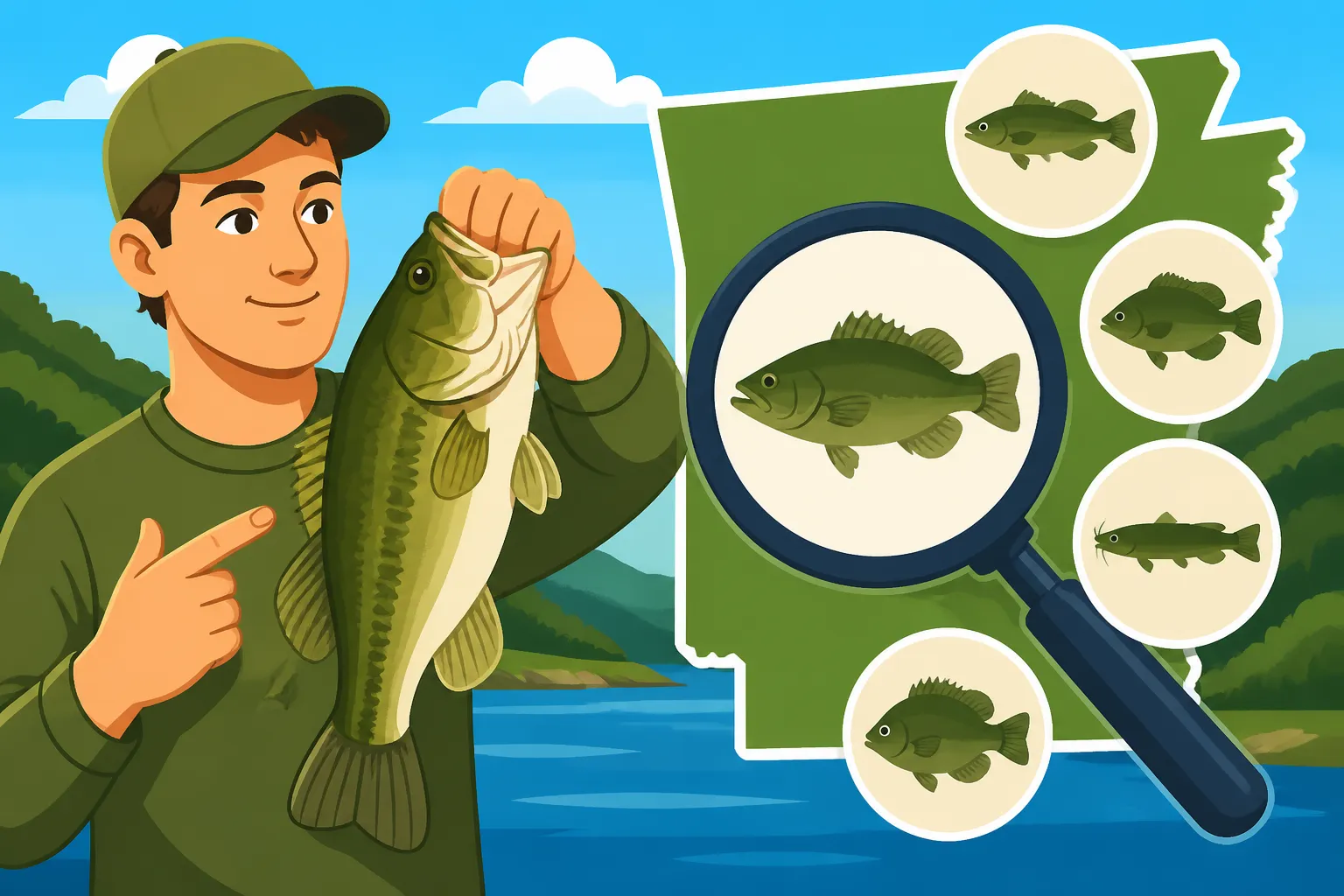
There's nothing quite like the thrill of feeling a strong tug on your line, fighting the fish, and finally bringing it to the boat or shore. But then you look at your catch, and a little doubt creeps in: "What is this fish, exactly?" Many of us have been there, holding a beautiful specimen and wondering if it's a largemouth or a spotted bass, or a black crappie versus a white crappie. This guide is all about helping you confidently identify the fish you've just caught in Arkansas waters, ensuring you're following regulations and getting the most out of your angling adventures.
Why Identifying Your Catch Matters Beyond Bragging Rights
Sure, knowing what you caught is great for sharing photos with friends or telling a tall tale around the campfire. But the truth is, identifying your fish correctly goes far beyond mere bragging rights. It's a critical part of being a responsible, knowledgeable angler, especially here in Arkansas where we have such a rich diversity of fish species and specific regulations.
Following Regulations and Limits
This is probably the most immediate and important reason to know your fish. Arkansas has very particular rules about what you can keep, how many, and how big they need to be. These rules often vary significantly between species, and sometimes even by specific bodies of water. For example, the daily limit for largemouth bass is different from that for crappie, and the minimum length for a smallmouth bass might be different depending on whether you're on a moving river or a large reservoir.
Imagine you've had a great day on the water and pulled in a stringer full of what you think are all the same type of bass. If you've misidentified even one fish, you could be unknowingly violating the law. This isn't just about avoiding a fine; it's about protecting our fisheries. Those rules are in place for a reason – to ensure healthy fish populations for generations to come. Having a solid grasp of your catch's identity means you can confidently check it against the current Arkansas Fish Size and Daily Limits and feel good about your compliance. Nobody wants to face Arkansas Fishing License Penalties and Requirements just because they couldn't tell two similar-looking species apart.
Understanding Fish Behavior and Habitat
When you consistently catch a certain type of fish, knowing its species allows you to connect the dots. You can start to understand why you caught it where you did, what kind of bait it preferred, and what time of year it's most active. Did you catch a crappie near a submerged brush pile? Next time, you'll know to seek out similar structure for crappie. Did that smallmouth bass hit a specific lure near rocky current? That's valuable intel for future trips.
This accumulated knowledge makes you a more effective angler. Instead of just casting blindly, you can make informed decisions about where to fish, what tackle to use, and when to go. It transforms fishing from a game of chance into a more scientific pursuit, increasing your success and enjoyment. Understanding the nuanced differences between, say, a largemouth bass that loves heavy cover and a smallmouth bass that prefers clear, rocky currents, is key to refining your technique.
Conservation and Responsible Angling
Proper fish identification is a cornerstone of conservation. There might be certain species that are protected, have stricter catch-and-release rules, or are experiencing population declines in specific areas. If you can't identify a fish, you might accidentally harm a sensitive population by keeping it when it should have been released.
Furthermore, being able to identify your catch helps you appreciate the biodiversity of Arkansas's waters. It connects you more deeply to the ecosystem you're enjoying. When you know you've caught a native darner or a unique species that's less common, it fosters a sense of stewardship. Our goal as anglers should always be to leave the fishery better than we found it, and that starts with knowing what lives beneath the surface and treating each fish with respect. This larger understanding is part of what makes Arkansas Fish Species: A Complete Guide to What's Swimming in Your Waters so valuable.
Key Features to Look For: Your Field Guide Checklist
When you pull a fish out of the water and need to identify it, don't just glance at the overall color. You need to become a detective, observing specific features that distinguish one species from another. Think of it as having a mental checklist for every fish you encounter.
Body Shape and Fin Characteristics
The overall silhouette of a fish can tell you a lot. Is it long and slender, built for speed, or deep-bodied and compressed, designed for navigating tight cover?
- Body Shape:
- Fusiform: Torpedo-shaped, like a trout or striped bass, indicates a fish that swims fast in open water.
- Compressed: Flattened side-to-side, like crappie or bluegill, good for slipping through weeds or tight spots.
- Depressed: Flattened top-to-bottom, like some catfish, often found resting on the bottom.
- Fins: Pay close attention to the dorsal fins (on the back), caudal fin (tail), pectoral fins (sides, behind gills), pelvic fins (belly, usually below pectorals), and anal fin (behind the anus).
- Dorsal Fins: Do they have one or two? If two, are they completely separated or barely touching? The number of spines and soft rays is often a key identifier. For instance, the separation of the dorsal fins is a critical distinction between largemouth and smallmouth bass.
- Caudal Fin (Tail): Is it forked, rounded, squared, or deeply indented? Catfish tails, for example, can be deeply forked (Channel Catfish) or nearly straight (Flathead Catfish).
- Other Fins: Note their size, shape, and placement. Some fish, like many catfish, have barbels (whiskers) around their mouths, which are highly distinctive.
Coloration, Patterns, and Markings
While color can be variable due to water clarity, diet, and even stress, specific patterns and markings are often more consistent and extremely helpful.
- Lateral Line: This is a sensory line running horizontally along the side of most fish. Is it complete, broken, or absent? Is it straight or does it curve? For bass, the distinctness and pattern of the lateral line can be a huge clue.
- Spots and Stripes: Are there dark spots, vertical bars (like a zebra), or horizontal stripes? Trout often have distinct spots on their bodies and fins, but the color and distribution of these spots differ between rainbow and brown trout. Bass might have a distinct dark horizontal stripe (largemouth) or faint vertical bars (smallmouth).
- Overall Color: While variable, some fish have general color tendencies. Rainbow trout often have a pinkish stripe, while brown trout are usually more golden-brown. Just remember that a stressed fish might appear paler, and a fish from clear water might be more vibrantly colored than one from murky water.
Mouth and Jaw Structure
The mouth of a fish reveals a lot about its diet and how it hunts.
- Mouth Size: Does the jaw extend past the eye? This is a classic differentiator for largemouth bass.
- Jaw Protrusion: Is the lower jaw longer than the upper (underslung), or vice-versa (overslung)? Or are they equal?
- Teeth/Barbels: Are there teeth present, and what kind? Are there any fleshy, whisker-like barbels around the mouth? Catfish have prominent barbels, which are easy to spot. The number of barbels can even help distinguish between different catfish species.
Scales and Gills
While perhaps less obvious to the casual observer, scale size and gill cover characteristics can be useful for finer identification, especially for some species where other features are similar.
- Scales: Are they large or small? Do they feel rough or smooth? Some fish, like catfish, actually lack scales entirely, having smooth skin instead.
- Gill Covers (Operculum): Observe the shape and any spines or points on the gill cover. For example, some panfish have a distinct "ear flap" extension on their gill cover that helps identify them.
Common Arkansas Game Fish: What to Expect
Let's dive into some of the most frequently caught and sometimes confused game fish species in Arkansas. Knowing these specifics will really boost your identification game.
The Bass Family: Largemouth, Smallmouth, and Kentucky
These three are probably the most common source of confusion for anglers in Arkansas, especially in shared waters like Bull Shoals Lake or Greers Ferry. But once you know what to look for, they're quite distinct.
-
Largemouth Bass:
- Mouth: The most telling feature! The jaw extends well past the rear edge of the eye when the mouth is closed. Seriously, open its mouth and look; it's a dead giveaway.
- Dorsal Fin: The spiny dorsal fin (front) is almost completely separated from the soft-rayed dorsal fin (back) by a deep notch.
- Lateral Line: Usually has a very distinct, irregular dark horizontal stripe along its side, sometimes broken into blotches.
- Habitat: Prefers warm, murky water with lots of cover like weeds, submerged timber, and brush piles.
- If you want a deeper dive, check out How to Identify a Largemouth Bass.
-
Smallmouth Bass:
- Mouth: The jaw typically extends only to about the middle of the eye, or just slightly beyond, but never significantly past it like a largemouth.
- Dorsal Fin: The spiny and soft-rayed dorsal fins are clearly connected, with only a shallow notch between them.
- Lateral Line: Lacks a prominent horizontal stripe. Instead, it usually has faint, dark vertical bars or blotches on its sides, giving it a somewhat "tiger-striped" appearance.
- Coloration: Often has a bronze, brown, or olive hue, sometimes with a yellowish belly. Its eyes can be reddish.
- Habitat: Favors cooler, clearer, rocky streams and reservoirs with good current. They love ledges, points, and gravelly bottoms.
- For more on these feisty fighters, read How to Identify a Smallmouth Bass.
-
Kentucky Bass (Spotted Bass):
- Mouth: Its jaw extends to about the middle of the eye, similar to a smallmouth, but not past it like a largemouth.
- Dorsal Fin: Like the smallmouth, the spiny and soft-rayed dorsal fins are connected with only a shallow notch.
- Lateral Line: Has a distinct lateral line, often with dark spots below it, which can form rows that look like faint horizontal stripes. This "spotted" appearance is where it gets its common name.
- Patch on Tongue: A definitive identifier! If you can safely look, it will have a small patch of teeth on its tongue. Neither largemouth nor smallmouth have this.
- Habitat: Adapts to a wider range of habitats, often found in rivers with moderate current, clear to slightly turbid reservoirs, and sometimes in deeper sections where largemouth struggle.
- Confused between a Kentucky and a Largemouth? This guide can help: How to Tell a Kentucky Bass from a Largemouth and also specifically for the Bull Shoals area: How to Tell a Kentucky Bass from a Largemouth at Bull Shoals.
For a quick reference on these popular species, here’s a comparison table:
| Feature | Largemouth Bass | Smallmouth Bass | Kentucky Bass (Spotted Bass) |
|---|---|---|---|
| Upper Jaw | Extends beyond the eye | Extends to or slightly past the middle of the eye | Extends to or slightly past the middle of the eye |
| Dorsal Fin | Deep notch, nearly separated | Shallow notch, connected | Shallow notch, connected |
| Lateral Line | Distinct dark horizontal stripe/blotches | Faint vertical bars/blotches | Distinct, often with rows of spots below |
| Tongue | Smooth | Smooth | Small patch of teeth present |
| General Color | Green to dark olive, often with distinct stripe | Bronze, brown, olive with faint bars | Greenish-brown, spotted below lateral line |
| Preferred Habitat | Warm, weedy, murky cover | Cool, clear, rocky, current | Rivers, reservoirs, various depths |
For a broader understanding, you might also find this article useful: Largemouth Bass vs Smallmouth Bass: What's the Difference?.
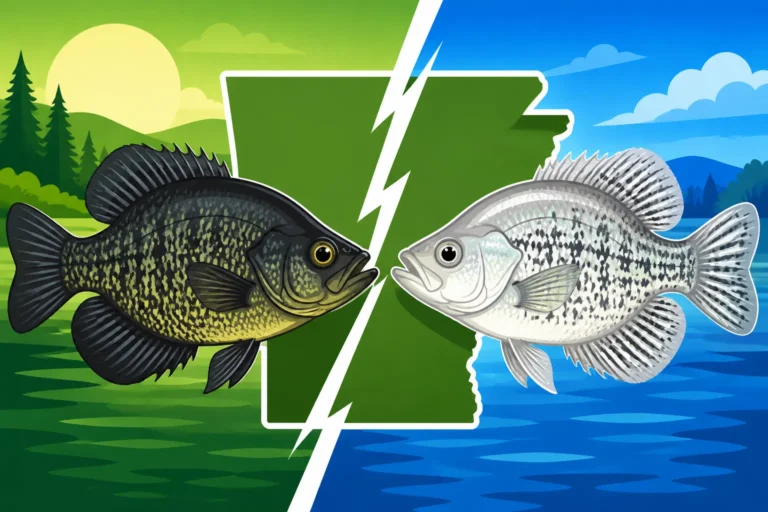
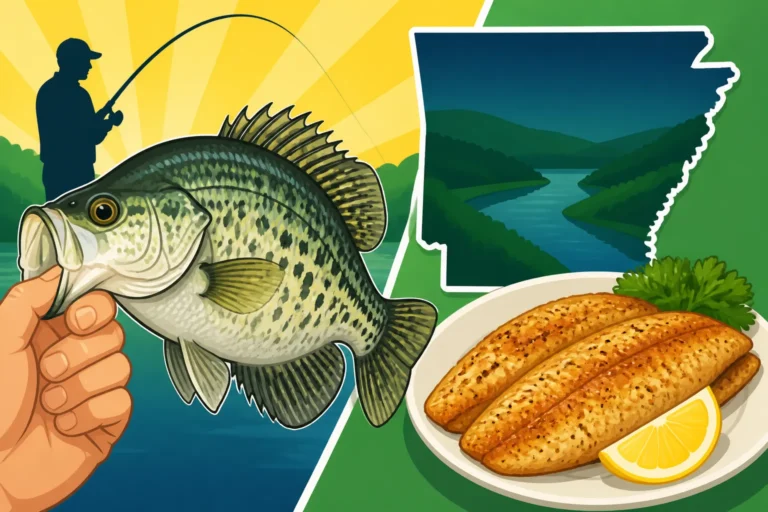
Crappie: Black vs. White
Crappie are a beloved panfish in Arkansas, known for their delicious fillets. While they look similar at first glance, there are distinct differences between black and white crappie.
-
Black Crappie:
- Dorsal Spines: Typically has 7 or 8 dorsal fin spines. This is a very reliable count.
- Pattern: Often has an irregular pattern of dark spots scattered across its body, giving it a "peppered" look. The spots don't usually form distinct vertical bars.
- Body: Generally has a slightly deeper, more rounded body profile.
- Habitat: Prefers clearer, cooler water with more vegetation.
-
White Crappie:
- Dorsal Spines: Almost always has 6 dorsal fin spines. This is the easiest way to differentiate them.
- Pattern: Usually has 7 or 8 distinct vertical bars on its sides, though these can sometimes be faint. The spots are often arranged in these bands rather than randomly scattered.
- Body: Tends to have a more elongated body shape than the black crappie.
- Habitat: Tolerates more turbid (murky) water and often found in shallower areas, especially around brush piles and stumps.
- For a detailed breakdown, see Black Crappie vs White Crappie: How to Tell Them Apart.
Catfish: Channel, Blue, and Flathead
Arkansas is a paradise for catfish anglers, with three main species offering a unique fight and excellent table fare. Telling them apart is crucial, especially for size and creel limits.
-
Channel Catfish:
- Tail: Deeply forked tail. This is the most distinctive feature.
- Body: Usually has dark spots on its sides, especially when young, though older, larger fish may lose these spots.
- Barbels: Four pairs of barbels (whiskers), two on the chin, two on the snout.
- Anal Fin: Has a rounded anal fin with 24-29 rays.
- Head: Relatively small head compared to its body.
- Color: Can vary from silvery-gray to olive-brown.
-
Blue Catfish:
- Tail: Deeply forked tail, similar to a channel cat, but often more deeply V-shaped.
- Body: Lacks any spots on its body. Its color is typically slate blue or gray, with a white belly.
- Barbels: Four pairs of barbels, but the upper jaw barbels are often longer than those of a channel cat.
- Anal Fin: Has a long, straight-edged anal fin with 30-36 rays. This is a key identifier: the anal fin has a straight edge, not rounded.
- Head: Often has a prominent hump on its back just behind the head when mature.
-
Flathead Catfish:
- Tail: Squared or slightly notched tail, not forked. This is the biggest giveaway.
- Body: Mottled brown, yellow, and black coloration. Often looks more flattened or "splotchy."
- Barbels: Four pairs of barbels. The lower jaw barbels are often dark, while the upper jaw barbels are paler.
- Anal Fin: Relatively short, rounded anal fin with 14-17 rays.
- Head: Has a distinctive broad, flattened head, giving it its name. The eyes are small and set high on the head.
- For a comprehensive guide on distinguishing these giants, check out How to Tell Channel, Blue, and Flathead Catfish Apart.
Trout: Rainbow and Brown
Arkansas's cold-water tailwaters, particularly the White River, are famous for their trout fishing. You'll primarily encounter rainbow and brown trout.
-
Rainbow Trout:
- Coloration: Typically silvery with a prominent pink or reddish stripe running horizontally along its side.
- Spots: Small, dark spots are usually present on its back, sides, and fins, including the caudal (tail) fin.
- Tail: Slightly forked tail.
- Mouth: Mouth generally doesn't extend past the eye.
-
Brown Trout:
- Coloration: Often more golden-brown, olive, or yellowish, especially on its sides and back.
- Spots: Features distinct dark spots with pale halos (red or orange spots are common, sometimes with a blue halo) on its sides, primarily above the lateral line. Its tail typically has few or no spots.
- Tail: Usually has a square or only slightly notched tail.
- Mouth: Mouth often extends back beyond the eye, giving it a more predatory appearance.
If you're ever struggling to tell these two apart, especially given how stunning they both are, take a look at How to Tell Rainbow Trout from Brown Trout.
Tools and Resources for On-the-Spot Identification
Even with all this knowledge, sometimes a fish just looks… different. Maybe it's a hybrid, or just a particularly stressed individual. That's when you need to lean on a few trusty tools and resources.
Physical Field Guides and Apps
Having a dedicated resource at your fingertips is invaluable.
- Waterproof Field Guides: Many publishers offer compact, waterproof field guides specifically for freshwater fish of the central U.S. or the Ozarks region. These are perfect for keeping in your tackle box or boat. They often feature clear illustrations or photos and highlight the key identification markers we've discussed. You can find a good selection of these on Amazon. Look for guides that are rugged enough to handle wet hands and a few splashes.
- Fishing Identification Apps: Your smartphone can be an incredible tool. There are numerous apps available that allow you to browse species by region, use decision trees based on features, or even identify fish from a photo. Just be mindful of battery life and signal strength in remote areas. A durable, waterproof case for your phone is highly recommended if you plan to rely on an app out on the water. Again, a quick search on Amazon for "fishing identification app" can show you popular options.
Photography and Online Resources
If you're still unsure, don't just guess. Take clear photos, and then you can consult with a wider community.
- Take Clear Photos: If you're practicing catch-and-release, quickly and safely snap a few photos from different angles. Get shots of the entire body, especially the head (showing the jawline and barbels if present), the dorsal fins (showing separation and spines), and the tail. Pay attention to markings and coloration. Make sure the fish isn't too obscured by your hand.
- Online Forums and Groups: Many online fishing forums, Facebook groups, or dedicated fish identification websites welcome photos from anglers seeking help. The collective knowledge of experienced anglers can often pinpoint your catch quickly. Be respectful, provide as much detail as possible (where and when you caught it), and always practice safe fish handling if you're holding the fish for a photo. There are also state-specific fishing groups where local experts are eager to help.
Consulting with Locals and Guides
Sometimes, there's no substitute for human experience.
- Ask Experienced Anglers: If you see other anglers on the water or at the boat ramp, don't be shy! Most experienced fishermen are happy to share their knowledge and help a fellow angler identify a fish. It's a great way to learn and build camaraderie in the fishing community.
- Talk to Fishing Guides: Licensed fishing guides are typically experts in the local fish species and regulations. If you've booked a trip with a guide, they'll be your best on-the-spot resource for identification. Even if you haven't, a quick chat at a local bait shop might yield some insights. If you're ever considering a guided trip, knowing How to Find a Reputable Fishing Guide in Arkansas can put you in touch with the best experts. Their livelihood depends on knowing these waters and the fish in them inside and out.
Disclaimer
This article is for general informational purposes only and does not constitute professional advice. Laws, prices and regulations vary by location and change over time. Consult a qualified professional for guidance on your specific situation.