Best Bait for Striped Bass in Arkansas
Few fish in Arkansas offer the heart-pounding thrill of a hooked striped bass, but these powerful, often elusive fighters can leave even seasoned anglers scratching their heads when it comes to bait choice. You've probably spent hours on the water, throwing everything in your tackle box, only to come up empty while someone else is reeling in a lunker. This guide is here to cut through the confusion and give you the real lowdown on the best baits for enticing those magnificent Arkansas stripers.
Understanding Striped Bass in Arkansas Waters
Before we dive into the tackle box, let's take a moment to truly appreciate what we're up against: the striped bass. These aren't your typical pond bluegill. Stripers are apex predators, built for speed and power, and they demand a certain respect – and the right bait – if you want to bring one to the boat. Understanding their habits is the first step to successful fishing.
Where Stripers Roam
In Arkansas, striped bass are primarily found in our larger reservoirs, where they have ample room to roam and forage. Lakes like Norfork Lake and Lake Hamilton are legendary for their trophy striper fisheries. These massive bodies of water mimic the open ocean environments where stripers originate, providing the deep, clear water and abundant baitfish populations they need to thrive. You'll often find them suspended over deep structure, chasing schools of shad in open water, or sometimes even pushing bait to the surface in explosive feeding frenzies. Knowing their preferred haunts is half the battle; the other half is offering them something they simply can't resist.
What Makes Stripers So Challenging
Striped bass are constantly on the move, driven by their insatiable appetites and the need to follow their food source. This nomadic behavior is what makes them so challenging – one day they might be busting bait on the surface, the next they're sulking 60 feet down. They are also highly sensitive to changes in water temperature, oxygen levels, and current, especially in the tailwater fisheries below our big dams. Their large size means they need a lot of food, but it also means they can be picky eaters, often keying in on a specific size or type of baitfish that is most prevalent. This requires anglers to be adaptable and ready to change tactics, which often means changing baits.
Seasonal Feeding Patterns
Just like humans, striped bass have different dietary preferences throughout the year. In the colder months, they tend to move slower and often prefer larger, slower-moving baits that require less energy to chase. Think deep, cold water and big meals. As the water warms in spring and fall, their metabolism kicks into high gear, and they become much more active, chasing faster baits and engaging in those thrilling surface feeds. Summer can see them retreating to deeper, cooler water, becoming a bit more lethargic during the day but potentially active at dawn and dusk. Understanding these seasonal shifts is crucial, as the "best bait" can change dramatically from January to July. Learning when to target these fish is just as important as knowing what to throw, and you can find more insights on the best times in our Best Time of Year to Fish in Arkansas guide.
The Reigning Champions: Live Baits for Striped Bass
When it comes to consistently catching big striped bass in Arkansas, live bait often reigns supreme. There's just something about the natural movement, scent, and distress signals of a live baitfish that stripers find utterly irresistible. If you're serious about landing a trophy, mastering live bait techniques is essential.
Gizzard Shad: Why It's King
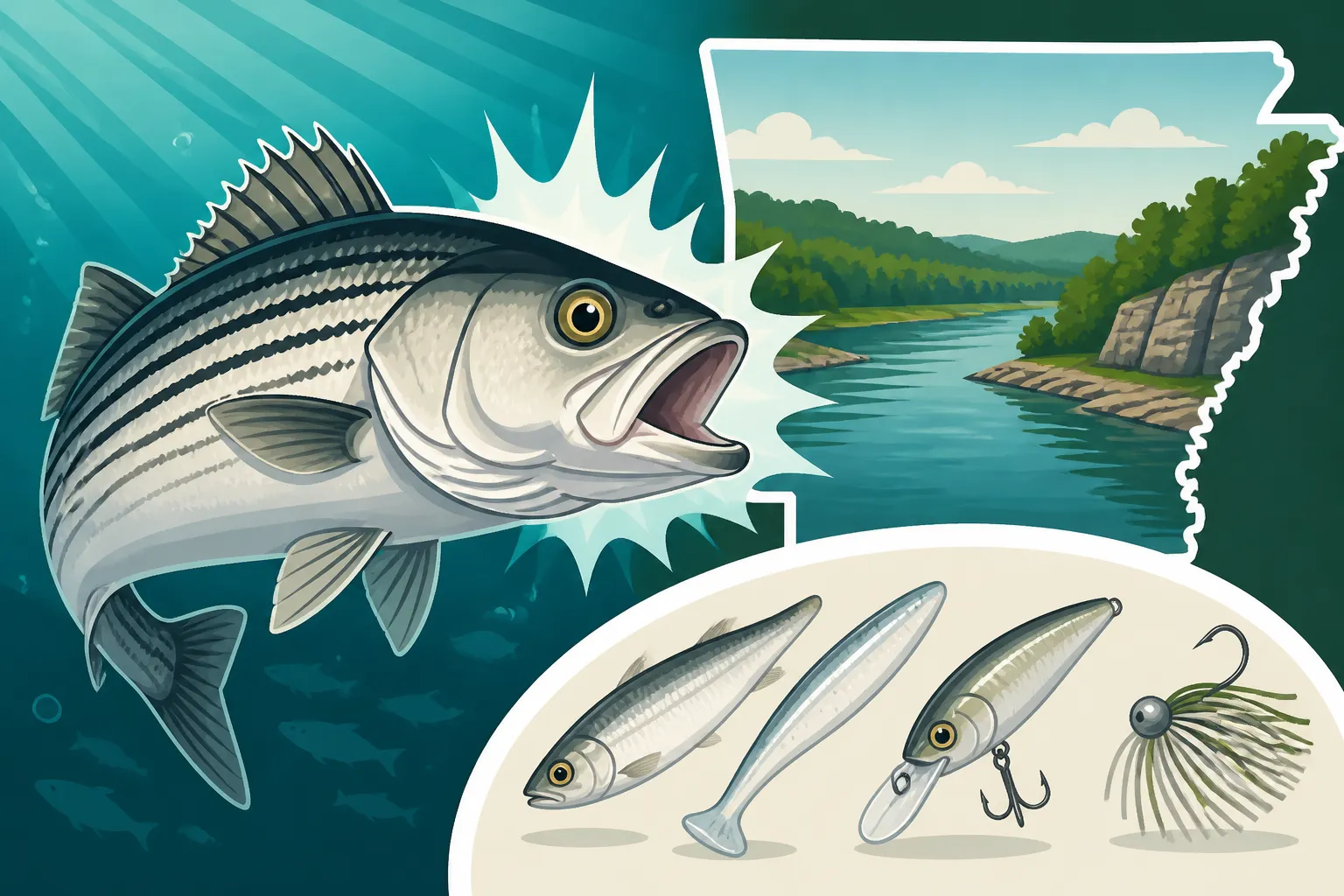
Hands down, gizzard shad is often considered the undisputed king of live baits for Arkansas striped bass. These oily, silvery fish are a primary food source for stripers in many of our major lakes like Norfork and Lake Ouachita. The sheer size of a gizzard shad, often ranging from 6 to 12 inches or more, perfectly mimics the substantial meals a large striper is looking for. Their frantic struggles on the hook send out vibrations that stripers detect from a distance, triggering an aggressive predatory response.
To fish gizzard shad effectively, you'll need specialized gear, including a good cast net for catching them and a large, well-aerated livewell to keep them frisky. Many anglers will purchase insulated bait tanks specifically designed for this purpose, often found on sites like Amazon. Presenting them involves using a large circle hook (often 5/0 to 8/0) either through the nose, back, or tail, depending on whether you're drifting, slow trolling, or anchoring. Varying your depth is key, as stripers might be anywhere from the surface to 80 feet down.
Threadfin Shad: A Smaller, Agile Alternative
While gizzard shad are great for big stripers, don't overlook threadfin shad, especially when the stripers are targeting smaller bait or when gizzards are hard to come by. Threadfins are typically smaller, usually 3 to 6 inches, making them an excellent choice for a wider range of striper sizes. They're also a bit easier to catch with a cast net and keep alive than their larger gizzard cousins.
Threadfin shad are particularly effective when stripers are schooling and feeding aggressively on smaller baitfish near the surface, or when fishing for smaller "schoolie" stripers. Rig them similarly to gizzard shad, but with slightly smaller hooks. They work wonderfully when drifted with the current or slow trolled on planer boards or downriggers, especially in open water where schools of bait are prevalent. Their natural panicked movements can really draw in nearby stripers.
Other Live Bait Options
While shad are primary, other live baits can certainly tempt Arkansas stripers. Golden shiners, often available at local bait shops, are hardy and can be very effective, especially in systems where they are a natural forage. They're usually presented similarly to shad, either free-lined or under a float, or even on a Carolina rig near the bottom.
In some areas, or when targeting stripers that might be feeding on panfish, larger bluegill or sunfish can also be viable options. Just be sure to check local regulations regarding the use of game fish as bait. These larger baits are often fished with stout tackle and heavy line, as they're typically reserved for targeting truly massive, solitary stripers that are looking for a significant meal. No matter your choice, ensure your live bait is fresh and active – a sluggish bait rarely fools a discerning striper. For more on what these fish like to eat, check out our Striped Bass Fishing in Arkansas article.
Artificial Baits That Get the Job Done
While live bait is often the gold standard, there are plenty of artificial lures that can absolutely crush Arkansas stripers, especially when they're actively feeding or when covering a lot of water. The beauty of artificials is their convenience – no cast net required!
Topwater Lures: Explosive Surface Action
There’s nothing quite like the explosive strike of a striped bass on a topwater lure. When stripers are herding baitfish to the surface, creating those iconic "boils," topwater lures are your ticket to heart-stopping action. Walk-the-dog style lures like Heddon Super Spooks or Zara Spooks are legendary for this, as are poppers and chuggers. They create a commotion and a distinct "walk" that mimics a struggling baitfish.
The key to effective topwater fishing is timing and presentation. Early mornings and late evenings, or overcast days, are prime times. Cast your lure into the feeding frenzy or just beyond it, and work it back with a retrieve that makes it dart and splash. Experiment with retrieve speed and cadence; sometimes a slow, deliberate walk is best, other times a faster, more erratic retrieve triggers the bite. Topwaters are also fantastic for scouting, as they cover a lot of water and can quickly reveal active fish. You can find a great selection of these on Amazon, often in multi-packs with various colors.
Sinking and Suspending Lures
For those times when stripers aren't on the surface but are still actively feeding, a variety of sinking and suspending lures come into play.
- Jerkbaits and Lipless Crankbaits: These are excellent for mimicking baitfish in the water column. Jerkbaits, like a Smithwick Rattlin' Rogue or a Lucky Craft Pointer, are particularly effective when twitched and paused, mimicking a wounded baitfish. Lipless crankbaits, such as a Bill Lewis Rat-L-Trap or a Strike King Red Eye Shad, offer a different vibration and can be retrieved at various depths, making them versatile for covering water. They're great for finding active schools.
- Swimbaits: Soft or hard-bodied swimbaits, especially those with a paddle tail, are phenomenal for stripers. Brands like Castaic or Keitech make soft swimbaits that can be rigged on a jig head and retrieved at a steady pace, mimicking a cruising shad. Hard-bodied swimbaits offer realistic profiles and actions, often sinking slowly, making them deadly when stripers are suspending at a specific depth.
- Spoons: Casting spoons like a Little Cleo or a Kastmaster are old-school but still incredibly effective. Their erratic fluttering action on the fall is often irresistible to stripers, especially when they're deeper. They can be cast and retrieved, trolled, or even jigged vertically when you're directly over a school of fish. Many anglers keep a selection of silver, gold, and white spoons in their tackle box, readily available from retailers.
Soft Plastics: Versatility in Action
Soft plastics have evolved immensely and are now indispensable for many striper anglers. The key here is usually size – think larger baits, often 5-8 inches or more, to tempt those big stripers.
- Large Paddle Tail Swimbaits: Similar to their hard-bodied counterparts, soft paddle tail swimbaits rigged on heavy jig heads are incredibly versatile. You can cast them to breaking fish, jig them vertically, or slow roll them near the bottom. The paddle tail creates a strong thumping vibration that stripers can feel.
- Flukes and Jerk Shads: Zoom Super Flukes or similar jerk shads, rigged weightless or with a small belly weight, can be deadly when twitched and allowed to dart and glide. They mimic a dying shad beautifully and are fantastic for when stripers are being a bit finicky or when fishing around cover.
- Grub Tails: Larger grub tails (4-6 inches) on a heavy jig head can also be effective, especially when worked along ledges or points. Their simple, steady tail action is often enough to provoke a strike.
The beauty of soft plastics is their cost-effectiveness and the ability to customize them with different jig head weights and colors to match conditions. For guidance on different ways to present these, you might find our Striped Bass Trolling Techniques or Deep Water Striper Fishing Techniques articles helpful.
Matching Bait to Conditions and Techniques
Choosing the right bait isn't just about what species it mimics; it's also about how you're presenting it and the conditions you're fishing in. Adapting your approach is crucial for success.
Trolling and Downrigging
When stripers are scattered in open water or holding deep, trolling is often the most effective method for covering ground and putting baits in front of fish. This is where both live bait and certain artificials shine.
- Live Bait Trolling: Slow trolling live gizzard or threadfin shad behind planer boards or on downriggers is a staple technique on lakes like Norfork. Planer boards spread your lines out, allowing you to cover a wider swath of water, while downriggers precisely present your bait at a specific depth, often where you've marked fish on your sonar. The key is to troll just fast enough to keep your bait moving naturally, but not so fast that it spins unnaturally.
- Artificial Trolling: Large lipless crankbaits, deep-diving crankbaits, and swimbaits are excellent for artificial trolling. These lures are designed to run true at speed and can be highly effective, especially when paired with inline weights or downriggers to reach deeper depths. Experiment with different colors and retrieve speeds until you find what the fish are keying in on.
Casting and Jigging
For active schools, especially when they're busting on the surface, or when you've located a submerged school, casting and jigging become your primary methods.
- Casting to Breaking Fish: This is where topwater lures, jerkbaits, and soft plastic flukes excel. The goal is to get your lure into the feeding zone quickly and present it with an erratic retrieve that mimics a fleeing or injured baitfish. Accuracy and speed are crucial here, as these feeding frenzies can be short-lived.
- Vertical Jigging: When stripers are holding deep in tight schools, often detected on your fish finder, vertical jigging is incredibly effective. Heavy spoons, large jigging spoons, or heavy jig heads with big soft plastics are dropped directly down to the fish. A sharp lift and fall, followed by a pause, can often trigger a strike from reluctant fish. This is particularly effective in winter when fish are lethargic but still need to feed.
Bank Fishing Considerations
While bank fishing for stripers can be more challenging due to their tendency to hold in open water or deep channels, it's not impossible, especially if you're targeting areas near deep structure or river channels accessible from shore.
- Bait Selection: Your best bet from the bank is often cut bait (strips of shad or other oily fish) fished on the bottom with a heavy sinker, or live bait if you can manage to procure and keep it healthy. Cast out as far as possible, preferably into a known channel or drop-off.
- Artificials from Shore: Casting long-distance artificials like heavy spoons, lipless crankbaits, or large swimbaits can also draw strikes. Focus on areas where baitfish might be congregating close to shore, such as around points, submerged timber, or bridge pilings. While it requires patience, a strong cast with the right bait can definitely yield results.
Here's a quick comparison of some popular striper baits:
| Bait Type | Pros | Cons | Ideal Conditions | Technique |
|---|---|---|---|---|
| Gizzard Shad | Natural, irresistible to large stripers, strong scent | Hard to catch/keep alive, requires specialized gear | Clear water, deep water, targeting trophy fish | Drifting, Trolling |
| Threadfin Shad | Natural, effective for all sizes, easier to keep alive | Smaller, may not attract largest stripers as readily | Schooling fish, surface activity, lighter tackle | Drifting, Trolling |
| Golden Shiners | Readily available, hardy, good alternative to shad | Not always preferred over shad by stripers | When shad is scarce, versatile for various depths | Drifting, Bottom |
| Topwater Lures | Explosive strikes, visually exciting, covers water | Only effective during surface feeds, less effective deep | Low light, overcast, breaking fish, calm water | Casting |
| Jerkbaits | Mimics wounded baitfish, effective suspending | Requires specific retrieve, can get snagged | Suspended fish, clear water, active feeders | Casting, Trolling |
| Swim/Paddle Tail | Versatile, realistic profile, strong vibration | Can be expensive (hard), soft can be torn easily | Various depths, active or moderately active fish | Casting, Jigging, Trolling |
| Spoons | Great for deep water, simple to use, casts far | Less natural action, can get snagged | Deep suspended fish, vertical jigging, covering water | Casting, Jigging, Trolling |
| Cut Bait | Strong scent trail, attracts lethargic fish | Less active presentation, can attract trash fish | Bottom fishing, slower bite, overnight | Bottom Fishing |
Ultimately, the "best" bait for striped bass in Arkansas is often a combination of factors: what the fish are currently feeding on, the conditions you're facing, and your chosen fishing technique. Be flexible, observe the water, and don't be afraid to experiment. You'll likely find that a well-placed live shad or a perfectly retrieved swimbait will put you on your next Arkansas trophy. For more details on specific species, check out our Arkansas Fish Species: A Complete Guide to What's Swimming in Your Waters.
Disclaimer
This article is for general informational purposes only and does not constitute professional advice. Laws, prices and regulations vary by location and change over time. Consult a qualified professional for guidance on your specific situation.