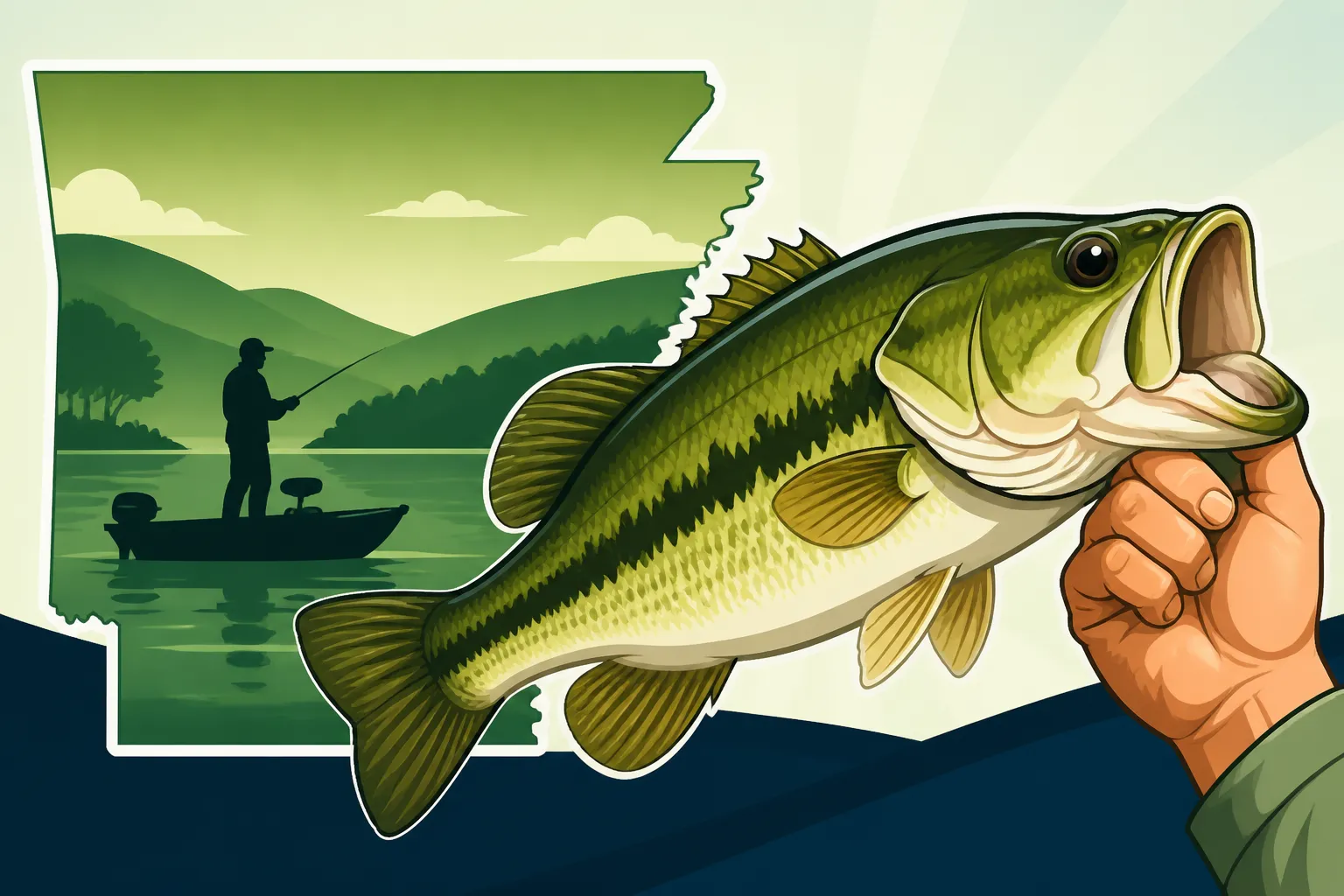
Average Size of Largemouth Bass Caught in Arkansas
It’s a common question that swirls in the minds of anglers heading to the Natural State: "What’s the average size of largemouth bass I can expect to catch in Arkansas?" You're not alone in wondering this. Many of us dream of landing a lunker, but it's equally important to have a realistic expectation of what a typical day on the water might bring. This guide will dive deep into what constitutes an "average" largemouth bass in Arkansas, exploring the factors that influence their size and offering tips to help you consistently find quality fish.
Understanding Largemouth Bass in Arkansas Waters
Largemouth bass are truly the kings of freshwater fishing in Arkansas, and for good reason! Their aggressive strikes, powerful fights, and widespread availability make them a prime target for anglers across the state. From sprawling reservoirs to winding rivers and countless smaller ponds, these fish thrive in a variety of habitats, each with its own unique influence on their growth and average size.
Why Largemouth Bass Are a Favorite
There's something incredibly addictive about chasing largemouth bass. They’re not just fish; they're a challenge, a puzzle, and a pure adrenaline rush all rolled into one. Anglers love their unpredictable nature—one minute you're slowly working a worm along the bottom, the next your rod is nearly ripped from your hands by a smashing strike. They're also incredibly visual, often hitting topwater lures with an explosive splash that gets your heart pounding. For many, catching a chunky largemouth is the quintessential fishing experience, whether you're a seasoned pro or just starting out. The sheer thrill of the fight, the satisfying bend in your rod, and the sheer number of these fish make them an enduring favorite across Arkansas's diverse fisheries.
Beyond the fight, largemouth bass are incredibly adaptable. You can find them lurking in the shallows around lily pads, tucked deep in submerged timber, or even suspended over open water. This versatility means that regardless of the season or the type of water body you're fishing, there's usually a way to tempt a bass. This adaptability, combined with their strong reproductive rates, ensures a healthy population in most of Arkansas’s prime fishing locations, making them a reliable and rewarding target. Learning how to identify a largemouth bass is often the first step in appreciating this fantastic sportfish.
Factors Influencing Bass Size
The size a largemouth bass reaches isn't just a matter of age; it's a complex interplay of several crucial environmental factors. Think of it like a recipe: you need the right ingredients in the right amounts for optimal growth. First and foremost is food availability. A lake or river brimming with abundant forage fish—like shad, bluegill, and crawfish—will naturally produce larger, healthier bass. When the pantry is full, bass can eat heartily and grow quickly. Conversely, waters with scarce food will often have more numerous, but smaller, bass.
Habitat quality also plays a massive role. Bass need good cover to ambush prey and escape predators. This means plenty of submerged timber, aquatic vegetation, rocky outcrops, and changes in bottom contour. Lakes like Lake Ouachita, with its clear waters and abundant structure, or the sprawling timber of Lake Conway, offer ideal conditions for bass to grow. Access to different depths, stable water temperatures, and healthy oxygen levels are also vital. Then there's genetics. Some bass strains simply have the genetic potential to grow larger than others. Fisheries management programs sometimes introduce specific strains known for their fast growth or trophy potential to enhance a fishery. Finally, fishing pressure can also indirectly affect average size. In heavily fished waters, larger, older fish might be removed more frequently, potentially lowering the average size, though careful regulations are in place to mitigate this.
The "Average" Largemouth Bass in Arkansas
When we talk about an "average" largemouth bass in Arkansas, it's really a sliding scale rather than a fixed number. What one angler considers average might be a respectable catch for another, depending on their experience and the specific body of water they frequent. However, we can certainly establish some common expectations for typical catches across the state.
Typical Weights and Lengths Across the State
In many of Arkansas's publicly accessible lakes and rivers, a "typical" largemouth bass often falls into the 1 to 3-pound range. These fish are generally between 12 and 18 inches long. They're strong, spirited fighters that offer plenty of fun on standard bass tackle, and they make up the bulk of catches for most recreational anglers. You'll encounter plenty of these solid keepers in places like Lake Conway, known for its healthy population of catchable bass, or even on the various pools of the Arkansas River.
It's important to understand that this "average" also encompasses fish that are slightly smaller, perhaps 10-11 inches and under a pound, especially in waters with high population density or less abundant forage. These smaller bass are often indicative of a thriving young population, which bodes well for the future of the fishery. Conversely, it's not uncommon to bump into fish in the 4 to 5-pound class, which many anglers would consider well above average, especially if they're fishing in renowned bass factories known for their trophy potential. These heavier fish might stretch the tape to 19-22 inches.
Regional Variations and Their Impact
The beauty of Arkansas fishing is its incredible diversity, and this directly impacts the size of bass you'll find. Different regions and specific bodies of water will definitely have their own "average."
For instance, the large, fertile impoundments in the southern part of the state, such as Lake Monticello Bass and Crappie Exceptions or even the vastness of Lake Ouachita, are renowned for producing truly impressive largemouth. Here, an "average" day might see you catching several fish in the 3-5 pound range, with legitimate shots at even larger bass. The sheer size of these lakes, combined with rich forage bases and excellent habitat, allows bass to grow to substantial sizes. The average might skew heavier due to the prevalence of bigger fish.
Contrast that with some of the smaller, community lakes or river systems that might have different dynamics. While still offering fantastic fishing, the average bass might lean towards the 1-2 pound range, with larger fish being less common but certainly still present. These waters often experience more fishing pressure or have a different aquatic ecosystem that influences bass growth. Even within a single body of water, different sections can yield different results. Shallow, fertile coves might hold more numbers of smaller bass, while deeper, timber-filled channels might hide fewer but larger fish. Understanding these regional nuances is key to setting realistic expectations for your outing.
Here's a quick look at general size expectations for largemouth bass in different types of Arkansas waters:
| Water Body Type | Typical Length Range (inches) | Typical Weight Range (pounds) | Notes |
|---|---|---|---|
| Large Reservoirs | 14-20 | 2-5 | Often produce the largest average sizes due to abundant forage and space. |
| Smaller Community Ponds | 10-15 | 1-2 | Can be crowded, leading to more numerous but smaller bass. |
| Rivers & Streams | 12-18 | 1.5-3 | Size often depends on flow, forage, and habitat complexity. |
| Heavily Managed Lakes | 12-22 | 2-6 | Specific management for trophy potential can increase average size. |
Beyond Average: Trophies and Regulations
While an "average" catch is satisfying, every angler secretly (or not-so-secretly!) dreams of a true trophy. Arkansas is certainly capable of producing these giants, but there are also regulations in place that help protect the fishery and ensure these big bass continue to thrive. It’s a delicate balance between opportunity and conservation.
Arkansas's Trophy Bass Potential
Arkansas is definitely a state where trophy largemouth bass dreams can become a reality. While the average might be a few pounds, there's always the chance to hook into something truly memorable. The state record for largemouth bass is well into the double digits, and every year, anglers report catching fish in the 8, 9, and even 10-pound class. Lakes like Lake Ouachita and Bull Shoals Lake are legendary for their trophy bass potential, consistently kicking out fish that would be a lifetime catch for many. These aren't just flukes; these lakes possess the deep, clear waters, vast amounts of structure, and prolific forage that allow largemouth to grow to colossal sizes.
Catching one of these giants usually requires a combination of patience, skill, and being in the right place at the right time. Anglers specifically targeting trophy bass often employ different tactics, using larger baits and focusing on prime ambush points during specific seasons, like the pre-spawn when bass are at their heaviest. It’s a pursuit that often involves many hours and careful planning, but the reward of holding a truly massive Arkansas largemouth makes it all worthwhile. Remember, even if you don't break a record, landing a 6- or 7-pound largemouth in Arkansas is an incredible accomplishment.
Size Limits and Conservation Efforts
To ensure that Arkansas's bass fisheries remain robust and continue to produce quality fish, the state has implemented various size and creel limits. These regulations are not arbitrary; they are carefully designed by fisheries biologists to promote healthy populations and allow a certain percentage of fish to grow to larger sizes, contributing to the trophy potential we all appreciate. For instance, the Largemouth Bass Daily Limit in Arkansas typically allows anglers to keep a certain number of fish per day, but there are often minimum length requirements. This means you can't just keep every bass you catch; smaller fish must be released to grow and spawn.
Specific lakes might have even more stringent regulations. A great example is Lake Monticello Bass and Crappie Exceptions, where special rules are in place that might include slot limits or different daily creel limits to manage the fishery for optimal health and trophy growth. A slot limit, for example, might require you to release fish within a certain size range (e.g., 13-16 inches) while allowing you to keep fish smaller or larger than that range. This helps protect the middle-sized, fast-growing bass that are crucial for future spawning and trophy potential. Always check the latest regulations for the specific body of water you plan to fish, as they can change and vary significantly. These efforts are crucial for sustaining the average size and the trophy potential of largemouth bass in Arkansas for generations to come.
Practical Tips for Targeting Larger Bass
If your goal is to consistently catch larger-than-average largemouth bass in Arkansas, you'll need to adjust your approach a bit. It’s not just about luck; it’s about understanding their habits and presenting appealing offerings. While catching any bass is fun, targeting bigger fish requires a more deliberate strategy.
Gear and Techniques for Big Bass
When you’re specifically gunning for those bigger Arkansas largemouth, your everyday spinning rod and worm setup might not cut it. Big bass are often wary, powerful, and require gear that can handle the abuse. Many seasoned anglers opt for heavier action baitcasting rods, often in the 7 to 7'6" range, paired with baitcasting reels spooled with stronger line—think 15-20 pound fluorocarbon or monofilament, or even braided line for dense cover. This robust setup allows you to cast heavier lures, muscle fish out of thick cover, and stand up to powerful headshakes. You can find a fantastic selection of these specialized rods and reels on Amazon to suit any budget.
As for techniques, "match the hatch" often applies, but for big bass, "match the meal" might be more accurate. Larger bass prefer larger meals, so don't be afraid to throw bigger baits. Think about swimbaits, large spinnerbaits, deep-diving crankbaits, or substantial jigs. During the pre-spawn season, when bass are packing on weight, slow-rolling a big spinnerbait along deeper points or working a jig around submerged timber can be deadly. When the bass spawn hits, pitching jigs or Texas-rigged soft plastics to visible beds can draw aggressive strikes from protective females. Topwater lures, especially frog imitations over matted vegetation, are also phenomenal for enticing explosive strikes from big bass throughout the warmer months. Don't forget to stock up on a variety of lures on Amazon before your next big bass hunt.
Locating Prime Habitat
Finding big bass isn't always about casting blindly; it's about understanding where they live and why. Larger largemouth bass are often more solitary and territorial than their smaller counterparts, preferring prime ambush points where they can effortlessly grab a meal. They aren't usually found in open, featureless water. Instead, look for significant changes in underwater topography and abundant cover.
Structure is key: this includes ledges, drop-offs, points, humps, and channel swings. Bass will often patrol these areas, especially where they intersect with deep water, allowing them quick access to safety and cooler temperatures. Think about the contour lines on a good lake map – where do they pinch together or form interesting shapes? That's often a good start.
Cover provides concealment and shade. Look for submerged timber (dead trees or brush piles), rock piles, docks, bridge pilings, and especially thick aquatic vegetation like hydrilla, coontail, or lily pads. Bass will often sit on the edge of this cover, ready to dart out and ambush passing prey. During the warmer months, shaded areas created by overhanging trees or deep docks can hold surprisingly large fish. In colder weather, they might retreat to deeper holes or channels. Learning Best Time of Day to Catch Bass and combining that with prime habitat knowledge will significantly increase your chances. A good fish finder can be an invaluable tool for pinpointing these hidden gems, and you can find a wide array of options for boats and kayaks on Amazon.
For anglers looking to explore further, identifying Best Bass Fishing Spots on Lake Ouachita, Arkansas or checking out specific locations like Bass Fishing at DeGray Lake in West-Central Arkansas can provide insights into where these prime habitats are most prevalent in the state. Remember, patience and observation are your best friends in the pursuit of Arkansas's big largemouth bass. You might even want to prepare with some Best Bait and Lures for Arkansas Bass before you head out. Understanding When Do Bass Spawn in Arkansas Reservoirs is also crucial for seasonal targeting. You can even find helpful fishing accessories and organizational solutions for your tackle on Amazon, ensuring you're always prepared.
Disclaimer
This article is for general informational purposes only and does not constitute professional advice. Laws, prices and regulations vary by location and change over time. Consult a qualified professional for guidance on your specific situation.