What Colors Work Best for Crappie Jigs in Arkansas
If you've ever stared at a wall of crappie jigs in an Arkansas tackle shop, feeling completely overwhelmed by the rainbow of options, you're not alone. Choosing the right jig color can feel like a guessing game, especially when you're hoping to land a cooler full of those delicious slabs. This guide is here to cut through the confusion and help you understand what colors really work best for crappie jigs in Arkansas, taking into account different water conditions and seasons.
Understanding Crappie Vision and Water Conditions
Before we dive into specific colors, it’s really helpful to understand a bit about how crappie see the world and how their environment impacts what they can perceive. It’s not just about what looks good to us on the shelf; it’s about what looks appealing and visible to them underwater.
The Science Behind Crappie Vision
Crappie, like many fish, have eyes designed to work well in varying light conditions, particularly in the dimmer, often murky waters they frequent. They possess both rod and cone cells in their eyes, similar to humans, which means they can detect light intensity (brightness) and also color. However, their color perception isn't identical to ours. They are particularly sensitive to certain wavelengths, with some studies suggesting they see blues, greens, and yellows quite well, and possibly some reds, especially in shallower, clearer water. The contrast a lure creates against the background is often as important as the color itself. A bright jig in clear water might stand out too much, while a subtle one might disappear. In darker or stained water, a jig that creates a strong silhouette or can reflect what little light is available will often be more effective.
How Water Clarity Affects Color Choice
This is where things get really practical for us anglers. The water we fish in Arkansas can range from gin-clear mountain streams and highland reservoirs like Bull Shoals Lake to the stained, often muddy waters of our delta lakes and major river systems like the Arkansas River. Each type of water dictates a different approach to jig color.
In clear water, fish can be quite sight-sensitive. They have a good long look at your presentation. This means natural, subtle colors often perform best. Think about what a crappie's natural forage looks like—minnows, small invertebrates—they're usually muted in color, not neon green. Conversely, in murky or heavily stained water, visibility is low. Your jig needs to create enough contrast or brightness to be seen. This is where those vibrant, sometimes unnatural, colors really shine. It’s not about mimicking natural prey as much as it is about getting noticed in a low-visibility environment. Strong vibrations from a jig with a paddle tail or a spinner can also help crappie find your lure when they can't see it well.
Top Crappie Jig Colors for Arkansas Waters
Alright, let's talk about the specific colors that have proven themselves time and again in Arkansas waters. It's not a hard and fast rule, but these are excellent starting points for your tackle box.
Natural Hues for Clear Water
When you're out on a clear lake like Lake Ouachita or Norfork Lake, especially on a bright, sunny day, you want to lean towards natural-looking jigs. These colors don't scream "predator!" but instead offer a subtle, appealing presentation that mimics the crappie's natural food source.
- White/Pearl: This is a classic for a reason. White or pearl jigs are incredibly versatile. In clear water, they imitate a shad or other baitfish perfectly. They also reflect available light well, making them visible without being garish. Many anglers swear by a simple white jig paired with a small spinner, especially in open water or around submerged timber. It’s a subtle flash that often triggers a strike when other colors might spook wary crappie.
- Grey/Silver: Similar to white, grey or silver jigs offer a muted, natural baitfish look. They work particularly well when crappie are keying in on specific forage with a silver flash. A little bit of glitter in these colors can add just the right amount of shimmer to catch a crappie's eye without being over the top. Consider these for those days when the fish seem to be ignoring everything else.
- Light Blue/Bluegill: Crappie will often feed on smaller bluegill or other panfish. A jig with subtle bluegill patterns or a light blue tint can be incredibly effective, particularly if you're fishing near areas where bluegill congregate, like around docks or brush piles. This provides a direct imitation that predatory crappie can't resist.
- Chartreuse (subtle): While often considered a bright color, a subtle chartreuse, perhaps mixed with white or a very pale green, can work in moderately clear conditions or as the light begins to fade. It provides a touch of visibility that can be just enough to attract attention without being too aggressive. This is a great transition color if the water isn't perfectly clear but not completely muddy either.
Bright and Bold for Stained or Muddy Conditions
Now, let's talk about the other end of the spectrum – those days when the water is murky, stained brown from recent rains, or just naturally dark like in some of our delta lakes or slow-moving river oxbows. In these situations, your subtle, natural jigs might as well be invisible. You need something that will stand out and grab a crappie's attention.
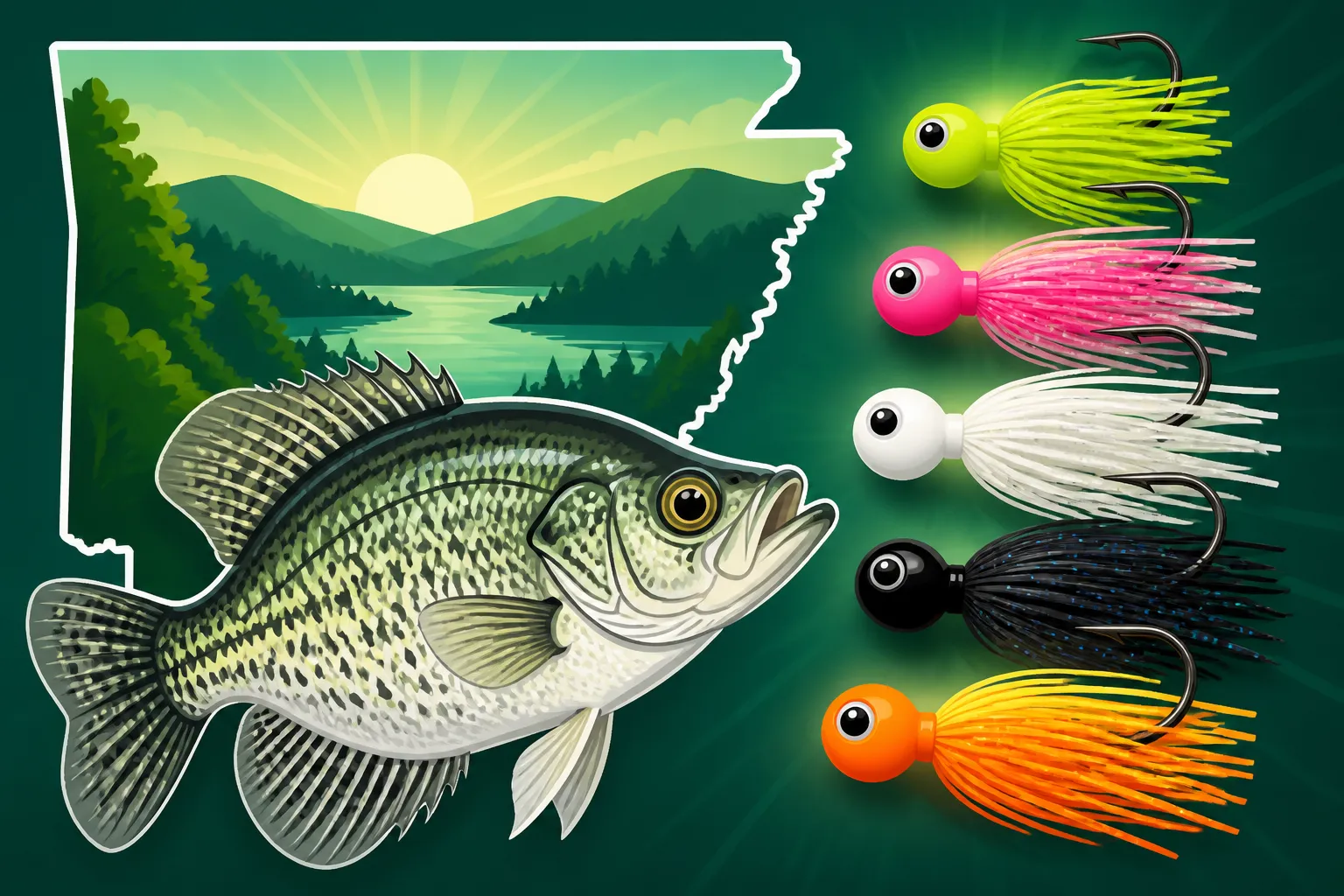
- Chartreuse (vibrant): This is the undisputed king of stained water crappie fishing. A bright, almost neon chartreuse jig creates a strong contrast and is highly visible in low-light and murky conditions. Crappie often react aggressively to it. Many anglers will pair a chartreuse jig head with a chartreuse body, or mix it with black for even more contrast. If you're buying crappie jigs, always make sure you have a healthy supply of chartreuse in various shades and sizes. What Colors Work Best for Crappie Jigs in Arkansas is a question that often leads straight to this answer!
- Orange/Pink: These bright, warm colors are also excellent for stained water. They have a good visual signature that can penetrate murky conditions. Pink, in particular, has seen a resurgence in popularity for crappie fishing, with many anglers reporting exceptional results. The combination of orange and chartreuse, or pink and chartreuse, is also a highly effective pairing.
- Black/Dark Purple: This might seem counterintuitive, but dark colors like black or dark purple create an incredibly strong silhouette against the lighter sky, even in murky water. This contrast helps crappie see the shape of your jig when bright colors might just blend into the general murkiness. These are particularly effective on overcast days or in extremely dark, muddy water. Don't underestimate the power of a dark jig! When crappie are holding tight to cover, this strong profile can be the ticket.
- Glow-in-the-Dark: While not strictly a color, jigs that glow in the dark are fantastic for extremely dark or stained water, and especially for night fishing. The luminescence provides an irresistible target for crappie, essentially giving them a beacon to home in on. You'll often see these in chartreuse or white variations, maximizing both visibility and glow potential.
Glow-in-the-Dark for Low Light
Speaking of glow-in-the-dark, these baits deserve their own moment, especially for those of us who love chasing crappie in low light conditions. Whether it's dawn, dusk, or full-on night fishing, the ability of a jig to emit light can be a game-changer.
The principle is simple: when light is scarce, a jig that makes its own light becomes incredibly attractive. This is why you see so many anglers on our Arkansas lakes venturing out for night fishing for crappie, and these jigs are often their secret weapon. The glow isn't just for attracting attention; it can also mimic bioluminescent organisms that some baitfish feed on, making it seem like a natural food source. While you can find specific glow-in-the-dark jigs, many standard jigs in colors like chartreuse or white are now made with some glow properties. You can also "charge" them with a flashlight or a UV light to enhance their glow before dropping them into the depths. This strategy works wonders on Lake Conway Bass Fishing Near Little Rock, Arkansas crappie and other typically murkier bodies of water where light penetration is limited.
Seasonal Color Adjustments and Local Preferences
Just when you thought you had a handle on it, remember that crappie behavior changes with the seasons, and so too can their color preferences. What works in the spring might not be the best bet in the dead of winter.
Spring Spawn and Aggressive Colors
Ah, spring! The time when crappie move into the shallows to spawn, often becoming more aggressive and easier to catch. During the Arkansas Crappie Spring Spawn Pattern, crappie are often focused on protecting nests or feeding heavily before and after the spawn. This is a time when bolder colors can really shine.
- Bright Chartreuse & Orange: These colors really draw attention in the shallow, often slightly stained waters of early spring. Crappie are keyed in on movement and striking anything that comes near their spawning beds. A jig in vibrant chartreuse or a hot orange can trigger an instinctive, aggressive strike.
- Pink/White Combinations: Many anglers find that pink with a white tail, or a solid pink jig, is incredibly effective during the spawn. The contrast and visibility appeal to aggressive crappie.
- Red: A jig with some red in it, perhaps a red head with a chartreuse body, can also be great during the spawn. Red is often associated with irritation or aggression, and it’s a color that stands out well in the clearer, shallower water they frequent during this period.
Remember, during the spawn, crappie aren't always looking for a meal; sometimes, they're just swatting away intruders. Bold colors work great for this.
Summer and Fall Subtlety
As the water warms up and the spawn ends, crappie often retreat to deeper, cooler waters or hold tight to submerged cover. Their feeding behavior becomes more measured, and they can be more selective. This is when you might need to dial back the flash and go for more subtle presentations.
- Natural Colors: Revisit those whites, pearls, and light blues. In deeper, clearer water, crappie have more time to inspect your jig, so a natural presentation is key. Many crappie move to thermoclines in summer, which are often in clearer water, so a realistic baitfish imitation is often best.
- Darker Blues/Greens: If the water is still relatively clear but deeper, darker blues or greens can imitate forage fish holding deeper in the water column. These colors don't scream for attention but offer a good silhouette.
- Motor Oil/Watermelon: These plastic worm colors translate well to crappie jigs in summer and fall. They offer a subtle, almost translucent quality with flecks of glitter that can be incredibly appealing to finicky crappie in clear water. Think about the subtle shimmer of a small minnow.
- Black/Blue: In the deeper, darker reaches of submerged brush piles or timber, a black and blue jig can create that strong silhouette we talked about earlier. This is especially true for crappie suspending under docks or bridges during the heat of summer. For those targeting crappie on Lake Monticello crappie limit drops to 15 fish per day or Lake Cargile Crappie Limit Rules, these subtle, deeper colors can be very effective in warmer months.
Winter Blues and Deep Water Tactics
Winter crappie fishing in Arkansas can be fantastic, but it definitely requires a different approach. Crappie often school up tightly in deep water, suspended over channels or congregating around structure. Their metabolism slows, and they might not chase a jig as aggressively.
- White/Glow: In the deep, often clear winter waters of our reservoirs, white or pearl jigs are excellent. The natural appearance, combined with the way they reflect what little light penetrates the depths, makes them highly visible. Glow-in-the-dark jigs are also incredibly effective for deep-water winter crappie, giving them a clear target in the dim conditions. How to Catch Crappie in Cold Water often involves these choices.
- Blue/Silver: These cool tones can be very effective in cold, clear water, mimicking inactive baitfish. A jig with a good amount of silver flash can also entice a bite from sluggish crappie who might not be willing to chase.
- Subtle Chartreuse: Even in winter, a pale chartreuse, often mixed with white, can provide just enough visibility to attract attention without being too aggressive. Sometimes it's about a slight visual cue rather than a bold statement.
- Black: Again, a solid black jig can be a winner in deep, dark winter haunts. The strong silhouette it presents against the lighter surface can be exactly what a crappie needs to commit.
Experimentation and Local Insights
No matter what articles or guides you read, the absolute best information often comes from a combination of personal trial and error and tapping into local knowledge.
The Importance of Trial and Error
Seriously, don't be afraid to experiment! What works like magic one day might get ignored the next. Water conditions, light levels, baitfish activity, and even angler pressure can change daily, if not hourly. Start with the tried-and-true colors recommended here, but if they're not producing, don't hesitate to switch it up. Carry a variety of colors in your tackle box, maybe even a Crappie Jigging Basics for Beginners kit you picked up from Amazon with a diverse selection, and pay attention to what the fish are telling you. Did you catch one on white, but then they stopped biting? Try pearl, then a light blue. Is the water getting murkier? Time to switch to a chartreuse or pink.
Keeping a small fishing journal can be incredibly helpful. Note the date, time, weather, water clarity, jig color, and your results. Over time, you'll start to see patterns emerge for your favorite fishing spots. It’s like being a detective, and every crappie caught is a clue! For example, if you're trying to figure out What Colors Work Best for Crappie Jigs in Arkansas at a particular spot on a particular day, sometimes it's about working through your options systematically.
Asking Local Anglers and Tackle Shops
This is gold, pure gold. The guys and gals who spend their lives on the local waters, or who own the bait shops, have seen it all. Don't be shy about striking up a conversation. Ask them what's been working lately. "Hey, I'm heading out to DeGray Lake tomorrow, any hot crappie jig colors you'd recommend right now?" You'd be surprised how willing most anglers are to share their insights, especially if you're respectful and genuinely interested.
Local tackle shops are not just places to buy gear; they are hubs of information. The staff often fish those waters themselves or hear reports from countless customers every day. They'll know if the crappie are hitting chartreuse and black, or if a specific brand of jig in a particular shade of pink is flying off the shelves. They might even have custom-tied jigs in local favorite colors that you won't find anywhere else. For example, if you are looking for How to Find Crappie in Deep Water in a specific local lake, the tackle shop will know what colors tend to perform best for vertical jigging there.
Here’s a quick reference table to help you narrow down your choices:
| Water Conditions | Light Conditions | Recommended Jig Colors | Notes |
|---|---|---|---|
| Clear Water | Bright Sun | White, Pearl, Light Blue | Subtle, natural baitfish imitation, minimal flash |
| Overcast/Low Light | White, Grey, Pale Chartreuse | Slightly more visibility, still natural | |
| Stained/Murky Water | Bright Sun | Vibrant Chartreuse, Orange | High visibility, strong contrast, aggressive strikes |
| Overcast/Low Light | Chartreuse, Pink, Black/Purple | Strong contrast, silhouette, good for very low visibility | |
| Deep Water (Winter/Summer) | Any (limited penetration) | White, Glow-in-the-Dark, Blue/Silver, Black | Visibility via glow or strong silhouette, mimic inactive baitfish |
| Night Fishing | Dark | Glow-in-the-Dark, Black | Emits own light or creates strong silhouette |
| Spring Spawn (Shallow) | Any | Bright Chartreuse, Pink, Red | Aggressive, attention-grabbing colors for territorial crappie |
Ultimately, finding What Colors Work Best for Crappie Jigs in Arkansas is a journey, not a destination. It's about combining general knowledge with local insights and a willingness to adapt on the water. Don't be afraid to buy a few jigs from Amazon that catch your eye, or pick up a "mystery pack" of assorted colors. The next time you're out on an Arkansas lake or river, you'll have a much better idea of how to arm yourself for success. Happy fishing!
Disclaimer
This article is for general informational purposes only and does not constitute professional advice. Laws, prices and regulations vary by location and change over time. Consult a qualified professional for guidance on your specific situation.