How to Tell a Kentucky Bass from a Largemouth
It can be incredibly frustrating when you're out on the water, you've just landed a beautiful bass, and you're staring at it, trying to figure out if it's a largemouth or something else entirely. We've all been there, especially with the subtle differences between species that often share the same waters. This guide is here to help you confidently identify the "Kentucky Bass," also known as a spotted bass, and clearly distinguish it from its more famous cousin, the largemouth bass, right here in Arkansas.
The Core Confusion: Why It's So Easy to Mix Them Up
You're not alone if you've ever held a bass in Arkansas and felt a moment of doubt about its identity. These fish, especially the largemouth and the spotted (Kentucky) bass, share a lot of common ground, making positive identification a bit of a head-scratcher at times. It's like trying to tell two siblings apart who have similar features but distinct personalities once you get to know them.
Shared Habitats and Similarities
One of the biggest reasons for the confusion is that Kentucky bass and largemouth bass often swim in the same neighborhoods. You'll find them coexisting in many of Arkansas's beautiful reservoirs and slower-moving rivers. Think about a lake like Bull Shoals or Greers Ferry; both species thrive there. They also have a similar general body shape – that torpedo-like, powerful build that makes them such incredible fighters. Their coloration can even be quite similar depending on the water clarity and forage, ranging from deep green to lighter olive hues with darker markings. They're both ambush predators, too, so you might catch them on similar lures and baits, which doesn't help in the identification process once they're in the boat. For a deeper dive into all the species, you might want to check out Arkansas Fish Species: A Complete Guide to What's Swimming in Your Waters.
Importance of Correct Identification
Now, you might be thinking, "What's the big deal? A bass is a bass, right?" Well, not quite! While it might seem like a minor detail, knowing exactly what kind of bass you've caught is actually pretty important for a few reasons. First, there can be different fishing regulations and size limits for different bass species in various waters across Arkansas. Imagine thinking you've caught a legal largemouth, only to find out later it was an undersized spotted bass, leading to a potential penalty. Nobody wants that kind of hassle! Second, for those of us who really love the sport, there's a deep satisfaction in understanding the fish we pursue. Knowing the species helps you understand its behavior, preferred habitat, and even the best techniques to catch more of them. It adds another layer to your angling knowledge. Finally, for conservation efforts and biological surveys, accurate reporting of catches is vital. Every little bit of information helps our wildlife agencies manage our precious fisheries effectively.
Key Distinguishing Features of Kentucky Bass (Spotted Bass)
Alright, let's get down to brass tacks and talk about the unique traits that set the Kentucky bass apart. Once you know what to look for, these "spotty" characters become much easier to identify. Often, folks in Arkansas refer to them simply as "spotted bass," and for good reason! If you're curious about the species overall, you can learn more by reading What is a Kentucky Bass?.
Mouth Size and Jawline
This is often the first visual cue most anglers use, and it's a crucial one. When you look at a Kentucky bass, its mouth is noticeably smaller than a largemouth's. If you gently close its mouth and extend its upper jaw, you'll notice that the corner of the jaw typically does not extend past the middle of its eye. Sometimes it might barely reach the back edge of the eye, but rarely beyond it. Think of it like a neatly trimmed beard, not one that's grown wild and past the chin. This smaller mouth gives them a slightly different feeding habit, often preferring smaller baits and lures, which is a good piece of information for any angler to have in their toolkit.
Lateral Line and Body Pattern
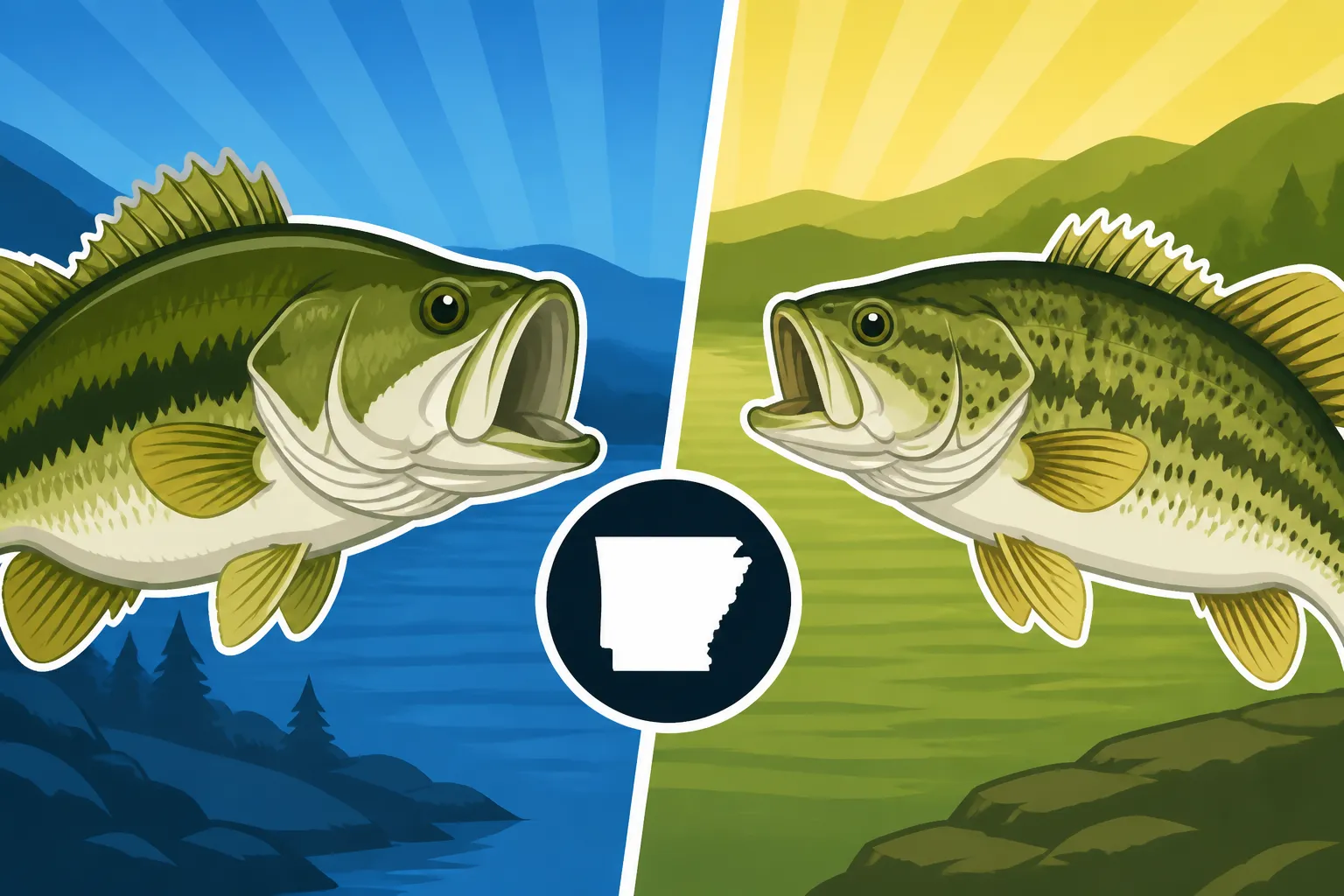
This is where the "spotted" part of their name really comes into play. While both largemouth and spotted bass have a distinct lateral line running down their sides, the Kentucky bass has something extra special. Below its prominent lateral line, you'll find rows of distinct dark spots, almost like they were painted on in neat lines. These spots give the fish a somewhat diamond-like or checkered pattern, especially on its lower flanks. It's not just a general mottled look; these are usually well-defined, individual spots. When you're trying to figure out How to Tell a Kentucky Bass from a Largemouth at Bull Shoals, this is one of the most reliable visual clues, as those spots are almost always present and clear on a Kentucky bass from that region.
Tooth Patch on Tongue
This is perhaps the most definitive "secret weapon" for identifying a Kentucky bass. It's a tactile test that leaves no room for doubt. If you gently open the mouth of a Kentucky bass and carefully run your finger across its tongue, you will feel a rough, oval-shaped patch of teeth. It's not a huge patch, but it's definitely there, feeling like sandpaper. Largemouth bass simply do not have this feature. It’s an anatomical giveaway that makes identification foolproof. So, if you're ever in doubt after looking at the mouth and spots, a quick check of the tongue will give you your answer. Always be careful when checking for teeth, of course!
Fin Characteristics
The dorsal fin (the one on its back) also offers some clues. Kentucky bass usually have a dorsal fin that appears to be more connected, with a less pronounced or even absent "notch" or separation between the spiny front part and the soft-rayed rear part. While largemouths have a very deep, almost complete separation, the Kentucky bass's dorsal fin looks more like one continuous fin, or at least has a much shallower dip in the middle. This isn't always as obvious as the mouth or the tongue patch, but it's another subtle indicator to look for.
Key Distinguishing Features of Largemouth Bass
Now, let's turn our attention to the king of many Arkansas waters, the largemouth bass. This is probably the fish most anglers envision when they think "bass." It's typically the more sought-after species due to its aggressive strikes and often larger size. Understanding these specific traits will help you confirm you've indeed caught a largemouth. You can also explore How to Identify a Largemouth Bass for more details.
Mouth Size and Jawline
As its name suggests, the largemouth bass has a significantly larger mouth. If you close its mouth and extend the upper jaw, the corner of its jaw will comfortably extend well past the back edge of its eye. Imagine that wild beard we mentioned earlier – it just keeps going! This larger mouth allows them to swallow bigger prey items, from hefty crawfish to small baitfish and even ducklings, which contributes to their potential for rapid growth and impressive size. When you compare it side-by-side with a Kentucky bass, the difference in mouth size is usually quite striking.
Lateral Line and Body Pattern
The largemouth bass is characterized by a prominent, dark horizontal lateral line that runs from its gill plate all the way to its tail. This line can sometimes appear broken or splotchy, but it's typically a continuous band. Unlike the Kentucky bass, a largemouth will generally not have those distinct rows of individual spots below the lateral line. Instead, its lower flanks might be mostly white or a lighter cream color, perhaps with some irregular blotches or a more mottled pattern, but not the clean, distinct spotting of a spotted bass. The overall body pattern is often more uniform green or olive on the back, fading to lighter shades on the belly.
Absence of a Tongue Tooth Patch
This is the direct contrast to the Kentucky bass's defining feature. When you open the mouth of a largemouth bass and feel its tongue, you will find it is smooth. There is absolutely no rough, oval-shaped patch of teeth on its tongue. This is a crucial, undeniable differentiator. If you're ever questioning your identification, this simple tactile check will give you a definitive answer.
Dorsal Fin Separation
Look closely at the dorsal fin of a largemouth bass. You'll observe a very deep, almost complete notch or separation dividing the spiny front portion of the fin from the soft-rayed rear portion. It looks like two distinct fins, barely connected at the base. This deep separation is a classic characteristic that helps distinguish it from the more continuous dorsal fin of a Kentucky bass or even the less pronounced notch of a smallmouth bass. For a useful comparison with another common species, you might be interested in Largemouth Bass vs Smallmouth Bass: What's the Difference?.
A Side-by-Side Comparison Table
To make things even clearer, here’s a handy table summarizing the key differences between Kentucky Bass (Spotted Bass) and Largemouth Bass. You can even print this out and keep it in your tackle box for quick reference!
| Feature | Kentucky Bass (Spotted Bass) | Largemouth Bass |
|---|---|---|
| Mouth Size/Jawline | Corner of jaw usually does not extend past the middle of the eye. | Corner of jaw typically extends well past the back edge of the eye. |
| Tongue | Has a rough, oval tooth patch on the tongue. | No tooth patch on the tongue; it feels smooth. |
| Lateral Line | Distinct rows of dark spots below the lateral line, often forming a diamond pattern. | Prominent dark lateral line, usually continuous but can be broken, no distinct rows of spots below it. |
| Dorsal Fin | Appears more connected; shallow or absent notch between spiny and soft-rayed sections. | Deep, almost complete separation/notch between spiny and soft-rayed sections. |
| Overall Shape | Often appears slightly more slender and streamlined. | Typically more robust and football-shaped, especially when mature. |
Practical Tips for Field Identification in Arkansas
Being able to quickly identify your catch on the water is a skill that comes with practice. But with a few simple techniques and by knowing what to focus on, you'll be a pro in no time. These tips are especially helpful when you're targeting bass in diverse Arkansas waters, whether it's a clear Ozark stream or a murky delta lake.
"Thumb Rule" for Mouths
When you've got a bass in hand, the quickest way to differentiate between a largemouth and a Kentucky bass is often by checking its mouth. Gently close the fish's mouth and see where the corner of its upper jaw lines up with its eye.
- If the jaw stops before or at the middle of the eye, you're almost certainly holding a Kentucky bass.
- If the jaw extends past the back edge of the eye, then you've got yourself a largemouth.
This "thumb rule" (as in, using your thumb to trace the jawline) is a fast and reliable visual cue. It’s a great trick to use if you’re catching and releasing quickly, without causing too much stress to the fish.
Running Your Finger Over the Tongue
This is the ultimate test, the one that seals the deal. After checking the mouth, if you still have an inkling of doubt, gently but firmly open the bass's mouth and carefully insert a clean finger (or even a small, dull object like the end of a pen, if you're squeamish about fish slime) to feel the tongue.
- If you feel a distinct, rough patch of teeth on the tongue, congratulations, you've caught a Kentucky bass. This feature is almost always present and palpable.
- If the tongue feels perfectly smooth, without any rough patch, then you're holding a largemouth bass.
This method is virtually foolproof. Just be cautious of other teeth inside the mouth and handle the fish gently to avoid injury to yourself or the fish. You can find some excellent bass grips and protective gloves on platforms like Amazon that make handling fish safer and easier while performing these checks.
Observe Behavior and Habitat Cues
While not as definitive as physical characteristics, observing where and how you catch a bass can provide some supporting clues, especially in Arkansas.
- Kentucky Bass tend to prefer slightly clearer, rockier waters and can often be found deeper or in areas with more current. They're common in the deeper sections of reservoirs and many of our Ozark streams. If you're fishing a deep bluff wall or a current seam, and you pull out a bass, it's a good time to double-check for those Kentucky bass characteristics. They might hit smaller crankbaits, jigs, or finesse worms more readily.
- Largemouth Bass are champions of cover. They love submerged timber, lily pads, grass beds, brush piles, and shallow coves. If you're pulling a fish out of heavy cover in a shallow, warmer part of a lake, chances are good it's a largemouth. They are often more aggressive in striking larger topwater lures, spinnerbaits, or big plastic worms thrown into that thick stuff. For understanding where these fish like to hang out, reading guides like Best Lakes in Arkansas for Bass, Crappie, and Catfish or Bass Fishing in Arkansas: Largemouth, Smallmouth, and Kentucky Bass Explained can be very insightful.
By combining these visual, tactile, and environmental cues, you'll soon be able to confidently identify whether you've landed a feisty Kentucky bass or a classic largemouth on your next Arkansas fishing adventure. This confidence not only helps with adherence to local regulations like Largemouth Bass Daily Limit in Arkansas but also enriches your entire angling experience.
Disclaimer
This article is for general informational purposes only and does not constitute professional advice. Laws, prices and regulations vary by location and change over time. Consult a qualified professional for guidance on your specific situation.