Largemouth Bass Daily Limit in Arkansas
It’s easy to feel overwhelmed by fishing regulations, especially when you’re just trying to enjoy a relaxing day on the water. Many anglers grapple with understanding exact limits, fearing they might accidentally break a rule. When it comes to chasing largemouth bass in Arkansas, knowing your daily limit is absolutely essential for a successful and legal trip. This comprehensive guide is here to untangle the confusion, providing clear details on statewide limits, specific lake exceptions, and all the crucial information you need to stay compliant.
Understanding the Statewide Largemouth Bass Limit in Arkansas
Let's cut right to the chase and lay out the fundamental rule for largemouth bass in Arkansas. This is your baseline, the regulation you should commit to memory before looking into any special circumstances. It’s a carefully crafted rule designed to protect the very fish we all love to catch.
The Standard Rule: Five Fish
For the vast majority of lakes, rivers, and ponds scattered across Arkansas's stunning landscape, the standard daily limit for largemouth bass is five fish. This means that within any single 24-hour period, you are permitted to harvest and keep a maximum of five largemouth bass. This five-fish rule is your go-to regulation and applies to countless fishing spots, ranging from small, private farm ponds to the large, popular public reservoirs where no specific, localized rules are in effect. Always assume this is the rule unless you've confirmed an explicit exception for your chosen fishing destination.
This five-fish limit isn't just an arbitrary number pulled out of a hat; it's a fundamental pillar of fisheries management established by the Arkansas Game and Fish Commission (AGFC). Their team of biologists and conservationists constantly monitor fish populations, studying everything from spawning success and growth rates to the pressure exerted by anglers. Without such limits, it wouldn't take long for our incredible bass fisheries to face severe depletion, disrupting the natural balance and leaving fewer fish for future generations. By maintaining this standard, the AGFC helps ensure that enough bass survive to reproduce and grow, supporting a sustainable and vibrant fishing environment that keeps anglers coming back year after year. For a broader overview of what's allowed in our waters, check out our guide on Arkansas Fish Size and Daily Limits.
While this statewide rule provides a solid starting point, it's crucial to remember that fishing regulations can sometimes feel like a complex puzzle with all its intricate details. Just because five fish is the standard doesn't mean it's universally applied. It's always a smart move to double-check the specific regulations for any particular body of water you plan to fish, especially if you're venturing into an unfamiliar lake or river. Up-to-date information is readily available on the AGFC's official website or by picking up a copy of their current fishing regulations booklet from a local sporting goods store or bait shop.
Why Daily Limits Exist
Daily limits are not put in place to inconvenience anglers; rather, they serve as a critical tool in responsible fisheries management. Imagine the scenario without them: an individual angler could potentially catch dozens of bass in a single day, taking them all home. If a significant number of anglers did this consistently, even the most robust bass fisheries would quickly be overwhelmed and ultimately collapse. The AGFC invests considerable time and resources into scientific research, assessing the health of fish populations, tracking spawning success, analyzing growth patterns, and understanding angler harvest rates. These daily limits are a direct outcome of that detailed research, striking a vital balance between an angler's desire to harvest fish and the absolute necessity of conserving the resource for long-term health.
One of the primary objectives of these limits is to prevent overharvesting. Largemouth bass are an immensely popular game fish, renowned for their aggressive strikes and spirited fights, making them an absolute joy to pursue. However, their popularity also means they are particularly vulnerable to overfishing. Daily limits act as a safeguard, ensuring that even during periods of intense fishing pressure or when the bite is exceptionally strong, only a sustainable number of fish are removed from the aquatic ecosystem. This protective measure allows juvenile fish ample opportunity to mature and contribute to future spawning events, thereby maintaining a healthy and balanced age structure within the bass population. It's all about guaranteeing that when you next cast your line, there's a strong likelihood you'll still be able to hook into some vibrant, healthy largemouth. This foundational aspect is integral to the comprehensive Arkansas Fishing Regulations Guide.
Beyond simply preventing the depletion of fish stocks, daily limits also play a significant role in promoting a more equitable distribution of the catch among all anglers. If a few individuals were permitted to keep an excessive quantity of fish, there would inherently be less for everyone else. These regulations foster a shared resource mentality, ensuring that while you are welcome to enjoy the rewards of your angling efforts, you are also consciously leaving plenty of fish for fellow anglers and, crucially, for the ongoing health of the fish population itself. This principle is a core tenet of the conservation ethic shared by dedicated anglers, who understand that our collective actions today directly influence the quality and availability of fishing opportunities for generations to come.
Measurement and Keeping Your Catch Legal
The thrill of hooking a largemouth bass is undeniable, but your responsibility doesn't end there. Understanding how to accurately measure your catch and handle it properly—whether you intend to release it or retain it—is just as vital as knowing the daily limit itself. Mismeasuring a fish can lead to an unwitting violation of regulations, a scenario no angler wants to encounter.
How to Measure a Bass Correctly
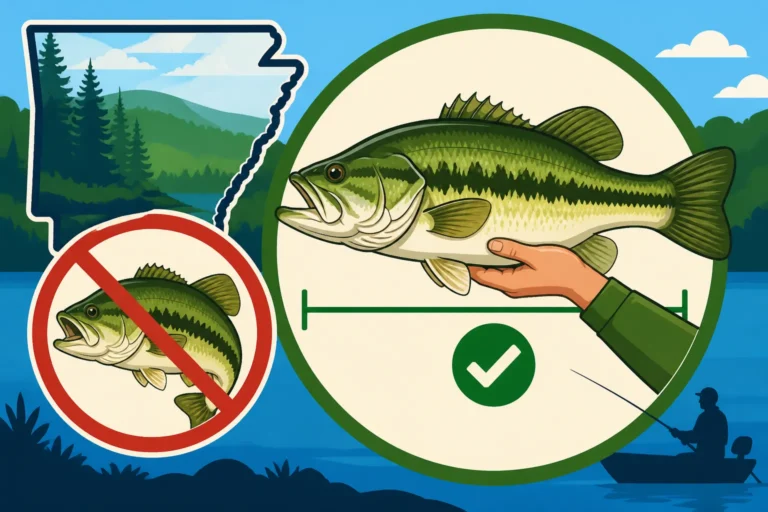
So, you’ve reeled in a bass, and it looks like a good one. How do you ensure it’s a legal keeper and measure it correctly? This might seem straightforward, but there’s a precise technique involved. You must measure the fish from the absolute tip of its snout, with its mouth completely closed, all the way to the very end of its tail. Critically, the tail should be squeezed or compressed to achieve the maximum possible length. Picture this: you're pushing the fish's nose firmly against a flat, perpendicular surface, and then gently pinching its tail together to measure straight back. Avoid the common mistake of measuring along the natural curve of its body, as this will result in an inaccurate, shorter measurement and could lead to you unknowingly keeping an undersized fish.
To achieve this accurately, a robust measuring board or a specialized fish measuring tape is absolutely indispensable. Many seasoned anglers highly favor a bump board because it offers a consistent, flat surface to firmly position the fish's nose against. This design makes obtaining an accurate measurement much easier, especially when dealing with a feisty, flopping bass. You can find excellent, highly durable measuring boards—some even foldable for convenient storage—from reputable brands or generic options on popular online marketplaces like Amazon. Having such a tool readily accessible in your boat or tackle box means you're always prepared to quickly and precisely verify your catch against the prevailing legal size limits. Remember, precision is key here—even a fraction of an inch can be the difference between a legal keeper and a fish that must be immediately released.
It's also important to clarify a common point of confusion: while the statewide largemouth bass daily limit is five fish, there isn't typically a statewide minimum size limit for largemouth bass in Arkansas. This implies that if you're fishing in waters without any specific slot limits or minimum length requirements, any bass you catch (up to your five-fish daily limit) is considered a legal keeper regardless of its size. However, as we will explore shortly, some specific lakes do impose unique size restrictions, so it is paramount to always confirm these local rules before assuming there's no minimum length. For instance, certain waters might stipulate a 12-inch minimum, or implement a "slot limit" where fish falling within a specified size range must be released.
Handling Bass for Release and Retention
Whether your intention is to keep a bass or release it back into the water, proper handling techniques are paramount for the fish's survival and overall health. For those fish destined for release, the goal is to minimize their time out of the water. Always hold them horizontally, ensuring their belly is adequately supported, and under no circumstances should you stick your fingers into their delicate gill plates. If you're utilizing a net, opt for one with a rubberized, knotless mesh; these are far gentler on the fish's protective slime coat and fins compared to traditional nylon nets. Aim for a quick measurement and a swift photograph, then carefully return the fish to the water, allowing it sufficient time to recover and swim off under its own power.
When you're choosing to retain fish, a well-maintained livewell becomes your most valuable asset. A livewell that is properly aerated and circulated helps keep your catch healthy and vigorous until you're ready to head back to shore. This is particularly crucial for tournament anglers who might be culling fish throughout the day to meet specific weight or size criteria. For recreational anglers, keeping fish healthy not only contributes to ethical practice but also ensures better quality for the table later on. If you don't have access to a livewell, or if you're fishing from the bank, a stringer can be an alternative, but always ensure the fish remain in the water, shielded from direct sunlight, and strung in a manner that minimizes undue stress. While not strictly required for daily limit compliance, a good, portable fish scale can also be a fun addition to quickly weigh your prized catches. You can find high-quality, durable measuring boards, fish lip grippers, and other essential handling tools readily available on Amazon to round out your fishing arsenal.
There's a common misconception that once a fish is placed on a stringer or in a livewell, it immediately counts against a "possession limit" for the day, which can become confusing if you're planning multi-day fishing trips or traveling. The AGFC has provided clarity on what constitutes a fish's final point of storage in Arkansas, and understanding this distinction is incredibly helpful. For bass, once they are harvested and moved into your cooler for transport, or placed into your home freezer, they transition from being counted against your "daily limit" to becoming part of your general "possession." The more recent regulatory changes have further clarified this, making it simpler for anglers to manage their catch, particularly when undertaking extended trips. For a deeper dive into these important distinctions, be sure to read our article on What counts as a fish's final point of storage in Arkansas.
Specific Lake Exceptions for Largemouth Bass
While the five-fish statewide limit provides the general framework for bass fishing in Arkansas, our state is blessed with an incredible diversity of fisheries. Consequently, some of these unique aquatic environments necessitate tailored regulations. It's critically important to never assume the standard rule applies universally, as overlooking a specific lake's unique regulation can inadvertently lead to legal trouble, even if your intentions were entirely innocent.
The Unique Case of Lake Monticello
Ah, Lake Monticello – a truly exceptional fishing destination renowned for its potential to yield some truly enormous largemouth bass. This lake stands as a prime illustration of why you absolutely must consult the specific regulations for the body of water you intend to fish. While the overarching statewide daily limit for largemouth bass remains five fish, Lake Monticello implements a crucial exception: of your five-fish daily limit, you are permitted to keep only one bass that measures 16 inches or longer. This means that if, for example, you catch four bass under 16 inches and one bass exceeding 16 inches, you have reached your legal limit for the day. Should you happen to catch two bass that are 16 inches or longer, you are legally required to immediately release one of them.
This particular regulation is far from arbitrary; it is a textbook example of a "slot limit" strategically designed to protect and enhance a trophy fishery. The AGFC's objective here is to encourage anglers to release the larger, more mature bass that play an indispensable role in maintaining robust breeding populations. These larger fish contribute significantly to the genetic health and overall strength of the lake's bass population. By restricting anglers to keeping only one large fish, the commission effectively increases the number of trophy-sized bass that remain in the water, allowing them to continue growing and producing more offspring. This carefully considered strategy ultimately benefits every angler who dreams of hooking a truly impressive lunker at Lake Monticello. You can explore this specific rule in more detail in our dedicated piece, Only one bass 16 inches or longer allowed at Lake Monticello.
Therefore, if Lake Monticello is on your fishing itinerary, ensure your measuring device is ready and that you're prepared to make informed decisions about which fish to retain and which to gently release. Adopting this small adjustment to your fishing approach directly contributes to the exceptional quality of bass fishing that Lake Monticello consistently provides, making it a truly special place for dedicated bass anglers.
Other Notable Lake Exceptions or Lack Thereof
Beyond the specific regulations of Lake Monticello, you might naturally wonder if other Arkansas lakes have similar distinct rules governing largemouth bass. The reassuring news is that for many of Arkansas’s other phenomenal bass fisheries, the standard five-fish daily limit, typically without a minimum size limit or a slot restriction, generally applies. Renowned fishing destinations such as Lake Ouachita, Bull Shoals Lake, Beaver Lake, and Greers Ferry Lake largely adhere to the statewide regulations for largemouth bass. This consistency often simplifies planning for anglers who frequently visit these popular reservoirs, though a quick verification before your trip is always a prudent practice. For a thorough overview of statewide regulations, our Full guide to Arkansas fishing license costs and limits for 2026 provides extensive details.
It's important to understand, however, that the AGFC regularly reviews and updates these regulations based on ongoing biological surveys and comprehensive data collected from various water bodies. A lake that currently follows statewide rules could potentially have a special regulation introduced in the future if biologists determine a need to protect a particular size class of fish or address evolving population dynamics. This proactive management approach is critical for keeping our fisheries healthy, productive, and enjoyable for all. For instance, while largemouth bass often have more lenient size rules, species like smallmouth bass in certain flowing waters frequently come with minimum length requirements, typically set at 12 inches.
Furthermore, it’s worth noting that smaller, local community fishing ponds or waters managed by city parks might sometimes impose even more restrictive rules, or even implement "catch and release only" policies. These specific regulations are almost always clearly posted at public access points. So, while the larger, well-known reservoirs mostly stick to the five-fish general rule for largemouth, that quaint pond in your local park might have its own distinct set of guidelines. Always make it a habit to look for posted signage, consult the most recent AGFC regulations, or engage with staff at a local bait shop for the most accurate and up-to-date information pertaining to your chosen fishing location.
Here's a convenient summary table to help clarify the largemouth bass daily limits:
| Water Body | Largemouth Bass Daily Limit | Size Restrictions | Notes |
|---|---|---|---|
| Most Arkansas Waters | 5 fish | None (unless otherwise specified) | Standard statewide regulation for most lakes and rivers. |
| Lake Monticello | 5 fish | Only 1 fish of the 5 may be 16 inches or longer. | Designed to protect trophy bass and promote larger fish. |
| Community Ponds/Parks | Varies | Varies (often more restrictive, sometimes catch & release) | Always check local signage and specific park regulations. |
Common Mistakes and Misconceptions About Bass Limits
Even the most seasoned anglers can occasionally stumble over the finer points of fishing regulations. It’s remarkably easy to make assumptions or inadvertently conflate different types of limits, which can unintentionally lead to violations. Let's shine a light on some of the most frequent pitfalls and clear up any lingering confusion.
Confusing Daily Limit with Possession Limit
This distinction is, without a doubt, the most common source of confusion for many anglers, especially if you're planning an exciting multi-day fishing adventure. The "daily limit" refers to the absolute maximum number of fish you are permitted to catch and keep within a single 24-hour period. Crucially, this limit resets with each new day. The "possession limit," historically, was the total number of fish you could have in your possession after you had concluded your fishing activity on the water, or at your campsite, back home, or in your vehicle. In previous years, Arkansas maintained a possession limit typically set at double the daily limit; meaning, if the daily limit was five bass, you could possess ten.
However, as a significant and angler-friendly change implemented for the 2026-27 season, Arkansas has eliminated statewide possession limits for the vast majority of species, including largemouth bass! This was a monumental update, specifically designed to simplify things for anglers and reduce anxiety about accidental violations. Now, provided you meticulously adhere to the daily limit each and every day you are actively fishing, you no longer need to worry about exceeding a cumulative possession limit when you transport your catch home or even across state lines. This means you can legally keep five bass today, another five bass tomorrow, and as long as you are not exceeding the daily limit during your active fishing sessions, you remain compliant. This regulatory shift is a game-changer for extended fishing trips, and its implications are thoroughly detailed in our guide, Arkansas eliminated statewide possession limits for the 2026-27 season.
So, the core takeaway here is crystal clear: your primary focus should be on strictly adhering to the daily limit while you are actively engaged in fishing. Once your fish have been cleaned, frozen, or otherwise prepared for long-term storage beyond the immediate scope of your fishing trip, they are generally no longer counted against your active daily limit for subsequent days. But always remember, this important change primarily impacts possession at your home or during transportation. You absolutely still cannot exceed the daily limit while you are actively fishing. It's always a good idea to carry a waterproof copy of the current regulations in your tackle box or on your boat, or even download an official PDF to your smartphone before heading out. Having the rules readily accessible for a quick reference can often save you from considerable headaches and potential issues.
The Importance of Knowing Local Rules
I cannot emphasize this point enough: it is absolutely critical to always be aware of the specific rules that apply to the exact body of water you are fishing. Operating under the assumption that regulations applicable to, say, Lake Ouachita are identical to those on Lake Monticello (as we’ve already discussed) is a sure path to potential trouble. Every single lake, and often distinct sections of the same river, can be governed by unique regulations meticulously tailored to its specific fishery management needs. These localized rules might encompass different daily limits, varying minimum or maximum size limits (also known as slot limits), or even restrictions on certain fishing methods. This isn't just about bass either; many other popular species, such as crappie or trout, frequently have highly localized rules that demand your attention and awareness.
So, how do you reliably stay informed and up-to-date? The most effective approach is to consistently consult the latest official Arkansas Game and Fish Commission fishing regulations guide. This comprehensive guide is conveniently available online as a downloadable PDF, and physical copies can be readily obtained at AGFC offices, a multitude of sporting goods stores, and most local bait shops throughout the state. Particularly in unfamiliar areas, stopping by a local tackle shop to pick up some bait and a current regulations booklet is an exceptionally smart move. Not only will they have the most current printed AGFC regulations, but they can also offer invaluable insights into the local bite and what techniques are currently proving most effective!
Before you even step out the door for your fishing excursion, dedicate a few minutes to specifically look up the lake or river you intend to fish. A quick search on the AGFC website, using terms like "Arkansas fishing regulations [Lake Name]", will typically lead you directly to the precise details you require. While this might seem like a minor preparatory step, it is an absolutely crucial one for being a responsible, ethical, and fully legal angler. Ignorance of the law is never a valid excuse, and remember, game wardens are on patrol specifically to ensure these regulations are upheld, thereby safeguarding our invaluable natural resources for the enjoyment and benefit of everyone. And while you're at it, confirm your Arkansas Fishing License Rules and Costs are current!
Gear and Techniques for Responsible Bass Fishing
Responsible angling extends far beyond simply memorizing the rulebook; it also encompasses possessing the correct tools and employing techniques that actively promote conservation, regardless of whether you plan to keep your catch or practice catch and release. Investing in a few key pieces of equipment can significantly bolster your compliance with regulations and, crucially, enhance the well-being of the fish you encounter.
Essential Gear for Measuring and Handling
First and foremost, it is absolutely non-negotiable to have a dependable measuring device at your disposal. As we discussed earlier, a bump board is an outstanding choice for this purpose because it facilitates an accurate and consistent measurement from the fish's snout to its tail. You can discover excellent, robust models from respected brands like Rapala or Ketch, as well as high-quality generic options, all readily available through online retailers such as Amazon. Steer clear of flimsy tape measures that are prone to bending or stretching, especially when attempting to measure a vigorous, struggling bass. Accuracy is paramount to prevent any accidental violations of size limits, a concern that becomes particularly acute on waters like Lake Monticello where specific length requirements are strictly enforced.
Beyond the act of measuring, possessing the right tools for handling your catch is equally vital. A reliable pair of fish lip grippers can empower you to control a feisty bass securely without putting your fingers at risk or inadvertently harming the fish's delicate jaw structure. When using grippers, however, be sure to exercise gentleness and always support the fish’s body horizontally, especially with larger bass, to prevent any undue stress or jaw damage. A sturdy pair of needle-nose pliers or a specialized hook remover is also indispensable for swiftly and safely extracting hooks, particularly if a fish has deeply swallowed the lure. The faster you can unhook and release a fish, the significantly better its chances of survival. For those planning to retain fish, a high-quality cooler filled with ice is an absolute necessity to maintain the freshness and quality of your catch.
When you're introducing children or novice anglers to the sport, having these essential tools readily available not only streamlines the entire experience but also instills crucial lessons in proper fish handling from the very beginning. The objective is to ensure the fish experiences minimal stress, whether its ultimate destination is back in the water or into the cooler. Consider investing in a comprehensive starter kit that might include a measuring tool, a lip gripper, and a hook remover – these are often conveniently bundled together on platforms like Amazon, making it effortless to acquire all your foundational gear in one purchase.
Catch and Release Best Practices
Even if your intention is to keep your full daily limit, the reality of bass fishing is that you will almost certainly catch and release many more fish than you ultimately retain. Therefore, mastering the best practices for catch and release is a hallmark of a truly responsible and ethical angler. The overarching goal is to minimize both the stress and any potential injury inflicted upon the fish, thereby maximizing its chances of survival once it's returned to its aquatic environment. One crucial practice is to opt for single, barbless hooks whenever feasible, or, failing that, to at least carefully pinch down the barbs on your treble hooks. This seemingly small adjustment dramatically facilitates easier and less damaging hook removal.
When you successfully land a fish that you intend to release, make every effort to keep it submerged in the water as much as possible. If it becomes absolutely necessary to remove it for a quick photograph, ensure you hold it horizontally, providing full support for its belly, and strive to return it to the water within mere seconds. Under no circumstances should you drop fish onto hard surfaces or apply excessive squeezing pressure to their bodies. If a fish appears to be stressed or disoriented, gently hold it in the water, ideally orienting it into a mild current if available, until it visibly regains its strength and is able to swim away autonomously. Avoid simply tossing it back; rather, ensure it is fully recovered and ready to depart. Our guide on Bass Fishing Techniques for Beginners often emphasizes these humane handling methods as foundational to the sport.
Another vital consideration, particularly when fishing for bass, is the depth from which you are retrieving the fish. If you are catching bass from significantly deep water (let’s say, 30 feet or more), they can be susceptible to barotrauma when brought rapidly to the surface. This condition is akin to "the bends" experienced by human divers; their swim bladder expands, making it difficult for the fish to swim back down to depth. In such specific scenarios, employing a "fizzing needle" or utilizing a release weight can assist in carefully deflating the swim bladder and helping the fish return to its appropriate depth. While not always a necessary intervention for largemouth bass caught in shallower waters, it represents an important consideration for deep-water fishing situations, embodying true responsible catch and release practices.
Penalties and Enforcement
It's an undeniable truth that not every angler adheres to the rules. This is precisely why the Arkansas Game and Fish Commission employs a dedicated force of game wardens. These officers are specifically tasked with upholding and enforcing fishing regulations, including those pertaining to largemouth bass. Understanding the potential legal repercussions of a violation can serve as a potent reminder of the critical importance of adhering to these rules.
Consequences of Violating Bass Limits
Getting caught violating fishing regulations in Arkansas, whether it's by exceeding your daily limit, retaining undersized fish, or fishing without the proper license, can lead to substantial penalties. These are not trivial infractions; they are serious offenses. Typically, fishing violations are categorized as misdemeanors, which can result in significant fines ranging from several hundred dollars to well over $1,000, depending on the specific nature and severity of the offense. Imagine, a pleasant day of fishing abruptly transforming into a costly legal nightmare, all because of a simple miscount or a failure to check the specific rules of the lake you were fishing.
Beyond the monetary fines, there exists the potential for jail time, though this is generally reserved for repeat offenders or particularly egregious violations. More commonly, you might face the suspension or complete revocation of your fishing license, meaning you would be legally prohibited from fishing in Arkansas for a specified period. For passionate anglers, the loss of fishing privileges can often feel like a far harsher penalty than any financial fine. Furthermore, any illegally harvested fish are likely to be confiscated, and you could also be burdened with additional court costs. Our comprehensive article on What's the penalty for fishing without a license in Arkansas provides more in-depth details regarding the legal ramifications of various violations.
In truth, the potential risks simply aren't worth it. The regulations are established to safeguard the natural resources for the enjoyment of everyone, and game wardens are merely performing their duty to uphold these vital protections. A single moment of carelessness or an intentional disregard for the regulations can result in enduring and financially burdensome consequences. Always err on the side of caution: if you find yourself uncertain about a specific rule, play it safe, release the fish, or make sure to consult the official regulations before making any irreversible decisions.
How Game Wardens Ensure Compliance
The Arkansas Game and Fish Commission’s game wardens are extensively trained law enforcement officers whose responsibilities extend far beyond simply issuing citations. They serve as educators, dedicated conservationists, and the primary protectors of Arkansas’s invaluable wildlife resources. These wardens regularly patrol lakes, rivers, and various access points, often observing discreetly or blending in with other anglers. Their keen eyes are constantly checking for adherence to everything from proper licensing requirements to strict compliance with daily limits and size restrictions. It should come as no surprise if a warden approaches your boat or campsite to conduct a routine inspection.
When a warden performs a check of your catch, they will meticulously count your fish and frequently measure them to ensure full compliance with both the daily limits and any specific size restrictions that may apply. They are equipped with official measuring devices and possess comprehensive knowledge of all state and localized regulations. They may also request to see your valid fishing license, and a trout permit if you are actively fishing in designated trout waters. All of these procedures are standard operating protocol designed to ensure fair, legal, and ethical angling practices for everyone. Their objective isn't to spoil your day, but they are absolutely dedicated to protecting the state's natural beauty and the health of its diverse fisheries. This diligent enforcement applies across the board, from activities like Largemouth Bass Fishing on Arkansas's White River to trout fishing in the state’s renowned tailwaters.
These enforcement checks are a critical component in maintaining the overall health and long-term sustainability of Arkansas’s exceptional fishing opportunities. By actively deterring violations, game wardens play an indispensable role in ensuring that our lakes and rivers continue to thrive as vibrant ecosystems, teeming with fish. Therefore, when a warden approaches, remember to be courteous, fully cooperative, and have your fishing license and any harvested fish easily accessible for their inspection. A respectful and prepared demeanor will go a long way in making these interactions smooth and pleasant for all involved. They are there to assist, but also to enforce, so being informed about the rules benefits everyone.
Disclaimer
The information provided in this guide is intended for general informational purposes only and does not constitute legal advice. Fishing regulations in Arkansas are subject to change. Always consult the official Arkansas Game and Fish Commission (AGFC) regulations guide for the most current and specific rules before engaging in any fishing activities. Compliance with all applicable laws and regulations is the sole responsibility of the angler.