Best Bait for Smallmouth Bass in Rocky Streams
It’s a special kind of challenge, isn't it, trying to entice those feisty smallmouth bass out of their rocky strongholds in Arkansas’s beautiful streams? You've probably found yourself casting into gorgeous water, knowing those bronzebacks are lurking, but just can't seem to get them to commit. This guide is here to unravel that mystery, providing you with a comprehensive look at the absolute best baits and techniques to consistently hook into smallmouth bass in our beloved rocky stream environments.
Understanding Smallmouth Bass and Their Rocky Stream Habitat in Arkansas
Fishing for smallmouth bass in Arkansas's rocky streams is a truly rewarding experience, but it's crucial to first understand the fish itself and the unique environment it calls home. These aren't your typical lake bass; they have distinct preferences and behaviors that dictate what baits will perform best.
The Elusive Nature of Smallmouth Bass in Moving Water
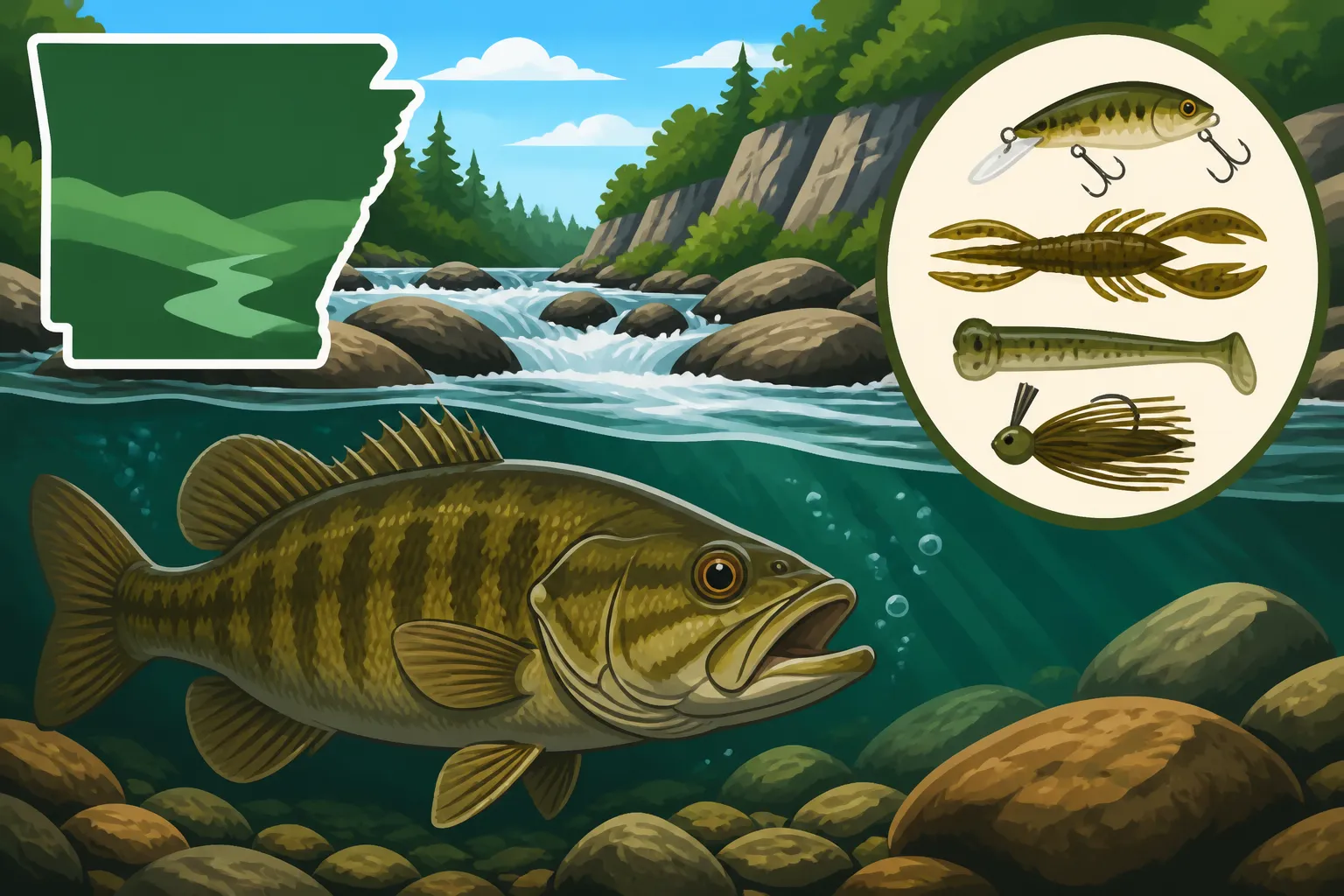
Smallmouth bass, often affectionately called "bronzebacks," are renowned for their incredible fighting spirit and their preference for cooler, clearer, and often faster-moving water. In Arkansas, you'll find them thriving in the Ozark streams and rivers, places like the Buffalo, Crooked Creek, or the Little Red River before it widens. Unlike their largemouth cousins who prefer murky, vegetation-choked waters, smallmouth are structure-oriented predators. They love to ambush prey from behind rocks, submerged logs, current breaks, and gravel beds.
Their elusive nature comes from their keen eyesight and their ability to use the current to their advantage. They often face upstream, waiting for food to drift naturally down to them. This means your bait presentation has to be realistic, and you need to minimize unnatural drag or movement that might spook them. Many anglers get frustrated by casting into obvious holding spots only to come up empty, often because their presentation isn't matching what the smallmouth expects to see in that fast-paced, rocky environment. Understanding their ambush tactics and current positioning is half the battle. If you're looking to identify one of these beauties, check out How to Identify a Smallmouth Bass.
Anatomy of an Arkansas Rocky Stream
When we talk about "rocky streams" in Arkansas, we're picturing clear, cool water flowing over a substrate dominated by gravel, cobble, and boulders. Think of the quintessential Ozark stream with its riffles, runs, pools, and eddies. Each of these features plays a vital role in where smallmouth will hold:
- Riffles: Shallow, fast-moving sections where the water tumbles over rocks, oxygenating the water and dislodging insects and small baitfish. Smallmouth rarely hold directly in the fastest current but will position themselves just downstream of these areas.
- Runs: Deeper, more uniform sections of current between riffles and pools. These can hold scattered rocks or ledges, providing excellent ambush points.
- Pools: Deeper, slower-moving areas often found at bends in the river or below significant drops. These offer refuge from strong currents and can hold larger smallmouth, especially in cooler weather or during mid-day heat.
- Eddies: Swirling pockets of water found behind large boulders, logs, or points where the current is significantly reduced. These are prime ambush points where smallmouth can rest and wait for food to be swept by.
The constant flow and abrasive nature of rocks mean there's less aquatic vegetation compared to lakes, and the food chain relies heavily on crayfish, hellgrammites, minnows, and terrestrial insects that fall into the water. This unique ecosystem directly influences what baits are most effective. For a deeper dive into their natural habitat, consider reading Smallmouth Bass Fishing in Arkansas's Ozark Streams.
Why Baits Matter in These Specific Environments
Choosing the right bait for smallmouth in rocky streams isn't just about what looks appealing; it's about what performs best in that dynamic environment and what the fish are naturally feeding on.
- Mimicking Natural Prey: Smallmouth are opportunistic predators. If your bait looks, moves, or even smells like their natural diet of crayfish, minnows, or insects, you're on the right track.
- Handling Current: Some baits simply don't perform well in moving water. Lightweight plastics might get swept away too quickly, while heavy jigs might snag constantly. The best baits are designed to cut through or interact with the current effectively.
- Navigating Structure: Rocky bottoms are notorious for snagging lures. Choosing baits that are relatively weedless or designed to deflect off rocks can save you a lot of frustration and lost tackle.
- Visibility: Clear water often means fish can be more discerning. Natural colors and subtle presentations are often key, though sometimes a bright, aggressive lure can trigger a reaction strike.
Understanding these factors is paramount. It’s the difference between a day of frustration and a day of bent rods.
Top Natural Baits for Smallmouth Bass in Arkansas Rocky Streams
When it comes to smallmouth bass in their natural, rocky stream environments, nothing quite beats the appeal of live bait. It's what they eat day in and day out, and the natural scent and movement are often irresistible.
Crayfish: The Undisputed King of Smallmouth Bait
If there's one bait that consistently dominates for smallmouth bass in rocky streams, it's the humble crayfish. Smallmouth absolutely love crayfish. They are a primary food source in these environments, and mimicking them is almost always a winning strategy.
- How to Rig and Fish Them:
- Hooking: You can hook a live crayfish through the tail (being careful not to pierce the vital organs) or through the carapace (the hard shell on their back). Hooking through the tail allows them to swim naturally backward, while through the carapace lets them scuttle along the bottom.
- Weighting: Depending on the current, you might need a small split-shot or an egg sinker to get the crayfish down to the bottom where smallmouth are holding. Use just enough weight to keep it near the bottom without hindering its natural movement too much.
- Presentation: Cast upstream or slightly quartering upstream and let the crayfish drift naturally downstream, bouncing along the bottom. Pay close attention to your line for any unusual taps or movement. When a smallmouth grabs it, they often hold it for a moment before really taking off, so wait for that solid pull before setting the hook.
- Finding Your Own: You can often catch your own crayfish by flipping over rocks in shallow stream areas or using a small minnow trap baited with a piece of hot dog. This fresh bait can be incredibly effective.
- Pros: Irresistible scent and movement, highly effective.
- Cons: Can be difficult to keep alive, messy to handle, and might be hard to find in some areas.
Live Minnows and Shiners: Simple, Effective, and Readily Available
Another classic live bait for smallmouth are various types of minnows and shiners. These darting little fish are a staple in the smallmouth diet and can trigger aggressive strikes. Common varieties found in Arkansas streams include hornyhead chubs, creek chubs, or various shiner species.
- Types, Sizes, and Presentation:
- Size Matters: Generally, minnows between 2-4 inches are perfect for stream smallmouth. Too big, and they might ignore it; too small, and you might attract smaller fish.
- Hooking: Hook minnows lightly through the lips (top lip first, then bottom) for a natural swimming action, or just behind the dorsal fin if you need them to stay put in heavier current.
- Rigging: A simple rig with a small hook and a split-shot (again, just enough to get it down) is often all you need. You can also fish them under a small bobber in slower pools or eddies.
- Drifting: Similar to crayfish, let them drift naturally with the current into promising areas. In pools, you can let them swim freely.
- Where to Get Them: Many local bait shops in Arkansas will carry live minnows. You can also net your own in shallower areas of streams if permitted.
- Pros: Readily available, very effective, easy to rig.
- Cons: Can be delicate, less durable than crayfish, and might attract other species.
Earthworms and Nightcrawlers: The Universal Appeal
While perhaps not as specific to stream smallmouth as crayfish or minnows, earthworms and nightcrawlers have a universal appeal that often works when other baits fail. Their wiggling action and natural scent can tempt a hungry smallmouth, especially after a rain when they might naturally wash into the stream.
- When They Shine:
- After Rain: When streams are slightly stained and elevated, worms are often washed into the water, making them a natural food source.
- Slower Water: They perform best in slower runs, eddies, or pools where the current won't rip them off the hook too quickly.
- Beginners: They are incredibly easy to rig and manage, making them a great choice for new anglers.
- Rigging: Use a small hook (sizes 6-10) and thread the worm on, leaving a tail end wiggling. A small split-shot can help get it down.
- Pros: Universally appealing, easy to find (even in your backyard!), inexpensive.
- Cons: Not as durable as other baits, can attract smaller fish, less effective in strong currents.
Productive Artificial Lures for Rocky Stream Smallmouth
For many anglers, the thrill of fooling a smallmouth with an artificial lure is unmatched. Modern lures are incredibly effective at mimicking natural prey, and when fished correctly in rocky streams, they can be absolutely deadly.
Crankbaits and Jerkbaits: Mimicking Natural Prey
Crankbaits and jerkbaits are fantastic choices for aggressive smallmouth, especially when they're actively feeding. They excel at mimicking baitfish or even fleeing crayfish, triggering violent strikes.
- Crankbaits: These lures dive to a specific depth when retrieved and have a wobbling action.
- Choosing the Right Dive Depth: For rocky streams, you'll want shallow-diving crankbaits (1-5 feet) for shallower runs and riffle edges, and medium-diving ones (6-10 feet) for deeper pools and runs. The key is to select one that just ticks the tops of the rocks without constantly snagging the bottom.
- Colors: Natural patterns like crawfish, silver/black, or shad imitations are usually best. In stained water, brighter colors like chartreuse or firetiger can sometimes grab attention.
- Retrieve: A steady retrieve often works, but incorporating pauses and twitches can often provoke a strike. Don't be afraid to let it bounce off rocks; this deflection can often trigger an aggressive reaction.
- Jerkbaits: These are designed to be retrieved with a "jerking" or "twitching" motion, followed by pauses, mimicking an injured or disoriented baitfish.
- Action: Look for suspending jerkbaits that stay at a certain depth during pauses. This allows smallmouth to key in on them.
- Technique: Cast, reel down to depth, then use a series of short, sharp rod tip twitches followed by pauses. Many strikes occur on the pause.
- Pros: Excellent for active fish, cover water efficiently, provoke aggressive strikes. You can find a huge variety of these on Amazon.
- Cons: Can be prone to snagging if you don't choose the right diving depth or retrieve carefully.
Jigs and Soft Plastics: Getting Down to Where They Live
Jigs and soft plastics are arguably the most versatile and consistently effective artificial baits for smallmouth in rocky streams. They allow you to get your presentation right into the strike zone, often bouncing along the very bottom where smallmouth are holding.
- Tube Jigs: These hollow, cylindrical soft plastics with tentacles are fantastic crayfish imitations.
- Rigging: Use an internal jig head that allows the hook to emerge from the side of the tube, making it mostly weedless.
- Colors: Green pumpkin, watermelon, brown, and natural craw colors are top choices.
- Presentation: Cast upstream or quartering upstream and let the jig tumble and bounce along the bottom with the current. Give it an occasional twitch to make it "scuttle."
- Grub Jigs: A simple lead-head jig with a curly-tail grub body.
- Sizes: 1/8 to 1/4 oz jigs with 2-3 inch grubs are perfect.
- Colors: Again, natural tones like smoke, clear with glitter, green pumpkin, or pearl white work well.
- Retrieve: A slow, steady retrieve where the tail just barely turns can be deadly. You can also hop it along the bottom.
- Swimbaits: Small paddle-tail swimbaits rigged on a weighted swimbait hook or a simple jig head can be very effective for mimicking minnows.
- Soft Plastic Creature Baits: Anything that mimics a hellgrammite or a larger insect can be rigged Texas-style or on a light jig head.
- Pros: Extremely versatile, can be fished slowly and deliberately, excellent for bottom-dwelling smallmouth, relatively snag-resistant depending on rigging.
- Cons: Requires a feel for the bottom to avoid constant snagging, takes practice to master. For a great selection of jig heads and soft plastics, check out retailers on Amazon.
Spinnerbaits and Buzzbaits: Covering Water and Triggering Strikes
While often associated with largemouth, smaller spinnerbaits and buzzbaits can be highly effective for covering water quickly and triggering reaction strikes from smallmouth in rocky streams, especially in areas with moderate current or slightly stained water.
- Spinnerbaits: These lures feature one or more blades that rotate, creating flash and vibration.
- Sizes: Opt for smaller spinnerbaits, usually 1/8 to 1/4 oz, with single Colorado or Willowleaf blades.
- Colors: White, chartreuse, or combinations of both are good, as are natural baitfish patterns.
- When to Use: Great for covering flats, the edges of current seams, or around submerged timber. They're also effective on slightly cloudy days or in stained water because of their vibration and flash.
- Buzzbaits: Topwater lures with a propeller blade that creates a sputtering commotion on the surface.
- When to Use: Best for low-light conditions (dawn, dusk) or overcast days when smallmouth are willing to strike on the surface. Look for areas with slower current or calm pools.
- Retrieve: A steady, continuous retrieve just fast enough to keep the blade churning on the surface is key.
- Pros: Excellent for covering large areas, create a lot of commotion, trigger aggressive strikes, mostly weedless in open water.
- Cons: Not ideal for deep water or strong currents, less subtle than other options.
Essential Considerations for Bait Presentation and Gear
Having the best baits is only half the battle. How you present them and the gear you use can make all the difference when targeting wary smallmouth in swift, rocky waters.
Matching the Hatch: Understanding Local Forage
One of the most valuable skills an angler can develop is "matching the hatch." This means observing what smallmouth are actually feeding on in a particular stream at a particular time. Before you even make your first cast, take a few moments to watch the water.
- Observe the Banks: Look for overturned rocks to see what crayfish species are present. Are there any minnows darting around? What insects are flying or landing on the water?
- Look for Prey: If you see minnows or shiners, artificial lures mimicking them (jerkbaits, swimbaits, grubs) will be effective. If you find plenty of crayfish, then live crayfish, tube jigs, or crawfish-pattern crankbaits are your go-to.
- Seasonal Changes: Forage changes throughout the year. In spring, crayfish might be more active. In summer, terrestrial insects falling into the water can be a big draw. Knowing what's available helps you refine your bait selection. This is a critical part of Bass Fishing Techniques by Season.
By taking a moment to observe, you're not just casting blindly; you're making an informed decision about what bait is most likely to fool a fish.
Rod, Reel, and Line Selection for Rocky Streams
Your gear needs to be appropriate for the environment and the fish you're targeting. Light tackle can be a blast, but you also need enough backbone to handle a strong smallmouth in current and prevent snags.
- Rods:
- Length: A 6'6" to 7' medium-light or medium action spinning rod is often ideal. It provides enough length for good casting distance and line control, but isn't so long it becomes unwieldy in brushy stream banks.
- Action: A fast or extra-fast tip allows for sensitive bite detection and quick hook sets, which is crucial for smallmouth.
- Reels:
- Spinning Reels: A 2000 or 2500 series spinning reel is a perfect match for stream smallmouth fishing. It offers a good balance of line capacity and smooth drag.
- Line:
- Braided Line (Main Line): Many anglers prefer 8-15 lb braided line as their main line for its sensitivity and strength, which helps with detecting subtle bites and pulling lures free from snags.
- Fluorocarbon Leader: Always tie on a 6-10 lb fluorocarbon leader (3-6 feet long) to your braided main line. Fluorocarbon is nearly invisible underwater and is more abrasion-resistant, which is vital when fishing around sharp rocks. You can find excellent quality fluorocarbon leader material on Amazon.
- Monofilament: If you prefer mono, a good quality 8-10 lb test line is generally suitable. It has more stretch, which can be forgiving with aggressive strikes, but less sensitivity than braid.
- Pros: Correct gear maximizes sensitivity, reduces snags, and increases your landing ratio.
- Cons: Using gear too heavy or too light can lead to missed bites, lost fish, or constant lure loss.
Reading the Water: Where to Cast Your Chosen Bait
You can have the best bait in the world, but if you're not putting it where the fish live, you won't catch anything. Learning to "read the water" is perhaps the most important skill for stream smallmouth anglers.
- Current Seams: These are the invisible lines where fast water meets slower water. Smallmouth love to sit in the slower water, waiting for food to be swept out of the fast current. Cast your bait so it drifts or retrieves along these seams.
- Behind Boulders and Logs: Any large object that breaks the current creates a "cushion" of slower water directly in front of it and a larger eddy behind it. These are prime ambush points. Cast your bait just upstream of these obstacles and let it wash into the slower water.
- Deep Pockets and Pools: In deeper pools, especially those with rock piles or submerged logs, smallmouth will congregate. Work jigs and soft plastics slowly along the bottom here.
- Under Overhanging Trees/Brush: Terrestrial insects often fall from these areas, and the shade provides cover.
- Riffle Edges: While smallmouth don't sit in the fastest part of a riffle, the transition zones where the riffle meets a deeper run or pool are excellent feeding lanes.
- Think Like a Fish: Always ask yourself, "If I were a smallmouth, where would I sit to expend the least amount of energy while still having easy access to food?" This perspective will guide your casts.
Understanding the Smallmouth Bass Limit Rules on Arkansas's Moving Waters Statewide and the Minimum length for smallmouth bass on flowing waters in Arkansas is also crucial, so you know which fish you can legally keep from these prime spots.
Below is a table summarizing some of the best bait and lure choices for smallmouth bass in Arkansas's rocky streams, along with their ideal conditions and typical presentation methods.
| Bait/Lure Type | Description | Ideal Conditions | Key Presentation | Pros | Cons |
|---|---|---|---|---|---|
| Live Crayfish | Small, live crustaceans | Clear water, moderate to strong current | Drift naturally along bottom, light weight | Irresistible natural scent & action | Messy, hard to keep, can be expensive |
| Live Minnows | Small baitfish (chubs, shiners) | Clear to slightly stained water, moderate current | Drift with current, under a bobber in pools | Highly effective, natural movement | Fragile, can attract smaller fish |
| Earthworms | Wiggling annelids | Stained water, slower current/pools | Drift on bottom with light weight | Universal appeal, easy to find | Less durable, smaller fish often bite |
| Tube Jigs | Soft plastic crayfish imitation with jig head | Clear to stained water, varying current | Hop, drag, or drift along bottom, twitch | Versatile, snag-resistant (internal jig) | Requires feel for bottom, can snag |
| Grub Jigs | Soft plastic curly-tail on lead head | Clear to stained water, light to moderate current | Slow retrieve, jigging, bouncing | Simple, effective, good vibration | Can be prone to snagging |
| Shallow Crankbaits | Hard plastic, wobbling, dives 1-5 ft | Clear to slightly stained, moderate current | Steady retrieve, occasional twitch, deflect off rocks | Aggressive strikes, cover water | Can snag on bottom, retrieve depth critical |
| Suspending Jerkbaits | Hard plastic baitfish, suspends on pause | Clear water, slower pools/runs | Jerk-jerk-pause retrieve | Mimics injured baitfish, strong reaction | Less effective in strong current, can snag |
| Small Spinnerbaits | Wire frame with blades and skirt | Slightly stained water, moderate current, overcast | Steady retrieve, vary speed | High visibility/vibration, covers water | Less subtle, not for deep water |
By considering these factors and being willing to experiment, you'll greatly increase your chances of finding those hard-fighting smallmouth bass in Arkansas's incredible rocky streams.
Disclaimer
This article is for general informational purposes only and does not constitute professional advice. Laws, prices and regulations vary by location and change over time. Consult a qualified professional for guidance on your specific situation.