Best Bait and Lures for Arkansas Bass
One of the most common frustrations anglers face in Arkansas, whether you're a seasoned pro or just starting out, is trying to figure out which bait or lure to tie on when you hit the water. With so many different bass species and constantly changing conditions from lake to river, it can feel like a guessing game. This guide is here to demystify the vast world of bass baits and lures, helping you understand what works best for Arkansas bass and why, so you can spend less time wondering and more time catching.
Understanding Arkansas Bass Species and Their Preferences
Before you even think about what lure to throw, it’s crucial to understand the different types of bass swimming in Arkansas waters and what makes them tick. Each species has its own personality, preferred habitat, and feeding habits, which directly influence what baits and lures will be most effective. Knowing your target will significantly improve your chances of success.
Largemouth Bass: The Classic Target
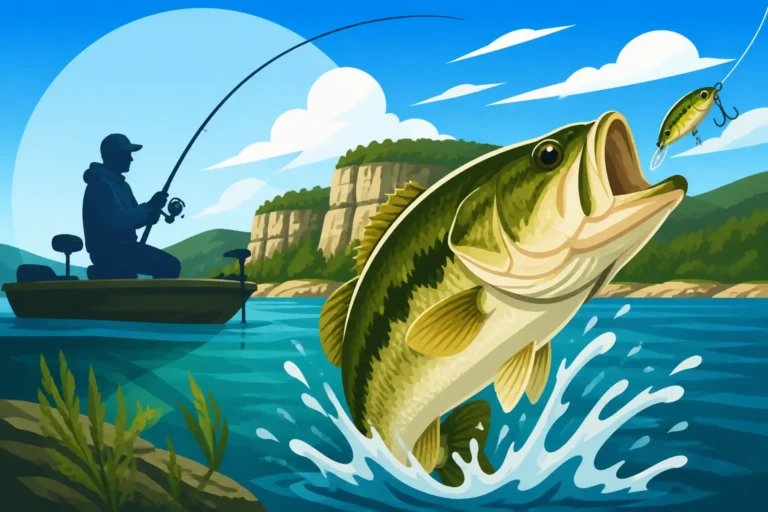
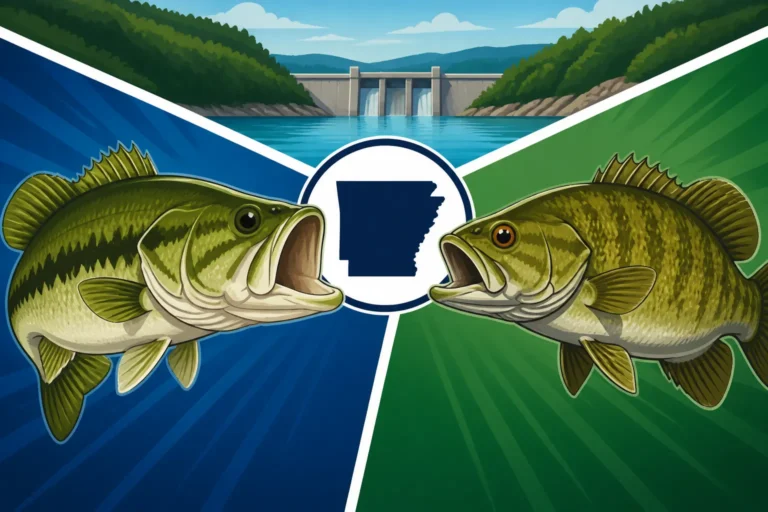
Ah, the largemouth bass – the undisputed king of Arkansas lakes and ponds. These green giants are often found lurking in thick cover: think lily pads, submerged timber, weed beds, and boat docks. They're ambush predators, meaning they'll hide and wait for an unsuspecting meal to swim by before launching a surprise attack. This tendency towards cover means your baits need to be able to navigate dense areas without getting hung up, or mimic prey that lives within or around that cover.
When fishing for largemouths, you’re usually trying to appeal to their aggressive, territorial nature. They love a hearty meal, and their diet primarily consists of smaller fish, crawfish, frogs, and even small rodents or birds that happen to fall into the water. This broad diet gives us a lot of options when it comes to lure selection. Think about what a crawfish scuttling on the bottom or a baitfish darting through weeds would look like, and then pick your lure accordingly. Best Lakes in Arkansas for Bass, Crappie, and Catfish often hold impressive populations of largemouths, offering plenty of opportunities to put these techniques into practice.
Smallmouth Bass: River and Rock Dwellers
If the largemouth is the king of the cover, the smallmouth is the undisputed champion of clear, rocky waters and moving currents. You’ll typically find these bronze beauties in the cooler, clearer rivers and rock-laden sections of larger reservoirs in the northern and western parts of Arkansas, especially in the Ozark streams. Unlike their largemouth cousins, smallmouths prefer rocky bottoms, current breaks, bluff walls, and gravel points. They’re less about ambush and more about active pursuit, often chasing down prey in open water or along current seams.
Smallmouth bass feed heavily on crawfish, minnows, and aquatic insects. They are known for their strong fights and acrobatic jumps, making them a favorite among many anglers. Because they often inhabit clear water, lure selection for smallmouths often favors more natural colors and actions. Presentations tend to be a bit faster, mimicking darting baitfish or crawfish trying to escape. Understanding the habitat is key; if you’re fishing a stretch of river with clear water and lots of rock structure, you can bet smallmouths are in the area. Smallmouth Bass Fishing on Bull Shoals Lake is a great example of where these tactics truly shine.
Kentucky (Spotted) Bass: An Aggressive Challenger
Often mistaken for largemouths, the Kentucky bass, also known as the spotted bass, is a distinct species with its own unique characteristics. You’ll find them in many of the same waters as largemouths and smallmouths, often overlapping, but they have a particular affinity for deep, rocky structure in reservoirs and swift-moving creeks. Kentucky bass are incredibly aggressive and tend to school up more readily than largemouths, especially when chasing baitfish.
Their diet is similar to that of largemouths, with a strong preference for baitfish and crawfish. However, their aggressive nature means they’re often willing to hit lures that largemouths might ignore, and they'll strike with a vengeance. They fight hard, often diving deep and pulling with surprising strength for their size. If you're encountering schools of bass that are aggressive and seem to be holding tight to deeper structure or current, chances are you've found some Kentucky bass.
Essential Lure Categories for Arkansas Bass Fishing
Now that we've covered the bass species, let's dive into the arsenal of lures you'll want in your tackle box. The sheer volume of choices can be overwhelming, but by understanding a few core categories, you can confidently select the right tool for the job. Remember, flexibility and experimentation are your best friends on the water.
Soft Plastics: Versatility is Key
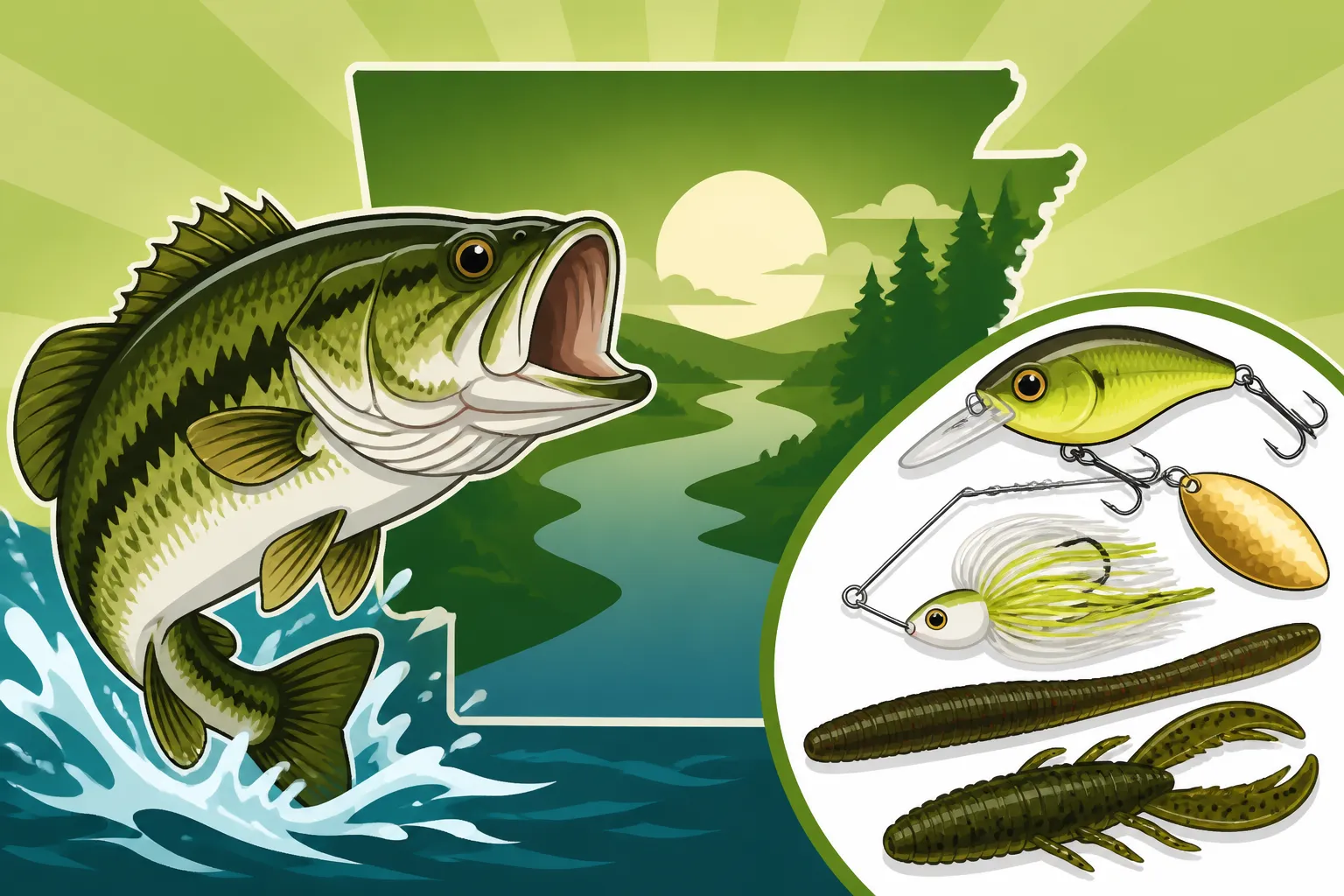
Soft plastics are, without a doubt, the most versatile category of bass lures. From worms and creature baits to swimbaits and Senkos, the options are endless, and they can be rigged in countless ways to imitate nearly anything a bass might eat. Their lifelike feel, subtle action, and ability to be worked slowly and precisely make them incredibly effective, especially when the bite is tough or fish are wary. You can find a huge variety of these on platforms like Amazon or at your local tackle shop.
A Texas rig, for instance, is a classic for largemouth bass in cover. It involves threading a worm or creature bait onto a worm hook, with the hook point embedded back into the plastic to make it weedless. Pair it with a bullet weight, and you have a perfect setup for punching through thick weeds or working submerged brush piles without getting snagged. For a more subtle approach, a wacky rig – hooking a Senko-style worm through its middle – provides an enticing shimmy as it falls, often irresistible to finicky bass. Then there's the Ned rig, a small, mushroom-head jig paired with a short, buoyant plastic. This finesse presentation is a killer on clear-water smallmouths and reluctant largemouths, often imitating a small baitfish or crawfish foraging on the bottom. Bass Fishing Techniques for Beginners often highlights the Texas rig as a foundational skill.
Crankbaits and Jerkbaits: Covering Water and Triggering Bites
When bass are active and scattered, or when you need to quickly cover a lot of water to find them, crankbaits and jerkbaits are your go-to options. These hard-bodied lures are designed to dive to specific depths, wobble, and dart, mimicking baitfish with incredible realism. They’re fantastic for eliciting reaction strikes, where a bass hits the lure out of aggression or instinct rather than hunger.
Crankbaits come in various shapes and sizes, each designed to dive to a particular depth. Shallow-diving crankbaits are perfect for working over submerged grass or rocky flats, while deep-diving crankbaits can reach those offshore humps and ledges where bass often school. The bill of the crankbait dictates its dive depth and wobble; a long, flat bill means a deeper dive, while a shorter, rounder bill keeps it shallower. Jerkbaits, on the other hand, are typically longer and thinner, designed to be reeled with sharp jerks and pauses. This erratic action perfectly imitates a wounded baitfish, and the pause often triggers strikes from predatory bass. Experiment with retrieve speeds and pause lengths to find what the fish prefer on any given day.
Spinnerbaits and Chatterbaits: Vibration and Flash for Reaction Strikes
For versatility in varying water conditions, it’s hard to beat spinnerbaits and chatterbaits. These lures are exceptional at attracting bass through both sight and sound, making them highly effective in stained or muddy water, on windy days, or whenever you need to draw attention to your presentation. They create a distinct vibration and flash that bass can detect from a distance, prompting them to investigate and strike.
Spinnerbaits feature one or more rotating blades that create flash and vibration as they move through the water, often paired with a silicone skirt that pulsates enticingly. They’re incredibly weedless, making them excellent for fishing through timber, heavy cover, or around docks. Different blade configurations (e.g., Colorado for maximum vibration, Willowleaf for flash and speed) allow you to customize your presentation. Chatterbaits, sometimes called bladed jigs, feature a unique hexagonal blade that vibrates violently as it's retrieved, creating an intense thumping action and an erratic side-to-side swim. They're fantastic for covering water and excel in conditions where bass are looking for a meal that puts out a lot of energy. Both can be highly effective for a wide range of bass species and conditions.
Topwater Baits: The Excitement of Surface Strikes
Few things in fishing compare to the heart-stopping excitement of a bass exploding on a topwater lure. These baits work exclusively on the surface of the water, creating commotion, splashes, and vibrations that trigger aggressive strikes from fish looking up for a meal. Topwater fishing is not only thrilling but also incredibly effective under the right conditions, especially during low-light hours or when bass are actively feeding on the surface.
Poppers and Walk-the-Dogs: Mastering the Surface Action
Poppers are designed with a concave face that "pops" or "chugs" water when twitched, mimicking a struggling baitfish or a frog. Their loud, aggressive action makes them excellent for drawing bass out of heavy cover or attracting attention in choppy water. You can work them with long pauses, short pops, or a series of rapid pops, varying your retrieve until you find what triggers a strike. Think of them as calling the fish to the surface.
"Walk-the-dog" style lures, like Zara Spooks, are a whole different beast. These cigar-shaped baits glide from side to side across the surface when worked with a specific retrieve pattern (a rhythmic twitch of the rod tip while reeling in slack). This creates a mesmerizing, natural, zigzagging action that perfectly imitates a wounded baitfish struggling on the surface. Mastering the walk-the-dog can take a bit of practice, but once you get it down, it's one of the most rewarding and effective ways to catch active bass.
Frogs and Buzzbaits: Heavy Cover Specialists
When the water is choked with lily pads, matted grass, or other thick vegetation, traditional topwater lures often get snagged. That's where soft plastic frog lures and buzzbaits come into their own. These lures are designed to be fished over and through the heaviest cover imaginable, allowing you to target bass that are otherwise inaccessible.
Hollow-bodied frog lures are often made of soft plastic and feature upward-pointing double hooks that sit flush with the body, making them virtually weedless. You can literally drag them across lily pads or thick mats of vegetation, and when a bass strikes, the soft body collapses, exposing the hooks. The key is to wait a second or two after the strike before setting the hook to ensure the fish has fully engulfed the bait. Buzzbaits, on the other hand, feature a propeller-like blade that churns the water, creating a loud, gurgling sound and a spray that mimics a struggling critter on the surface. They're designed to be retrieved quickly and steadily, creating a commotion that often triggers explosive strikes from aggressive bass. These are particularly effective in low-light conditions or when bass are feeding aggressively in shallower, vegetated areas.
Live Bait vs. Artificial Lures: Making the Right Choice
This is a timeless debate among anglers, and the truth is, there's a place for both live bait and artificial lures in your Arkansas bass fishing strategy. Each has its advantages and disadvantages, and the best choice often depends on the specific conditions, your goals for the day, and your personal fishing style.
The Allure of Live Bait: Simplicity and Effectiveness
For many, especially beginners or those fishing with children, live bait offers a certain simplicity and almost guaranteed effectiveness that artificials can't always match. Minnows, nightcrawlers (worms), and crawfish are natural food sources for bass, and their inherent movements and scents are often irresistible. When the bite is tough, or bass are highly pressured and wary of artificial presentations, a struggling live minnow or a juicy crawfish can often coax a strike when nothing else will.
Fishing with live bait typically involves a more relaxed approach, often with a simple bobber rig or a bottom rig with an ounce of lead to keep it still. It requires less technical skill in presentation compared to working a jerkbait or skipping a frog. This makes it an excellent choice for a leisurely day on the water, especially for families introducing kids to fishing. Plus, there's a certain satisfaction in knowing you're using what the bass naturally eat. Just remember to check local regulations regarding the use of live bait, as some waters may have restrictions to prevent the spread of invasive species.
The Art of Artificials: Skill, Variety, and Challenge
While live bait can be incredibly effective, artificial lures offer a different kind of satisfaction and challenge. Mastering various lure types and presentation techniques allows you to actively "hunt" for bass, adapting to conditions and triggering strikes with skill and finesse. The sheer variety of artificial lures means you can mimic virtually any prey item and present it in countless ways, from the most aggressive topwater explosions to the most subtle, deep-water finesse presentations.
Using artificials encourages you to learn about fish behavior, habitat, and how environmental factors like water temperature, clarity, and current affect where bass position themselves and what they're willing to eat. It's a continuous learning process that deepens your understanding of the fishery. Many dedicated bass anglers prefer artificials because it allows them to cover more water, target specific sizes of fish, and enjoy the sport aspect of outsmarting a cunning predator. The ability to switch lures quickly, experiment with colors, and refine your retrieve is all part of the allure. Plus, purchasing a selection of quality artificial lures from a trusted retailer like Amazon can build a diverse tackle box that lasts for many seasons.
Matching Baits to Arkansas Seasons and Conditions
Arkansas's diverse climate means that bass fishing conditions can change dramatically throughout the year. What works in the chilly depths of winter won't necessarily entice a bass during the sweltering heat of summer. Adapting your bait and lure choices to the prevailing season and specific conditions is paramount for consistent success.
Spring: Pre-Spawn and Spawn Tactics
Spring is often hailed as one of the best times to catch big bass in Arkansas. As water temperatures begin to rise, bass move from their deeper wintering grounds towards shallower spawning areas. This period is generally divided into pre-spawn and spawn.
During the pre-spawn, bass are actively feeding, trying to pack on weight before the rigors of spawning. They're often aggressive and will chase down a variety of baits. Moving baits like crankbaits, spinnerbaits, and jerkbaits are excellent for covering water and locating these active fish along points, creek channels, and secondary breaks. As the water warms further and bass move onto beds to spawn, your tactics will shift. Soft plastics, especially creature baits and jigs, pitched directly into or near a visible bed, can provoke a territorial strike. It's a slower, more methodical approach, but highly effective for fish guarding their nests. Remember to be mindful of fish on beds; many anglers prefer to practice catch and release to protect the fishery during this critical time. For a deeper dive, check out Arkansas Bass Spawn Fishing Guide.
Summer: Heat, Depth, and Early/Late Bites
Summer in Arkansas often brings scorching temperatures, and that means bass will seek refuge in cooler, deeper waters or dense shade. While the midday bite can be tough, early mornings, late evenings, and even night fishing can be incredibly productive.
During the hottest parts of the day, focus on fishing deep structure: ledges, humps, offshore brush piles, and river channels. Deep-diving crankbaits, heavy jigs, and Carolina-rigged soft plastics are excellent for targeting these deeper fish. Look for schools of baitfish, as bass will often follow their food source. As the sun begins to set, or before it fully rises, bass will often move shallower to feed. This is prime time for topwater lures like poppers, buzzbaits, and frogs, especially in areas with grass or lily pads. Night fishing can also be fantastic, with dark-colored jigs, worms, and even spinnerbaits drawing strikes in the darkness. Understanding Summer Bass Fishing Patterns is crucial for success during these warm months.
Fall: Feeding Frenzy and Migration
Fall is another fantastic time for bass fishing in Arkansas, often characterized by a "feeding frenzy" as bass aggressively chase baitfish to fatten up for the coming winter. As water temperatures cool, baitfish move into creeks and shallower coves, and bass follow close behind.
This period is excellent for reaction baits. Lipless crankbaits, chrome or shad-colored crankbaits, spinnerbaits, and swimbaits that imitate shad are incredibly effective. Bass are often schooling and actively chasing prey, so covering water quickly with these lures can lead to multiple hook-ups. Look for birds diving, which can indicate baitfish schools being pushed to the surface by predatory bass. Fishing main lake points, creek mouths, and secondary channels can be highly productive. The bass often remain active throughout the day, providing consistent action. Dive deeper into these strategies with Fall Fishing Patterns for Bass and Crappie.
Winter: Slow and Subtle Approaches
Winter fishing for bass in Arkansas can be challenging, but also highly rewarding for those willing to brave the cold. Bass become lethargic in cold water and won't chase baits over long distances. Your presentations need to be slow, subtle, and often target deeper, stable water.
Jigs with bulky trailers, slow-rolled spinnerbaits, and suspending jerkbaits are all excellent choices for winter bass. Fish them meticulously around deep structure like bluff walls, deep points, and submerged timber. A suspending jerkbait, retrieved with long pauses, can often entice a strike from a cold, sluggish bass that might ignore a faster moving lure. Focus on areas with a slight depth change or cover, as bass will often congregate in these spots. Even a slight increase in water temperature in certain areas (like power plant discharge or sun-exposed rock formations) can concentrate fish. Don't be afraid to slow down your retrieve dramatically and focus on specific spots. For more specific guidance on this challenging but rewarding season, check out How to Catch Bass in Cold Water.
Here’s a quick overview of some popular bait and lure types and when they shine:
| Lure Type | Best for Bass Species | Prime Season | Key Conditions | Retrieve/Technique |
|---|---|---|---|---|
| Soft Plastics (Worms, Creature Baits) | Largemouth, Smallmouth, Kentucky | All Seasons | Cover (weeds, wood), Finesse, Tough Bite, Deep Structure | Texas Rig, Carolina Rig, Wacky Rig, Ned Rig, Jigging |
| Crankbaits (Shallow/Deep) | Largemouth, Smallmouth, Kentucky | Spring, Fall, Summer (deep) | Covering Water, Rocky Areas, Ledges, Baitfish schools | Steady Retrieve, Stop-and-Go, Deflection off cover |
| Jerkbaits | Largemouth, Smallmouth, Kentucky | Spring, Fall, Winter | Clear Water, Cold Water, Schooling Baitfish | Twitch-Twitch-Pause, Erratic Action |
| Spinnerbaits | Largemouth, Kentucky | Spring, Fall, Summer (low light) | Stained Water, Wind, Cover (wood, grass) | Steady Retrieve, Slow-Roll, Yo-Yoing |
| Chatterbaits | Largemouth, Kentucky | Spring, Fall, Summer (low light) | Stained Water, Grass, Reaction Strike | Steady Retrieve, Ripping Grass |
| Poppers | Largemouth, Smallmouth | Summer, Fall (low light) | Calm Water, Low Light, Over Cover | Pop-Pause, Walk-the-Dog, Chugging |
| Walk-the-Dog Lures | Largemouth, Smallmouth | Summer, Fall (low light) | Calm Water, Open Water, Schooling Bait | Walk-the-Dog Action (side-to-side) |
| Hollow-Bodied Frogs | Largemouth | Summer, Fall | Heavy Mats, Lily Pads, Thick Vegetation | Pop-Pause, Glide over Cover |
| Buzzbaits | Largemouth, Kentucky | Summer, Fall (low light) | Shallow Cover, Low Light, Aggressive Fish | Fast, Steady Retrieve |
| Jigs | Largemouth, Smallmouth, Kentucky | All Seasons | Deep Structure, Cover, Finesse, Cold Water | Flipping, Pitching, Dragging, Hopping |
| Live Bait (Minnows, Worms, Crawfish) | All Bass Species | All Seasons | Tough Bite, Beginners, Relaxed Fishing | Bobber Rig, Bottom Rig |
Ultimately, the best bait and lures for Arkansas bass fishing come down to a combination of understanding the bass species you're targeting, adapting to seasonal patterns, and experimenting with different presentations. Don't be afraid to try new things, observe what's working for others, and pay attention to what the fish are telling you. Every day on the water is a new learning experience, and with a well-stocked tackle box and a willingness to adapt, you'll be well on your way to consistent success on Arkansas's beautiful bass waters.
Disclaimer
This article is for general informational purposes only and does not constitute professional advice. Laws, prices and regulations vary by location and change over time. Consult a qualified professional for guidance on your specific situation.