Where to Catch Crappie on Beaver Lake, Arkansas
It's incredibly frustrating when you head out to a beautiful lake like Beaver Lake, gear in hand, only to spend hours searching for those elusive crappie without a bite. You know they're in there, but finding their secret hideouts can feel like solving a complex puzzle. This guide is here to untangle that mystery, offering you clear, actionable insights into where and how to successfully target crappie across Beaver Lake's diverse waters, so you can spend less time guessing and more time reeling in your next meal.
Understanding Crappie Behavior on Beaver Lake
Crappie, whether black or white, are creatures of habit, but their habits shift dramatically with the seasons and water conditions on a large, clear reservoir like Beaver Lake. Unlike some other species that might roam vast open waters, crappie often relate to structure – think standing timber, submerged brush piles, creek channels, and even man-made cover like docks and bridge pilings. Understanding these preferences is key to consistently finding them.
Seasonal Movements of Crappie
Crappie have distinct patterns of movement throughout the year, driven primarily by water temperature and their spawning cycle. If you're out there blindly casting, you're likely missing them entirely, because where they are in April is vastly different from where they'll be in August. Knowing these seasonal shifts is like having a secret map.
During the spring, usually from March through May depending on water temperatures, crappie move into shallower waters for their spawn. This is often the easiest time to locate them, as they congregate around protected coves, shallow brush, and submerged cover. As the water warms into summer, they retreat to deeper, cooler waters, often suspending over creek channels or near thermoclines. Fall sees them moving back towards shallower feeding areas as temperatures cool, stocking up for winter. And in winter, they'll often be found in deep, stable water, still relating to significant structure. This knowledge allows you to anticipate their location, rather than constantly searching.
Preferred Crappie Habitats in Beaver Lake
Beaver Lake is a massive reservoir with diverse topography, offering a variety of excellent crappie habitats. Its clear water, numerous creek arms, standing timber, and abundant submerged brush make it a prime crappie destination. When you're looking for crappie, you're essentially looking for cover combined with access to deeper water.
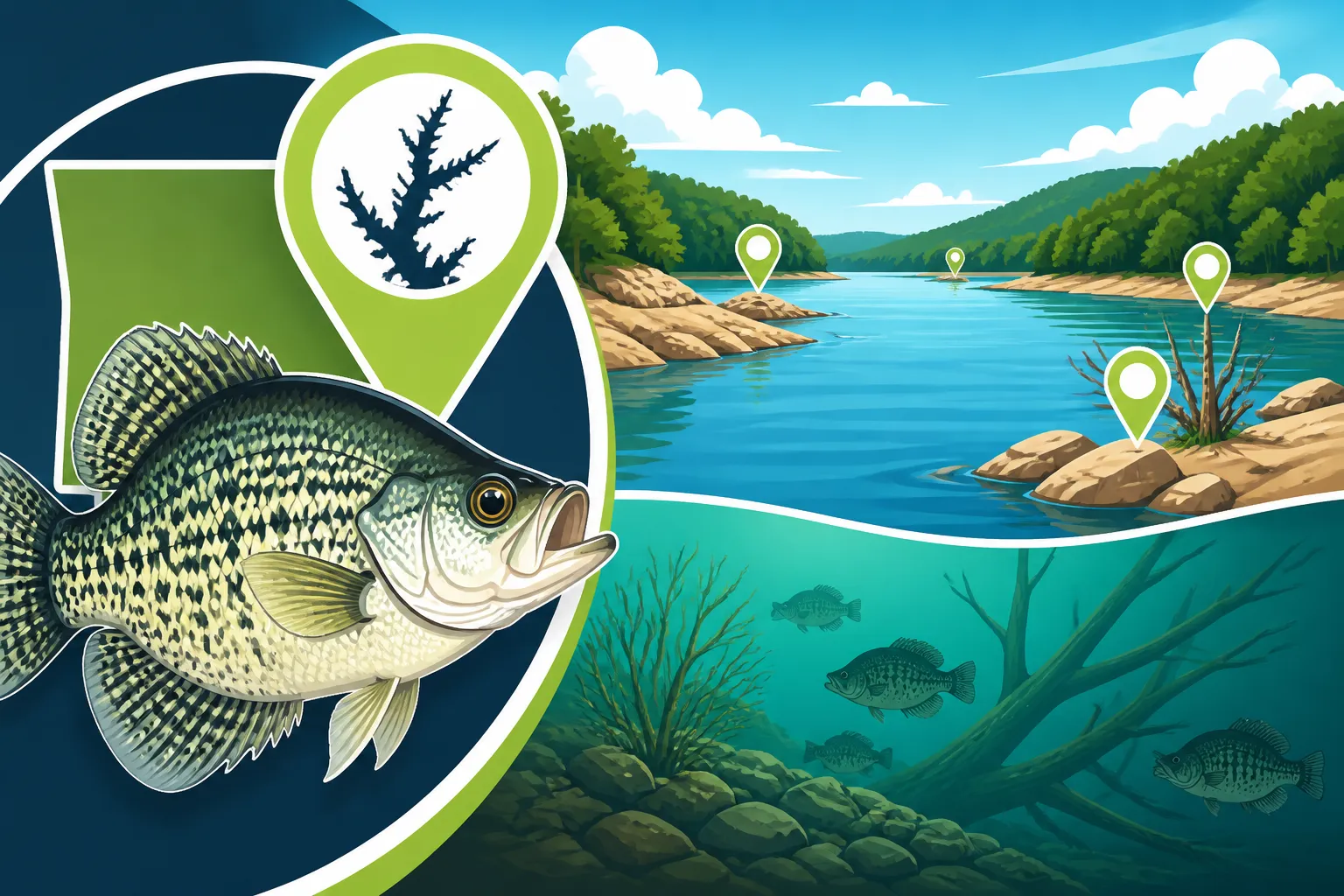
Crappie love areas with submerged brush piles, which act as both ambush points for forage and protection from predators. These can be naturally occurring or man-made structures placed by anglers or the Arkansas Game and Fish Commission. Standing timber in the deeper creek channels is also a major draw, providing vertical cover from the bottom all the way up through the water column. In areas with marinas or private docks, crappie will often seek refuge and forage underneath these structures, especially those with lights that attract baitfish at night. You'll also find them congregated along the edges of old creek and river channels that snake through the lakebed, particularly where these channels intersect with submerged timber or humps.
Top Crappie Hotspots on Beaver Lake
Beaver Lake offers a wealth of potential crappie locations, but a few areas consistently produce fish year after year. Knowing these prime spots can dramatically improve your chances, saving you time and frustration on the water.
War Eagle Creek Arm
The War Eagle Creek arm, located on the eastern side of Beaver Lake, is arguably one of the most consistent crappie producers, especially during the spring spawn. This creek arm features numerous shallower coves and feeder creeks that warm up quickly, drawing crappie in to lay their eggs.
As spring arrives and water temperatures nudge into the upper 50s and low 60s, crappie flood into the shallower sections of War Eagle Creek. Look for areas with submerged timber, brush piles, and fallen trees along the banks. Anglers often have great success casting jigs or minnows around these structures in 3-10 feet of water. As the spawn progresses and fish move out of the very shallow water, they'll often suspend near brush piles in slightly deeper coves or along the creek channel edges. This area is also popular for its productive fishing through the fall as crappie move back into shallower feeding zones. Many local guides, some found on platforms like FishingBooker, often start their crappie trips in this very creek, knowing its reliability.
Blackburn Creek and Rocky Branch
Moving westward, Blackburn Creek and Rocky Branch also offer fantastic crappie fishing opportunities. These areas provide similar characteristics to War Eagle Creek but often experience slightly less pressure, especially during peak times.
Blackburn Creek has several prominent creek channels and large coves that hold crappie throughout the year. During the spring, anglers target the shallow ends of the coves and around submerged trees and brush. In the summer and winter, the deeper sections of the creek channel and its associated humps and drops become prime targets. Crappie will suspend at various depths, so using your electronics to locate schools of baitfish and crappie is crucial. Rocky Branch, a smaller but equally productive area, features numerous docks and private structures where crappie will stage. These man-made structures often have brush piles intentionally placed by homeowners, creating magnets for crappie. Using spider rigging techniques with multiple poles or vertical jigging around these structures can be highly effective.
Key Main Lake Coves and Points
Beyond the major creek arms, the main lake also harbors excellent crappie habitat, particularly in specific coves and around prominent points that feature significant submerged cover. These spots might not be as obvious as the vast creek arms but can be incredibly productive for those who know where to look.
Look for large, deep coves along the main lake that have standing timber or established brush piles. These areas often provide consistent crappie action in the summer and winter when fish seek deeper, more stable water. Points that extend out into the main lake, especially those with steep drops or rock piles, can also be crappie magnets. Fish will often stage on the points during transition periods, moving between shallow and deep water. The clear waters of Beaver Lake often mean crappie will be deeper during the day, so don't be afraid to fish depths of 15-30 feet, especially if you see baitfish on your sonar. Local anglers frequently use their electronics to mark brush piles and then precisely drop jigs or minnows to tempt these deeper fish. For a deeper dive into general crappie behavior, you might find our guide on Arkansas Crappie Fishing Season Guide helpful.
Here's a quick overview of some top crappie spots on Beaver Lake by season:
| Location / Feature | Spring (Spawn) | Summer (Deep Water) | Fall (Transition) | Winter (Deep Structure) |
|---|---|---|---|---|
| War Eagle Creek Arm | Shallow coves, submerged brush | Creek channel edges, suspended over timber | Shallow coves, timber lines | Deep timber, channel breaks |
| Blackburn Creek | Upper coves, fallen trees, brush | Main creek channel, humps | Submerged brush, channel bends | Deep creek channel, thermocline areas |
| Rocky Branch | Docks, shallow brush, fallen trees | Deep docks, suspended fish | Docks, shallow brush | Deep brush piles near docks |
| Main Lake Coves | Backs of coves, shallow timber | Standing timber in 20-30 ft | Secondary points, brush piles | Main lake points, deep brush |
| Bridge Pilings | Shallow pilings (lower water) | Deep pilings, suspended fish | Mid-depth pilings, current breaks | Deepest pilings, stable water |
Effective Techniques for Beaver Lake Crappie
Knowing where to go is only half the battle; knowing how to fish those spots is just as critical. Beaver Lake's clear water and varied structure call for a few key techniques to consistently catch crappie.
Vertical Jigging and Dropping
Given the prevalence of submerged timber, brush piles, and deep structure, vertical jigging or dropping baits is often the most effective method on Beaver Lake. This technique allows you to precisely target crappie holding tight to cover without getting hung up as often as casting and retrieving.
When you've located a brush pile or a school of crappie on your electronics, position your boat directly over the top of them. Then, lower a small jig (1/16 to 1/8 ounce is common) or a live minnow on a hook directly down to their depth. Use your sonar to monitor your bait's position relative to the fish. For jigs, a subtle up-and-down motion or a gentle quiver is usually enough to entice a bite. For minnows, simply holding them still at the right depth can be incredibly effective. This method is particularly deadly in the summer and winter when crappie are often suspended deep over structure. Many anglers use a tactic called "tight-lining" where they fish vertically with a tight line, feeling for the slightest tap. You might also find this method useful in areas with a strong current, though Beaver Lake is mostly a reservoir without significant river currents. To ensure you're using the right gear, check out our piece on Best Bait for Arkansas Crappie.
Spider Rigging and Trolling
For covering more water and targeting suspended crappie, especially in open areas or along creek channels, spider rigging or slow trolling can be a game-changer. This method involves using multiple rods spread out from the boat, presenting baits at different depths and distances.
Spider rigging is essentially slow trolling with an array of long poles extending from the bow of the boat, often in a fan-like pattern. Each rod will have a different setup – perhaps a jig on one, a minnow on another, or different colored jigs – fished at varying depths. This allows you to quickly identify the crappie's preferred depth and bait for that day. It's particularly effective in the spring and fall when crappie are scattered but still relate to channel edges, or in summer when they're suspended over deeper water. You'll move very slowly, often just enough to give your baits a subtle action. If you're planning a trip and need a guide to help with these techniques, booking through a reputable service like FishingBooker can connect you with local experts who specialize in spider rigging on Beaver Lake. For more on what tackle to use, consider reading our advice on How to Rig a Jig for Crappie Fishing.
Casting and Retrieving
While vertical presentations dominate in deep water, casting and retrieving jigs or small crankbaits can be highly effective, especially during the spring spawn or when fish are feeding in shallower cover.
In the spring, when crappie are up shallow in coves like those found in the War Eagle or Rocky Branch arms, casting small tube jigs, grub tails, or tiny spinnerbaits into submerged brush, around fallen trees, or under docks can yield excellent results. Use a slow, steady retrieve, occasionally pausing or twitching the bait to mimic injured forage. The clear water of Beaver Lake often means lighter lines (4-6 lb test) are advantageous, and natural bait colors tend to perform well. Even in other seasons, if crappie move up to feed on baitfish pushed against a bank or over a shallow hump, casting can be a productive way to reach them without spooking them with your boat. Remember, crappie are often found in groups, so if you catch one, keep working that area! Also, always be mindful of the Crappie Size and Daily Limit in Arkansas to ensure you're fishing legally.
Important Regulations for Crappie Fishing
Before you head out, it's crucial to be aware of the specific regulations for crappie fishing in Arkansas. These rules are in place to ensure healthy fish populations for future generations of anglers.
Statewide Crappie Limits
For Beaver Lake, the statewide crappie regulations generally apply. This means you can keep up to 20 crappie per day. However, there's also a minimum length limit you need to adhere to.
Each crappie you keep must be at least 9 inches long. This means any crappie shorter than 9 inches, whether it's a black or white crappie, needs to be immediately released back into the water. This regulation is vital for allowing younger fish to grow to maturity and reproduce, helping to maintain a robust crappie population. Always carry a measuring device with you, like a small ruler or a sticker on your boat, to quickly verify the length of your catch. Ignorance of the rules is not an excuse, and game wardens do check. For a detailed overview of all the rules, refer to the comprehensive Arkansas Fishing Regulations Guide.
Checking for Specific Lake Exceptions
While statewide rules are a good general guide, it's always smart to double-check for any specific exceptions that might apply to Beaver Lake. While Beaver Lake typically follows the statewide limits for crappie, some Arkansas lakes do have special regulations.
For example, a lake like Lake Monticello or Lake Cargile has unique crappie limits that differ from the statewide rule, such as reduced daily limits or slot limits. Always check the current Arkansas Game and Fish Commission fishing guide before your trip, available online or at most license vendors. This small act of due diligence can save you from potential fines and ensures you're a responsible angler. When in doubt, a quick call to the AGFC office or checking their website can confirm current regulations. If you're considering other fishing adventures, you might also be interested in what's required regarding an Arkansas Fishing License Rules and Costs.
Disclaimer
Please note that fishing conditions and regulations can change. Always consult the latest Arkansas Game and Fish Commission regulations before heading out on the water. This guide is for informational purposes only and does not constitute legal advice.