How to Find Crappie in Deep Water
There's nothing quite as frustrating as heading out to your favorite Arkansas lake, knowing the crappie are there, but just not being able to find them. It often feels like they've vanished into thin air, especially when the weather changes and they head for deeper water. But don't worry, you're not alone in this challenge! Crappie are masters of hide-and-seek, but with the right knowledge, gear, and techniques, you can absolutely track them down, even when they're tucked away in the depths. This guide is all about equipping you with the strategies to confidently locate and catch those elusive deepwater crappie in Arkansas.
Understanding Crappie Behavior in Deep Water
Crappie, whether they're the vibrant black crappie or the silvery white crappie found across Arkansas, are creatures of comfort, constantly seeking ideal conditions. When surface temperatures climb in the summer or plummet in the winter, or when fishing pressure is high, these clever fish will often move to deeper sections of the lake or river. This isn't just a random act; it's a calculated move to find stable temperatures, sufficient oxygen, and a consistent food supply.
Seasonal Movements and Deep Water Retreats
Think about a hot summer day in July on a lake like Lake Ouachita. The surface water might be bathwater warm, but just 15 or 20 feet down, it's significantly cooler. Crappie will gravitate to these cooler, more comfortable zones. Similarly, in the dead of winter, when the surface is near freezing, the slightly warmer water at the bottom offers a refuge. It's all about homeostasis for them – finding that sweet spot where they can conserve energy and stay active without overexerting themselves. This often means they’re relating to structure in these deeper zones.
During the pre-spawn and post-spawn periods, crappie might also use deeper channels or flats as staging areas before or after their shallower spawning rituals. They won't always be on the absolute bottom; sometimes they suspend at certain depths. Understanding these seasonal shifts is the first step in knowing where to even begin your search. Our Arkansas Crappie Spring Spawn Pattern guide delves deeper into these seasonal behaviors.
Key Environmental Factors Affecting Deep Crappie
When crappie move deep, several environmental factors dictate exactly where they'll settle. Ignoring these means you might be looking in the right depth range but the wrong spot entirely.
- Temperature and Oxygen (The Thermocline): In warmer months, many lakes form a "thermocline," which is a distinct layer where the water temperature changes rapidly with depth. Above the thermocline, the water is warmer and well-oxygenated. Below it, the water is much colder, but often has significantly less oxygen, sometimes even becoming anoxic (lacking oxygen). Crappie will typically suspend just above or within the thermocline where there's a good balance of comfortable temperature and ample oxygen. Your fish finder can sometimes show this distinct layer.
- Structure and Cover: Crappie are ambush predators and feel safest when they have cover. In deep water, this means submerged timber, brush piles (natural or man-made), rock piles, ledges, old creek channels, bridge pilings, or even artificial habitat structures. These spots not only offer protection from larger predators but also concentrate baitfish. If you're looking for deep crappie, you're almost always looking for deep structure.
- Baitfish Presence: Ultimately, crappie are where the food is. Shad, small minnows, and other forage fish will congregate around structure or in specific temperature bands, and the crappie will follow. Observing schools of baitfish on your sonar is often the biggest clue that crappie are nearby. Without bait, crappie won't stick around long, no matter how good the cover or temperature.
Essential Gear and Electronics for Deepwater Crappie
Trying to find deepwater crappie without the right tools is like looking for a needle in a haystack blindfolded. Modern fishing electronics and specialized tackle are your best friends in this pursuit.
The Role of Sonar and Fish Finders
This is where the game truly changes. A quality fish finder isn't just a luxury; it's a necessity for deepwater crappie.
- 2D Sonar: Your traditional 2D sonar will show you arches (fish) and structure directly beneath your boat. You'll learn to differentiate between baitfish schools and larger crappie, and identify sunken trees or brush piles. Look for those tell-tale "Christmas tree" shapes which indicate dense cover.
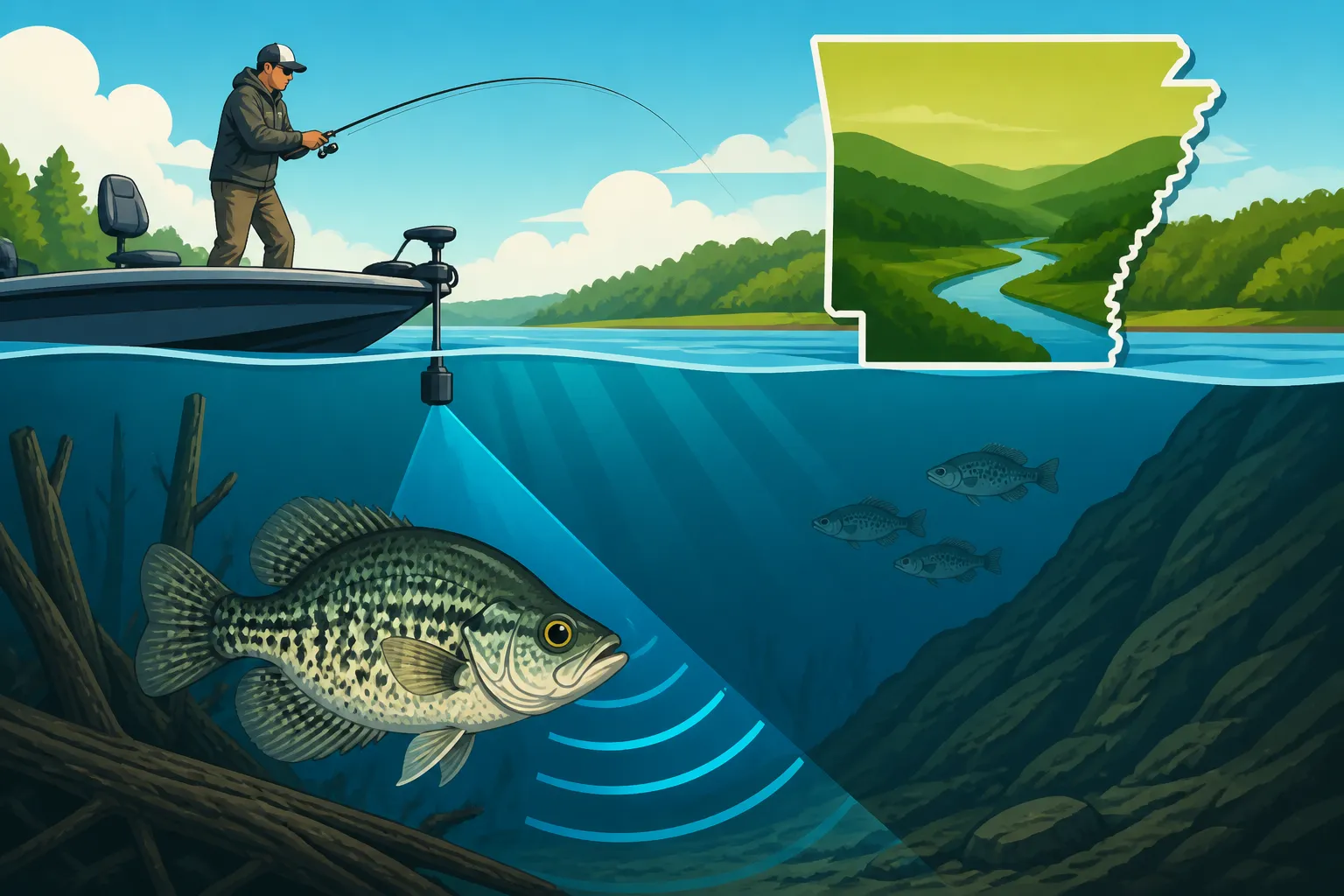
- Down Imaging/ClearVü/DownScan: This technology provides photographic-like images of what's directly below your boat. It excels at showing distinct objects like individual tree limbs, brush piles, and how fish are relating to them. You can often see crappie suspended just above or nestled right inside a brush pile. This clarity is invaluable for precise jig placement.
- Side Imaging/SideScan: This is perhaps the most powerful tool for searching deep water efficiently. Side imaging sends sonar beams out to the sides of your boat, allowing you to scan vast areas of the bottom without driving directly over them. You can quickly identify creek channels, ledges, and isolated brush piles or timber that might be holding crappie, often hundreds of feet away from your boat. Once you spot potential cover, you can mark it with a waypoint and then move in for a closer look with your 2D or down imaging. You can find a wide range of these advanced fish finders on
Amazon, offering various features for different budgets. Brands like Humminbird and Lowrance are popular choices among serious crappie anglers.
Learning to interpret what you see on your screen takes practice. Pay attention to the density of returns, the shape of the arches, and how they relate to the structure. Those little dots hovering around a sunken tree? That's your deep crappie target.
Rods, Reels, and Line for Deep Presentation
You can't just use any old ultralight setup for deepwater crappie; you need gear that can handle the depth and potentially heavier jig weights.
- Rods: Opt for longer rods, typically 7 to 14 feet, especially if you're spider rigging (more on that below). A longer rod helps spread out your lines and absorb shock. For vertical jigging, a sensitive 6.5 to 7.5-foot medium-light to medium-action rod with a fast tip is ideal. The fast tip helps detect those subtle deepwater bites, which can feel like just a little "tick" or added weight.
- Reels: Matching spinning reels for jigging or small baitcasting reels for spider rigging should have smooth drags and hold enough line. A good quality reel ensures consistent performance.
- Line: This is crucial. Fluorocarbon line is an excellent choice for deepwater crappie because it has very low stretch, offering superior sensitivity for feeling those deep bites. It's also virtually invisible underwater. Many anglers prefer 6-8 pound test fluorocarbon. Some will use a braided main line with a fluorocarbon leader for even more sensitivity and strength, but the leader length needs to be carefully considered for deep presentations. You can often find bulk spools of high-quality fluorocarbon line on
Amazonat competitive prices.
Lures and Baits That Reach the Depths
To get down where the crappie are, you'll need jigs and baits designed for depth.
- Jigs: Heavy jigs are key. While you might use 1/32 or 1/16 oz jigs in shallow water, deepwater crappie often require 1/8 oz, 1/4 oz, or even 3/8 oz jigs to quickly get to the desired depth and maintain contact. Jig bodies can be soft plastics, hair jigs, or marabou. Experiment with colors – chartreuse, white, black/chartreuse, and blue/pearl are often good starting points.
- Minnows: Live minnows are a time-tested crappie getter. For deep water, you can hook them through the lip or back and fish them beneath a weight or directly on a bare hook with a split shot or a small jig head. The natural movement of a minnow is often irresistible to a lethargic deepwater crappie.
- Spoons: Small jigging spoons can be effective, especially when crappie are schooled up or suspended. Their flash and erratic fall can trigger aggressive bites. Vertical jigging spoons often mimic dying baitfish, a prime target for opportunistic crappie.
Techniques for Targeting Deepwater Crappie in Arkansas
Once you've located some promising deep structure on your electronics, it's time to present your bait in a way that entices a bite.
Vertical Jigging and Dropping
This is a precision technique, best employed when you've spotted crappie directly beneath your boat or precisely marked a brush pile.
- Positioning: Use your trolling motor to hold your boat directly over the fish or structure. A GPS-enabled trolling motor with spot-lock is a game changer here, holding you perfectly still even in wind or current.
- Presentation: Drop your jig or minnow straight down to the depth where you're seeing fish. Watch your line and your sonar simultaneously. If fish are at 25 feet, drop your bait to 25-27 feet.
- Action: Once at depth, gently lift and drop your rod tip, imparting a subtle jigging motion. Sometimes a completely still presentation is best. Experiment with pauses and retrieves. The key is to keep your bait in the strike zone as long as possible.
- Sensitivity: Pay close attention to your rod tip. Deepwater bites can be incredibly light – a slight tap, a spongy feeling, or simply your line going slack (which means a fish picked it up on the fall). Setting the hook quickly is essential. This method is fantastic for targeting individual fish or small, tight schools.
Spider Rigging and Trolling
Spider rigging is a great way to cover a lot of water and present multiple baits at varying depths simultaneously, especially useful when crappie are scattered or when you're searching for them across a deep flat or creek channel.
- Setup: This involves deploying several rods (often 4 to 8, depending on regulations) from the bow of your boat, fanned out like a spider's legs. Each rod will have a different jig or minnow presentation, possibly at slightly different depths or with different colors.
- Movement: Use your trolling motor to move slowly, often less than 1 mph, along contours, creek channels, or across deep flats. This slow troll allows your baits to swim naturally and covers a wide swath of water, increasing your chances of finding scattered fish.
- Monitoring: Keep a close eye on your rod tips for any movement. Often, a crappie bite on a spider rig is a gentle dip or bounce of the rod tip. Adjust your speed and depth based on where you get bites. You might find more detailed information on techniques like this in our guide on Crappie Jigging Basics for Beginners.
Interpreting Your Electronics and Water Conditions
Your fish finder is constantly giving you clues. Learn to read it like a book.
- Follow the Bait: If you see large schools of shad, crappie are likely nearby. They'll often be just below or on the edges of these baitfish schools.
- Identify the Cover: Distinguish between hard bottom (rock, gravel) and soft bottom (mud, silt). Crappie often prefer harder bottoms or areas where structure meets a hard bottom.
- Notice the Thermocline: If your fish finder shows a distinct thermocline, assume crappie will be above or in it, not below it.
- Mark Waypoints: Every time you get a bite or see a good brush pile, mark a waypoint on your GPS. Over time, these waypoints will reveal patterns and show you exactly Where to Catch Crappie on Lake Ouachita or other favorite spots.
- Consider the Weather: Cold fronts can push crappie deeper and make them less active. Stable weather often means more predictable patterns. High sun can also drive them into thicker cover in deeper water.
Top Arkansas Lakes for Deepwater Crappie
Arkansas is blessed with an abundance of fantastic crappie fisheries, many of which offer excellent deepwater opportunities.
Renowned Deep Crappie Fisheries
While nearly every lake in Arkansas will hold crappie, some are particularly famous for their deepwater populations and structure:
- Bull Shoals Lake: Known for its clear, deep waters and abundant submerged timber and bluff lines. Crappie here can often be found suspended over brush piles in 20-40 feet of water, especially in the winter and summer.
- Norfork Lake: Another deep, clear Ozark lake with extensive rock formations, standing timber, and creek channels that hold crappie throughout the year. The sheer depth here can be intimidating, but electronics are your friend.
- Lake Ouachita: Arkansas's largest lake, famous for its clear waters and incredible deep structure, including vast stands of submerged timber. This lake is a prime candidate for finding crappie in deep cover. Anglers often refer to it as one of the Best Crappie Lakes in Arkansas.
- DeGray Lake: Offers great crappie fishing with good structure in its deeper sections, especially around its numerous islands and submerged humps. For specific tips, you might consult Crappie Fishing Guides on Arkansas's DeGray Lake.
- Greers Ferry Lake: Another excellent clear-water lake with deep channels, bluff walls, and abundant submerged cedar trees, all perfect deepwater crappie habitat.
When and Where to Focus Your Efforts
Knowing the lake is one thing, but knowing when and where to start is another.
- Seasonal Hotspots: In summer, focus on the main lake points, bluff ends, and creek channel bends with deep brush piles. In winter, look for crappie suspended in old creek channels or relating to vertical structure like bridge pilings or deep timber near a drop-off.
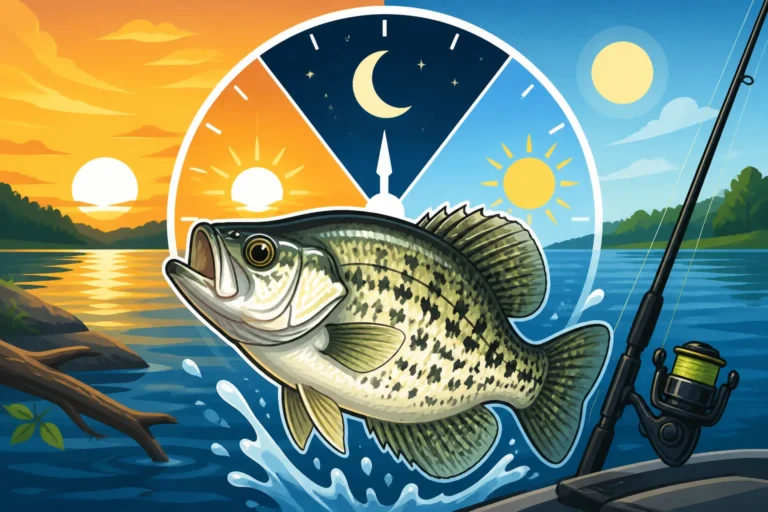
- Time of Day: While crappie can be caught deep all day, low light conditions (dawn, dusk, or heavily overcast days) can sometimes draw them slightly shallower or make them more active. However, deepwater crappie are often less affected by direct sunlight than their shallow-water counterparts. You might find a good read on this in "What's the Best Time of Day to Fish DeGray Lake?".
- Structure is Key: Always prioritize areas with significant submerged structure. Crappie don't just hang out in open deep water; they use structure for safety and as an ambush point. If you’re not seeing distinct cover on your electronics, you’re likely not in a prime deepwater crappie spot. Keep moving and keep scanning until you identify those critical holding areas.
The table below offers a quick comparison of common deepwater crappie techniques to help you choose the best approach for your next trip.
| Technique | Ideal Conditions | Key Gear | Pros | Cons |
|---|---|---|---|---|
| Vertical Jigging | Crappie concentrated over specific structure | Sensitive rod, heavy jigs/minnows, sonar | Precise, direct presentation, higher hook-up | Limited search area, requires good boat control |
| Spider Rigging | Crappie scattered on deep flats/channels | Multiple long rods, trolling motor, sonar | Covers large areas, presents multiple baits | Requires more gear, can be cumbersome |
| Deep Trolling | Crappie suspended in open water or along contours | Trolling motor, specific crankbaits/jigs | Highly efficient for searching | Less precise, can be harder to feel bites |
Remember, mastering deepwater crappie fishing takes time and persistence. Don't get discouraged if you don't find them immediately. Keep experimenting with depths, baits, and techniques, and most importantly, trust your electronics. Those crappie are down there, and with these strategies, you'll be putting them in your livewell in no time! Also, be sure to always check the Crappie Size and Daily Limit in Arkansas for the specific body of water you're fishing.
Disclaimer
This article is for general informational purposes only and does not constitute professional advice. Laws, prices and regulations vary by location and change over time. Consult a qualified professional for guidance on your specific situation.