How to Position a Boat for Bass Fishing
There's nothing quite like the thrill of chasing bass in Arkansas, but if you've ever felt like you're just missing something, or that the fish are always just out of reach, it often comes down to one crucial element: your boat's position. It's a common frustration—you see the cover, you cast, but nothing. This guide is going to dive deep into how to properly position your boat for bass fishing, giving you the strategic edge you need to put more fish in the livewell, no matter if you're on a vast reservoir like Lake Ouachita or a meandering river.
Understanding Bass Behavior and Habitat for Optimal Positioning
Before you even think about dropping your trolling motor or making that first cast, you need to understand why bass are where they are. Bass aren't just swimming aimlessly; they have preferences, habits, and instincts that dictate their location. Knowing these helps you predict their movements and, most importantly, position your boat to intercept them effectively. It's like being a detective, looking for clues that lead you to the suspect.
Why Bass Love Structure and Cover
Bass are ambush predators, and like any good hunter, they need a place to hide and wait for their prey. This is where "structure" and "cover" come into play. Structure refers to changes in the lake or river bottom itself – things like creek channels, humps, points, ledges, and drop-offs. These are permanent features that contour the underwater landscape. Bass will often relate to these changes, using them as highways or resting areas.
Cover, on the other hand, is anything on or in the water that provides shelter or concealment. Think about those fallen trees (often called "laydowns"), submerged brush piles, boat docks, lily pads, grass beds, or even boulders. These are physical objects that bass can get into, under, or around. They offer protection from predators, shade from the sun, and ideal ambush points for unsuspecting baitfish. When you see good cover or structure, your brain should immediately start thinking about how to present your lure to the bass hiding there. The best boat position is one that allows you to work your lure through these prime areas naturally and effectively, maximizing your chances of a strike.
Seasonal Movements and Their Impact on Boat Position
Bass aren't static; their behavior changes dramatically with the seasons, largely driven by water temperature and their spawning cycle. What works in spring won't necessarily work in summer, and your boat positioning needs to adapt accordingly. For instance, in early spring, as the water warms, bass will move to shallower, sun-exposed areas to feed and prepare for spawning. This is your cue to keep your boat relatively shallow and parallel to sun-drenched banks where they'll be staging.
Once the spawn is in full swing, you'll find them on beds in very shallow water, often near protected coves. After the spawn, during the post-spawn period, they'll be recovering and often move to slightly deeper cover near those same spawning flats. Come summer, with rising water temperatures, bass will seek cooler, oxygenated water, often retreating to deeper main lake points, ledges, or offshore humps. This means your boat position will shift to deeper water, using your electronics to find those thermoclines and contours. Fall brings a feeding frenzy as bass fatten up for winter, often pushing baitfish into creeks and shallow pockets, which might have you chasing schools with your boat. Finally, in winter, bass will typically hold on deep, vertical structure or main lake points. Understanding these patterns, like those discussed in a Bass Fishing Techniques by Season guide, is fundamental to knowing where to point your bow.
Essential Boat Positioning Techniques for Different Scenarios
Having a solid understanding of bass behavior is one thing, but actually putting your boat in the right spot for the perfect cast is another skill entirely. This is where the rubber meets the road, or more accurately, where the hull meets the water. Precision boat control isn't just about getting there; it's about staying there, and doing it in a way that maximizes your fishing efficiency.
The Art of the Angle: Casting Lanes and Presentations
Think of your boat as the launching pad for your lure. The position of that launching pad determines everything about your cast: the distance, the accuracy, and crucially, the angle at which your lure approaches the target. You want your lure to look as natural as possible to the bass, which often means approaching from an unexpected angle or mimicking the flow of natural prey. For example, if you're fishing a submerged brush pile, casting directly on top might spook fish. Instead, positioning your boat so you can cast past the cover and retrieve your lure through it, or parallel to it, often yields better results. This allows the lure to enter the strike zone looking like a fish swimming by, rather than dropping on its head.
In rivers or current, positioning your boat upstream and casting downstream allows your lure to flow naturally with the current, like a stunned baitfish. Conversely, if you're working a crankbait along a deep contour, you'll want to position your boat parallel to that contour line, allowing your lure to run at a consistent depth along the edge. The more precise your boat's angle and distance from the target, the more control you have over your lure's presentation. It's not just about getting a lure to the fish, but getting it past them in a way that triggers a strike. Sometimes, moving your boat just a few feet can completely change the way a bass perceives your offering.
Using Electronics and Trolling Motors for Precision Control
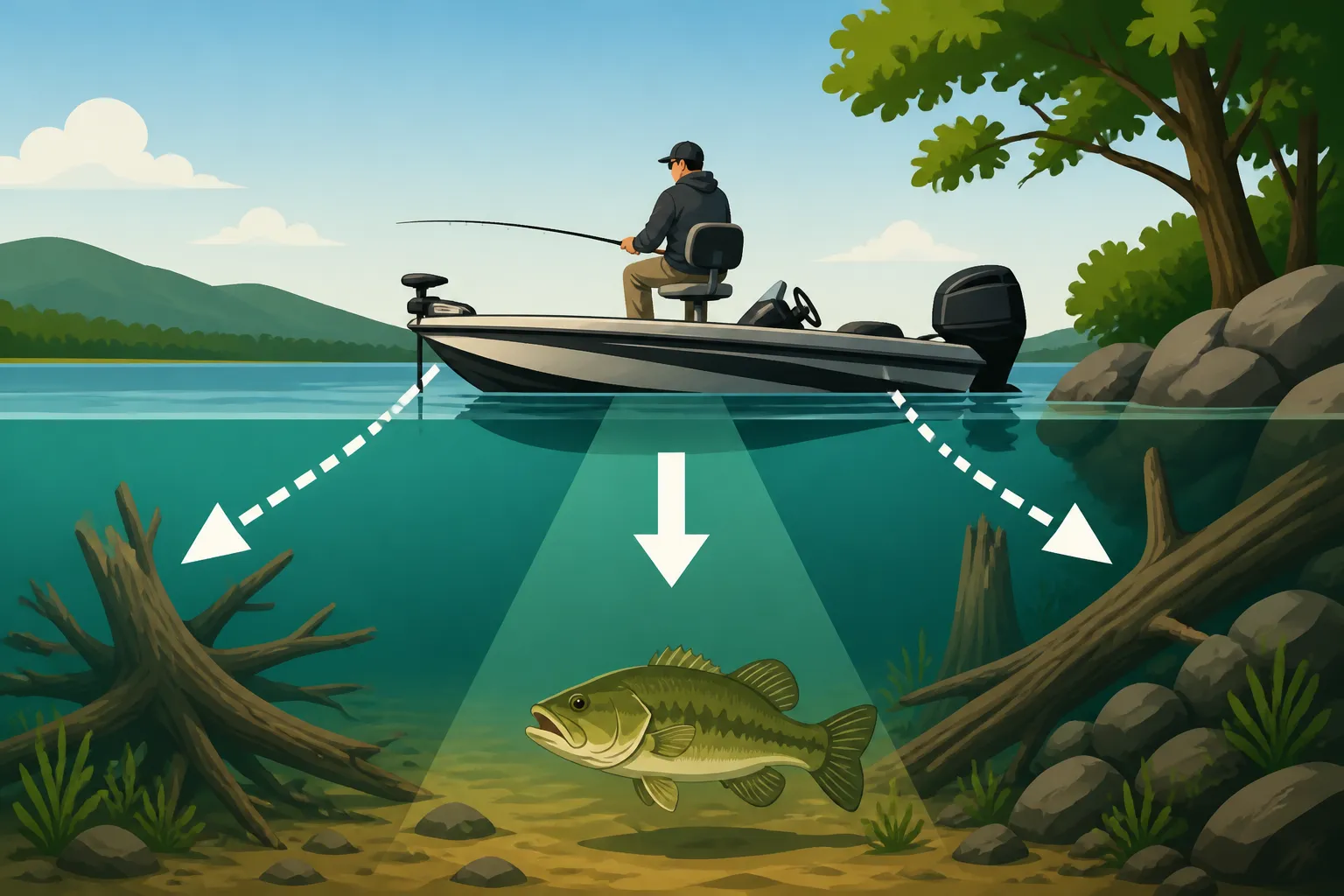
Modern bass boats are equipped with incredible tools that make precise boat positioning easier than ever. Your fish finder, especially with side imaging and down imaging, is your underwater eyes. It allows you to see structure, cover, and even individual fish before you ever cast. Use it to identify that isolated brush pile, a subtle hump, or a submerged rock pile. Once you've located a promising spot, your trolling motor becomes your best friend for micro-adjustments. A good foot-controlled trolling motor, easily found on a platform like Amazon, allows you to keep your hands free for fishing while making constant, subtle adjustments to hold your position against wind or current.
Many newer trolling motors also feature GPS-based "Spot-Lock" or anchor modes. This technology is a game-changer. Once you find a productive spot, engage Spot-Lock, and your trolling motor will automatically hold your boat in that exact position, compensating for wind and current. This frees you up to focus 100% on fishing, making repeated accurate casts to the same target without constantly wrestling with the boat. Imagine finding a small sweet spot on a main lake point; Spot-Lock lets you pepper that exact area with casts, maximizing your time in the strike zone. This capability significantly improves your ability to execute various Bass Fishing Techniques for Beginners with confidence.
Mastering Boat Control in Wind and Current
Wind and current are two of the most challenging, yet often overlooked, factors in boat positioning. They can quickly turn a precise presentation into a frustrating mess. When facing a stiff wind, your trolling motor isn't just for propulsion; it's for stabilization. You can "push" into the wind, maintaining your desired speed and angle while you cast. If you're drifting too fast, point the bow into the wind and use short bursts of power to slow your drift. This technique also allows you to control the speed at which your lure moves, which can be critical for triggering bites on tougher days.
Similarly, in rivers or tailwaters with strong current, you can use your trolling motor to hold your boat stationary, or move it slowly upstream or downstream, allowing you to thoroughly work a specific piece of structure. Many anglers will hold their boat slightly upstream of their target, allowing their lure to drift naturally into the strike zone. Don't be afraid to experiment. Sometimes, a controlled drift, rather than a stationary position, is exactly what the fish want, especially when targeting suspended fish or covering large flats. The key is to be proactive, anticipating how wind and current will affect your boat and adjusting before it becomes a problem.
Specific Situations: Where to Put Your Boat for Key Bass Spots
Knowing the general principles is great, but bass fishing is often about adapting to specific pieces of cover and structure. Each type of bass hangout demands a slightly different approach and, therefore, a unique boat position to maximize your chances. Let's break down some of the most common and productive scenarios you'll encounter on Arkansas lakes and rivers.
Positioning for Docks, Laydowns, and Isolated Cover
Docks are absolute magnets for bass, offering shade, cover, and ambush points. When approaching a dock, avoid running your main engine or even your trolling motor too close, as noise can easily spook fish. Your ideal boat position will allow you to cast parallel to the dock, under it, and around its pilings. Often, this means staying a good cast length away, using the wind (if favorable) to your advantage for silent approach. Cast past the target and retrieve your lure through the strike zone. For example, if you're pitching a jig, you'll want to be close enough for accuracy, but far enough not to cast a shadow over the dock or make excessive noise.
Laydowns, those majestic fallen trees stretching into the water, require a multi-angle approach. Don't just cast to the visible parts. Bass will often hold deep within the branches. Position your boat to cast to the trunk, then to the deeper branches, then parallel to the entire length of the tree. Make sure you can hit both the shallowest parts near the bank and the deepest tips. Similarly, for isolated brush piles or rock piles you've found on your electronics, circle them, casting from different angles. One angle might look natural, another might simply get your lure snagged. Experiment until you find the retrieve path that gets bit, then use your trolling motor to repeat that perfect angle. This meticulous approach is key to consistently catching fish, whether it's on a major reservoir or a smaller body of water like the one discussed in Lake Conway Bass Fishing Near Little Rock, Arkansas.
Fishing Points, Humps, and Channel Swings
Points are classic bass holding areas, especially main lake points that extend into deeper water. They act as travel corridors and feeding grounds. When fishing a point, you want to cover all its facets: the tip, the sides, and the transition areas where it drops off into deeper water. Position your boat so you can cast across the tip, then move to cast down each side, parallel to the depth contour. For bass that are suspended or chasing bait, you might hold your boat over the deepest part of the point and cast towards the shallower water, working your lure down the slope.
Humps are submerged islands that can be offshore gold mines. Again, your electronics are vital here. Once you've located a hump, position your boat to cast over its top, retrieving down its sides. Then, move your boat to the sides of the hump, casting up onto the top and dragging your lure down the opposite slope. Bass often relate to the "lip" where the hump drops off into deeper water. Channel swings, where a creek or river channel bends, also create prime bass habitat. Fish will often sit on the outside bend where the current carves out a deeper ledge, or on the inside bend where current deposits baitfish. Position your boat on the flats adjacent to the channel, casting towards the deeper edge, or directly over the channel, working lures up onto the shallower shelves. These areas are fantastic for finding both largemouth and smallmouth, as highlighted in guides like Smallmouth Bass Fishing in Arkansas's Ozark Streams.
Targeting Grass Beds and Hydrilla
Grass beds and hydrilla offer incredible cover and oxygen for bass, but they can be tricky to fish effectively. The key here is often to fish the edges, pockets, and subtle breaks within the vegetation. When targeting the outside edge of a grass line, position your boat parallel to the edge, casting along it. This maximizes your time with the lure in the prime strike zone. If you see open pockets within a dense grass mat, position your boat to make accurate pitches or flips into those openings.
For bass holding on top of submerged grass, you might want your boat positioned slightly shallower than the grass, allowing you to cast over it with topwater lures or buzzbaits. In clear water situations, particularly with sparse grass, a stealthy approach is paramount. Stay further back from the grass line, using longer casts to avoid spooking the fish. The lighter the line and the more subtle your approach, the better. Your boat acts as a platform, and its position determines how effectively you can present your lure without giving away your presence to the wary bass hiding in the green stuff.
Common Boat Positioning Mistakes and How to Avoid Them
Even with the best intentions and knowledge, it's easy to make mistakes when positioning your boat. These errors can quickly turn a promising spot into a dead zone, leaving you wondering why the fish aren't biting. Recognizing and correcting these common pitfalls is a crucial step towards becoming a more successful bass angler.
Spooking Fish: Noise, Shadows, and Close Approaches
This is probably the most common and costly mistake anglers make. Bass are incredibly sensitive to their environment. A loud clunk from dropping pliers on the deck, the whir of your big engine firing up too close to a shallow cove, or even the shadow of your boat passing over a shallow flat can send fish scattering. It's an all too familiar scenario: you pull up to a promising looking bank, make a cast, and nothing. Then you realize you just drove right over where the bass should have been.
To avoid this, always approach your target quietly and from a distance. Use your trolling motor well before you get to your spot, keeping your main engine off. If you're on a sunny day, pay attention to where your boat's shadow is falling. Keep it off the prime fishing area. If the wind is blowing towards your target, use it to your advantage for a quiet drift, or maintain just enough trolling motor power to hold your angle. A good rule of thumb is to stay at least a comfortable casting distance away, perhaps 50-70 feet, especially in shallower water or clear conditions. Sometimes, even the splash of an anchor can send fish packing, so consider alternatives like a shallow water anchor system if you find yourself fishing in skinny water frequently.
Poor Casting Angles and Limited Coverage
Another frequent mistake is failing to position your boat to maximize your casting angles and fully cover a piece of structure. Many anglers will pull up, make a few casts from one spot, and then move on, thinking the fish aren't there. However, bass often have a very specific sweet spot, and approaching from the wrong angle might mean your lure never even enters their strike zone properly. For instance, casting perpendicular to a long, tapering point might only allow you to work a small section.
Instead, position your boat to make multiple casts that work the entire area. Circle that point, casting along each side. Move around a brush pile to hit it from north, south, east, and west. Don't be afraid to adjust your boat even just a few feet. It can dramatically change the way your lure interacts with the cover and the fish. The goal is to present your lure in a way that looks natural and covers every potential hiding spot. This is especially important for How to Fish a Texas Rig for Bass or a Carolina Rig, where presentation on the bottom is key. If you're only casting from one position, you're likely missing a significant portion of the fish-holding potential.
Ignoring Environmental Factors
Finally, neglecting how environmental factors like wind, current, and sun angle affect bass and, by extension, your boat's position, is a common pitfall. Many anglers will fish a spot the same way regardless of the conditions. But fish relate to cover differently based on these factors. Bass might move to the shaded side of a dock or a laydown on a sunny day, or position themselves on the leeward side of a point during heavy wind to escape the chop.
You need to be constantly observing and adapting. If the wind picks up, do you need to adjust your trolling motor power? Is the sun now directly overhead, pushing fish deeper or into denser shade? Is the current stronger or weaker than an hour ago? By paying attention to these cues, you can anticipate where the bass will be and adjust your boat position accordingly. Don't just fight the elements; learn to work with them. Sometimes, using the wind to push you along a productive bank can be more efficient than constantly fighting it with your trolling motor, as long as it allows for a controlled drift and accurate casts. Being mindful of the Best Time of Day to Catch Bass often means considering these variables.
To help you visualize some common scenarios, here's a quick reference table:
| Scenario | Target | Recommended Boat Position | Why It Works |
|---|---|---|---|
| Docks & Piers | Pilings, shady spots | Stay a long cast away (50-70 ft), parallel or slightly angled. | Reduces spooking; allows casting under and along dock structure. |
| Laydowns/Timber | Branches, trunk, ends | Circle the structure, casting from multiple angles (bow, stern, sides). | Ensures you hit all parts of the laydown, including deep branches. |
| Points | Tip, sides, transition | Position to cast across the tip, then parallel down each side. | Covers the entire point, targeting bass moving up/down or feeding. |
| Humps | Top, slopes, edges | Hold over the deep water, casting onto the hump, or circle the hump. | Allows working lures over the top and down all slopes where bass hold. |
| Grass Lines | Edges, pockets, clumps | Parallel to the grass edge for long casts, or directly over pockets. | Maximizes time in the strike zone, hits key ambush points. |
| River Banks/Current | Current breaks, eddies | Upstream of target, casting downstream; or on the edge of current. | Lure moves naturally with current; targets bass in calmer water near current. |
| Ledges/Drop-offs | Breakline | Parallel to the ledge, casting shallow and retrieving deep. | Keeps lure in the strike zone along the break for longer. |
Remember, boat positioning is a skill that improves with practice. The more time you spend on the water, experimenting with different angles and paying attention to how fish react, the more intuitive it will become. Don't be afraid to adjust, move, and try something new. The bass are there; it's just a matter of putting yourself in the best possible position to catch them.
Disclaimer
This article is for general informational purposes only and does not constitute professional advice. Laws, prices and regulations vary by location and change over time. Consult a qualified professional for guidance on your specific situation.