How to Jug Fish for Catfish
Have you ever spent hours on the bank with your rod and reel, patiently waiting for a bite, only to feel like the catfish are just teasing you? Or maybe you're looking for a way to maximize your chances, especially for those bigger, harder-to-reach bottom dwellers, without having to hold a rod all day long. That's a frustration many anglers in Arkansas can relate to! Thankfully, there's a tried-and-true method that's both effective and a ton of fun: jug fishing. This comprehensive guide is going to break down everything you need to know about how to jug fish for catfish in Arkansas, from setting up your gear to mastering the best spots and complying with local regulations.
Understanding the Appeal of Jug Fishing for Catfish
Jug fishing might sound a little old-school to some, but don't let that fool you. It's a remarkably effective and exciting way to target catfish, offering a blend of tradition, strategy, and often, big rewards. For many of us, it conjures up images of simpler times, but it’s far from an outdated technique.
What is Jug Fishing, Really?
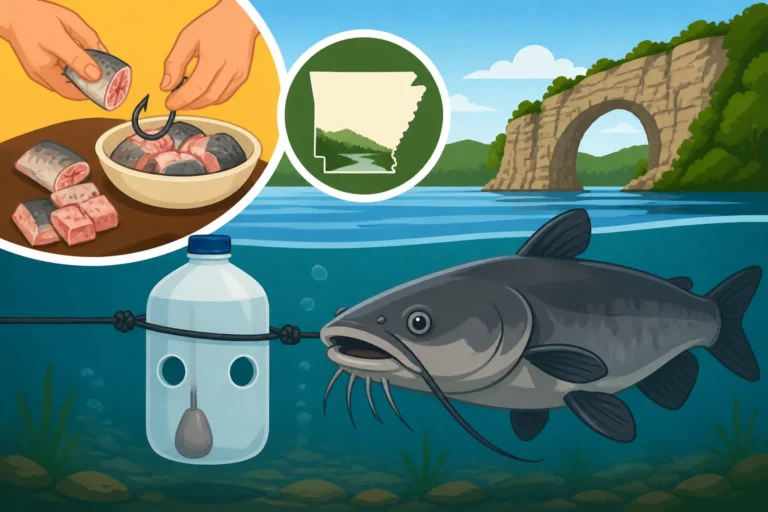
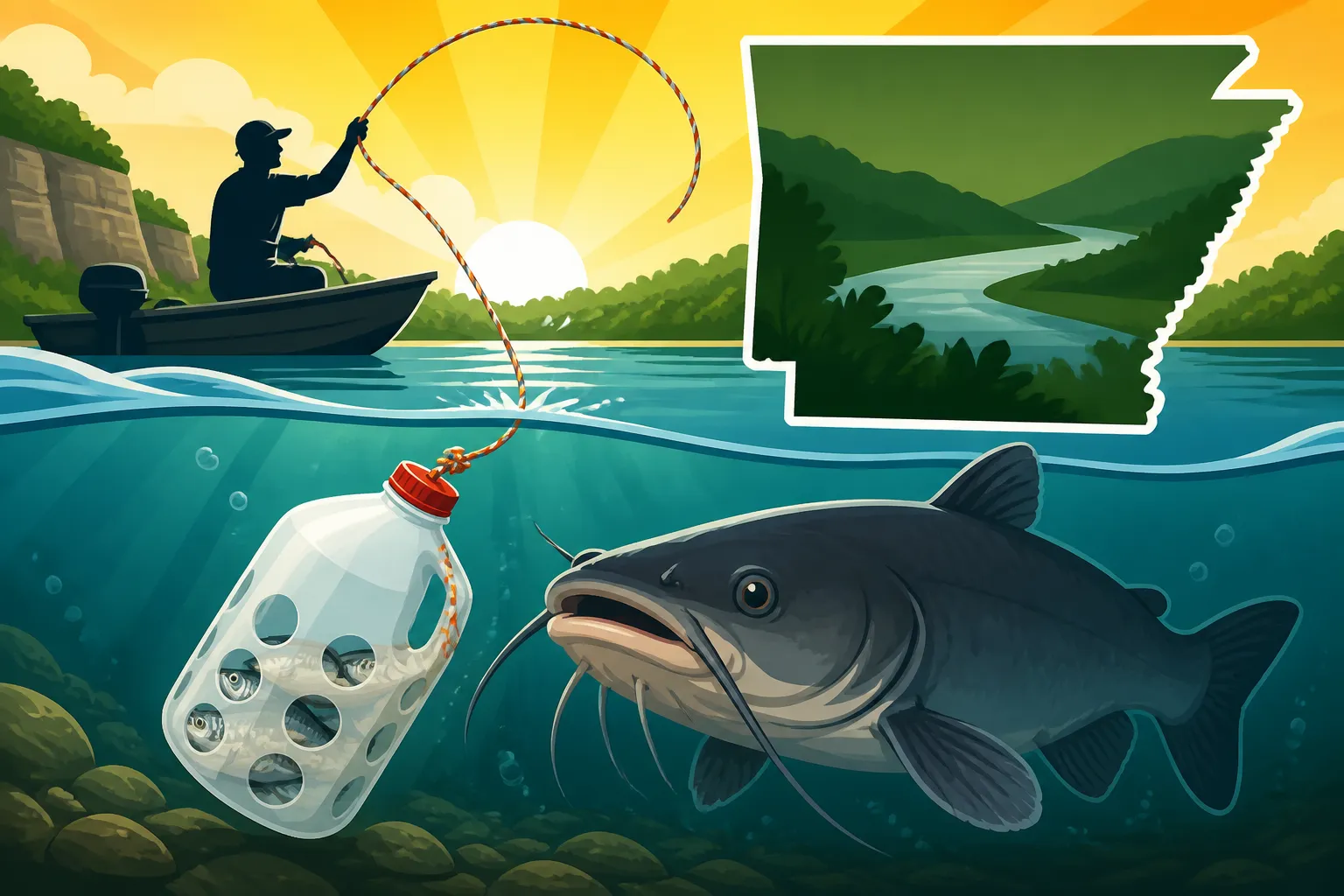
At its heart, jug fishing is a passive fishing method where you use individual, free-floating lines, each attached to a buoyant "jug" or float. Think of it as setting multiple individual lines without having to manage each one directly. Instead of holding a rod, you're monitoring these floats, waiting for one to start dancing on the water, signaling a hungry catfish has taken the bait. It’s particularly appealing because it allows you to cover a wider area than traditional bank or even boat fishing with a limited number of rods.
The beauty of jug fishing lies in its simplicity and efficiency. You can set out a dozen or more jugs, each baited and ready, and then patrol the area by boat, watching for the tell-tale tug. When a jug dips, darts, or starts moving against the current, it's game on! It's a fantastic way to target species like Channel Catfish, Blue Catfish, and even the elusive Flathead Catfish, especially in larger bodies of water where they might be spread out or holding in deeper sections. The anticipation of spotting a moving jug bobbing across the water is truly a unique thrill.
The Legality and Ethics of Jug Fishing in Arkansas
Before you even think about buying your first jug, it’s absolutely critical to understand the rules. Trust me, the Arkansas Game and Fish Commission (AGFC) takes its regulations seriously, and getting caught unprepared can quickly turn a fun outing into a costly headache. Many folks get confused about what's allowed and what's not, especially with different rules for various fishing methods. Don't worry, we'll clear that up.
In Arkansas, jug fishing is indeed a legal method for recreational anglers, but there are some strict guidelines you absolutely must follow. These rules are in place to ensure fair chase, prevent overfishing, and maintain the safety of our waterways.
Here's what you need to know:
- Number of Jugs: Recreational anglers are typically limited to 20 jug lines. It might sound like a lot, but once you're out there, you'll realize how quickly that limit can be reached, especially if you're fishing with a buddy.
- Identification: Each jug must be clearly marked with the angler's name and address or current AGFC customer identification number. This is non-negotiable. If a game warden finds unmarked jugs, they'll likely be confiscated, and you could face a citation. It’s best to use permanent markers or waterproof labels that won't easily wash off.
- Active Attendance: You must remain in "attendance" of your jug lines. This doesn't mean you have to be holding them, but you can't just set them out and leave for hours, or worse, overnight. The rule typically means you need to be in the general vicinity and able to readily retrieve your lines. The exact interpretation can vary, but staying within sight or a short boat ride is generally safe.
- Waters Closed to Jug Fishing: Not all waters are open to jug fishing. For instance, many state park lakes or smaller, intensively managed waters might have specific restrictions. Always check the latest Arkansas Fishing Regulations Guide or contact the AGFC directly if you're unsure about a specific body of water. Some waters might require a specific license or permit, so it's always wise to double-check the latest Arkansas Fishing License Rules and Costs.
- Commercial vs. Recreational: Remember, these rules apply to recreational fishing. Commercial fishing operations have different, much stricter regulations.
Beyond the legalities, there's an ethical component. Always retrieve all your jugs, even if they're snagged. Leaving lost jugs behind can create hazards for boats and wildlife, and it just isn't good sportsmanship. We want to keep our beautiful Arkansas waters clean and enjoyable for everyone.
Essential Gear for Your Arkansas Jug Fishing Adventure
Getting the right gear is crucial for a successful jug fishing trip. While it's a simple method, having reliable equipment will save you a lot of frustration and increase your chances of landing some impressive catfish. You don't need a massive investment, but quality matters where it counts.
Choosing the Right Jugs and Floats
The "jug" is obviously the star of the show here! You want something that's highly visible, durable, and provides enough buoyancy to handle a thrashing catfish without sinking.
- Material Matters: Many anglers opt for repurposed two-liter soda bottles, plastic milk jugs, or even pool noodles. These are cheap, readily available, and effective. However, if you want something more professional and long-lasting, dedicated jug fishing floats are available. They often come in bright colors and are built for abuse. Personally, I've had great success with a simple, brightly painted PVC pipe sealed at both ends. They're practically indestructible.
- Visibility is Key: Choose bright, fluorescent colors like orange, yellow, or chartreuse. This makes them easy to spot, especially from a distance, in low light, or on choppy water. You really don't want to lose track of a jug that's hooked into a big fish.
- Buoyancy: Ensure your chosen jug is buoyant enough to stay afloat even with a heavy catfish pulling on it. A two-liter bottle is generally good for most catfish up to 20 pounds, but for truly monstrous blue cats, you might want something with more lift. Consider the average size of fish you expect to catch in your chosen fishing spot.
You can often find multi-packs of sturdy plastic floats or even pool noodles at sporting goods stores or easily browse a wide selection on online retailers like Amazon. Just make sure whatever you choose can withstand the elements and a feisty fish.
Selecting Lines, Hooks, and Swivels
This is where the rubber meets the road, or rather, the fish meets the hook! Don't skimp on quality here. You'll be dealing with strong, hard-fighting fish, and cheap components will absolutely fail you.
- Line: You need strong, abrasion-resistant line. Monofilament line in the 50-80 lb test range is a popular choice for its affordability and stretch, which can act as a shock absorber. Braided line, while more expensive, offers superior strength for its diameter and no stretch, giving you direct contact with the fish. For jug fishing, I lean towards heavy mono (like 80 lb test) because it's less prone to tangling and more forgiving.
- Length: A common setup is to have about 5-10 feet of line, but this needs to be adjustable based on the water depth you're fishing. You want your bait to be near the bottom or at the depth where catfish are actively feeding.
- Hooks: Circle hooks are the go-to for jug fishing, and for good reason. They are designed to hook fish in the corner of the mouth, minimizing gut-hooking and making catch-and-release easier and less harmful to the fish. This is important for conservation and also ensures a cleaner, safer release if you're not keeping the fish. Sizes typically range from 7/0 to 10/0, depending on the bait size and target fish. Bigger hooks for bigger baits and bigger fish!
- Swivels: Heavy-duty barrel or ball-bearing swivels are essential. Catfish can twist and roll, and a good swivel prevents your line from tangling and snapping. Always opt for swivels with a higher breaking strength than your main line.
- Weights: You'll need enough weight to keep your bait at the desired depth, even in current, but not so much that it pulls your jug under. Bank sinkers or pyramid sinkers in the 2-4 ounce range are usually sufficient.
All these components, from heavy-duty fishing line to various sizes of circle hooks and sturdy swivels, are readily available. Many anglers stock up on these essentials from places like Amazon due to the wide selection and convenience.
The Best Baits for Arkansas Catfish
This is where you can really get creative and where local knowledge truly shines. Catfish are opportunistic eaters, but they definitely have their preferences, and what works best can change with the season and water body. If you're wondering what kind of tasty morsels these whiskered warriors prefer, check out our guide on the Best Bait for Catfish.
- Cut Bait: This is a classic for a reason. Shad, skipjack herring, carp, and even small pieces of bluegill or bream are fantastic. Fresh is always best, but frozen cut bait works too. The oil and scent trail that cut bait leaves in the water is irresistible to catfish.
- Live Bait: For bigger trophy Flatheads, live bait like small bluegill, sunfish, or even sturdy creek chubs can be incredibly effective. Make sure your live bait is legal to use in Arkansas and is handled humanely.
- Prepared Baits: Stink baits and punch baits have their loyal followers, especially for Channel Catfish. Brands like Catfish Charlie or Secret 7 have been catching catfish for generations. These baits are designed to release a strong scent, drawing catfish from a distance.
- Chicken Liver: A timeless favorite, chicken liver is bloody, soft, and has a potent scent. The main challenge is keeping it on the hook, so some anglers cure it or use small bait holders.
Here's a quick comparison of some popular catfish baits:
| Bait Type | Target Species | Pros | Cons | Best For |
|---|---|---|---|---|
| Fresh Cut Bait | Blue, Flathead, Channel | Strong scent, very effective for all sizes | Can be messy, requires preparation | All-around best for active catfish |
| Live Bait (small fish) | Flathead Catfish | Extremely effective for trophy Flatheads | Requires live bait keeping, specific rules | Targeting large, predatory Flatheads |
| Chicken Liver | Channel Catfish | Inexpensive, strong scent | Falls off hook easily, messy | Smaller Channel Cats, quick action |
| Stink Baits | Channel Catfish | Easy to use, good for smaller fish | Less effective for large Blue/Flatheads | High-volume catching of eating-size channels |
The best part about bait is experimenting! What works wonders on the Arkansas River might not be as hot on Lake Dardanelle. Keep a log, try different things, and you'll find your local winning combination.
Setting Up and Deploying Your Jug Lines Effectively
Now that you have all your gear, it’s time to put it together and get those lines in the water. This is where your strategy comes into play, deciding where and when to present your bait.
Crafting Your Jug Line Setup
Assembling your jug lines is straightforward, but attention to detail makes all the difference. You want a robust, tangle-free setup that can withstand a strong fight.
- Cut Your Line: Start by cutting your main fishing line. A good length is typically 8-12 feet. This gives you plenty of room to adjust for different depths.
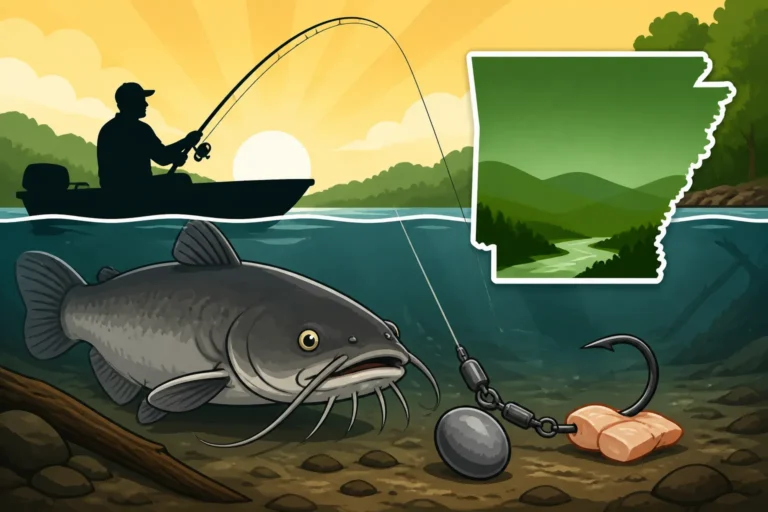
- Attach the Weight: Tie a heavy-duty swivel to one end of your main line. Then, attach your sinker (2-4 oz) to the other end of that swivel using a short leader (6-12 inches) of slightly lighter line. This way, if the sinker gets snagged, you might only lose the sinker, not the entire setup.
- Attach the Hook: About 12-24 inches above your sinker, tie another heavy-duty swivel. To this swivel, attach your circle hook using a snell knot or a strong palomar knot on a short leader (6-12 inches). This allows the bait to drift naturally and prevents the hook from being too close to the weight.
- Attach to Jug: Securely tie the opposite end of your main line (the one without the hook or sinker) to your chosen jug. Make sure to use a strong knot that won't slip, like a double uni knot or a clinch knot.
- Mark Your Jug: Don't forget this crucial step! Write your name and address or AGFC customer ID clearly on the jug with a permanent marker. This is a legal requirement in Arkansas.
Repeat this process for all your jugs. Having a dozen or more pre-rigged lines means less time tying knots on the water and more time fishing.
Strategic Placement: Where to Set Your Jugs in Arkansas Waters
Location, location, location! Just like with any fishing, knowing where the fish are holding is paramount. Catfish aren't just swimming around aimlessly; they gravitate towards structure, current breaks, and areas with abundant food. Our guide to the Best Catfish Spots in Arkansas can give you some excellent starting points, but let's dive into some general principles.
- Deep Channels and River Bends: Catfish, especially Blue and Channel cats, love deep water, particularly in rivers. Look for the deepest channels and the outside bends of rivers where the current has scoured out holes. The Arkansas River is a prime example of where this strategy shines. When you're Fishing the Arkansas River for Bass and Catfish, keep an eye out for these deeper pockets.
- Submerged Structure: Catfish are ambush predators and often hide in or around submerged timber, rock piles, or old foundations. These structures provide cover, shade, and act as feeding lanes for smaller fish. Drop your jugs near these areas, but be prepared for snags!
- Feeder Creeks and Inflows: Areas where smaller creeks or streams flow into a larger lake or river are often hotspots. These inflows bring in nutrients, baitfish, and often create current breaks that catfish exploit.
- Flats Adjacent to Deep Water: Catfish will often move up onto shallower flats to feed, especially at night, before retreating to deeper water during the day. Setting some jugs on these transition areas can be very productive.
- Wind-Blown Banks: A consistent wind can push baitfish and oxygenated water to one side of a lake. Catfish often follow this food source, so casting jugs on the wind-blown side can be a smart move.
Remember, jug fishing allows you to cover a lot of water. Don't be afraid to spread your jugs out, experimenting with different depths and locations until you find a pattern.
Timing is Everything: When to Deploy Your Jugs
The time of day and year can dramatically influence your jug fishing success. Catfish, like many species, have peak feeding times.
- Night Fishing: For many catfish anglers, especially those targeting larger Blue and Flathead cats, night is the absolute best time. Catfish are primarily nocturnal hunters, using their highly sensitive barbels to find food in the dark. If you're looking for more information on tactics, check out Night Fishing Techniques for Catfish.
- Dawn and Dusk: The transition periods of dawn and dusk are also incredibly productive. As light levels change, catfish become more active, moving from their daytime resting spots to feeding grounds. To really dial in on these times, our guide on the Best Time of Day to Catch Catfish offers excellent insights.
- Seasonality:
- Spring: As water temperatures rise, catfish become very active, feeding heavily before and after the spawn. This is a prime time for jug fishing.
- Summer: Catfish can still be caught throughout the summer, often moving to deeper, cooler water during the heat of the day. Night fishing is especially effective in summer.
- Fall: As water temperatures drop, catfish will often feed aggressively to fatten up for winter. This can be another fantastic time for jug fishing, especially on sunny days when they might move to shallower areas.
- Winter: Jug fishing can be tough in winter, as catfish activity slows down considerably. However, on warmer winter days or in specific deep holes, you can still find success.
Always pay attention to local weather patterns. A stable, warm front can spur catfish activity, while a sudden cold front can shut them down.
Managing and Retrieving Your Jug Lines Responsibly
Once your jugs are deployed, the real fun (and responsibility) begins. This isn't just about catching fish; it's about being a diligent angler and respecting the resource.
Monitoring Your Jugs
You've set your lines, now what? The waiting game is part of the experience, but "attendance" means you need to be actively monitoring.
- Visual Cues: Keep a keen eye on your jugs. A gentle bob might just be waves, but a sudden dip, a fast-moving jug against the current, or one that's gone completely under and resurfaced is a clear sign a fish has found your bait. The excitement when a jug starts to move is truly contagious!
- Regular Checks: Even if you don't see any frantic movement, it's a good practice to check your jugs periodically. This allows you to re-bait if needed, check for snags, or retrieve any fish that might have been on the line for a while. This also helps prevent fish from being stressed or injured by being hooked for too long.
- Using a Boat: A boat is almost essential for effective jug fishing, allowing you to quickly move to a "hot" jug and retrieve your catch. Make sure your boat is equipped with all necessary safety gear.
Landing Your Catch and Re-baiting
So, you've spotted a dancing jug! Time for action.
- Approach Carefully: Drive your boat slowly towards the moving jug. Don't spook the fish by rushing in too fast.
- Grab the Jug: Once you're close enough, carefully grab the jug. Sometimes, the fish will make a last-ditch run, so be ready for a strong pull!
- Hand-Lining: This is where the real fight happens. Hand-line the fish in, being careful not to let the line slip through your hands, which can cause painful burns. Wear gloves if you prefer. For larger catfish, don't be afraid to let them pull and tire themselves out a bit before bringing them to the boat.
- Landing the Fish: For smaller catfish, a simple dip net works great. For larger fish, a sturdy landing net is invaluable, or you can "lip" them by gripping their lower jaw firmly, being careful of their sharp pectoral and dorsal fins. Many trophy anglers prefer to use a fish grip or a strong pair of pliers to grab the lower jaw, especially for big blues.
- Re-bait and Re-deploy: Once you've secured your catch (or released it), remove any old bait, re-bait your hook with fresh bait, and toss the jug back into the water. The sooner it's back in action, the sooner it can catch another fish!
Respecting the Resource: Ethical Practices
Jug fishing is a privilege, and we all have a responsibility to keep our fisheries healthy.
- Clean Up: Always, always, always retrieve all your jugs. Lost jugs become litter and can continue to "ghost fish," harming wildlife. It reflects poorly on all anglers when trash is left behind.
- Handling Fish: If you're not keeping a fish, release it quickly and gently. Circle hooks significantly improve survival rates, but proper handling is still key. Minimize air exposure, support the fish's weight, and revive it if necessary before release.
- Know Your Limits: Adhere to all size and daily limits set by the AGFC. These limits are in place for a reason – to ensure sustainable fish populations. Even if you're not seeing fish in your immediate area, those limits apply. Our article on What Counts as a Fish's Final Point of Storage in Arkansas is helpful if you're planning on keeping your catch.
Jug fishing for catfish is a fantastic, exciting, and often productive way to fish in Arkansas. By understanding the regulations, preparing your gear, knowing where to set your lines, and practicing responsible angling, you'll be well on your way to some memorable catches!
Disclaimer
Please note that fishing regulations, costs, and availability of products can change. Always consult the official Arkansas Game and Fish Commission (AGFC) website or their latest regulations guide before planning your fishing trip to ensure you have the most current and accurate information. The advice provided in this guide is for informational purposes only.