Boat Fishing Techniques for Reservoirs
Stepping onto a boat, motor humming, and looking out over the vast expanse of an Arkansas reservoir can be both exhilarating and a little overwhelming. You've got all that water stretching out, and sometimes it feels like finding a fish is akin to finding a needle in a haystack. But don't you worry, because this guide is all about equipping you with the knowledge and confidence to transform those big, intimidating waters into your personal fishing playground, turning those "no bite" days into memorable catches.
Getting Started: The Right Boat and Gear for Arkansas Reservoirs
When you're facing down huge bodies of water like Lake Ouachita or Bull Shoals Lake, having the right setup isn't just a luxury; it's a necessity. It’s the difference between effortlessly reaching those honey holes and spending your day frustrated by limitations. You need a boat that can handle the conditions and gear that can help you locate and entice fish in varied depths and structures.
Choosing Your Vessel: From Jon Boats to Bass Rigs
Deciding on the perfect fishing boat for Arkansas's diverse reservoirs really depends on your budget, the species you're targeting, and how many people you typically fish with. For many, a simple aluminum Jon boat with a modest outboard motor is a fantastic starting point. These boats are generally more affordable, easy to trailer, and surprisingly versatile for smaller reservoirs or calm days on larger ones. They're great for accessing shallower coves and creek arms where bass or crappie might be holding. However, on a windy day on a huge lake like Greers Ferry Lake, they can feel a bit small and rough.
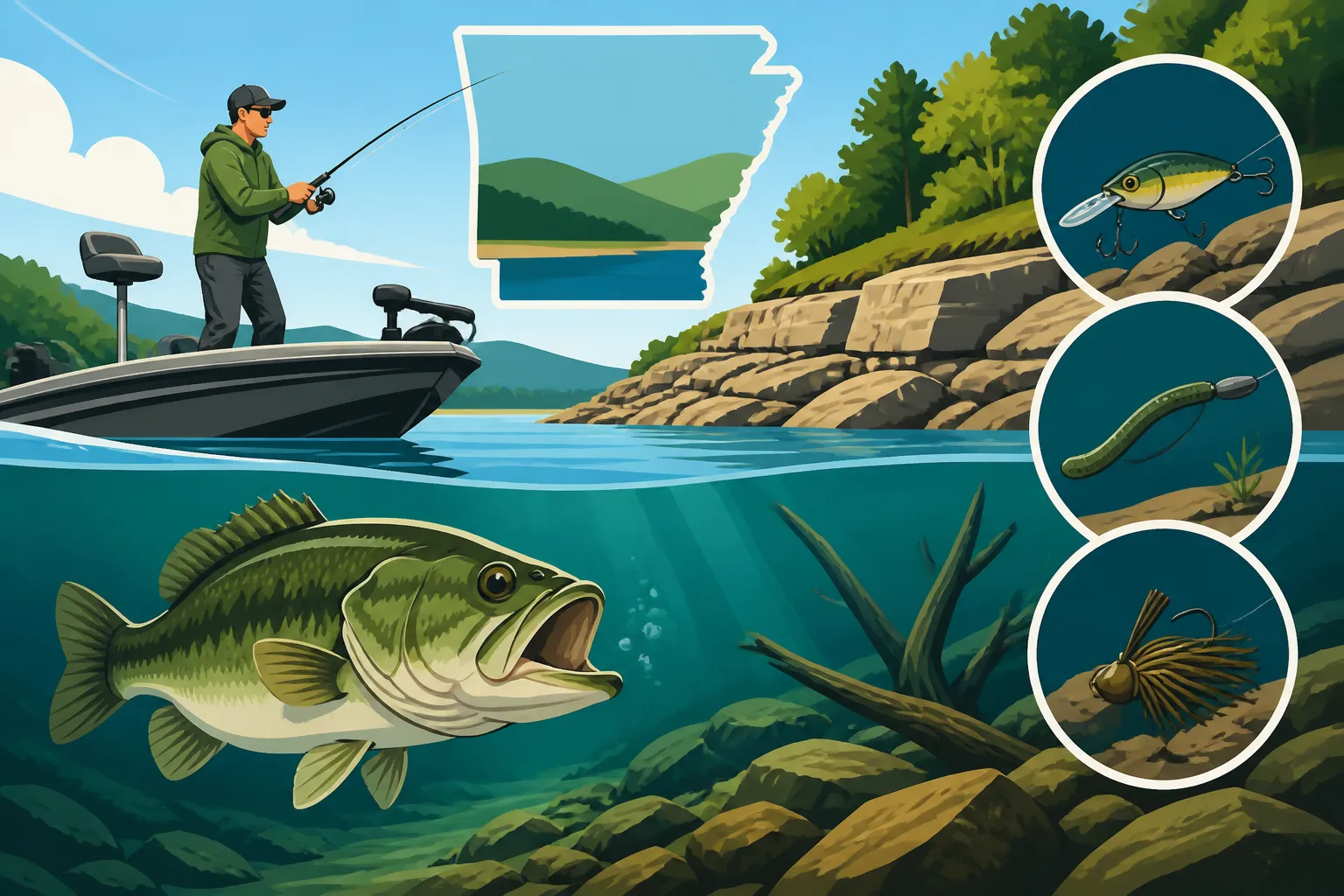
If you're serious about bass fishing, a dedicated bass boat is often the dream. These sleek, powerful machines are designed for speed, stability at rest, and equipped with features like livewells, extensive storage, and powerful trolling motors. They allow you to cover vast distances quickly, crucial for tournament fishing or simply exploring new areas on big impoundments. For families or those who enjoy a wider variety of fishing and water sports, a versatile deck boat or even a pontoon boat can offer a comfortable platform. While not as fast, a pontoon offers incredible stability and space, perfect for multiple anglers, especially when you're bottom fishing for catfish or crappie jigging. Remember, the right boat enhances your experience, making those long runs to a distant cove or battling choppy water much more manageable.
Essential Gear: Rods, Reels, and Electronics
Beyond the boat itself, your arsenal of rods, reels, and electronics truly defines your capability on the water. For reservoir fishing, versatility is key. You'll want a mix of medium-heavy action casting rods for pitching jigs and heavy cover, and medium-light spinning rods for finesse presentations like drop-shotting or throwing small crappie jigs. Pairing these with reliable baitcasting and spinning reels ensures you're ready for anything from a trophy largemouth to a feisty crappie. Investing in quality fishing line, whether fluorocarbon for sensitivity or braided line for strength, is also critical. You can often find great deals on reputable brands like Penn or Shimano on Amazon, making it easier to build out your collection without breaking the bank.
But the real game-changers on a reservoir are your electronics. A good fish finder with GPS and mapping capabilities is practically non-negotiable. Units from brands like Humminbird or Garmin can show you underwater structure, depth contours, baitfish schools, and even individual fish arches. This allows you to "see" what's below the surface, identifying submerged timber, rock piles, ledges, and creek channels that hold fish. A reliable trolling motor, especially one with GPS anchoring features, can keep you precisely positioned over a hot spot, allowing you to focus on fishing instead of constantly battling the wind or current. These tools transform guessing games into strategic assaults, helping you unlock the secrets of The Top Arkansas Lakes for Bass, Crappie, and Catfish For serious anglers, side-imaging and down-imaging technologies provide even more detailed views, essentially painting a picture of the underwater world around and beneath your boat.
Reading the Water: Finding Fish on Big Reservoirs
Arkansas reservoirs are complex ecosystems, often shaped by damming rivers that once snaked through valleys and hills. This means they have incredible underwater topography, from old riverbeds and submerged timber to vast open waters. Learning to "read" these waters is less about luck and more about understanding fish behavior and habitat.
Understanding Structure and Cover
Fish in reservoirs, especially larger game fish, are almost always associated with some form of structure or cover. Structure refers to changes in the lake's bottom topography, like creek channels, humps, ledges, points, and sudden drops in depth. These are highway systems and ambush points for fish. For example, a submerged river channel that winds through a flat can act as a migration route and a holding area for bass and crappie, especially during seasonal transitions. Using your fish finder to locate these subtle contours is crucial.
Cover, on the other hand, refers to physical objects within the water column or on the bottom, such as standing timber, brush piles, rock formations, docks, or even lily pads. These provide shelter, shade, and ambush points for predatory fish, as well as protection for baitfish. Many Arkansas reservoirs, like Lake Conway, are famous for their standing timber, which can be fantastic crappie and bass habitat. Learning to differentiate between these and understanding which species prefer which types of cover at different times of the year is a skill developed over time, but your electronics are your best teachers here. For instance, Crappie Fishing at Arkansas's White River National Wildlife Refuge often involves targeting flooded timber and brush piles.
Deciphering Water Conditions and Depth
Water conditions are dynamic and play a huge role in where fish position themselves. Factors like water temperature, clarity, and oxygen levels dictate comfort zones for different species. During warmer months, fish might seek deeper, cooler, more oxygenated water, or hide in the shade of dense cover. In cooler months, they might gravitate towards shallower areas that warm up faster or deep structures that offer stable temperatures. Water clarity also influences fish behavior; in clear water, fish are often spookier and might hold deeper or tighter to cover, while in stained or muddy water, they might be shallower and less cautious.
Depth is perhaps the most critical variable on reservoirs. Some fish, like striped bass, are often found suspended in open water or around deep main lake points, while others, like largemouth bass, might patrol shallow coves or deep ledges depending on the season. Using your depth finder to identify these depth transitions and target specific depths where you're seeing baitfish or fish arches is key. A general rule of thumb is that the deeper the water, the more subtle changes in structure become important, as fish will relate to even a slight contour change on a flat bottom. Pay attention to your electronics, and don't be afraid to experiment with different depths until you find where the fish are active.
Mastering Techniques: Effective Boat Fishing Strategies
Once you have your boat and a good understanding of the reservoir, it’s time to put some proven techniques into practice. There’s no single "best" method; instead, successful reservoir anglers employ a variety of approaches, adapting to what the fish are telling them.
Trolling and Casting: Covering Water Effectively
Trolling is a fantastic way to cover large areas of water, especially on expansive reservoirs like Norfork Lake, and is particularly effective for species like striped bass, walleye, or even crappie. It involves dragging lures or bait behind a moving boat, allowing you to present your offering at a consistent depth and speed over long stretches. For stripers, large crankbaits or live bait (like shad) trolled at specific depths can be incredibly productive. For crappie, spider rigging with multiple poles, each presenting a jig or minnow at a different depth, allows you to pinpoint where they are holding. The key to successful trolling is maintaining the correct boat speed and ensuring your lures are running at the desired depth, which often requires a depth finder with precise depth tracking or specialized trolling weights.
Casting, on the other hand, is more precise and often employed when you've identified a specific piece of cover or structure. Whether you're throwing a Texas-rigged worm into submerged timber for bass or casting a small jig near a dock for crappie, accuracy and presentation are paramount. Fan casting an area allows you to systematically cover it, while skipping lures under docks or overhanging branches lets you reach places other anglers can't. Combining these two approaches, using trolling to locate active fish and then casting to them once found, can be a highly effective strategy for reservoir fishing. Don't forget to check out Best Time of Day to Catch Bass for prime casting opportunities.
Vertical Jigging and Drop-Shotting: Finesse in Deep Water
When fish are holding tight to deep structure or are lethargic due to cold fronts or hot weather, vertical jigging and drop-shotting become invaluable. Vertical jigging involves dropping a lure, often a spoon or a heavy jig, directly beneath the boat and working it up and down. This technique is deadly for schooling fish, like crappie, white bass, or even stripers, that are stacked on humps or ledges. Your fish finder is essential here, allowing you to position your boat precisely over the fish and watch your lure descend into the strike zone. The key is often a subtle presentation and feeling for the lightest bite.
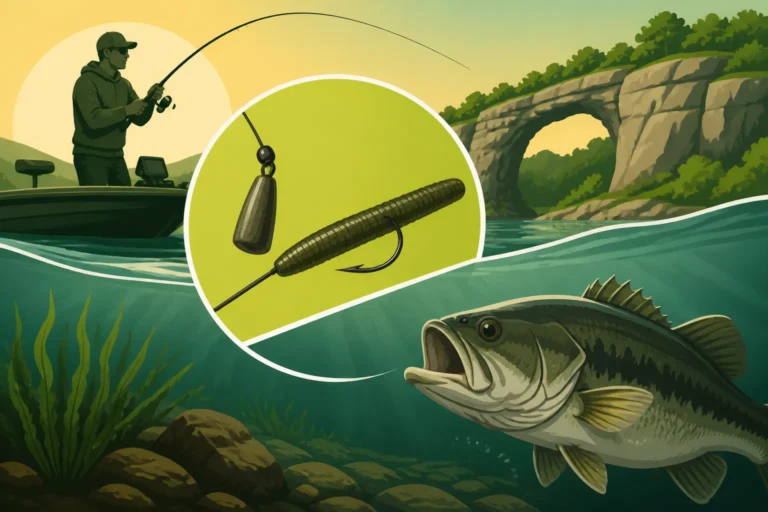
Drop-shotting is a finesse technique that excels in clear, deep water or when fish are highly pressured. It involves tying a hook directly into your line a foot or two above a sinker, allowing your bait (typically a small soft plastic worm or creature bait) to suspend tantalizingly off the bottom. This presentation allows the bait to flutter naturally with minimal rod movement, often triggering bites from finicky fish. It’s particularly effective for smallmouth bass and spotted bass found on deep rock piles or ledges in lakes like Beaver Lake. These techniques require sensitivity in your rod and reel setup and a keen eye on your electronics to put your bait exactly where the fish are.
Topwater and Frogging: Excitement in the Shallows
There’s nothing quite like the explosive strike of a bass on a topwater lure. These techniques are often employed in shallower water, especially during low-light conditions (dawn, dusk) or overcast days, and can be incredibly exciting. Topwater lures, which float on the surface, mimic injured baitfish, frogs, or insects, enticing aggressive strikes. Poppers, walk-the-dog baits, and prop baits are all staples. The key is often a stop-and-go retrieve, allowing the lure to sit for a moment before imparting action, giving the fish time to commit.
Frogging, a specialized topwater technique, involves casting weedless frog lures into dense cover like lily pads, matted vegetation, or thick moss. These lures are designed to glide over the cover without snagging, allowing you to target fish hiding deep within the thick stuff. When a bass explodes through the mat to ambush your frog, it's an unforgettable experience. Heavy braided line and a stout rod are essential for these situations, as you'll need to haul fish out of heavy cover. These shallow water techniques are more seasonal and condition-dependent but offer some of the most thrilling bites you'll experience on an Arkansas reservoir.
Here's a quick overview of some popular reservoir fishing techniques and when they're generally most effective:
| Technique | Primary Target Species | Best Season(s) | Typical Depth | Key Considerations |
|---|---|---|---|---|
| Trolling | Striped Bass, Walleye, Crappie | Year-round (species-dependent) | Mid to Deep | Speed, depth control, bait/lure selection, covering large areas. |
| Casting Jigs/Plastics | Largemouth Bass, Crappie | All-Year | Shallow to Deep | Accuracy, cover/structure identification, various retrieves. |
| Vertical Jigging | Crappie, White Bass, Striped Bass | Summer, Winter | Deep | Boat positioning, fish finder use, subtle rod movements, feel for light bites. |
| Drop-Shotting | Smallmouth Bass, Spotted Bass, Crappie | All-Year | Deep, Clear Water | Finesse presentation, bait suspension, sensitive gear. |
| Topwater/Frogging | Largemouth Bass | Spring, Summer, Fall | Shallow, Heavy Cover | Low light, aggressive retrieve, strong gear for cover. |
| Crankbaiting | Largemouth Bass, Walleye, Striped Bass | All-Year | Mid to Deep | Matching dive depth to fish depth, retrieve speed, cover deflections. |
Seasonal Adjustments: Fishing Reservoirs Year-Round
Arkansas's reservoirs offer fantastic fishing opportunities throughout the year, but successful anglers know that fish behavior changes dramatically with the seasons. What works in spring won't necessarily work in summer, and vice-versa. Understanding these patterns is key to consistent catches. For a broader overview, check out our Arkansas Fishing Seasons Guide.
Spring: The Spawn and Pre-Spawn Frenzy
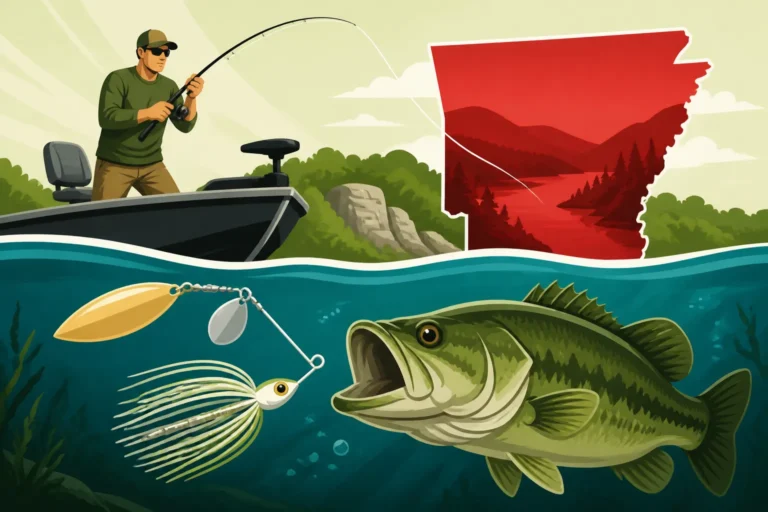
Spring is arguably the most anticipated time for many reservoir anglers, especially those targeting bass and crappie. As water temperatures begin to rise from the chilly winter lows, fish move from their deep wintering grounds towards shallower areas to feed heavily in preparation for spawning. This "pre-spawn" period is a fantastic time for catching big, fat fish that are actively gorging themselves. Target major creek arms, shallow points, and secondary ditches leading into spawning coves. Crankbaits, spinnerbaits, and jigs are excellent choices during this time, allowing you to cover water and entice aggressive strikes.
Once the water hits optimal spawning temperatures (typically 58-65°F for bass), fish move onto beds in very shallow water. This is the "spawn" period, a unique opportunity where fish are focused on reproduction. While some anglers prefer to sight fish for bedding bass, many respect the fish during this vulnerable time. After spawning, fish will enter a "post-spawn" phase, often retreating slightly deeper to recover before resuming more aggressive feeding. This entire spring cycle, especially the Arkansas Bass Spawn Fishing Guide, offers some of the year's best fishing, requiring constant attention to water temperature and fish movement.
Summer: Deep Water Tactics and Night Fishing
As the scorching Arkansas summer heat sets in, reservoir fish often retreat to deeper, cooler, and more oxygenated waters. This doesn't mean the fishing stops; it just shifts. Look for bass, crappie, and stripers on deep ledges, humps, submerged creek channels, and main lake points. Vertical presentations like drop-shotting, deep-diving crankbaits, and heavy jigs become highly effective. Pay close attention to your electronics to find thermoclines (layers of water with different temperatures), as fish will often suspend just above or within these zones.
Another excellent summer strategy, particularly for species like catfish and sometimes even bass or crappie, is night fishing. The cooler temperatures and reduced boat traffic can make for incredibly peaceful and productive outings. Catfish, in particular, are very active at night, moving into shallower areas to feed. Look for spots where creek channels meet main lake points or around standing timber. Many anglers will set up lights to attract baitfish, which in turn attract crappie and other predators, making for exciting night jigging sessions. Just be sure to bring all your necessary safety gear, as navigating a reservoir in the dark presents its own challenges.
Fall: The Feeding Frenzy Before Winter
Fall is another favorite season for many anglers, often considered one of the most beautiful times to be on an Arkansas reservoir. As air and water temperatures cool down, baitfish become more active and schools of predatory fish like bass, crappie, and white bass follow them into shallower water, often into the backs of creeks and coves. This is a time of intense feeding as fish try to fatten up for the leaner winter months. Think "power fishing" – crankbaits, spinnerbaits, and topwater lures can be incredibly effective as fish chase bait.
Look for schooling activity, especially early in the morning or late in the afternoon, where baitfish are being pushed to the surface by predators. Birds diving can be a dead giveaway to this feeding frenzy. On many lakes, like Lake Hamilton, this is also a prime time for targeting striped bass as they actively pursue shad schools. This pre-winter feeding binge can provide some of the most exciting and consistent action of the year, making it a great time to explore various fishing techniques by season.
Winter: Slow and Steady Bites
Don't let the cold keep you off the water! Winter reservoir fishing in Arkansas can be surprisingly productive, though it often requires a slower, more deliberate approach. Fish metabolism slows down significantly in cold water, meaning they aren't as willing to chase fast-moving lures. They often congregate in large schools in deep water, typically around main lake points, channel swings, and deep humps, seeking stable temperatures.
For bass, slow-rolled jigs, Alabama rigs, and subtle jerkbaits can entice strikes. Crappie often stack up tightly on deep brush piles or submerged timber, requiring precise vertical jigging with small baits or minnows. Knowing How to Find Crappie in Deep Water is key. Striped bass and white bass can be found schooling in deep open water or around the dams, often requiring live bait or heavy spoons. While the bites might be fewer and farther between, the fish caught in winter are often larger and healthier. Patience and a good understanding of your electronics are your best friends during the colder months.
Safety and Etiquette: Making the Most of Your Reservoir Experience
Being out on an Arkansas reservoir is a privilege, and it comes with responsibilities. Ensuring your safety and respecting other users of the water not only makes your trip more enjoyable but also helps preserve the resource for everyone.
Essential Safety Gear and Practices
Before you even leave the dock, conduct a thorough safety check. Ensure you have properly fitting life jackets for everyone on board – and wear them, especially if you're alone or if conditions are rough. Check that your navigation lights are working, particularly if you plan on fishing at dawn, dusk, or night. A fully charged battery, a spare prop, and basic tools are also smart additions. Don't forget your whistle or horn, a fire extinguisher, and a first-aid kit. Knowing where your safety equipment is and how to use it can make all the difference in an emergency.
Always check the weather forecast before heading out. Reservoir conditions can change rapidly, with calm waters turning choppy in minutes. If a storm rolls in, seek shelter immediately. Inform someone on shore of your float plan – where you're going, who's with you, and when you expect to return. Operating your boat responsibly means maintaining a safe speed, especially in crowded areas or no-wake zones, and always being aware of your surroundings. Remember, alcohol and boating don't mix; appoint a designated sober operator. For more detailed information, consult the official Arkansas Game and Fish Commission safety guidelines.
Respecting Other Anglers and the Environment
Arkansas reservoirs are shared resources, and showing courtesy to other anglers and boaters is crucial. When you see another boat fishing a spot, give them ample room. Don't crowd them or zoom past them too closely, as your wake can disrupt their fishing or even be dangerous. If someone is anchored or trolling, pass wide and slow. Every angler has their favorite spot, and respecting that space goes a long way. This is particularly true in popular spots like those found in Best Fishing Spots in Arkansas.
Beyond fellow boaters, be mindful of the environment. Pack out everything you pack in – no littering, especially monofilament line, which can be deadly to wildlife. Dispose of old fishing line responsibly, as many tackle shops and even some marinas have recycling bins. If you're using live bait, ensure you're not introducing invasive species into the watershed. Practice catch-and-release, especially for trophy fish or species outside of legal limits, to help sustain fish populations. By being a responsible steward of the environment and a considerate fellow boater, you contribute to a positive experience for everyone and ensure Arkansas's amazing fishing opportunities endure for generations to come.
Disclaimer
Please remember that fishing regulations, license requirements, and fish limits in Arkansas can change. Always consult the latest official Arkansas Game and Fish Commission regulations before heading out on the water. This guide provides general information and should not be considered a substitute for official legal guidelines.