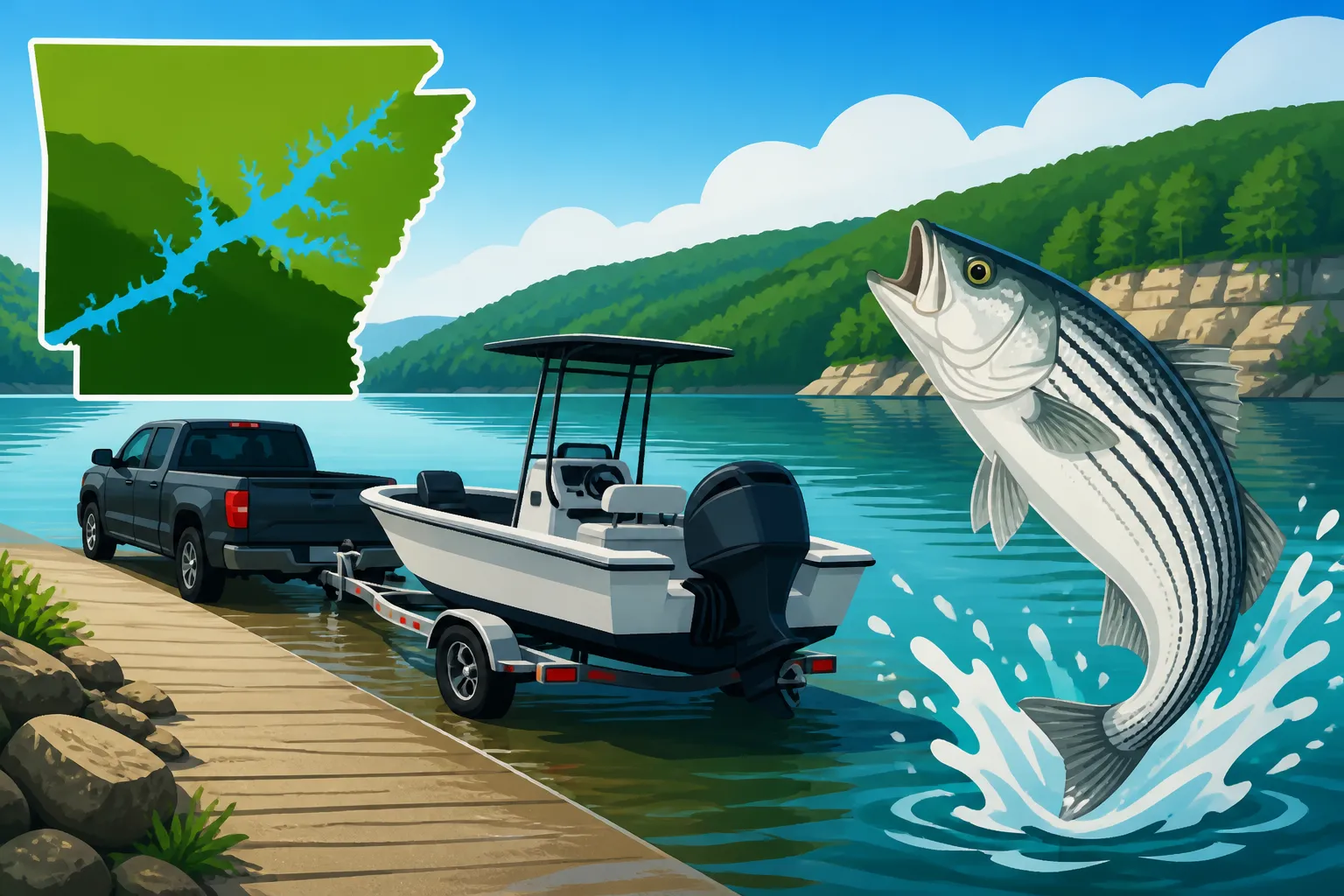
Boat Ramps on Norfork Lake for Striper Anglers
Navigating the sprawling waters of Norfork Lake to find those elusive striped bass can feel like a daunting task, especially when you're launching your boat and every minute counts. You want to get to the action quickly, without wasting precious fishing time or fuel figuring out the best access point. This comprehensive guide is designed to cut through the confusion, offering detailed insights into the most advantageous boat ramps on Norfork Lake, specifically tailored for striper anglers, to ensure your next trip is as efficient and successful as possible.
Understanding Norfork Lake's Striper Appeal
Norfork Lake isn't just another pretty body of water; it's a genuine powerhouse for striped bass, a reputation hard-earned through years of consistent big catches. Anglers from across the region flock here, rods bent, hoping to tame one of these incredible fighting fish. But what makes Norfork so special for stripers, and why does understanding this matter when you're picking a boat ramp?
Why Norfork is a Striper Paradise
First and foremost, Norfork Lake offers the perfect trifecta for a thriving striped bass population: deep, clear waters, an abundant forage base, and dedicated management efforts by the Arkansas Game and Fish Commission (AGFC). The lake's cold, oxygen-rich depths are ideal for stripers, especially during the warmer months when these fish seek out cooler refuge. Its primary forage includes vast schools of threadfin and gizzard shad, which provide the fuel for stripers to grow to impressive sizes, often reaching well into the 30 and 40-pound range, and sometimes even larger. In fact, if you're curious about the potential, you might want to check out Norfork Lake: One of Arkansas's Best Striped Bass Fisheries for more details on what makes this lake a true gem.
The unique geology of Norfork, with its numerous coves, points, and vast open water, creates diverse habitats that stripers utilize throughout the year. You'll find them cruising main lake channels, suspending over deep humps, or even pushing into the backs of major creeks during certain feeding patterns. This diverse environment means that while the stripers are always present, their exact location can shift dramatically with the seasons and even daily weather changes. Knowing this helps you visualize where the fish might be, which in turn influences which ramp gives you the quickest, most direct path to the action.
How Ramp Location Impacts Striper Success
Think of your boat ramp as your strategic launchpad. Its proximity to known striper haunts isn't just about saving fuel; it's about maximizing your time on the water and positioning yourself for success. If you're planning to troll expansive main lake points and deep channels, launching from a ramp that provides immediate access to these areas can save you a significant amount of travel time. Conversely, if you're targeting stripers that have pushed into a specific creek arm in search of baitfish, launching closer to that arm makes more sense than navigating the entire lake.
For instance, during the hot summer months, stripers often dive deep, seeking the cooler, oxygenated waters of the thermocline in the main lake. A ramp that gets you quickly to these deep-water zones, like those near the dam, can be a game-changer. In contrast, during the spring or fall, when stripers might be more scattered or chasing bait closer to the surface in certain coves, a ramp providing access to those shallower, more protected areas could be more effective. Ultimately, your ramp choice is an extension of your fishing strategy, setting the stage for how efficiently you can execute your plan.
Key Boat Ramps for Norfork Striper Anglers
Norfork Lake is dotted with numerous boat ramps, but not all are created equal when it comes to the specific needs of a striper angler. We're looking for ramps that offer good accessibility, ample parking, and, most importantly, strategic placement relative to where stripers typically roam.
East Side Ramps: Quick Access to Deep Water
The eastern side of Norfork Lake, particularly the areas closer to the dam, is renowned for its deep, open waters and direct access to the main lake channel. This makes these ramps incredibly popular for striper anglers who often employ trolling techniques or chase fish suspending in vast open-water expanses.
Cranfield Boat Ramp is a perennial favorite, and for good reason. Located on the southeastern arm of the lake, it offers multiple launch lanes, a spacious parking area that can accommodate numerous boat trailers, and excellent courtesy docks. What truly sets Cranfield apart for striper enthusiasts is its immediate access to the main body of Norfork Lake. From here, you can quickly reach deep channels, prominent main lake points, and areas known for holding large schools of baitfish, which, of course, attract hungry stripers. The ramp is well-maintained by the U.S. Army Corps of Engineers and remains usable even during moderate lake level fluctuations. Anglers often head out from Cranfield to troll umbrella rigs or live bait in the deeper sections, making it a prime starting point for those big water expeditions.
Another excellent option in this vicinity is Henderson Boat Ramp. While perhaps slightly less bustling than Cranfield, Henderson offers similar advantages with its direct access to the deep, eastern arms of the lake. It typically has good facilities, including parking and docks. Launching from Henderson places you perfectly to explore the expansive waters stretching north toward the Jordan area or south towards the dam, both zones where stripers frequently forage. For those early morning starts, being able to get your boat in the water quickly and motor directly to a deep channel or a known congregation point for stripers is invaluable, and both Cranfield and Henderson deliver on this promise.
Central and North Side Ramps: Strategic Positioning for Various Depths
As you move northward and westward into the central and upper arms of Norfork Lake, the topography begins to change, offering a mix of deep channels, large coves, and the influence of the North Fork River. These ramps provide a different strategic advantage, allowing anglers to target stripers in a wider variety of settings, from open water to more confined creek channels.
Robinson Point Boat Ramp is a fantastic central access point, located on a prominent peninsula that juts into the lake. This ramp provides easy entry to both main lake areas and the beginnings of several significant creek arms. Its location is a strategic sweet spot because stripers are known to use these transitional zones, moving between the vast open water and the more protected, bait-rich coves. Robinson Point offers a multi-lane concrete ramp, ample parking, and courtesy docks, making it a user-friendly choice. From here, you can choose to head south towards the dam, north towards the river, or venture into the nearby coves, adapting your strategy based on current striper movements and conditions. This versatility makes it a great choice for anglers who like to keep their options open.
Further north, Jordan Marina also offers a convenient access point with a well-maintained ramp. While a commercial marina, they typically have public launch facilities, though it’s always wise to check for any fees or specific hours of operation. Jordan provides excellent access to the mid-section of the lake, known for its extensive points, underwater humps, and proximity to areas where stripers can be found suspending or chasing bait. Anglers launching from Jordan can quickly navigate to prime trolling runs or identify schooling fish on their sonar units. The amenities usually include bait and tackle shops, which can be a huge bonus if you need to stock up on live bait or pick up a last-minute lure.
West Side Ramps: Exploring Tributaries and Points
While many anglers associate stripers with the deepest parts of Norfork, these powerful fish will often follow bait into the major tributary arms and shallower points, especially during cooler seasons or when specific feeding frenzies occur. The ramps on the western side of the lake offer prime access to these areas.
A prime example is the Lakeview Boat Ramp, situated very close to the dam, but still providing a slightly different angle of approach to the main lake. While geographically on the west side of the lower lake, it shares characteristics with the eastern ramps due to its proximity to the dam, offering quick access to some of the deepest water. However, it also allows for easy navigation toward the major western arms and numerous large coves that often hold stripers during transition periods. It’s an excellent ramp for large boats, usually featuring multiple wide lanes and significant parking, making it a popular choice for tournament anglers and those with larger rigs aiming for trophy stripers.
Venturing further west or northwest, ramps like Tracy Ferry or Buzzard Roost can be strategic for anglers looking to explore the major creek arms that feed Norfork Lake. While perhaps not as immediately "deep water" as Cranfield or Lakeview, these ramps place you closer to areas where stripers might be actively pushing shad against points or into the backs of coves. During the spring and fall, when water temperatures are more moderate, stripers will often move into these areas, providing excellent opportunities for casting or targeted live bait presentations. These ramps often have less boat traffic than the main lake access points, offering a potentially more peaceful fishing experience while still being within striking distance of productive striper waters.
Navigating Norfork's Waters for Stripers from the Ramps
Getting your boat into the water is just the first step. To truly unlock Norfork's striper potential, you need to understand how to leverage your chosen ramp location with smart navigation and effective gear use.
Launching Your Striper Boat: Considerations and Best Practices
Launching a boat, especially a larger one typically used for striper fishing, requires a bit of finesse and forethought. Norfork Lake's ramps are generally well-maintained, but factors like the ramp's incline, the length of your boat and trailer, and current lake levels can all play a role. Always ensure your trailer lights are unplugged before backing down the ramp to prevent electrical shorts. Having your lines and fenders ready will make tying up to the courtesy dock a breeze, allowing you to move your boat out of the way quickly for other anglers.
Checking the current lake level is absolutely paramount, as significantly low water can expose submerged obstacles at the end of the ramp or make it too shallow for a safe launch, particularly for boats with deeper drafts. The U.S. Army Corps of Engineers website for Norfork Lake is your go-to resource for real-time water levels and ramp conditions. Furthermore, extending a little ramp etiquette goes a long way. Prepare your boat before you get to the ramp, not while blocking it. Get your drain plug in, gear stowed, and tie-downs removed in the staging area. This ensures a smooth flow, keeping everyone's blood pressure low, especially during peak fishing season.
Reading the Lake: How Ramps Connect to Striper Behavior
Striped bass are creatures of habit, driven largely by their need for cool, oxygenated water and abundant food. Understanding these patterns is key to connecting your ramp choice to successful fishing. During the scorching Arkansas summers, stripers will typically hold in the thermocline—a layer of water where temperature changes rapidly with depth—often found in the main lake basins. Launching from a ramp like Cranfield or Lakeview puts you right on top of these crucial summer holding patterns. If you're wondering when the best time to target these giants is, take a look at our guide on Best Time of Year for Striped Bass Fishing at Norfork Lake.
In spring and fall, as water temperatures become more uniform, stripers can be found shallower, pushing baitfish into coves and along points. This is when ramps like Robinson Point or those further up the major arms become incredibly valuable, offering quicker access to these shallower, active feeding grounds. They're often chasing shad, so being near tributaries that feed the lake can also be advantageous. Knowing these seasonal movements and connecting them to your chosen launch point is a powerful strategic tool for any serious striper angler.
Essential Gear for Norfork Striper Fishing
Tackling Norfork's trophy stripers isn't a job for light gear. These fish are powerful, and the lake is vast, so you need equipment that can handle the challenge. Robust electronics are non-negotiable: a good sonar unit with side imaging or down imaging capabilities will help you locate baitfish schools and suspending stripers. GPS is crucial for marking hotspots, navigating safely, and returning to productive areas. For those targeting deep-water stripers, downriggers are often a necessity for presenting baits at precise depths.
Heavy-action rods, paired with large-capacity reels spooled with strong braided line, are standard. Live bait, particularly gizzard shad, is often the most effective presentation for trophy stripers, so a well-aerated livewell or bait tank is essential. Trolling motors with GPS anchoring capabilities (like those from Minn Kota or Lowrance Ghost) can also be invaluable for holding position over a marked school or navigating precise trolling paths. For a broader overview of tactics, you might find our article on Striped Bass Fishing in Arkansas helpful. Outfitting yourself properly means you're prepared for whatever Norfork's stripers throw your way.
Practical Tips for a Successful Norfork Striper Trip
Even with the perfect boat ramp chosen and the right gear on board, a successful striper trip on Norfork Lake requires meticulous planning and a keen awareness of conditions.
Checking Water Levels and Ramp Conditions
This can't be stressed enough: always check current lake levels and ramp conditions before you leave your driveway. The U.S. Army Corps of Engineers website for Norfork Lake provides real-time data, and it's the most reliable source. What seems like a minor fluctuation on paper can mean the difference between a smooth launch and a frustrating struggle to get your boat off the trailer. Low water levels, for example, can expose hidden stumps or rocks near the ramp, or make the ramp simply too short for effective use with a larger boat.
Imagine driving two hours to Cranfield, only to find the ramp too shallow for your 24-foot striper boat. It's a waste of time, fuel, and can quickly sour a highly anticipated fishing trip. Keeping an eye on weather forecasts is also crucial, as heavy rains can quickly raise water levels and increase current, while prolonged dry spells can drop them. A quick check before you head out, and perhaps a call to a local marina or bait shop, can save you a lot of grief.
Planning Your Route from the Ramp
Once you've successfully launched, the lake opens up, but don't just point and shoot. Take a moment to plan your immediate route. Using marine navigation apps like Navionics or a detailed lake map on your boat's electronics can help you scout potential hotspots, identify channels, points, and humps even before you start your engine. Knowing where you want to go and how to get there efficiently will save you time and fuel, putting you on the fish faster.
Consider the day's weather, especially wind. Norfork can get choppy very quickly, and a strong wind blowing across a large open section of the lake can make for an uncomfortable and even unsafe ride. If the wind is strong from the north, for instance, you might opt to head south from Cranfield to find more protected waters or adjust your trolling patterns accordingly. For an in-depth look at where to find these fish, check out Best Striper Fishing Spots on Norfork Lake, Arkansas, which can help you identify prime areas for your initial run from the ramp. Understanding wind direction and its impact on your chosen spots will also inform how you drift or position your boat for live bait fishing.
Safety First on Big Water
Norfork Lake is beautiful, but its vastness and potential for rapidly changing conditions demand respect and a strong emphasis on safety. Always ensure everyone on board is aware of safety protocols, including wearing life jackets (especially when the big motor is running or in rough water), knowing where safety equipment like throw cushions and first-aid kits are located, and having a kill switch lanyard attached to the boat operator.
Given the size of stripers and the forces involved when fighting them, having clear decks and secure footing is important. A larger, more stable boat is generally recommended for serious striper fishing on Norfork, as it can better handle the chop that can develop quickly on open water. It’s also wise to inform someone on shore of your float plan, including where you're launching, where you intend to fish, and your estimated return time. While Norfork doesn't have specific daily possession limits beyond statewide rules for some species, understanding general Arkansas Fishing Regulations Guide is always a good idea for any angler. Always carry a fully charged phone or a marine radio for emergencies.
Booking Guides and Resources for Norfork Lake
Even the most seasoned angler can benefit from local expertise, especially on a lake as dynamic and productive as Norfork. For those new to the area or specifically chasing trophy stripers, a guided trip can be an invaluable investment.
When a Guide Can Help
Hiring a local fishing guide on Norfork Lake offers a tremendous advantage. These professionals spend countless hours on the water, tracking striper movements, understanding seasonal patterns, and knowing exactly where the fish are holding on any given day. They have the specialized gear, the boat, and the local knowledge to put you on trophy fish, often leveraging their access to specific ramps that get them to the hotspots most efficiently. This is particularly true if you're targeting those elusive 40-pound-plus stripers – a guide significantly increases your odds. If you're pondering the potential of those giants, our article How Big Do Norfork Lake Stripers Get? offers a fascinating read.
A guide can teach you specific techniques, show you how to properly use equipment like downriggers, and help you understand the nuances of striper behavior on Norfork. For families or groups, it's a fantastic way to enjoy a stress-free day on the water, with all the logistics handled. If you're considering this option, platforms like FishingBooker are excellent resources. You can browse various Norfork Lake striper guides, compare their services, read reviews, and easily book a trip that fits your schedule and goals. They make connecting with experienced local captains straightforward and reliable. To learn more about booking an expert, check out Arkansas Fishing Guides and Charters: The Complete Booking Guide.
Utilizing Online Resources
Beyond guides, there's a wealth of online information to tap into for your Norfork Lake striper adventure. As mentioned, the Arkansas Game and Fish Commission (AGFC) website and the U.S. Army Corps of Engineers Norfork Lake page are essential for regulations, lake levels, and ramp conditions. Local bait shops and marinas often have active social media pages where they post daily fishing reports, water temperatures, and even pictures of recent catches, giving you a real-time pulse on the lake.
Fishing forums and online communities dedicated to Arkansas fishing, or specifically Norfork Lake, are also fantastic places to ask questions, share tips, and learn from other anglers. These communities can provide insights that you won't find anywhere else. Remember to cross-reference information, but these local insights can be invaluable. And if you’re looking to plan a trip, even for just a weekend, FishingBooker can assist not just with finding guides, but also with general trip planning, offering a centralized place to consider all your options for a memorable Norfork Lake experience. The more informed you are, the better prepared you'll be to tackle Norfork's legendary striped bass.
Norfork Lake Striper Angler Boat Ramp Comparison
| Boat Ramp Name | General Location | Key Facilities | Striper Access Advantage |
|---|---|---|---|
| Cranfield | Southeastern Arm | Multi-lane ramp, ample parking, courtesy dock, restrooms | Direct access to main lake channels and deep open water; ideal for trolling and deep-water live bait. |
| Henderson | Southeastern Arm | Multi-lane ramp, good parking, courtesy dock | Excellent access to the lower lake, main channels, and broad points; slightly less crowded than Cranfield. |
| Robinson Point | Central East Side | Multi-lane ramp, large parking area, courtesy dock, camping | Versatile access to both main lake and major creek arms; good for diverse seasonal patterns. |
| Jordan Marina | Central North Side | Marina services, multi-lane ramp, parking, bait shop (check fees) | Access to mid-lake humps, points, and northern creek mouths; convenient for amenities. |
| Lakeview | Near Dam, West Side | Wide, multi-lane ramp, extensive parking, courtesy dock | Quick entry to the deepest sections of the lake; excellent for large boats and trophy hunting near the dam. |
| Tracy Ferry | Western Arm | Single/double lane ramp, parking | Strategic for accessing the western river arm and associated coves, especially in cooler months. |
Disclaimer
The information provided in this guide is for general informational purposes only and is subject to change. Always consult the official regulations and resources from the Arkansas Game and Fish Commission (AGFC) and the U.S. Army Corps of Engineers for the most current and accurate information regarding fishing licenses, regulations, lake levels, and boat ramp conditions. Fishing inherently involves risks, and adherence to safety guidelines and personal responsibility is paramount.