Best Time of Year for Striped Bass Fishing at Norfork Lake
Many anglers dream of battling a powerful striped bass, and Norfork Lake in Arkansas offers some truly incredible opportunities. But if you've ever spent hours on the water without a single strike, you know how frustrating it can be to figure out when and where these magnificent fish are biting. This guide is going to break down the best times of year to target striped bass on Norfork Lake, helping you understand their seasonal movements and behaviors so you can maximize your chances of success and bring home some unforgettable memories.
Understanding Norfork Lake's Striped Bass Fishery
Norfork Lake isn't just any body of water; it's a premier destination for striped bass fishing, often touted as one of the best in the nation. Its unique characteristics are precisely what make it such a thriving habitat for stripers, leading to the incredible fishing opportunities it offers. Understanding what makes this lake special is the first step to unlocking its secrets.
Why Norfork Lake is a Striper Paradise
Norfork Lake is a large, deep, clear-water reservoir nestled in the Ozark Mountains. This description alone tells you a lot about why stripers thrive here. They are a species that prefers cooler, oxygen-rich water, and Norfork's depths provide exactly that, even during the scorching Arkansas summers. The lake boasts an impressive forage base, primarily threadfin and gizzard shad, which are the absolute lifeblood of a healthy striper population. These baitfish schools move seasonally, and the stripers are always right on their tails, creating predictable patterns for savvy anglers.
The geography of the lake, with its numerous coves, creek channels, and vast main lake points, offers a diverse range of habitats. From steep bluff walls to sprawling flats, there's always a place for stripers to ambush bait or hold in comfort. This abundance of structure, combined with the deep, cool water and a never-ending supply of food, sets the stage for stripers to not only survive but to grow to truly impressive sizes, making it a legendary spot for those seeking Trophy Striped Bass Fishing in Arkansas. Many anglers come here specifically to target those massive fish that pull like freight trains.
The Life Cycle of Norfork Stripers and Seasonal Movements
Striped bass are pelagic fish, meaning they typically live in the open water column rather than hugging the bottom or dense cover. Their entire existence revolves around finding comfortable water temperatures and, more importantly, finding food. This means their movements are highly seasonal and largely dictated by the migration of baitfish and the changing water temperatures throughout the year.
In the cooler months, stripers are often found shallower or suspended over deeper water, following schools of shad. As the water warms, they'll seek out the deeper, cooler layers, often congregating around the thermocline (the layer where water temperature changes rapidly). Understanding this fundamental principle – that stripers follow bait and preferred temperatures – is key to predicting where they might be at any given time of year. This constant pursuit defines their seasonal patterns, which we'll explore in detail.
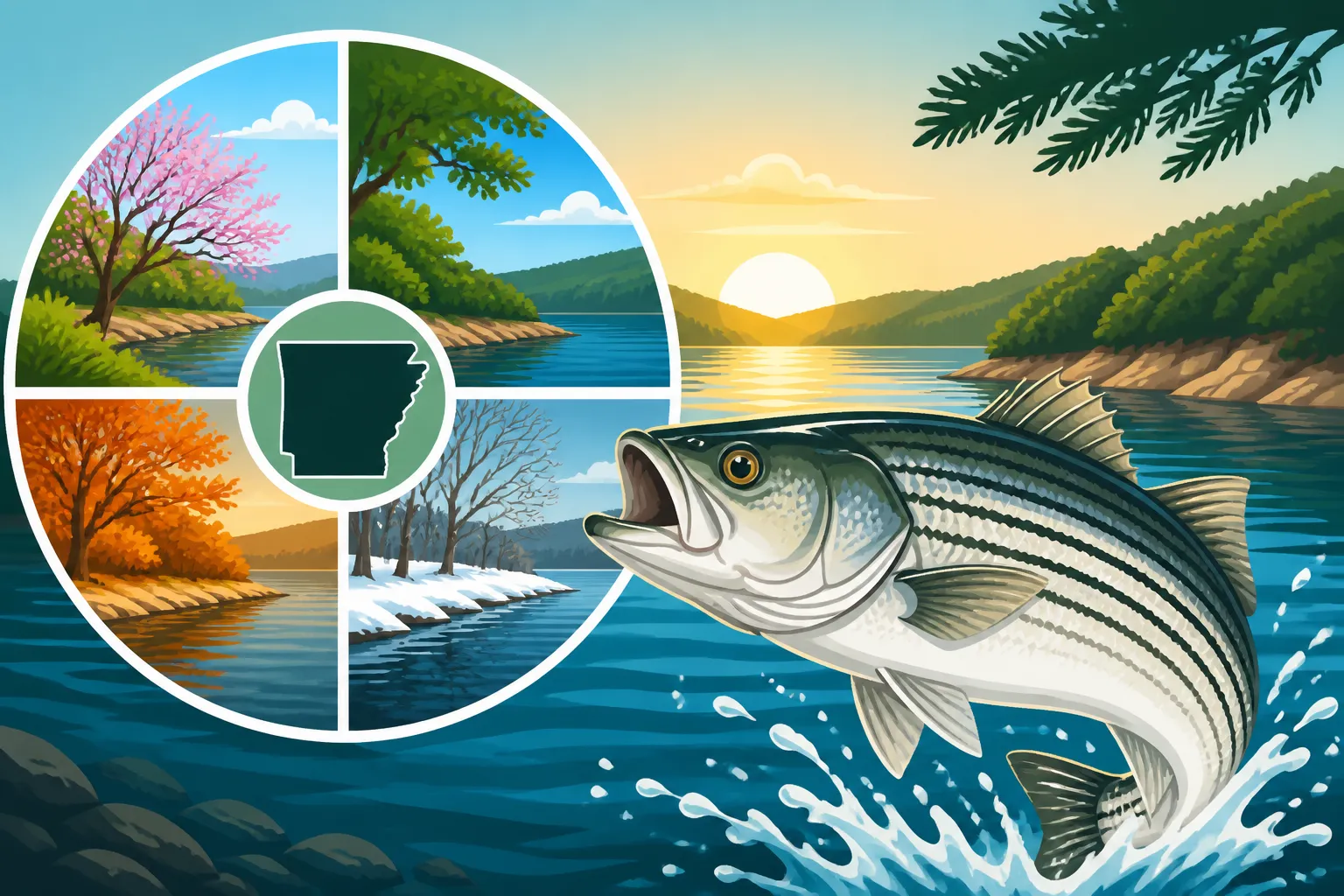
Spring: A Season of Awakening and Opportunity (March – May)
Ah, spring! The air is crisp, the trees are budding, and the fish are shaking off their winter lethargy. For many anglers, myself included, spring is one of the most exciting times to be on Norfork Lake chasing striped bass. The warming waters signal a burst of activity, and the stripers become incredibly active as they prepare for and recover from their spawning rituals.
Early Spring Action: Pre-spawn Excitement and Shallow Feeds
As March rolls into early April, the water temperatures on Norfork Lake start to creep up, typically hitting that sweet spot in the low to mid-50s. This is prime pre-spawn time for stripers. They're hungry and actively looking to bulk up before they expend energy on spawning. You'll often find them pushing baitfish into creek arms and shallower coves, sometimes as shallow as 15-25 feet, which is incredible for stripers! This is when live bait, like gizzard shad or threadfin shad, becomes absolutely deadly. Drifting or slow-trolling these baits near points and humps where stripers are known to stage can lead to some explosive bites.
The beauty of early spring is the accessibility. You don't necessarily need the most advanced electronics to find them, though they certainly help. Look for areas where baitfish are congregating, especially in the backs of major creeks or where warmer water might be flowing in after a good rain. Often, you'll see birds diving, which is always a dead giveaway for schooling bait being pushed to the surface by hungry stripers. The action can be fast and furious, offering some of the most memorable fights of the year. This is a fantastic time for anglers who enjoy active fishing and working lures.
Late Spring: Post-spawn Patterns and Sustained Bites
By late April and into May, most of the stripers have completed their spawning rituals. They're still very active, but their focus shifts from reproduction back to recovery and relentless feeding. Water temperatures continue to rise, often hitting the upper 50s and low 60s. The stripers might start to move out of the very shallow spawning grounds and begin to disperse more across the lake, but they'll still be aggressively chasing bait.
During this period, you'll often find stripers congregating near main lake points, humps, and submerged islands, especially those with access to deeper water nearby. Trolling umbrella rigs or large swimbaits can be very effective as stripers are actively searching for bigger meals. Topwater action can also pick up, especially during dawn and dusk, when stripers drive bait to the surface in spectacular fashion. Watching a huge striper blow up on a topwater lure is an experience every angler should have. It's a fantastic time to use your electronics to locate schools of bait and the stripers holding underneath them, then present your offerings accordingly. For a deeper dive into seasonal changes, consider checking out our Norfork Lake Striper Season guide.
Summer: Deep Water and Early Morning Thrills (June – August)
Summer on Norfork Lake is beautiful, but it brings its own set of challenges for striper anglers. The intense heat of an Arkansas summer drives water temperatures up, pushing striped bass into deeper, cooler, and more oxygenated parts of the lake. This doesn't mean the fishing stops; it just means your tactics need to adapt.
Beating the Heat: Early Mornings and Night Fishing
When the sun beats down relentlessly, stripers, much like us, try to avoid the harsh glare and heat. This is why early mornings and late evenings become absolutely critical for successful summer striper fishing. The first few hours after sunrise offer a brief window when stripers might push bait closer to the surface or congregate in shallower depths before retreating to the cooler depths. Trolling planers or downriggers with live bait or deep-diving crankbaits can be effective during these periods.
Night fishing is another phenomenal summer strategy on Norfork Lake, and it's an experience unlike any other. As the sun sets, stripers often move into shallower areas, drawn by cooler surface temperatures and the opportunity to ambush baitfish. Many anglers use lights suspended over the water to attract shad, and then fish live bait directly underneath. It's an atmospheric and often incredibly productive way to catch large stripers, especially when the daytime bite is tough. Always ensure you have appropriate navigation lights and safety gear when fishing after dark. For more on summer tactics, take a look at Summer Striper Fishing at Norfork Lake Arkansas.
The Thermocline and Deep-Water Tactics
As summer progresses, a distinct thermocline forms in Norfork Lake. This is the layer of water where the temperature changes dramatically, creating a comfortable, oxygen-rich zone that stripers absolutely love. Locating this thermocline with your fish finder is paramount to success during the summer months. Stripers will often suspend directly in or just above this layer, usually in the 40-70 foot range, but sometimes even deeper depending on the lake's conditions.
Once you've identified the thermocline and located schools of baitfish and stripers, deep-water tactics come into play. Downriggers and lead core line become your best friends for presenting live bait or artificial lures at precise depths. Trolling large spoon lures, sometimes called "striper spoons," or big swimbaits at these depths can entice strikes from inactive fish. Vertical jigging with heavy spoons or bucktails directly over marked fish can also be incredibly effective, especially if you see individual stripers holding near structure. This is where quality electronics, which you can find a huge selection of on Amazon, become an indispensable tool.
Fall: The Ultimate Feeding Frenzy (September – November)
If you ask seasoned Norfork Lake striper anglers, many will tell you that fall is their absolute favorite time of year. After a summer of deep-water endeavors, the cooling temperatures of autumn trigger an aggressive feeding frenzy as stripers gorge themselves in preparation for winter. The activity can be explosive and incredibly rewarding.
Water Cooling and Baitfish Migration
As September transitions into October, the surface water temperatures on Norfork Lake begin to drop, gradually erasing the thermocline and allowing stripers to range more freely throughout the water column. This cooling trend also signals a major shift in baitfish behavior. Shad, driven by instinct and temperature, start to move into shallower coves and creek arms, often migrating towards the backs of these areas.
The stripers, always close on the heels of their food, follow suit. This convergence of cooling water and concentrated baitfish creates truly epic fishing opportunities. You'll find stripers actively pushing schools of shad, often creating massive boils and surface blow-ups that are visible from a distance. It's a prime time to be on the water, observing the activity and casting into the chaos.
Topwater Action and Schooling Stripers
Fall is synonymous with topwater striper fishing on Norfork. When those stripers push shad to the surface, the water erupts in a frenzy, and casting a big topwater plug or a walking bait into the melee can yield instant, heart-stopping strikes. This is sight fishing at its finest, watching a massive striper chase down your lure on the surface. These schooling fish can be found throughout the main lake, particularly around points, humps, and the mouths of larger creeks.
Beyond topwater, trolling umbrella rigs or large swimbaits remains incredibly productive. Live bait, of course, is always a go-to, especially when fishing areas where stripers are less active or when you're targeting larger, more solitary fish. The key in the fall is often covering water and watching for signs of activity, whether it's diving birds, surface boils, or marked schools of fish on your electronics. It's a time of year when stripers are less finicky and more willing to chase down a meal, making it an ideal time for both novice and experienced anglers. This is often described as the Best Time of Year for Striped Bass Fishing at Norfork Lake Arkansas.
Winter: Challenging but Rewarding (December – February)
Winter striper fishing on Norfork Lake can be a bit of a tough nut to crack, but for those willing to brave the colder temperatures, the rewards can be immense. The lake is often less crowded, and the fish, though slower, are often some of the biggest and fattest of the year. It requires patience and a specific set of tactics to be successful.
Slow and Steady: Deep-Water Suspended Fish
As winter fully sets in and water temperatures drop into the 40s, striped bass generally move into deeper parts of the lake. They become less active and will often suspend in tight schools over deep water, sometimes over 80-100 feet deep. Their metabolism slows down, so they aren't as prone to chasing fast-moving baits as they are in the fall. This means your approach needs to be more subtle and precise.
Live bait is king during the winter. Large gizzard shad or even trout (where legal and appropriate for larger stripers) fished on downlines or free lines (weighted to suspend at a specific depth) become incredibly effective. The key is to get your bait right in front of the fish and keep it there. Anglers often meticulously watch their electronics, marking schools of stripers and then positioning their boats directly over them. This slow, methodical approach can lead to hooking up with some truly impressive fish that are gorging themselves on shad schools, sometimes requiring a dedicated search for baitfish on Amazon before heading out.
Targeting the Dams and Warm Water Discharges
One of the most reliable winter spots for stripers on Norfork Lake is near the dam. The dam creates a current that can attract baitfish, and the release of water through the turbines (if occurring) can create warmer, more oxygenated pockets that stripers gravitate towards. This constant flow and concentration of bait make the dam area a magnet for stripers, even in the coldest months.
Fishing close to the dam, whether by jigging spoons, drifting live bait, or slow-trolling heavy lures, can be highly productive. It's crucial to pay attention to any generation schedules if fishing near the outflow, as water flow can dramatically change fish behavior and safety conditions. Also, look for creek channels or areas with warmer inflows from tributaries, as these can also concentrate bait and stripers. While the number of bites might be fewer than in other seasons, the quality of the fish caught in winter is often exceptional, with many trophy-sized stripers being pulled from Norfork's cold, deep waters during this period.
Seasonal Striper Fishing on Norfork Lake
To give you a quick overview, here's a table summarizing the general patterns and best approaches for Norfork Lake striped bass fishing throughout the year:
| Season | Months | Water Temperature Range | Typical Depths | Primary Forage | Key Techniques & Bait | Activity Level |
|---|---|---|---|---|---|---|
| Spring | March – May | 50s-low 60s | 15-40 feet | Shad | Live shad, trolling swimbaits, topwater (late spring) | High, pre/post-spawn |
| Summer | June – August | 70s-80s (surface) | 40-70+ feet | Shad | Live shad on downriggers, deep trolling, night fishing | Moderate (early/late) |
| Fall | September – November | 60s-50s | 20-50 feet | Shad | Topwater, live shad, trolling umbrella rigs, swimbaits | Very High, feeding frenzy |
| Winter | December – February | 40s | 60-100+ feet (suspended) | Shad | Live shad on downlines, vertical jigging, dam areas | Low, but trophy potential |
Gear and Techniques for Norfork Lake Stripers
Catching big, powerful striped bass consistently requires not only an understanding of their seasonal patterns but also the right tools and techniques. You wouldn't bring a butter knife to a sword fight, and you shouldn't bring ultralight tackle when you're battling a striper that can easily top 30 or 40 pounds.
Essential Rods, Reels, and Line
For Norfork Lake stripers, you need robust gear that can handle the sheer power of these fish. Forget your bass rod; we're talking about something with serious backbone.
- Rods: Medium-heavy to heavy action rods, typically 7 to 8 feet long, are ideal. Look for rods designed for saltwater jigging or heavy freshwater trolling. A sturdy graphite or composite blank will give you the sensitivity to detect subtle bites while providing the power needed to set the hook and turn a big fish.
- Reels: Depending on your preferred technique, you'll want either a heavy-duty spinning reel (size 5000-8000) or a stout baitcasting/conventional reel. The most crucial factor is line capacity and a smooth, reliable drag system. A screaming drag is a common occurrence with Norfork stripers!
- Line: Braided line is almost universally favored for stripers due to its strength, thin diameter, and lack of stretch, which provides superior sensitivity and hook-setting power. Opt for 30-65 lb test braid. Pair it with a fluorocarbon leader (20-40 lb test) for abrasion resistance and invisibility in Norfork's clear waters. You can find excellent braided lines and fluorocarbon leaders from brands like PowerPro and Seaguar on Amazon. Don't skimp on line; it's your only connection to that monster fish!
Baits and Lures That Get Results
Norfork Lake stripers are primarily piscivorous, meaning they eat other fish. Shad are their main diet, so anything that imitates a shad is usually a winner.
- Live Bait: Hands down, live gizzard shad (and sometimes threadfin shad) are the most effective bait for stripers, especially when they're deeper or less active. The natural movement and scent are irresistible. Some anglers also use live trout for truly massive stripers, but check local regulations for any restrictions on baitfish.
- Artificial Lures:
- Topwater Plugs: Large walk-the-dog baits (like Heddon Super Spooks) or chuggers (like poppers) are exhilarating in the fall and during early morning/late evening summer feeds.
- Swimbaits: Large soft plastic paddle tail swimbaits (5-9 inches) rigged on heavy jig heads are excellent for imitating shad at various depths. Hard body swimbaits can also be very effective for trolling.
- Spoon Lures: Heavy jigging spoons (like a Hopkins or a Kastmaster) are deadly for vertical jigging over suspended schools of stripers, especially in summer and winter. Trolling spoons behind downriggers or lead core line also accounts for many fish.
- Crankbaits: Deep-diving crankbaits can be trolled effectively, especially in spring and fall, to target fish that are suspending or relating to structure.
- Umbrella Rigs: These multi-lure setups mimic a school of baitfish and are incredibly popular for trolling, especially in spring and fall. They can be very heavy, so ensure your rod and reel can handle the strain.
The key to success with any bait or lure is presentation. Whether you're drifting live bait, trolling an umbrella rig, or casting a topwater plug, pay attention to depth, speed, and how the stripers are reacting. Sometimes a slight change in retrieve speed or lure color can make all the difference. Knowing What's the Best Time of Day to Fish DeGray Lake? or any lake for that matter can help with timing your lure presentations.
It's also worth noting the critical role of electronics in Norfork striper fishing. A good fish finder with side imaging and down imaging will help you locate bait schools, identify individual stripers, and understand the lake's bottom structure and thermocline. Investing in a quality unit will dramatically increase your success rate and is a piece of gear worth researching on Amazon before your next trip.
Conclusion
Norfork Lake offers incredible striped bass fishing year-round, but understanding the seasonal nuances is what truly sets successful anglers apart. From the aggressive shallow-water feeds of spring and fall to the challenging but rewarding deep-water battles of summer and winter, the patterns are driven by temperature and baitfish movements. Equip yourself with sturdy gear, learn to read your electronics, and most importantly, be patient and persistent. By tuning into these seasonal rhythms, you're not just casting a line; you're engaging with the pulse of one of Arkansas's most exciting fisheries. So grab your rods, pack your cooler, and get ready for the fight of a lifetime on Norfork Lake!
Disclaimer
This article is for general informational purposes only and does not constitute professional advice. Laws, prices and regulations vary by location and change over time. Consult a qualified professional for guidance on your specific situation.