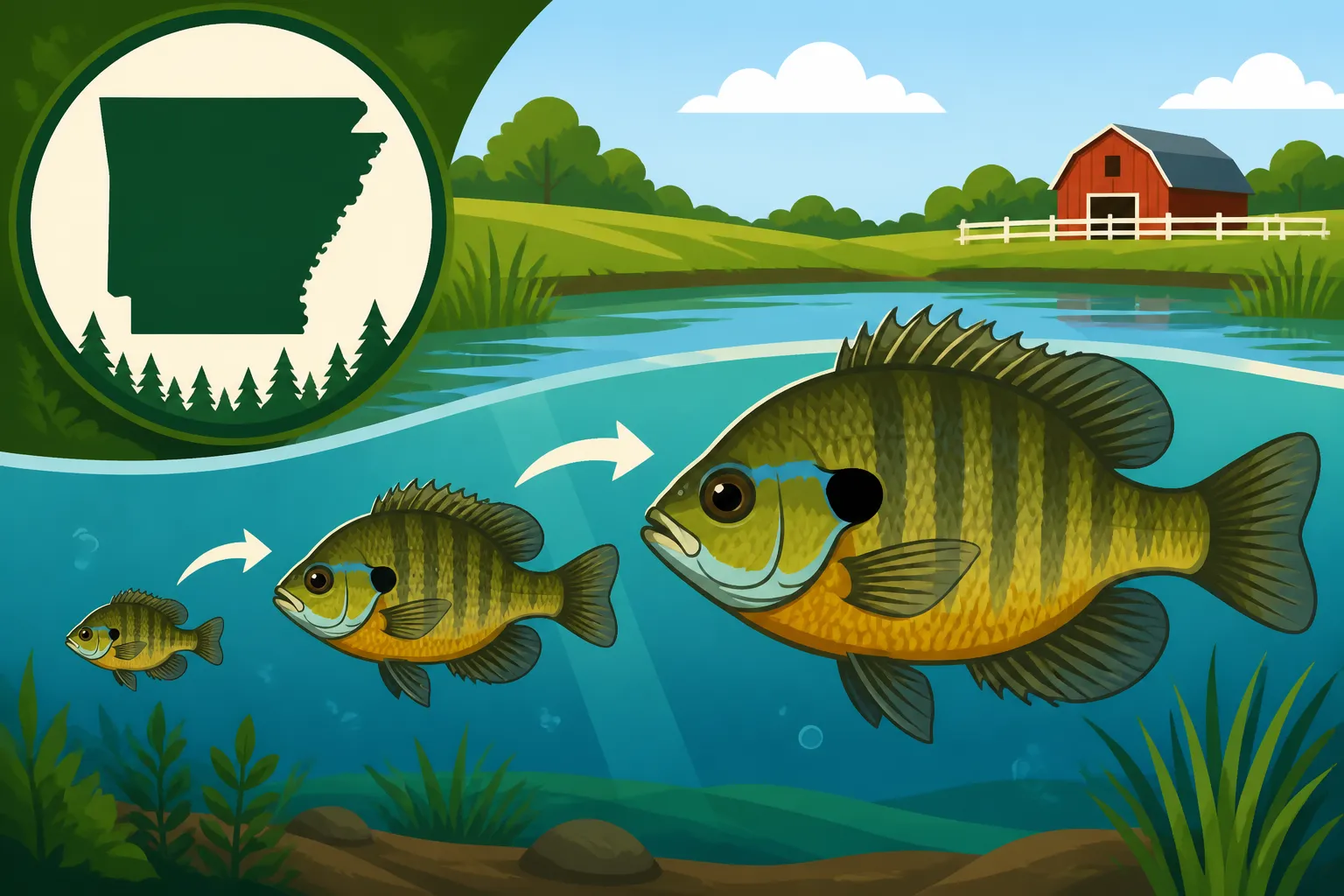
Bluegill Size and Growth in Farm Ponds
Anyone who's ever managed a farm pond in Arkansas dreams of pulling out those big, dinner-plate-sized bluegill. But let's be honest, more often than not, you're catching a bunch of skinny, little guys that barely make a decent meal. It's frustrating to pour effort into your pond only to see stunted fish. This guide is all about helping you understand why your bluegill might not be growing to their full potential and what practical steps you can take to foster a healthier population with bigger, fatter fish in your own slice of Arkansas heaven.
Understanding Bluegill Growth Dynamics in Farm Ponds
Bluegill are fantastic fish for farm ponds in Arkansas. They're prolific, fun to catch, and tasty. However, their very nature – being incredibly productive – can quickly become their biggest downfall in a closed system like a pond if not managed properly. Getting those prized large bluegill isn't just about throwing food in; it's about creating a delicate balance.
The Ideal Conditions for Bluegill Growth
For bluegill to truly thrive and reach a respectable size, they need a few key things: an abundant and consistent food supply, excellent water quality, and appropriate habitat or cover to feel secure and ambush prey. In a natural system, these elements are often in flux, but in a farm pond, you have a hand in controlling them.
When conditions are good, bluegill will reproduce like crazy, which seems like a positive, right? Well, not always. A farm pond is a finite resource. It has a limited amount of food, oxygen, and space. If too many bluegill are born and survive, they quickly eat up all the available food. Imagine trying to feed a hundred hungry kids with only enough snacks for twenty. Everyone's going to be a little bit hungry, and no one's going to grow much. This overpopulation is the silent killer of large bluegill dreams, leading to a pond full of small, hungry, and often unhealthy fish. It's a common story in many unmanaged private ponds across Arkansas.
Factors Stunting Bluegill Growth
So, what specifically holds back those bluegill from becoming the beauties you envision? It usually boils down to a few critical factors that are prevalent in many smaller, unmanaged aquatic environments. Recognizing these signs is the first step toward correcting them.
The most significant factor in bluegill stunting is overpopulation. Bluegill are prolific spawners, and without adequate predation, their numbers can explode. Each tiny bluegill needs food, and if there are thousands of them competing for every morsel, none of them will get enough to grow past a few inches. They become scrawny and often have huge heads relative to their bodies because their heads grow faster than their bodies when food is scarce. Think of it like a crowded buffet where everyone gets only a tiny scoop; nobody leaves truly full.
Another critical factor is a lack of sufficient predators. In a healthy ecosystem, predators keep prey populations in check. In many Arkansas farm ponds, if you don't have enough largemouth bass – or bass of the right size – to thin out the bluegill numbers, the bluegill will simply reproduce unchecked. Bass are like the bouncers at the bluegill party, ensuring not too many crash the buffet. Without them, the bluegill population will boom, and then bust, in terms of size and health. Largemouth bass daily limit statewide is 5 fish is a regulation for public waters, but the principle of predation is vital for private pond management, too.
Finally, poor habitat and water quality can also play a role. If a pond lacks adequate submerged structure for bluegill to hide and forage, or if the water quality is consistently poor (low oxygen, high turbidity, extreme pH), their growth will suffer. They need safe zones to ambush insects and avoid larger predators, as well as clean, oxygenated water to metabolize food efficiently. Without these basics, even a perfectly balanced population would struggle to reach its full potential.
Managing Your Pond for Bigger Bluegill
The good news is that if you're willing to put in a little work, turning your pond into a big bluegill factory is entirely achievable. It's not about magic, but rather understanding the ecology of your pond and making informed management decisions.
The Importance of a Balanced Predator-Prey Relationship
This is arguably the single most critical aspect of growing big bluegill. It’s a concept that often feels counterintuitive to new pond owners, but it’s foundational. You need enough predators to eat the excess bluegill, allowing the remaining ones to grow larger.
The primary predator for bluegill in most Arkansas farm ponds is the largemouth bass. Stocking your pond with the right number of bass, appropriate for its size and forage availability, is essential. These bass will prey on the smaller, slower bluegill, effectively thinning out the herd. This competition reduction means more food for the surviving bluegill, enabling them to pack on pounds and reach impressive sizes. It’s a brutal but effective form of natural selection that benefits the overall health of your bluegill population. Knowing Best Bass Fishing Spots on Bull Shoals Lake won't directly help your pond, but understanding bass behavior and their role in an ecosystem is key.
Then there's the equally important, and often harder, task of harvesting bluegill. Many pond owners hesitate to remove fish, thinking "more fish is better." But when it comes to bluegill, fewer, larger fish are almost always better than many, small fish. You should be selectively harvesting the smaller bluegill – those 4-6 inchers that are abundant. By removing these smaller individuals, you reduce the competition for food and resources, leaving more for the remaining bluegill to grow. Aim to remove a significant number of these smaller bluegill each year. Don't be afraid to keep a cooler full when you're out fishing; you're doing your pond a favor! This practice, combined with a healthy bass population, is the cornerstone of successful bluegill management. This is especially important if you're trying to foster a Panfish Species Good for Kids and Beginners population that will actually engage young anglers.
Supplemental Feeding and Fertilization
While managing the predator-prey balance is crucial, sometimes your pond simply doesn't produce enough natural food to support trophy bluegill. That's where supplemental feeding and strategic fertilization come into play.
Supplemental feeding can significantly accelerate bluegill growth, especially in ponds where you've managed the population density. High-quality commercial fish pellets, designed for panfish, offer a concentrated source of protein and nutrients. Bluegill quickly learn to come to the sound of food hitting the water, making them easier to catch and allowing you to observe their health. You can hand-feed, but for consistency and convenience, especially if you have a larger pond, an automatic feeder can be a game-changer. These feeders, readily available on platforms like Amazon, dispense food at set times, creating a routine that the bluegill quickly adapt to. This extra boost of nutrition means they spend less energy foraging and more energy growing. For those looking for quick growth, this can be incredibly effective, and when paired with Best Bait for Bluegill Fishing, you'll see a noticeable difference.
Pond fertilization, when done correctly, can also boost your pond's productivity by increasing the amount of plankton – tiny plants and animals that form the base of the aquatic food chain. This plankton is eaten by insects and small crustaceans, which in turn are eaten by bluegill. It's like giving your pond a vitamin shot to make the food web more robust. However, fertilization requires careful monitoring and application. Over-fertilization can lead to excessive algae blooms, which can deplete oxygen levels and cause fish kills, especially during hot Arkansas summers. It's a powerful tool, but one that demands caution and ideally, consultation with an expert.
Monitoring and Assessment for Pond Health
You can't manage what you don't measure, and your farm pond is no exception. Regularly checking in on your bluegill population and overall pond health will give you vital clues about whether your management strategies are working or if adjustments are needed.
How to Assess Your Bluegill Population
It’s exciting to implement new strategies, but how do you know if they're actually paying off with bigger bluegill? You need to become a bit of a detective and assess your pond's residents.
The simplest way to start is through test fishing. Grab your rod and reel, head out, and actively fish for bluegill. Pay close attention to what you're catching. Are they all consistently small, or are you starting to see a mix of sizes, including some larger individuals? Are the small fish skinny or plump? If you're catching tons of bluegill, but they're all under 5 inches and look rather thin, that's a classic sign of overpopulation and stunted growth. Conversely, if you're catching fewer bluegill, but a good percentage of them are healthy, chunky fish, then your management is likely on the right track. This method gives you an anecdotal but often accurate snapshot of your pond's health. For example, if you're teaching your kids to fish, pay attention to the bluegill they're catching. Are they healthy enough to make the experience fun? Check out How to Rig a Worm Under a Bobber for Bluegill for easy test fishing methods.
For a more scientific approach, especially in larger ponds, seining or trapping can provide a clearer picture. Using small seine nets or wire traps, you can capture a sample of your bluegill population. This allows you to measure and weigh individual fish, providing data on their average size, growth rates, and overall condition. It also helps you see the actual distribution of sizes, identifying if there's a strong year-class of small, stunted fish dominating the pond. This more intensive assessment can confirm what your test fishing suggests and guide more precise management decisions.
Finally, record keeping is your secret weapon. Keep a simple logbook. Note down the date, how long you fished, how many bluegill you caught, and their approximate sizes. Over time, these records will show trends. Are your bluegill getting bigger on average? Is the catch rate of small fish decreasing? This long-term data will be invaluable for understanding the effectiveness of your efforts. It's not just about what you caught today, but what you're catching over weeks, months, and even years.
Common Pitfalls and Troubleshooting
Even with the best intentions, pond management can hit snags. Knowing what common problems look like can save you a lot of frustration and help you get back on track.
The most common pitfall, as we've discussed, is seeing lots of small fish. If every time you cast, you pull in another 3-inch bluegill, and you rarely see anything larger, your pond is almost certainly overpopulated with bluegill and doesn't have enough predators (or you're not harvesting enough of the small ones yourself). The solution here involves increasing bass predation, reducing the bluegill population through aggressive harvesting of small fish, and potentially supplementing food to kick-start growth in the survivors. This is a battle of numbers, and you need to tip the scales in favor of fewer, larger fish. You might find some helpful tips for managing a healthy ecosystem by learning about Fish Species Checklist for a Weekend Trip to Arkansas – though for ponds, it's a bit more curated.
Water quality issues are another significant problem. If you notice persistent algae blooms, murky water, or, worst of all, dying fish, your water quality needs immediate attention. Algae blooms often indicate excessive nutrients (nitrogen and phosphorus) in the water, which can lead to low oxygen levels at night when the algae respire. This is a common problem after heavy rainfall or if too much fertilizer or feed has been added. Testing your pond's water parameters (pH, dissolved oxygen, ammonia, nitrates) can pinpoint the exact issue. Solutions range from adding aeration to chemical treatments (used cautiously) or even partial water exchanges. You can find simple water testing kits on Amazon to help you keep an eye on these vital parameters. Remember, healthy fish need healthy water, and maintaining good water quality is a continuous effort, especially in smaller, enclosed systems.
Long-Term Strategies for Sustained Big Bluegill
Growing big bluegill isn't a one-and-done project; it's ongoing pond stewardship. To ensure your pond continues to produce those impressive panfish year after year, you need to implement long-term strategies that focus on habitat and, when necessary, professional guidance.
Habitat Enhancement and Cover
A productive bluegill pond isn't just a big bathtub full of water. It needs complexity and structure, just like a natural lake or river. Adding structures is key to providing bluegill with places to hide from predators, ambush prey, and even spawn. Simple brush piles made from cut trees or limbs can be sunk to create excellent cover. Artificial structures, like purpose-built PVC trees, are also popular because they don't rot and are easily placed. Rock piles can also provide excellent hiding spots for smaller bluegill and invertebrates they feed on. These structures act as fish condos, providing safety and feeding grounds. You can think of them as the underwater equivalent of a bustling downtown, offering both shelter and opportunity. This also improves the overall fishing experience, as these are often prime spots to target.
Beyond hard structures, managing aquatic vegetation is vital. A healthy pond needs some aquatic plants; they provide oxygen, food, and cover for young fish and invertebrates. However, too much vegetation can be detrimental. Dense mats of weeds can make fishing impossible, deplete oxygen at night, and hinder predator access, allowing bluegill populations to become overgrown and stunted. Striking the right balance – enough for cover, but not so much it chokes the pond – is crucial. This might involve mechanical removal, biological controls (like grass carp, where permitted), or careful herbicidal application. Learning about Best Panfish Spots for Beginners on Local Lakes might offer insights into how natural vegetation patterns affect fish.
Consulting with Pond Management Professionals
Sometimes, managing a pond feels like trying to solve a puzzle with half the pieces missing. If you're new to pond management, facing persistent problems, or simply want to optimize your pond for the absolute best results, don't hesitate to call in the experts. Professional pond management companies in Arkansas have the knowledge, experience, and equipment to accurately assess your pond's specific needs.
They can conduct thorough fish surveys, analyze water chemistry, identify specific plant issues, and develop a customized management plan tailored to your pond's size, goals, and existing fish populations. For complex issues, like chronic water quality problems or stubborn overpopulation, their expertise can be invaluable. They can advise on proper stocking ratios for bass and bluegill, recommend aeration systems, or even help with fish removal if necessary. Investing in professional advice, especially for an initial assessment or when setting up a new pond, can save you a lot of time, money, and frustration in the long run. It's like having a master gardener tend to your prize roses; they know precisely what's needed for optimal growth and health.
Disclaimer
This article is for general informational purposes only and does not constitute professional advice. Laws, prices and regulations vary by location and change over time. Consult a qualified professional for guidance on your specific situation.