Blue Catfish vs Flathead Catfish: Which Grows Bigger?
For anglers across Arkansas, there's an ongoing debate that sparks countless conversations on the banks and around campfires: which grows bigger, the blue catfish or the flathead catfish? It's a question that challenges our perceptions of these freshwater giants and often dictates how we target them. This guide aims to settle that discussion by diving deep into the characteristics, growth potential, and habitats of these two magnificent species found right here in our beloved Natural State waters.
Understanding Arkansas's Goliath Catfish Species
Arkansas is truly blessed with an abundance of fantastic fishing opportunities, and our catfish population is certainly a highlight. When it comes to the biggest of the big, two species consistently stand out: the blue catfish and the flathead catfish. While both are impressive, they each have distinct characteristics and lifestyles that contribute to their overall size and where you're likely to encounter them.
The Mighty Blue Catfish (Ictalurus furcatus)
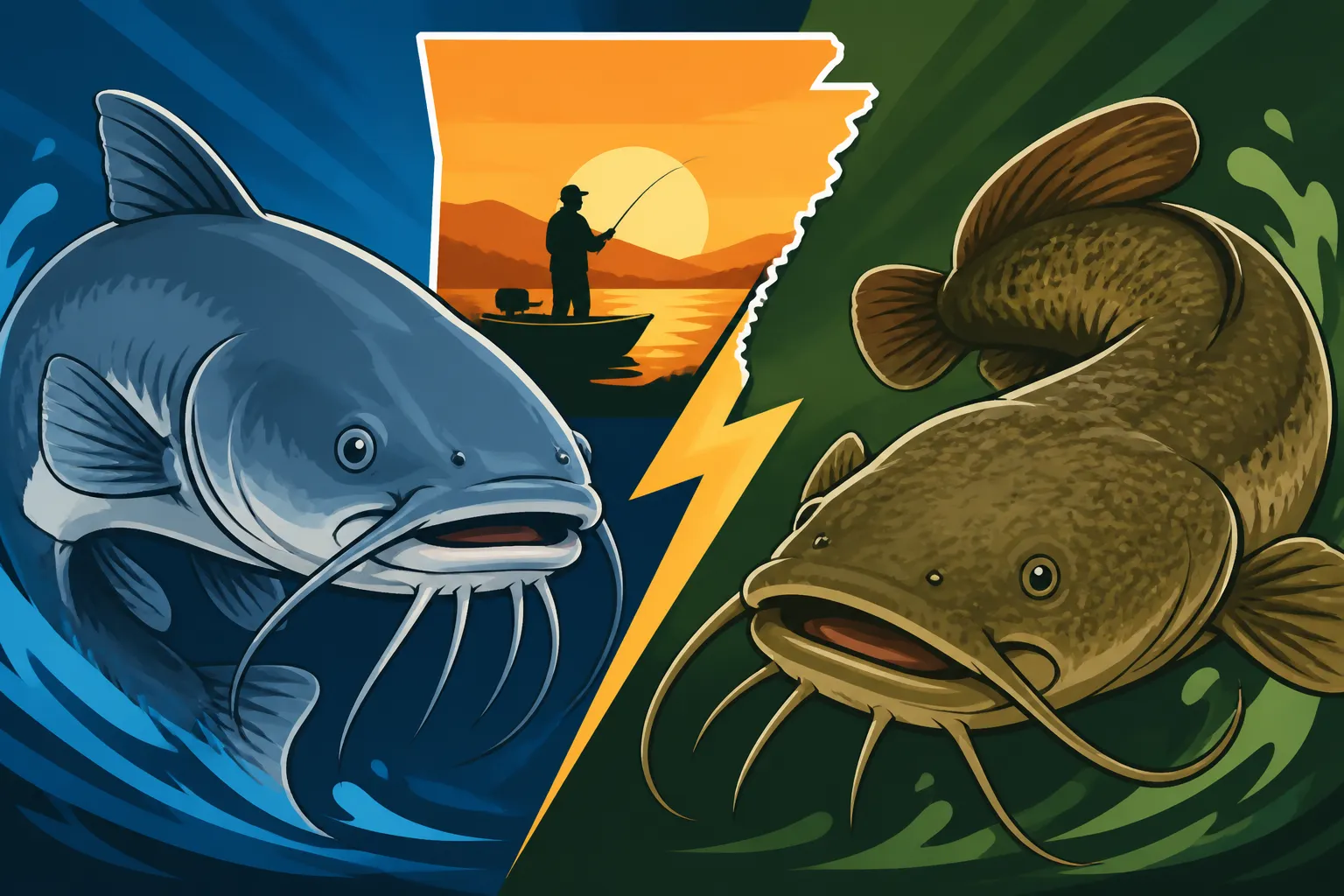
Blue catfish are often hailed as the true giants of North American freshwater, and Arkansas is certainly no exception. These fish are characterized by their deeply forked tails, a slate-blue or grey color on their backs fading to white on their bellies, and a smooth, scaleless body. What really sets them apart is their schooling nature and a diet that makes them grow to incredible sizes.
They are primarily river fish, thriving in the main channels and tributaries of large rivers like the Arkansas River, but they also do exceptionally well in vast reservoirs. Blue catfish are opportunistic feeders, consuming a wide variety of prey including shad, minnows, crayfish, mussels, and even other smaller fish. Their diet often consists of whatever is most readily available, and their schooling behavior means they can aggressively compete for food, leading to rapid growth when food sources are abundant. Many dedicated catfishermen swear by fresh cut bait, which mimics injured or dead baitfish, a favorite meal for these powerful predators.
The Solitary Flathead Catfish (Pylodictis olivaris)
In stark contrast to the schooling blue catfish, the flathead catfish is a creature of solitude. Easily identified by its distinctly flattened head, lower jaw that protrudes past the upper, and rounded tail, the flathead's coloration can vary greatly depending on its habitat, from mottled browns and yellows to olive greens, providing excellent camouflage against timber and rocky structure.
Flatheads are ambush predators that prefer live prey. They’re not as interested in scavenger fare as blues; they want a struggling sunfish, a lively shad, or a squirming crawfish. This preference for live bait, combined with their solitary nature and tendency to hide out in logjams, undercut banks, and deep holes, often makes them a more challenging but incredibly rewarding catch. They are powerful fish, and their reliance on live food means they often inhabit areas where they can easily ambush unsuspecting meals, often in the same rivers and reservoirs as blues, but in different types of cover.
The Battle of the Brutes: Size and Growth Potential
Now, for the main event! When we talk about which species grows bigger, it's not just about average size, but the maximum potential these fish can reach under ideal conditions. Both species produce true monsters in Arkansas waters, making them highly sought-after by trophy anglers.
Peak Weights and Lengths for Blue Catfish
Blue catfish hold the crown for the sheer maximum weight. These fish have the potential to grow absolutely enormous, with many state records across the country exceeding the 100-pound mark. In Arkansas, our waters are renowned for producing incredible blue cats. It's not uncommon for anglers targeting blues in the Arkansas River or major reservoirs to land fish weighing 30, 40, or even 50 pounds on a regular basis. The state record for a blue catfish in Arkansas is an astonishing 116 pounds, caught right here in the Arkansas River.
This massive size is attributed to several factors: their prolific feeding habits, their ability to thrive in large, nutrient-rich river systems and impoundments, and their relatively long lifespan. When a blue cat finds a stable, abundant food source, especially baitfish like shad, it can pack on pounds at an incredible rate. They also tend to grow longer than flatheads on average at trophy sizes. Many serious anglers are always chasing that next personal best, knowing that a true giant blue catfish could be lurking in any deep bend or channel. Want to learn more about a specific catch? You might be interested in Arkansas's State-Record Blue Catfish Weighed 116 Pounds.
Peak Weights and Lengths for Flathead Catfish
While flathead catfish might not consistently hit the triple-digit weights as frequently as blue cats in most systems, they are still undeniably massive fish. They tend to be exceptionally long and thick-bodied, with broad, powerful tails. A 50-pound flathead is an absolutely incredible catch and offers a fight like no other. In Arkansas, flatheads regularly reach weights into the 60-70 pound range, and the state record is a truly impressive 80 pounds, 0 ounces. This fish, like many other large flatheads, was likely caught in a sprawling river system where plenty of cover and live prey were available.
Their growth, while perhaps not reaching the very top end of a blue catfish's weight potential, is still substantial. Flatheads rely on consuming live fish, which provides excellent nutrition. However, their solitary nature and preference for ambush tactics might mean they don't consume as sheer a volume of food as a schooling blue catfish that actively hunts. For more on their impressive stature, check out How Big Do Flathead Catfish Get in Arkansas?.
So, which one grows bigger? In terms of absolute maximum weight, the blue catfish generally holds the edge, especially when looking at state and world records. However, both are undeniably huge fish capable of breaking rods and creating lifelong memories.
Let's break down some key differences at a glance:
| Feature | Blue Catfish | Flathead Catfish |
|---|---|---|
| Typical Size | 5-50 lbs (common), 50-100+ lbs (trophy) | 5-40 lbs (common), 40-80+ lbs (trophy) |
| Record Size | State record: 116 lbs (Arkansas River) | State record: 80 lbs (unknown location) |
| Tail Shape | Deeply forked | Rounded |
| Lower Jaw | Upper jaw protrudes slightly or even | Lower jaw protrudes significantly |
| Diet | Omnivorous scavenger, fish, mussels, crawfish | Almost exclusively live fish, crawfish |
| Social Behavior | Schools, often found in groups | Solitary, territorial, prefers hiding cover |
Factors Influencing Catfish Size in Arkansas Waters
The sheer size these catfish can achieve isn't just a matter of species; it's a complex interplay of environmental factors unique to Arkansas. Our diverse waterways offer prime conditions, but not all spots are created equal when it comes to growing giants.
Habitat and Food Availability
Arkansas boasts some of the best catfish habitats in the country, especially its major river systems and large impoundments. The Arkansas River, for instance, is a massive waterway with an abundance of shad and other baitfish, providing a literal buffet for blue catfish. The expansive, deep channels and constant current ensure a steady supply of nutrients and prey, allowing blue cats to gorge themselves and grow quickly. Reservoirs like Lake Ouachita or Norfork Lake also offer vast expanses of water with healthy populations of baitfish, creating excellent growing conditions for both species, though flatheads will be found tucked away in the timber or rock piles.
For flatheads, the presence of suitable structure like submerged timber, rock ledges, and deep holes is paramount. They need places to hide and ambush their live prey. Rivers with plenty of logjams and large, slow-moving pools are ideal. The sheer volume of water and robust forage base in Arkansas’s larger rivers means that when a flathead finds its perfect ambush spot with a consistent flow of unsuspecting baitfish, it can grow steadily into a truly enormous specimen.
Age and Genetics
Like all fish, the age of a catfish plays a significant role in its potential size. A blue or flathead catfish needs many years to reach trophy dimensions. These fish can live for a surprising number of years if left undisturbed, accumulating mass over time. A 100-pound blue catfish or an 80-pound flathead isn't a young fish; it's a seasoned veteran of the river, likely decades old.
Genetics also play a role. Just like in any species, some individual fish are simply predisposed to growing larger than others. They might have a more efficient metabolism or a genetic makeup that allows for faster growth under optimal conditions. While we can't control the genetics of the fish, understanding that not every catfish is destined to be a record-breaker helps set realistic expectations for anglers. The continuous management and healthy populations across Arkansas ensure that these genetic potentials have a chance to be realized.
Fishing Pressure and Management
The balance between abundant fish and responsible harvesting is crucial for maintaining a trophy fishery. Areas with high fishing pressure, where many large fish are consistently removed, might see a reduction in the average size over time. This is why regulations, like those set by the Arkansas Game and Fish Commission, are so important. They help ensure that enough fish survive to reach maturity and trophy size.
Arkansas has a strong focus on conservation, which contributes to its reputation as a premier catfish destination. By setting appropriate limits and encouraging catch-and-release for truly massive trophy fish, the state helps protect the genetic potential and the older, larger fish that are essential for a healthy, vibrant fishery. Anglers who release a giant blue or flathead are contributing to the future of trophy catfishing for everyone.
Targeting Trophy Catfish: Tactics for Landing a Giant
Knowing where and how to target these magnificent fish is just as important as understanding their growth potential. Different species call for different strategies, and investing in the right gear, which you can easily find on Amazon or at local tackle shops, can make all the difference.
Blue Catfish Tactics
When chasing those colossal blue catfish, your approach needs to be adapted to their schooling behavior and diet. Forget finesse; this is about power and presenting a tempting, smelly meal.
- Bait of Choice: Cut bait is king for blue cats. Fresh shad, carp, skipjack, or even perch cut into sizable chunks release a scent trail that blues simply can't resist. Many anglers will head out with smaller tackle first to catch their bait, knowing that fresh is always best. You can even find specialized bait knives and cutting boards on Amazon to make the process easier.
- Gear Up: You'll need heavy-duty rods, often 7-9 feet long with a strong backbone, paired with large conventional reels spooled with at least 50-80 pound braided line. A stout circle hook, usually 8/0 or larger, is essential for a good hookset without deep-hooking the fish. For terminal tackle, a heavy sinker (3-8 ounces, depending on current) to keep your bait on the bottom is crucial.
- Techniques: Drifting along main river channels, anchoring over submerged humps or ledges, or targeting deep holes near current breaks are all effective methods. Blue cats are often found where baitfish congregate, so paying attention to your fish finder for schools of bait is a smart move. Remember, patience is key, but so is checking your lines regularly to ensure your bait is still in the strike zone and appealing. If you're looking for gear recommendations, don't forget to browse rod and reel combos specifically designed for heavy catfishing, available on Amazon. Best Bait for Blue Catfish in Arkansas offers more detail.
Flathead Catfish Tactics
Targeting flatheads requires a different mindset. These solitary predators prefer live bait and often hold tight to heavy cover, presenting a unique challenge that's incredibly rewarding when you finally connect.
- Bait of Choice: Live bait is absolutely non-negotiable for flatheads. Sunfish (bluegill, green sunfish), small carp, or suckers are prime choices. The livelier the bait, the better! Hook your live bait through the back or lips to keep it active and enticing. Best Bait for Flathead Catfish in Arkansas goes into more depth on this.
- Gear Up: You'll need even sturdier gear than for blue cats. A heavy-action rod, often a bit shorter for better leverage in tight spots, paired with a powerful conventional reel spooled with 60-100 pound braided line is recommended. Flatheads will often try to drag you into snags, so strong line is essential. Again, a large circle hook (8/0 to 10/0) is preferred. Keep plenty of extra weights and hooks, as you're likely to get snagged in their preferred habitats. For those serious about rigging up, specialized flathead tackle kits can be found on Amazon.
- Techniques: Flatheads are often found near submerged timber, logjams, rock piles, or undercut banks in rivers and large creeks. Night fishing is particularly effective as flatheads are nocturnal hunters, coming out from their daytime lairs to forage. Setting lines near promising cover, using a buoy marker to keep your line out of the snag, or even walking baits through deep holes can yield results. Always be prepared for a powerful, dogged fight, especially if they try to wrap you around structure. Identifying their preferred cover is key to success, as described in How to Identify a Flathead Catfish.
Disclaimer
This article is for general informational purposes only and does not constitute professional advice. Laws, prices and regulations vary by location and change over time. Consult a qualified professional for guidance on your specific situation.