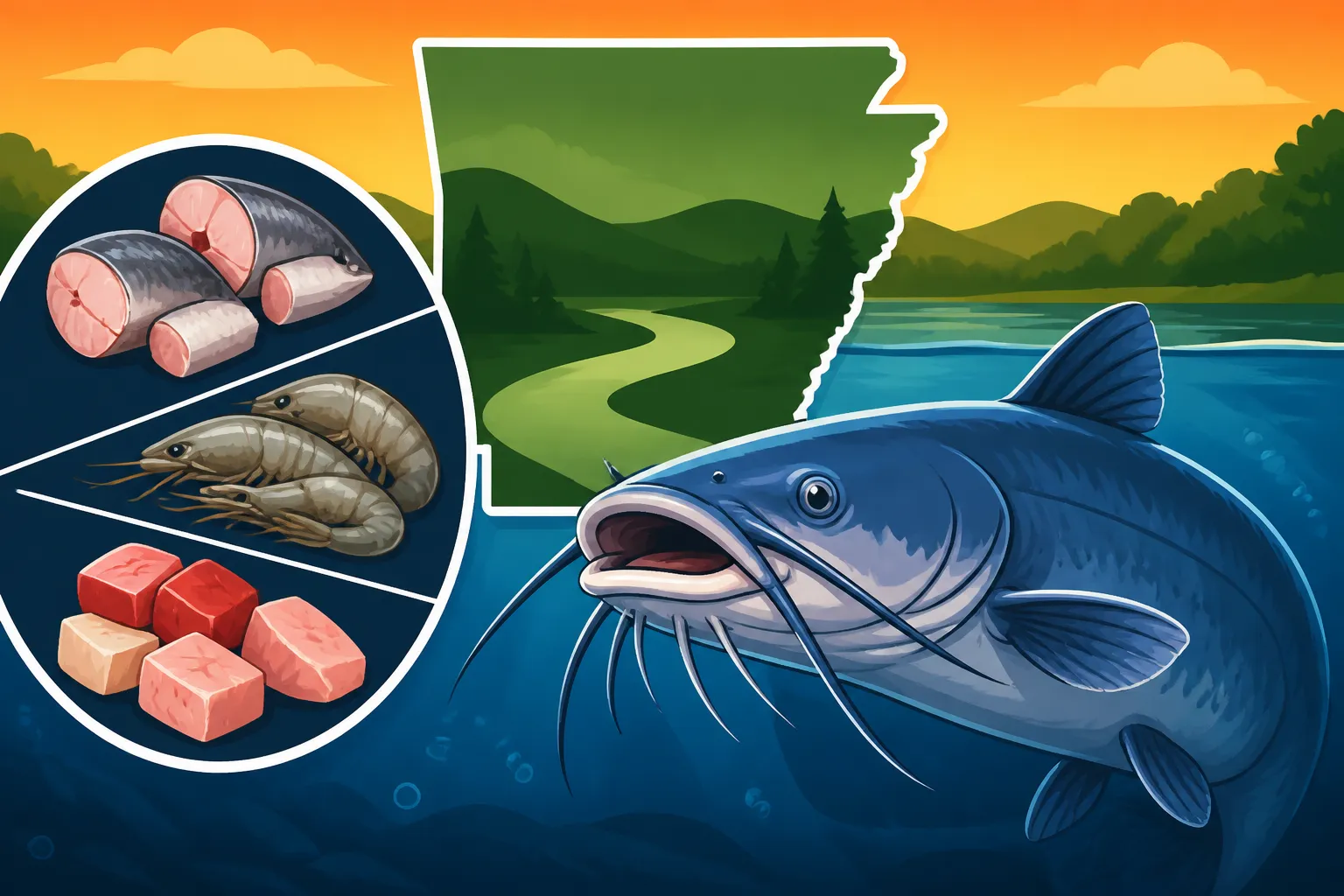
Best Bait for Blue Catfish in Arkansas
There’s nothing quite like the thrill of a heavy strike on your line, the rod bending almost to its breaking point, and the sheer power of a massive blue catfish on the other end. But let’s be real, you can’t just throw any old thing in the water and expect to land one of those whiskered giants. It takes strategy, patience, and most importantly, the right bait. This guide is all about cutting through the noise and getting down to what truly works for hooking those big Arkansas blue cats, from the freshest cut baits to the prepared concoctions that can turn a slow day into an unforgettable battle.
The Undeniable Appeal of Fresh Cut Bait for Blue Catfish
When it comes to blue catfish, especially those absolute monsters that make your reel sing, there’s one truth that stands above all: fresh cut bait is king. It’s not just a preference; it’s a biological imperative for these opportunistic predators. They're primarily scavengers and hunters, relying heavily on their incredible sense of smell and lateral line to detect vibrations and scents in the water, even in murky conditions.
Why Fresh is Always Best for Blue Cats
Think about it from a blue catfish's perspective. You're cruising the depths of the Arkansas River, maybe around the bends or near some deep structure, and suddenly, a cloud of enticing scent hits your nostrils. It's the unmistakable aroma of a recently deceased, oily baitfish, leaching its juices into the current. That’s a five-star meal alert!
Fresh cut bait simply has a superior scent profile compared to frozen or heavily processed options. Freezing can break down cell structures, causing the bait to lose some of its natural oils and potent smell once thawed. Stale bait, on the other hand, might have an off-putting odor or just lack the vibrant, attention-grabbing essence that fresh bait provides. Anglers often get frustrated when they use bait that seems "good enough" but only manages to attract smaller fish or nothing at all. The difference often comes down to that fresh, potent scent trail. It’s what drives blue catfish into a feeding frenzy and compels them to travel considerable distances to investigate. This fresh-factor is particularly crucial in the vast waters of Arkansas, where a strong scent is needed to really carry and draw fish from afar.
Top Choices for Cut Bait in Arkansas
Arkansas waters are rich with excellent baitfish, and knowing which ones to use as cut bait can make all the difference. The best options are typically oily, tough enough to stay on the hook, and readily available.
- Shad (Gizzard and Threadfin): These are absolute gold for blue catfish anglers. Both gizzard and threadfin shad are super oily, creating a fantastic scent slick in the water that blue cats can't resist. You'll find gizzard shad in abundance in many Arkansas lakes and rivers, often schooling near drop-offs or humps. Threadfin shad are generally smaller but equally potent. Catching them often requires a good cast net, which you can find readily available online, perhaps even through a quick search on Amazon. The key is to get them fresh, ideally by catching them yourself on the morning of your trip.
- Skipjack Herring: Ah, the legendary skipjack! If you're serious about targeting trophy blue cats, especially on the Arkansas River, skipjack herring is often considered the holy grail of cut bait. They are incredibly oily, have a strong natural scent, and their flesh holds up well on a hook even in strong currents. The challenge with skipjack is that they can be elusive to catch, often found in strong currents below dams. Dedicated catfishermen will spend hours cast netting them, knowing the reward can be immense.
- Common Carp: Don't overlook the humble common carp. While often seen as a nuisance fish by some, carp makes for excellent cut bait, especially for bigger blue cats. Their meat is firm and oily, and they are abundant in most Arkansas waterways, making them an easy target to catch for bait. Many anglers prefer using carp chunks or strips, and its tough hide helps it stay on the hook for longer, resisting the nibbles of smaller fish.
- Drum (Gaspergou): Also known as freshwater drum or gaspergou, this fish is another fantastic option. They’re common in rivers and lakes across Arkansas and, like carp, have firm, oily flesh that releases a strong scent. Drum can be caught on light tackle or with a cast net, providing a reliable source of bait for your blue cat endeavors.
When preparing cut bait, size matters. For smaller blues, a 1-inch chunk might be sufficient. But for those truly gargantuan blue cats, you want bigger pieces—think 2-4 inch steaks or strips from the body, or even a whole head or tail section. This larger profile helps deter smaller fish and ensures there’s enough bulk for a serious scent trail.
Beyond Fresh Cut: Other Effective Baits for Arkansas Blue Cats
While fresh cut bait reigns supreme for trophy blue catfish, there are certainly other effective options that every serious angler should have in their arsenal. These alternative baits often offer convenience, specific advantages in certain conditions, or simply provide another tool for enticing hungry blues.
Prepared Baits and Their Role
Sometimes, you're out on the water, the fresh bait isn't biting, or you just want something easy to use that can still pull in fish. That's where prepared baits come in. These are typically formulations designed to mimic the strong scents that catfish are attracted to, often with added attractants and binders to keep them on the hook.
- Punch Baits: These are thick, sticky baits usually made from cheese or other fermented ingredients, designed to be "punched" onto a treble hook. Brands like Catfish Charlie are popular choices among anglers who favor this method. The advantage of punch baits is their incredible scent dispersal and their ability to hold up in current if properly applied. They're especially effective in slower moving waters or when fish are more active due to their intense aroma. However, they can be messy to work with, and some anglers find they primarily attract smaller channel cats rather than the truly monstrous blues. They do offer an alternative when live bait or fresh cut bait is scarce.
- Dip Baits: Similar to punch baits but often thinner in consistency, dip baits require a special bait holder or sponge-style lure to soak up and hold the pungent mixture. These baits are renowned for their powerful, often quite foul, odor – exactly what catfish find irresistible! They create a potent scent cloud, making them excellent for attracting fish from a distance, particularly in stained or muddy water where visibility is low. Again, while effective for a range of catfish, truly colossal blue cats might be more consistently caught on large pieces of natural cut bait. Still, having a jar of dip bait on hand can certainly save a slow day and is an easy item to pick up at most sporting goods stores or through online retailers like Amazon.
The role of prepared baits is generally to offer a convenient, long-lasting, and highly aromatic option. They might not always fool the biggest, most discerning blue cats, but they are undeniably effective for putting plenty of fish in the boat, especially if you're targeting numbers rather than just trophy size.
Live Bait Options (Though Less Common for Trophy Blues)
Live bait is a go-to for many different species, and catfish are no exception. However, when specifically targeting trophy blue catfish, live bait tends to be a less common choice compared to cut bait.
- Bluegill, Small Carp, Perch: These are excellent live bait choices for other catfish species like flatheads, and they will certainly catch blue catfish too. A lively bluegill hooked through the back or lips can be incredibly enticing to a cruising blue cat, especially if they're in a more aggressive, predatory mood. The vibration and natural movement of a struggling live baitfish can trigger a strike that scent alone might not.
- Why Cut Bait Often Wins for Trophy Blues: The primary reason cut bait generally outperforms live bait for trophy blues lies in their feeding habits and the sheer amount of scent. While a big blue cat will absolutely ambush a live fish, they are also highly efficient scavengers. A large, oily piece of cut bait releases a much stronger and more consistent scent trail than a single live fish, drawing fish from greater distances. Furthermore, live bait can be difficult to manage in strong currents, often getting tangled or struggling itself out of prime positions. Many anglers, when aiming for the biggest fish possible, prioritize that powerful scent signal over the subtle movements of a live offering. If you're looking for What Bait Catches the Biggest Catfish in Arkansas?, the answer leans heavily towards fresh cut bait.
When you're out on the Arkansas River Fishing for Bass and Catfish, it's always good to experiment. Sometimes, a subtle approach with live bait can be just the ticket. But for consistent action on big blues, keep that fresh cut bait handy.
Rigging and Presentation: Making Your Bait Irresistible
Having the best bait in the world won't do you any good if it's not presented properly. Blue catfish are bottom feeders, spending much of their time lurking in deeper channels, holes, and around structure. Getting your bait down to them, keeping it visible (scent-wise), and ensuring a solid hookset are all crucial elements of success.
Essential Rigs for Blue Catfish
Choosing the right rig is paramount for effective blue catfish angling. The goal is to get your bait on the bottom, in the strike zone, and allow the fish to take it without immediately feeling resistance.
- Carolina Rig: This is perhaps the most fundamental and widely used rig for bottom fishing, and it's absolutely perfect for blue catfish. It consists of a sinker (often an egg sinker or no-roll sinker) threaded onto your main line, followed by a bead (to protect the knot), and then tied to a swivel. To the other end of the swivel, a leader of typically 18-36 inches is tied, with your hook at the very end. The beauty of the Carolina rig is that the weight slides freely on the main line. When a blue cat takes your bait, it can swim off with it a short distance before feeling the resistance of the sinker, giving you a better chance for a solid hookset. This setup is ideal for fishing open bottoms, subtle ledges, and channels in lakes and rivers alike.
- Santee Cooper Rig: This rig is a slight modification of the Carolina rig, designed specifically to lift your bait just off the bottom, making it more visible and keeping it out of snags like hydrilla or fallen timber. Instead of just a hook on the leader, the Santee Cooper rig incorporates a small float or cork above the hook on the leader. This float suspends your cut bait a few inches to a foot or more off the bottom, preventing crabs or bottom-dwelling baitfish from nibbling at it constantly, and presenting it enticingly to blues cruising just above the riverbed. It's incredibly effective in situations where the bottom is a bit snaggy or when you want your bait to dance a little in the current.
- Three-Way Swivel Rig (Dropper Rig): While less common for blue cats than the previous two, a three-way swivel rig can be effective, especially in strong currents where you want to keep your bait stationary. One eye of the swivel goes to your main line, another to a short leader with a heavy sinker, and the third to a longer leader with your hook and bait. This rig keeps your bait close to the bottom while offering a distinct separation from the weight. It's often used when you need to anchor your bait in a very specific spot within a current seam or deep hole.
Regardless of the rig, remember to use strong components. Blue catfish are powerful fish, and a weak link in your tackle can lead to heartbreak. Heavy monofilament or fluorocarbon leaders, robust swivels, and strong, sharp hooks are essential. For more general advice on getting your bait to the depths, you might find useful tips in Catfish Bottom Fishing Techniques.
Hooking Your Bait for Maximum Effectiveness
Once you've got your rig ready, how you attach your bait is the final puzzle piece. The goal is to keep the bait securely on the hook, allow it to release its scent, and ensure maximum hook exposure for a solid strike.
-
Cutting Your Bait: For whole baitfish like shad or carp, you have a few options.
- Steaks: Slice the fish into thick, cross-sectioned "steaks." These are excellent for larger blue cats as they present a substantial profile and hold up well.
- Chunks: For smaller baitfish or when targeting medium-sized blues, simple 1-2 inch chunks can be highly effective.
- Fillets/Strips: Some anglers prefer to fillet the baitfish and then cut the fillets into strips, sometimes leaving a bit of skin on for durability. The dangling strips can be very appealing in current.
- Heads/Tails: Don't discard the heads and tails! The heads, in particular, are very oily and tough, making them excellent big-cat baits, especially on a large circle hook.
-
Hooking Technique:
- Circle Hooks are King: For blue catfish, circle hooks are almost universally recommended. Their design ensures that as the fish takes the bait and swims away, the hook rotates into the corner of its mouth, resulting in fewer gut-hooked fish and a much higher landing ratio. When using circle hooks, do not set the hook aggressively. Instead, let the fish take the bait, let the rod load up, and simply reel steadily.
- Through the Skin/Meat: For cut bait chunks or steaks, thread the hook through the tough skin once or twice. For larger pieces, you might even pass the hook through multiple times to secure it, making sure the hook point remains exposed. With fillets or strips, a single pass through the thicker end, leaving the rest to flutter, can be very effective.
- Multiple Hooks for Large Chunks: If you're using a truly massive piece of bait for a trophy hunt, some anglers will use a tandem hook setup or a larger hook with a stinger hook to ensure maximum hookup potential. However, for most situations, a single, appropriately sized circle hook is sufficient.
Always check your hook point for sharpness. A dull hook will lead to missed strikes and frustration. A quick file or a replacement hook can make all the difference when that monster blue finally decides to bite.
Where to Find the Best Blue Catfish in Arkansas (and Their Preferred Meals)
Arkansas is a phenomenal state for catfish, with waters that consistently produce giants. Knowing where these fish congregate and how to tailor your bait strategy to those environments is key to consistently successful trips.
Prime Blue Catfish Waters in Arkansas
The Natural State boasts an impressive network of rivers and reservoirs that are home to thriving populations of blue catfish, including state record-breakers.
- Arkansas River: Without a doubt, the Arkansas River is a blue cat mecca. From Fort Smith down to its confluence with the Mississippi, this mighty river is a prime location. Blue cats gravitate towards deep channels, river bends, scour holes below dams and locks, and areas with submerged structure like timber or rock piles. The current provides constant food delivery, and the deeper sections offer refuge. Places like Lake Dardanelle, though technically a reservoir section of the river, hold incredible numbers of blues. For anglers looking for a true challenge, this river system is hard to beat.
- Mississippi River: The eastern border of Arkansas offers world-class blue cat fishing on the legendary Mississippi River. This immense waterway is known for producing some of the largest blue catfish on the planet. Target deep holes, current seams, wing dams, and the mouths of tributaries. The sheer volume of water and abundant food sources allow blue cats here to grow to astonishing sizes.
- Major Reservoirs (Lake Ouachita, Lake Dardanelle, Lake Conway): While rivers are generally the top choice for truly immense blue cats, many of Arkansas's large reservoirs also hold impressive populations.
- Lake Ouachita: Known for its clear waters and excellent fishing, Lake Ouachita has strong populations of catfish in its deeper sections and along main lake channels. While perhaps not as famed for trophy blues as the rivers, it offers consistent action. You can often find Catfish Fishing Spots on Arkansas's Lake Ouachita.
- Lake Dardanelle: As part of the Arkansas River system, Lake Dardanelle combines riverine characteristics with reservoir expanse. It's an outstanding blue cat fishery, with plenty of deep water, humps, and structure.
- Lake Conway: A shallower, timber-filled lake near Little Rock, Lake Conway is more renowned for bass and crappie but still holds a healthy population of catfish, including blues, particularly in its deeper channels and around brush piles. While you might want to look up Best Bass Fishing Spots on Lake Conway, Arkansas, don't discount its catfishing potential.
When scouting for locations, pay close attention to depth changes, current breaks, and underwater structure. Blue cats are often found in areas where they can ambush prey or scavenge easily while expending minimal energy.
Matching Bait to the Environment
The best bait isn't just about the species of fish you're using; it's also about how that bait performs in the specific environment you're fishing.
- Tailwaters and Strong Current: In the swift currents below dams or in the main channels of the Arkansas or Mississippi Rivers, scent dispersal is amplified, but bait security becomes critical. This is where fresh, oily cut bait like skipjack herring or gizzard shad truly shines. Their strong scent trail is carried far downstream, drawing in distant blues. Use larger, tougher pieces of cut bait to resist being torn off the hook by the current or by nuisance fish. Heavily weighted Carolina or Santee Cooper rigs are essential here to keep your bait anchored in the strike zone. The currents also mean that bait that's too small or soft will quickly wash out or be stripped from the hook.
- Still Lakes and Slower Rivers: In calmer waters, such as large coves in reservoirs or slower river pools, you have a bit more flexibility. While fresh cut bait is still fantastic, prepared baits like punch baits or dip baits can be incredibly effective here. Their potent scent can accumulate in the water, creating a strong attractant without being washed away too quickly. In these scenarios, the scent might need more time to travel, so a long-lasting bait is a huge plus. You can also experiment with slightly smaller cut bait pieces or live baits like bluegill if you're exploring for active fish. Remember, if you're trying to How to Find Catfish in a Reservoir, a powerful scent from any of these baits will be your best ally.
- Visibility and Water Clarity: In murky or muddy water, scent is king. This is where the oiliest cut baits and the most pungent prepared baits really excel. The fish are relying almost entirely on their sense of smell to locate food. In clearer water, while scent is still important, presentation and even subtle visual cues (like a suspended cut bait on a Santee Cooper rig) can also play a role. However, for blue cats, the scent always dominates.
| Bait Type | Key Advantage | Best Use Case | Acquisition Method | Target Size Range |
|---|---|---|---|---|
| Fresh Cut Shad | High oil content, potent scent | Rivers & lakes, strong currents | Cast net (catch yourself), bait shops | All sizes, good for trophies |
| Skipjack Herring | Extremely oily, very tough | Strong river currents, trophy blue cats | Cast net (difficult), specialized bait shops | Trophy-sized blue cats |
| Common Carp Chunks | Oily, firm, widely available | Rivers & lakes, good all-around | Catch yourself (rod & reel), bait shops | Medium to large blue cats |
| Punch/Dip Baits | Intense, long-lasting scent | Slower currents, stained/muddy water, convenience | Sporting goods stores, online (Amazon) | Mostly smaller to medium blues |
| Live Bluegill | Natural movement, visual appeal | Less common for trophy blues, calmer waters, targeting aggressive fish | Catch yourself, bait shops | Medium to large blue cats |
Ultimately, the best bait for blue catfish in Arkansas often comes down to personal confidence, local conditions, and a willingness to adapt. But if you start with fresh, oily cut bait and present it effectively in proven blue cat haunts, you’re already well on your way to a memorable fight. For a more general overview of species, check out Arkansas Fish Species: A Complete Guide to What's Swimming in Your Waters. Tight lines, everyone!
Disclaimer
This article is for general informational purposes only and does not constitute professional advice. Laws, prices and regulations vary by location and change over time. Consult a qualified professional for guidance on your specific situation.