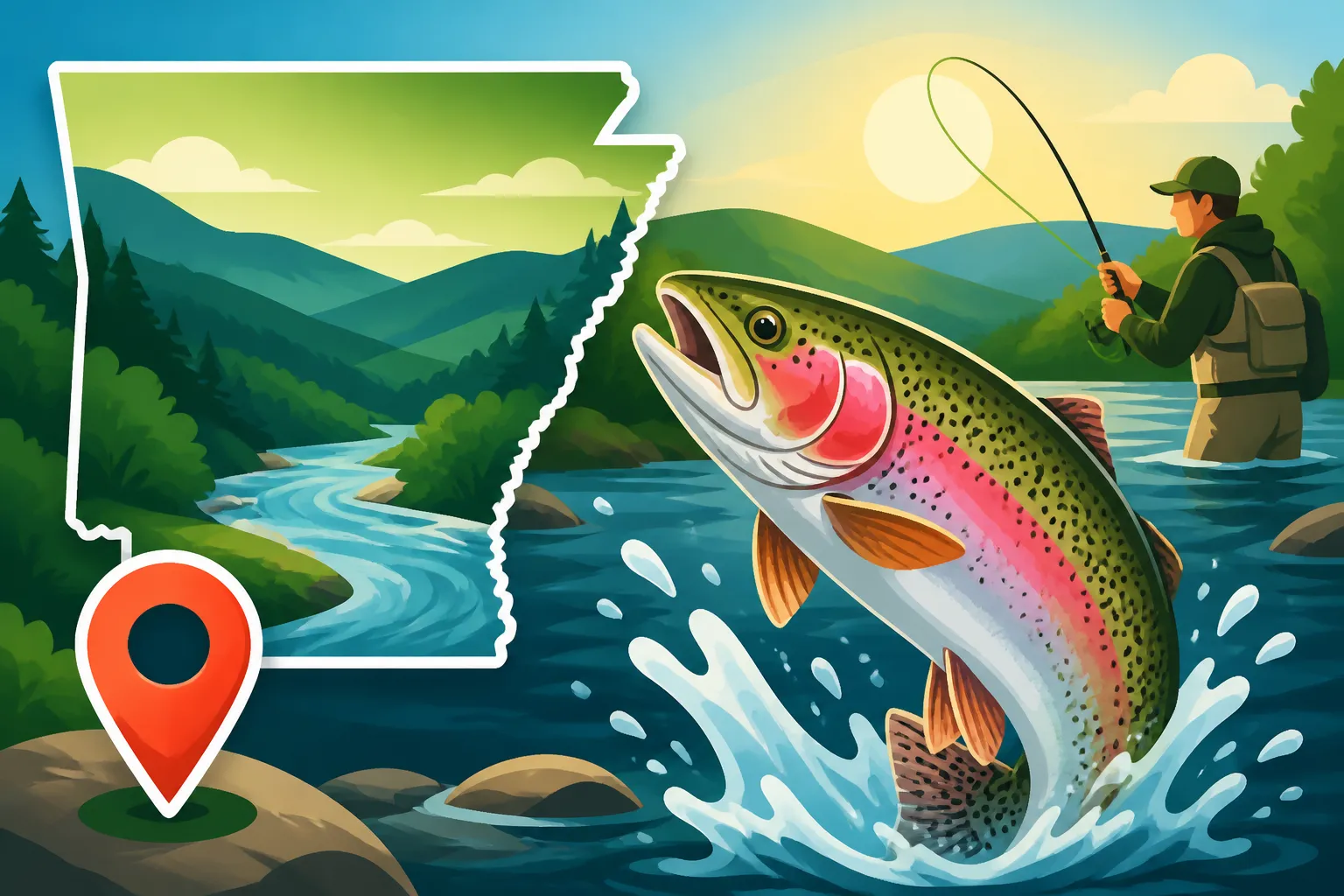
Where to Catch Rainbow Trout in Arkansas
Finding good rainbow trout fishing in Arkansas can feel like a secret code you need to crack, especially if you're new to the state's renowned coldwater fisheries. Many anglers dream of pulling in a beautiful rainbow, but knowing exactly where these elusive fish thrive and how to access those spots is often the biggest hurdle. This guide is here to demystify the process, showing you the prime locations across Arkansas where you have the best chance of encountering these vibrant, hard-fighting fish.
Arkansas's Premier Coldwater Fisheries for Rainbow Trout
Arkansas might be known as the Natural State, but for trout anglers, it's really the "Trout State." The incredible success of rainbow trout in Arkansas is largely due to the unique environment created by its large hydro-electric dams. When these dams release water from deep within the lakes, that water is incredibly cold and highly oxygenated, mimicking the ideal conditions found in pristine mountain streams. This makes the tailwaters below these dams absolute havens for rainbow trout.
The White River System
Without a doubt, the White River is the undisputed champion when it comes to rainbow trout fishing in Arkansas. Stretching for miles below multiple dams, this river provides an extensive, consistent coldwater habitat that supports a massive population of trout. Anglers from all over the world flock here, drawn by the sheer numbers and often impressive size of the rainbows. The section below Bull Shoals Dam, in particular, is legendary.
When the generators at Bull Shoals Dam are running, the cold, clear water rushes through, creating prime feeding lanes and oxygenating the river perfectly. Even during periods of low generation, the sustained cold temperatures from the deep lake waters keep the trout happy and active. It's a truly spectacular fishery, offering everything from serene float trips to challenging wade fishing. Just remember that water levels can change rapidly, so always be aware of generation schedules, which are often posted online by the U.S. Army Corps of Engineers. This river system isn't just about rainbows, either; you'll find other trout species here, but rainbows dominate the catch.
The Norfork Tailwater
A tributary of the White River, the Norfork Tailwater (below Norfork Dam) is another jewel in Arkansas's trout crown. Though shorter than the main White River, it's no less productive and often boasts some truly memorable rainbow trout fishing experiences. This tailwater is known for its incredible insect life, which means the trout here are often eager feeders, especially for fly anglers.
What makes the Norfork Tailwater particularly appealing for many is its more intimate feel compared to some of the wider sections of the White River. You can find excellent wade fishing opportunities here, especially when generation is low. It’s also a fantastic place to fish from drift boats or smaller craft. The water is pristine, and the scenery is stunning, offering a peaceful backdrop to your fishing adventure. Don't be surprised if you hook into some truly feisty rainbows that put your gear to the test.
Diving Deeper into Specific Rainbow Trout Hotspots
While the White and Norfork rivers are the main attractions, Arkansas offers a few other locations where you can target rainbow trout, each with its own charm and challenges. Knowing these specific areas can help you plan a more diverse fishing trip.
Bull Shoals Tailwater
This section is essentially the upper part of the White River, directly below Bull Shoals Dam, and it's where much of the legendary trout fishing takes place. It extends for many miles downstream and includes various access points that cater to both waders and boaters. For example, popular access points like the Bull Shoals-White River State Park offer convenient boat ramps and often accessible bank fishing spots.
The incredible depth and structure of this river section provide ample hiding and feeding opportunities for rainbow trout. You'll find deep runs, swift riffles, and quiet eddies, all holding fish. Many anglers find success here by using both artificial lures and natural baits, adapting to the current conditions. If you're looking for consistent action and the chance at a true trophy, the Bull Shoals Tailwater should be at the top of your list. Remember, fishing here often requires careful planning around water release schedules, which can dictate whether you'll be wading or boating. For more detailed information on regulations in this area, check out Bull Shoals Tailwater Trout Rules in Arkansas.
Little Missouri River
Shifting gears from the big tailwaters, the Little Missouri River below Lake Greeson (specifically the Narrows Dam) offers a different, wilder rainbow trout experience. This isn't your typical large, dam-controlled tailwater; it's a smaller, freestone stream that is stocked with rainbow trout when water temperatures allow. It's a fantastic place for those who prefer a more intimate stream setting, wading through smaller flows and targeting aggressive fish.
The challenge and charm of the Little Missouri lie in its more natural, less predictable flow. Stocking occurs regularly during cooler months, providing consistent opportunities, but the fish disperse and often require more active hunting. It's a great spot for light tackle and fly fishing, especially with smaller nymphs and dry flies when conditions are right. You'll often find yourself in beautiful, secluded stretches, truly connecting with nature while pursuing these spirited rainbows. You'll want to check the stocking schedule and water conditions before heading out, as this river is more susceptible to natural fluctuations.
Other Stocked Waters
Beyond the major rivers, the Arkansas Game and Fish Commission (AGFC) also stocks rainbow trout in various smaller lakes and ponds across the state, particularly during the cooler months. These "put-and-take" fisheries are often designed to provide easy access for families and beginners, offering a fun day out without the challenges of large river systems.
These urban and community fishing programs make trout fishing accessible to everyone, even those living in or near larger cities. While you might not find trophy-sized fish in these waters, they are excellent places to introduce kids to fishing or to simply enjoy some relaxing catch-and-release action. Locations often vary by season, so it's always a good idea to check the AGFC website or local advisories for current stocking information. These spots are perfect for a spontaneous outing with simple gear, maybe a basic spin-casting setup you picked up from Amazon.
Factors That Create Ideal Rainbow Trout Habitat
Rainbow trout aren't just found anywhere; they thrive in very specific conditions. Understanding these habitat needs is key to knowing where to focus your efforts in Arkansas, even within the designated trout waters. It’s not just about water, it’s about the right kind of water.
Consistent Cold Water Temperatures
This is, without a doubt, the most critical factor for rainbow trout survival and growth in Arkansas. Rainbow trout are a coldwater species, preferring water temperatures generally below 68°F (20°C). Any prolonged exposure to warmer water can stress them significantly or even be lethal. This is precisely why the tailwaters below large dams are so important; the water released from the bottom of these deep reservoirs remains consistently cold, even during the hottest Arkansas summers.
The deep sections of lakes like Bull Shoals and Norfork store immense volumes of frigid water, and when released, these "tailwaters" become perfect thermal refuges for trout. Without these coldwater releases, rainbow trout would simply not survive year-round in much of Arkansas, which naturally experiences very warm summers. So, when you're looking for rainbow trout, always think cold water first. This is why you won't typically find them in the shallower, warmer sections of Arkansas's natural rivers or lakes that aren't fed by a dam release. You'll often see guides and seasoned anglers using specialized thermometers to monitor water temperature, especially during transitional seasons, as even a few degrees can make a big difference in fish activity.
High Oxygen Levels
Just as important as cold water is a plentiful supply of dissolved oxygen. Fast-moving water, like rapids, riffles, and dam discharges, naturally picks up and holds more oxygen than stagnant, still water. Rainbow trout are active predators and require high levels of oxygen to support their metabolism and energetic lifestyle. This is another reason why tailwaters are so successful. The powerful currents and churning water below the dams create an oxygen-rich environment that these fish absolutely love.
In addition to dam releases, natural features like waterfalls, rapids, and even strong winds over open water contribute to oxygenation. When water levels are low and flow is minimal, oxygen levels can drop, especially in deeper, slower pools. Anglers who understand this will often target areas where the current is most active, such as around current breaks, eddies, and seams where fast and slow water meet. These spots not only provide oxygen but also funnel food directly to waiting trout. You can learn more about these specialized environments in our Arkansas Tailwater Trout Fishing Guide.
Abundant Food Sources and Structure
Rainbow trout are opportunistic feeders, and their presence in high numbers in Arkansas's trout streams is largely due to the rich and varied food sources available. This includes everything from aquatic insects (mayflies, caddisflies, stoneflies), to small baitfish, crustaceans, and even terrestrial insects that fall into the water. A diverse and healthy ecosystem with plenty of invertebrate life is a strong indicator of good trout habitat.
Beyond food, structure is vital. Trout need places to hide from predators, escape strong currents, and ambush prey. This means looking for submerged rocks, fallen timber (often called "snags" or "laydowns"), undercut banks, deep pools, and gravel beds. These features provide shelter and create current breaks where trout can rest without expending too much energy. Understanding the river's topography, whether you're bank fishing or using a boat, helps immensely in identifying these crucial holding spots. A good topographical map, perhaps found on Amazon, can be an invaluable tool.
Tips for Locating and Catching Rainbow Trout in Arkansas
Now that you know where to look for rainbow trout and why they are there, let's talk about some practical tips to help you actually find them and get them to bite. It's one thing to know the general area, and another to pinpoint the exact spot.
Reading the Water
One of the most valuable skills an angler can develop, especially in moving water, is "reading the water." This means observing the currents, seams, eddies, and structures to predict where a fish might be holding. Rainbow trout, like most fish, are energy-efficient. They won't sit in the fastest current constantly fighting it. Instead, they'll often position themselves in a current break, just out of the main flow, where food is swept to them without much effort on their part.
Look for areas where fast water meets slow water—these are often called "seams." Trout will sit in the slower water, darting into the faster current to grab passing food. Also, pay attention to submerged rocks, fallen logs, and undercut banks. These provide shelter and ambush points. Deep pools after a fast run are often prime holding areas, as are the tails of riffles where food settles. The more time you spend observing the water, the better you'll become at identifying these productive lies.
| Water Feature | Characteristics | Why Trout Hold Here | Best Techniques |
|---|---|---|---|
| Riffles/Runs | Shallow, fast-moving water, often rocky | Highly oxygenated, transports food | Wet flies, nymphs, small spinners |
| Eddies | Swirling water where current reverses or slows | Resting areas, food collects here | Drifting baits, slow-moving lures |
| Seams | Boundary between fast and slow current | Prime ambush points, food funnels through | Nymphing, drifting small jigs, casting parallel |
| Deep Pools | Deeper, slower water, often dark | Shelter, thermal refuge, holds larger fish | Bottom bouncing baits, deep diving crankbaits |
| Undercut Banks | Bank eroded beneath the surface | Excellent cover, shade, current break | Casting close to the bank, flipping small jigs |
| Structure (Logs/Rocks) | Obstacles in the water | Current breaks, ambush points, food collection zones | Pitching baits/lures into pockets, bouncing off structure |
Access Points and Strategies
Knowing the river's character helps you choose the right access and strategy. For instance, on the White River, many sections are best fished from a drift boat with a knowledgeable guide. A guided trip can unlock access to the best drifts and teach you invaluable local techniques. You can learn more about choosing a guide in our post How to Book a Fishing Guide in Arkansas. However, there are also excellent public access points for wade fishing.
For wade fishing, comfortable waders and sturdy wading boots are essential. You'll want to move slowly and deliberately, disturbing the water as little as possible. On the Norfork Tailwater, for example, there are great wading sections below the dam when the water isn't generating. For these trips, a reliable pair of polarized sunglasses, available from Amazon, will help you spot fish and submerged structures. Always be mindful of changing water levels and currents, especially in tailwaters where dam releases can quickly make wade fishing unsafe. A wading staff can provide extra stability.
The Right Gear and Bait
Rainbow trout can be caught on a variety of gear, making them accessible to many anglers. For spin fishing, light to ultralight rods paired with small spinning reels are ideal. Spool up with 4-6 lb test fluorocarbon or monofilament line. Effective lures include small inline spinners (like Rooster Tails or Mepps), tiny spoons, and small jigs tipped with a grub or a piece of corn. Natural baits like power bait, corn, worms, or salmon eggs are often very effective, especially in stocked waters.
For fly fishing, a 4-weight to 6-weight fly rod is generally sufficient for Arkansas's rainbows. Popular fly patterns include various nymphs (Prince Nymph, Pheasant Tail, Hare's Ear), streamers (Woolly Buggers), and dry flies (Elk Hair Caddis, Adams) depending on the hatch. The White River, in particular, is renowned for its fly fishing opportunities, with many anglers specifically targeting its wilder, larger browns and feisty rainbows on the fly. To get started, you can find a comprehensive guide to equipment and techniques in Fly Fishing the White River in Northwest Arkansas. Whether you prefer spin gear or a fly rod, the key is to present your offering naturally and subtly to these often wary fish.
Disclaimer
This article is for general informational purposes only and does not constitute professional advice. Laws, prices and regulations vary by location and change over time. Consult a qualified professional for guidance on your specific situation.