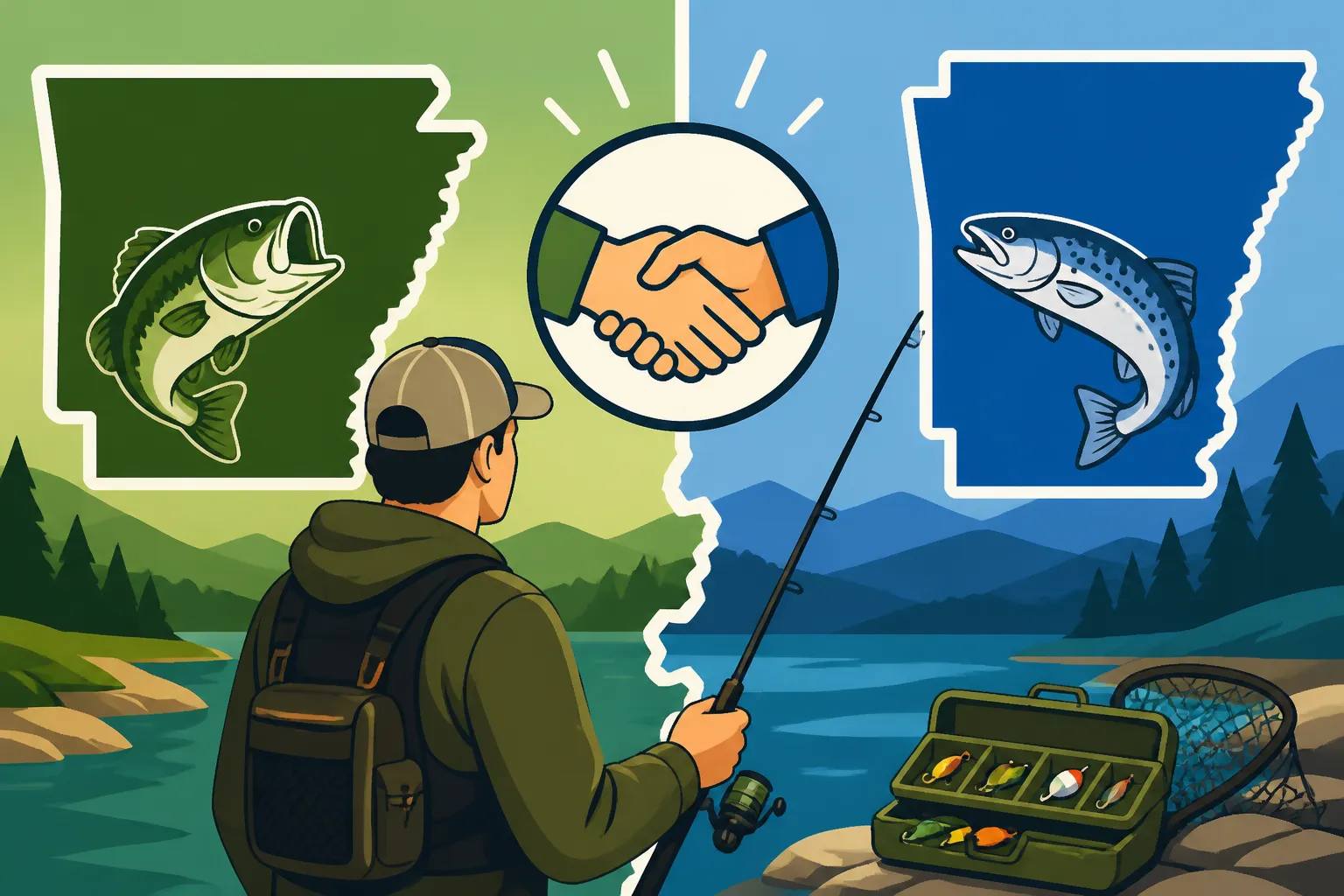
Reciprocity rules anglers should check before crossing state lines
It can be incredibly confusing and even frustrating when you plan a fishing trip that takes you close to, or even right across, state lines. You might wonder if your current fishing license is valid everywhere, especially on those big rivers and lakes that seem to belong to everyone. The last thing any angler wants is to accidentally break the law and face a fine, simply because they weren't clear on the rules. This guide is here to untangle those complicated reciprocity rules for fishing in Arkansas, helping you understand exactly what you need before you cast a line.
The Reality of Fishing Across State Lines: No Easy Answers
It's a common, and very understandable, assumption: if you have a valid fishing license in your home state, it should cover you on any water, especially those shared between states. After all, fish don't carry passports, right? But the reality for anglers is a bit more complicated, and it's a frustration many of us have faced. The simple truth is, there's no widespread, blanket reciprocity that automatically allows your fishing license from one state to be valid in another.
Why Blanket Reciprocity is Rare
The idea of a single license covering multiple states might seem logical from an angler's perspective, but it quickly runs into complex legal and financial hurdles for state wildlife agencies. Each state's game and fish commission operates independently, managing its own resources, setting its own regulations, and, critically, relying on revenue from fishing license sales to fund conservation efforts, fisheries management, and enforcement. If every state simply honored every other state's license, it would create a chaotic patchwork of differing regulations and severely impact the funding essential for maintaining healthy fish populations.
Think about it this way: the Arkansas Game and Fish Commission (AGFC) invests heavily in stocking programs for trout on the White River, managing bass populations in lakes like Ouachita, and overseeing a vast network of hatcheries and public access points. This work is primarily funded by the sale of Arkansas Fishing License Rules and Costs. If anglers from neighboring states could consistently fish Arkansas waters using only their home state's license, the AGFC would lose out on significant revenue, potentially jeopardizing the very fisheries we all love to enjoy. It's a system designed to ensure that those who benefit from a state's resources contribute to their upkeep.
The Default Position: Get the Local License
Given the complexities and the lack of widespread agreements, the safest and most reliable approach for any angler is to assume that if you are fishing in Arkansas waters, you need an Arkansas fishing license. This applies whether you're a long-time resident or just visiting for a weekend trip. The waters of Arkansas, unless explicitly stated as part of a specific reciprocity agreement, fall under the jurisdiction of the AGFC.
This means that if you're coming from out of state, you'll need to purchase a Nonresident Fishing License Rules for Arkansas. While it might feel like an extra hurdle, it's a necessary step to ensure you're fishing legally and contributing to the conservation efforts that make Arkansas a premier fishing destination. There are various options available, from annual licenses to shorter-term permits, designed to accommodate different lengths of stays and fishing plans. Just remember, ignoring this default rule can lead to significant headaches, including citations and fines from game wardens who are simply doing their job to protect the state's natural resources.
Where Arkansas Does Have Border Water Agreements
While broad reciprocity is uncommon, Arkansas, like many states, does have specific agreements for certain waters that form its borders. These agreements are often highly specific and only apply to the main channel or designated boundary portions of these shared bodies of water, not to every tributary or lake arm that might wander across an imaginary line. It’s vital to understand these nuances, because misinterpreting a "border water" can still land you in hot water.
Specific Waters with Limited Reciprocity
Arkansas currently maintains limited reciprocity agreements primarily along its borders with a couple of key states, specifically concerning major rivers. These agreements are designed to simplify things for anglers who are genuinely fishing these shared main channels, but they don't extend statewide or cover every body of water that happens to be near a state line.
- The Mississippi River (with Mississippi, Missouri, and Tennessee): This is one of the most prominent examples. If you possess a valid resident fishing license from Arkansas, Mississippi, Missouri, or Tennessee, you are generally allowed to fish the main channel of the Mississippi River. This also extends to certain adjacent oxbow lakes and waters directly connected to the river's main flow. However, here's the critical caveat: you must comply with your home state's specific creel and length limits, or the regulations of the state you are physically fishing from or in. For example, if you're an Arkansas resident fishing the Mississippi and you're mostly on the Tennessee side, you'd typically need to know and follow either Arkansas's or Tennessee's rules for the species you're targeting. This can get tricky, so many anglers opt to just follow the more conservative rules if they're unsure. This agreement aims to facilitate seamless fishing on this massive shared waterway without forcing anglers to buy multiple licenses for a single river trip.
- The Red River (with Texas): Another significant border water where reciprocity applies is the Red River, specifically along the Arkansas-Texas border. Anglers with a valid resident fishing license from either Texas or Arkansas are typically permitted to fish the Arkansas portion of the Red River and its backwaters. Similar to the Mississippi River agreement, you are generally required to comply with your resident state's creel and length limits. So, if you're an Arkansas resident with an Arkansas license, you fish by Arkansas's Red River rules, even if you're casting towards the Texas bank. This agreement recognizes the shared nature of this important waterway and simplifies access for local anglers on both sides of the border.
It's important to note that these agreements are specific to the main channels and directly connected backwaters. They don't typically extend to every lake, reservoir, or smaller river that might touch the state line. For instance, while parts of Lake Norfork are very close to Missouri, a Missouri fishing license does not automatically grant you the right to fish the Arkansas portions of Lake Norfork. In such cases, if you're on the Arkansas side, you need an Arkansas license.
What Constitutes a Border Water
Understanding what exactly qualifies as a "border water" in the context of reciprocity agreements is paramount. It’s not simply any body of water that happens to lie adjacent to a state boundary. Instead, these are specifically designated main river channels, or clearly defined parts of lakes, where reciprocal agreements have been formally established between the respective state wildlife agencies.
For the purposes of Arkansas's agreements, when we talk about "border waters," we're generally referring to the main flowing channels of the Mississippi and Red Rivers. This means the core navigational and primary flow areas. It usually does not include every single cove, tributary, or oxbow lake that might be geographically close to the border but is technically considered entirely within one state's jurisdiction. If you venture away from the main channel into a specific slough, bay, or feeder creek that is definitively on one side of the border, you are likely subject to that specific state's full regulations, regardless of any broader border water agreement. This distinction is crucial because game wardens patrol these areas, and they know precisely where the jurisdictional lines lie. Always err on the side of caution and verify if your specific fishing spot falls squarely within a reciprocal zone or if it requires the local state's license.
To help clarify the specific border water agreements, here's a quick reference table:
| Border Water | Reciprocal States | Conditions |
|---|---|---|
| Mississippi River | Mississippi, Missouri, Tennessee | Valid resident license from any of these states allows fishing in the main channel and directly connected oxbows. Must adhere to home state or fishing state's regulations. |
| Red River | Texas | Valid resident license from Arkansas or Texas allows fishing in the Arkansas portion of the main channel and backwaters. Must adhere to resident state's regulations. |
| Other Shared Waters | Generally No Specific Reciprocity | For most other waters near state lines (e.g., Lake Norfork near Missouri), a valid Arkansas license is required for fishing in Arkansas waters. |
This table serves as a general guide. However, even with these agreements, an individual Arkansas Fishing License Requirements for Out-of-State Anglers remains crucial if you step beyond these very specific boundaries, or if you plan to fish any other lakes or rivers within Arkansas. For instance, if you're coming from Texas and want to fish the Red River with your Texas license, that's fine for the Red. But if you then decide to hit Lake Millwood for some bass, you'll absolutely need an Arkansas nonresident license.
Navigating the Rules: What Every Angler Needs to Know
Fishing across state lines doesn't have to be a minefield of confusion, but it does require diligence. The key is to never assume and always verify. Understanding the implications of these rules, how to check them, and how to properly prepare can save you a lot of grief and ensure your fishing trips are enjoyable and legally sound.
The Importance of Checking Regulations Beforehand
I can't stress this enough: always, always check the current regulations before heading out. Fishing rules, especially those concerning border waters and reciprocity, can change. What was true last year might be different this year. Relying on outdated information or hearsay from a friend can easily lead to trouble. The official source for all things Arkansas fishing is the Arkansas Game and Fish Commission (AGFC). Their website (agfc.com) is a treasure trove of up-to-date information, including detailed regulation guides, maps, and specific rules for various bodies of water. You can often find a comprehensive Arkansas Fishing Regulations Guide there.
Taking a few minutes to review the specific rules for your intended fishing location can prevent major headaches. It’s like checking the weather before you pack – a small effort that yields big benefits. Before your trip, you might even want to pick up a physical copy of the AGFC Fishing Guide from a local bait shop or Walmart, or simply reference the digital version on their site. Consider printing out the relevant pages or saving them to your phone, especially if you're heading to a remote spot where cell service might be spotty. Planning this way ensures you know the limits, seasons, and any special permits needed, like a trout permit if you’re fishing certain designated trout waters.
Consequences of Non-Compliance
Ignoring fishing license requirements or reciprocity rules isn't just a minor oversight; it carries real consequences. Getting caught fishing without the proper license or violating regulations on border waters can result in a citation from a game warden, leading to fines, court costs, and potentially even the confiscation of your gear or catch. These penalties can vary significantly, but they're rarely cheap and always disruptive to your fishing trip. To understand more, you can read about Penalties for Fishing Without a License in Arkansas.
Beyond the immediate financial and legal repercussions, there’s also the potential for negative impacts on your future fishing privileges. Repeated violations could lead to losing your fishing privileges in Arkansas, and potentially in other states if the violation is severe enough. Game wardens are tasked with enforcing these regulations to protect fish populations and ensure fair sport for everyone, and they take their job seriously. It's much simpler and less stressful to spend a few extra dollars on the correct license than to face the embarrassment and expense of a ticket. Remember, their presence is ultimately for the good of the fishery, ensuring there's plenty of fish for generations to come.
Getting Your Arkansas Fishing License
If you've determined that you need an Arkansas fishing license – which, as we've established, is the case for most anglers fishing in Arkansas waters – getting one is a straightforward process. You have several convenient options to choose from, whether you're a resident or an out-of-state visitor.
For residents, the Resident Annual Fishing License Cost in Arkansas is quite affordable, and there are options like the Arkansas Resident 3-Day Fishing License if you only plan a short trip. Seniors in Arkansas (65 and older) also have special provisions, including the option for a One-time $10.50 lifetime license for Arkansas seniors 65 and up, which is an amazing deal.
For our friends visiting from out of state, there are equally flexible choices. The Nonresident annual fishing license price in Arkansas is $60 for a full year of fishing adventure. If you're only planning a quick weekend getaway, an Arkansas Nonresident 3-Day Trip License is often your best bet. Many anglers ask, "Is the 3-day trip license enough for a weekend fishing trip?" And for most, yes, it covers Friday, Saturday, and Sunday perfectly, providing ample time to explore. When considering value, you might wonder about 3-day license versus annual license: which saves more money, which largely depends on how many trips you plan to take in a year.
The easiest and quickest way to purchase your license is often online through the AGFC website. You can find detailed instructions on How to Buy an Arkansas Fishing License Online. It's a user-friendly system, and you can usually print a temporary license immediately or save it to your phone. Alternatively, licenses are sold at most sporting goods stores, bait shops, Walmart, and other authorized vendors across the state. These physical locations are great for when you're already on the road or prefer to speak with someone directly. For those who frequently fish in multiple states, a great resource for gear and informational books can be found on Amazon, which often stocks regional fishing guides that could help you decide which license is best for your planned adventure. Always make sure to have your driver's license or state ID handy, as you'll need it to prove residency and age.
Planning Your Multi-State Fishing Adventures
For dedicated anglers who love to explore and frequently fish in states bordering Arkansas, a little proactive planning can save a lot of trouble. Don't just show up at the state line hoping your existing license will magically cover you. Instead, dedicate some time before your trip to research the specific regulations of each state you plan to fish in. This means visiting the official game and fish websites for Arkansas, Missouri, Texas, Oklahoma, Louisiana, Mississippi, or Tennessee, depending on your itinerary.
Look for specific sections on nonresident licenses and, most importantly, any detailed information about "border waters" or "reciprocity agreements." While we covered the main ones for Arkansas, individual states might have unique arrangements. It's also wise to check for any special stamps or permits, such as trout permits or waterfowl stamps, which are often required in addition to a general fishing license. For example, even if you’re fishing a reciprocal border water, if you decide to target trout in an area designated as a trout stream, you might still need a Do you need a trout permit to keep trout in Arkansas? from the state whose waters you are primarily fishing, even if your general license is from a neighboring state. Sometimes, simply calling the game and fish commission directly can provide the clearest answers for complex situations. Being prepared allows you to focus on the joy of fishing, rather than worrying about unexpected fines.
Disclaimer
The information provided in this guide is intended for general informational purposes only and may not cover every specific scenario or regulatory nuance. Fishing regulations are subject to change, and it is the sole responsibility of each angler to consult the most current and official regulations published by the Arkansas Game and Fish Commission (agfc.com) before fishing. Compliance with all applicable laws and regulations is mandatory.