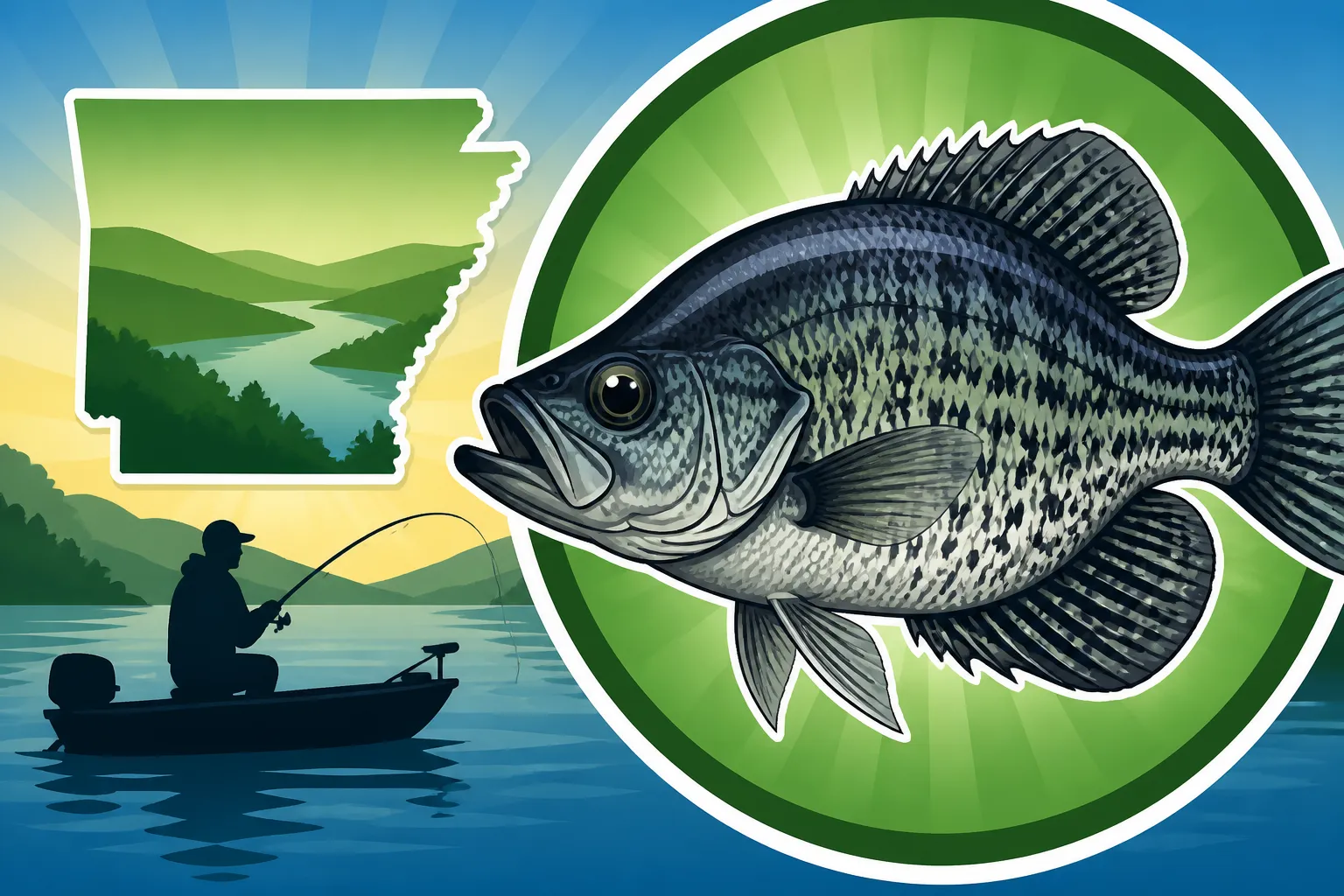
How to Identify Black Crappie
We've all been there: you've just landed a beautiful crappie, its silver sides glinting in the Arkansas sun, and then the nagging question pops into your head. Is it a black crappie or a white crappie? The truth is, distinguishing between these two popular panfish can sometimes feel like trying to tell two peas in a pod apart, especially if you're new to the waters of the Natural State. But knowing the difference isn't just a fun fact; it can actually impact your fishing strategy and ensure you're compliant with any specific local regulations. This guide is here to cut through the confusion and give you the definitive features to confidently identify black crappie every time.
The Core Differences: Black Crappie vs. White Crappie
While both black and white crappie are sought-after game fish across Arkansas, they do have distinct characteristics that, once you know what to look for, make them quite easy to tell apart. Think of it like learning the subtle differences between largemouth and smallmouth bass – once you've trained your eye, it becomes second nature.
Body Shape and Fin Structure
The first thing you might notice when comparing the two crappie species side-by-side, even before color, is their overall body shape. Black crappie tend to have a more deep-bodied, compressed, or "disc-shaped" appearance. Imagine a frisbee that's been slightly squished from top to bottom; that's closer to a black crappie's profile.
This deeper body also influences the way their fins are set. Specifically, pay close attention to the dorsal fin (the one on their back) and the anal fin (the one on their belly, mirroring the dorsal). On a black crappie, these two fins are generally of similar length, giving the fish a very balanced, almost symmetrical look. Their spines are also a key differentiator, which we'll dive into more depth on shortly. In contrast, white crappie often appear more elongated and streamlined, almost torpedo-shaped. Their dorsal and anal fins might not always be as evenly matched in length, contributing to that more stretched-out profile. Understanding this basic body architecture is your first step in quick identification.
Coloration and Pattern
The names "black crappie" and "white crappie" can be a bit misleading because neither is truly black or pure white. However, their patterns offer clear clues. Black crappie typically boast a more mottled or speckled appearance. Their sides are usually adorned with irregular, dark blotches and spots that are scattered seemingly at random, without forming any distinct lines or bands. This pattern often looks like someone took a pepper shaker and sprinkled dark flakes all over their silvery-green or golden-brown background. The overall impression is often darker than a white crappie.
Environmental factors can heavily influence this coloration, of course. A black crappie caught from dark, tannin-stained waters with heavy cover might appear much darker than one caught from a clear, sandy-bottomed lake. However, the irregularity of the spots remains consistent. White crappie, on the other hand, are known for their distinct vertical bars or stripes that run down their sides. These bars are usually quite pronounced and can number anywhere from five to seven. Imagine a tiger's stripes, but on a fish and vertical – that's the general pattern for a white crappie. So, if you see distinct bars, it's likely a white crappie. If you see scattered "pepper," it's probably a black crappie.
Key Identification Features of a Black Crappie
While body shape and coloration offer great initial hints, there's one surefire method to differentiate between black and white crappie that experienced anglers swear by. It’s all in the spines!
Dorsal Fin Spines: The Definitive Count
This is arguably the most reliable way to tell black crappie from white crappie, regardless of their size, color variation, or how murky the water you pulled them from. You'll need to count the rigid, spiny rays in their dorsal fin.
Here's the trick: Black crappie will almost always have 7 or 8 dorsal fin spines. Think of it as a solid rule of thumb. Gently press down on the dorsal fin; you'll feel the individual spines. For comparison, a white crappie typically has only 5 or 6 dorsal fin spines. This difference is consistent across their entire range and is not affected by habitat or diet. It's like a built-in barcode for species identification. If you're ever in doubt after looking at their spots or body shape, this spine count is your ultimate tie-breaker. You don't need to be a marine biologist to do it; just a careful touch and a quick count.
Mouth Shape and Jaw Protrusion
Another subtle, but often helpful, clue lies in the structure of their mouth. Black crappie tend to have a more upturned mouth, almost as if they're constantly looking upwards for prey. Their lower jaw usually protrudes slightly beyond the upper jaw. This adaptation makes sense given their preference for feeding on insects and small baitfish higher in the water column or amidst overhead cover.
While this might seem like a minor detail, when you're examining a fish, it can add to the overall picture. White crappie, by contrast, generally have a mouth that appears a bit more level or even, with the upper and lower jaws meeting more evenly. These are subtle distinctions, of course, and can be tough for a beginner. It's not as definitive as counting spines, but it’s a good supporting characteristic to consider once you've gained a bit more experience with crappie identification.
Overall Appearance and Habitat Clues
Pulling all these observations together, a typical black crappie will present as a deep-bodied, silvery fish with an overall darker, mottled appearance due to irregular dark spots. Their dorsal fin will have those telling 7 or 8 spines, and their mouth might seem slightly upturned. Beyond their physical traits, where you catch a crappie can also give you a strong hint about its identity.
Black crappie generally prefer clearer, cooler water with abundant submerged vegetation, timber, or other complex cover. You'll often find them lurking in lily pad fields, around fallen trees, or deep within brush piles in clearer lakes. Lakes like Bull Shoals or Greers Ferry with their extensive submerged timber and clear waters can be prime black crappie territory. The Best Crappie Lakes in Arkansas often feature these types of environments. If you're pulling crappie from relatively clear water, especially around heavy cover, there's a good chance they're black crappie. White crappie, conversely, are more tolerant of turbid or murky water and are often found in larger rivers and reservoirs with less vegetation, preferring open water near structure like bridge pilings, rip-rap, or deeper channels. So, the environment itself can be a fantastic indicator even before you get your hands on the fish.
Why Accurate Identification Matters for Arkansas Anglers
It might seem like a minor detail, but knowing the difference between black and white crappie is more than just academic. For anglers in Arkansas, it can directly impact your success on the water and your adherence to local fishing regulations.
Understanding Habitat and Behavior
Crappie species, while similar, have slightly different preferences when it comes to where they live and what they eat. Black crappie's affinity for clearer, vegetated, and cooler waters means that if you're targeting them, you'll want to focus your efforts on areas with extensive aquatic plant life, submerged timber, or shaded areas. They are often found shallower, especially during the spawn, and might be more responsive to finesse presentations that mimic insects or small minnows. Knowing this, you might choose lighter lines, smaller jigs, or even tiny fly patterns.
White crappie, by contrast, thrive in murkier, warmer waters, often favoring open water areas near structural elements like channel edges, main lake points, or bridge supports. They can be more prone to schooling in open water and might respond better to trolling techniques or larger baits. So, if you're out on a lake like Lake Conway, known for its extensive timber, and you’re consistently catching white crappie, you might adjust your location to areas with less vegetation or deeper channels to find larger schools. This nuanced understanding directly translates to more fish in your cooler. For more insights on where these fish prefer to hide, check out Crappie Fishing Tips for Arkansas Timber Lakes.
Size Limits and Regulations
Here's where identification can become particularly critical. While many statewide crappie regulations in Arkansas apply uniformly to both black and white crappie (such as the general 9-inch minimum length and 20-fish daily limit), there are exceptions. Certain lakes or water bodies within Arkansas may have specific, stricter regulations that differentiate between the two species, or even apply only to one. For example, some lakes might have an adjusted daily limit or size restriction for one species but not the other, or a slot limit that applies only to certain fish.
Imagine you're fishing Lake Monticello Bass and Crappie Exceptions or Lake Cargile Crappie Limit Rules. These specific lake regulations might alter the number or size of crappie you can keep. If you can't accurately identify whether your catch is a black or white crappie, you risk inadvertently breaking the law. Ignorance of the law is rarely an excuse when a game warden checks your cooler. Always consult the most current Arkansas Game and Fish Commission (AGFC) fishing regulations handbook for the specific body of water you're fishing. It's always better to be safe than sorry, and a quick check can save you a potential fine. The penalties for fishing violations, even for mistaken identity, can be significant.
Practical Tips for Identifying Crappie in the Field
When you're out on the water, excited about a fresh catch, sometimes the details can blur. But with a few simple techniques, you can confidently identify your crappie every time.
What to Look For Immediately
When you pull a crappie from the water, try to make a quick mental checklist:
- Body Shape: Is it deep and round (like a squashed frisbee) or more elongated and football-shaped? The deeper body points towards black crappie.
- Color Pattern: Does it have distinct, uniform vertical bars on its sides, or is it covered in random, irregular speckles, almost like pepper? Speckles mean black crappie.
- Mouth Position: Does the lower jaw stick out a bit more, giving it an upturned look? This is often a black crappie trait.
These visual cues are great for a first impression, especially if you're catching a lot of fish quickly. However, if there's any ambiguity, move to the definitive test.
When In Doubt: Observe and Learn
Sometimes, especially in stained water, the coloration can be tricky, or the fish might be a hybrid. When visual cues aren't enough, or if you're just starting out, always revert to the dorsal fin spine count. It's the most reliable method. Gently spread the dorsal fin and count those stiff, spiny rays. Remember, 7 or 8 means black crappie, 5 or 6 means white crappie. This is a skill that improves with practice, just like learning to tie different fishing knots.
If you're still truly unsure, especially if you know there are specific regulations for one species over the other, it's always best to err on the side of caution. Consider releasing the fish or consulting a local guide or another experienced angler. You can even snap a quick photo with your phone to look up later or show to a friend. Many anglers keep a small, laminated fish identification card or a copy of the AGFC regulations with them, which you can easily find on Amazon. Taking the time to learn and identify your catch not only makes you a more knowledgeable angler but also ensures you're fishing responsibly.
Remember, fishing is a journey of continuous learning. Each fish you catch is an opportunity to deepen your understanding of Arkansas's incredible aquatic ecosystems.
Black Crappie vs. White Crappie: A Quick Comparison
To help you quickly reference the key differences, here's a table summarizing the main identification points:
| Feature | Black Crappie | White Crappie |
|---|---|---|
| Body Shape | Deep-bodied, compressed, rounder, "frisbee-like" | More elongated, slender, "torpedo-like" |
| Dorsal Fin Spines | 7-8 (The most reliable indicator!) | 5-6 |
| Color/Pattern | Mottled, irregular dark speckles/blotches, no distinct bars | Distinct vertical bars/stripes down the sides |
| Mouth | More upturned, lower jaw often protrudes slightly | More level, jaws meet more evenly |
| Habitat Preference | Clearer, cooler water with heavy vegetation/timber | Murkier, warmer water, open areas near structure |
| Dorsal/Anal Fins | Typically similar length, almost symmetrical | Anal fin often slightly longer than dorsal fin |
This chart is a handy tool to keep in your mind or even printed out and tucked into your tackle box. It provides a quick way to compare and confirm your crappie identification when you're on the water.
Arkansas is truly a crappie angler's paradise, with countless opportunities to reel in both black and white crappie. Whether you're targeting them in the clear waters of Beaver Lake or the timber-laden coves of Lake Ouachita, being able to distinguish between these two species will make you a more informed and successful angler. So next time you land one, take a moment, count those dorsal spines, and confidently say, "Yep, that's a black crappie!" Happy fishing!
Disclaimer
This article is for general informational purposes only and does not constitute professional advice. Laws, prices and regulations vary by location and change over time. Consult a qualified professional for guidance on your specific situation.