How to Fish Deep Structure for Bass
It’s a familiar frustration for any bass angler in Arkansas: you’re tearing it up in the shallows early in the morning, but as the sun climbs high, the bites just… stop. The bass seem to vanish into thin air, leaving you wondering where they’ve gone and how on earth to get to them. Often, the answer lies in the mysterious, productive world of deep structure. This guide will help you understand why bass abandon the shallows, how to locate them when they seek refuge in deeper waters, and the most effective techniques to pull them out of their submerged hideouts, turning those frustrating slow periods into productive fishing adventures.
Decoding Deep Water: Why Bass Go Deep and Where to Find Them
Bass, like most creatures, are driven by comfort and survival. When conditions in the shallows become less favorable – think scorching summer heat, intense fishing pressure, or clear, calm waters – they seek refuge. Deep water offers stability, cooler temperatures, and often, an abundance of baitfish that also prefer these conditions. Understanding why they go deep is the first step; knowing where to find them is the key to unlocking consistent success.
Thermoclines and Oxygen Levels
One of the most critical concepts in deep water fishing is the thermocline. In many Arkansas reservoirs, especially during warmer months, the water column stratifies into layers of different temperatures. The upper layer is warm, the middle layer (the thermocline) experiences a rapid temperature drop, and the bottom layer is cold. What's often overlooked, however, is the oxygen content. The very bottom, coldest water can sometimes become depleted of oxygen, especially in deeper, less circulated sections of a lake. Bass, like us, need oxygen to thrive. This means they're usually found above the oxygen-depleted zone, but below the warmest surface water, often congregating right along the thermocline itself. This invisible barrier acts like a ceiling and floor for fish, concentrating them in a specific depth range.
Imagine an invisible comfort zone underwater, like a perfect air-conditioned room on a hot day. That's the thermocline for bass. Your fish finder, which we'll discuss more, can often show you this distinct line, helping you narrow down the productive depth. You might mark fish suspended right on that line, or slightly above it, particularly baitfish. Where the baitfish are, the bass are usually not far behind, waiting for an easy meal. This is especially true on lakes like Ouachita or Greers Ferry, where the deep, clear waters really define these zones.
Types of Deep Structure and Cover
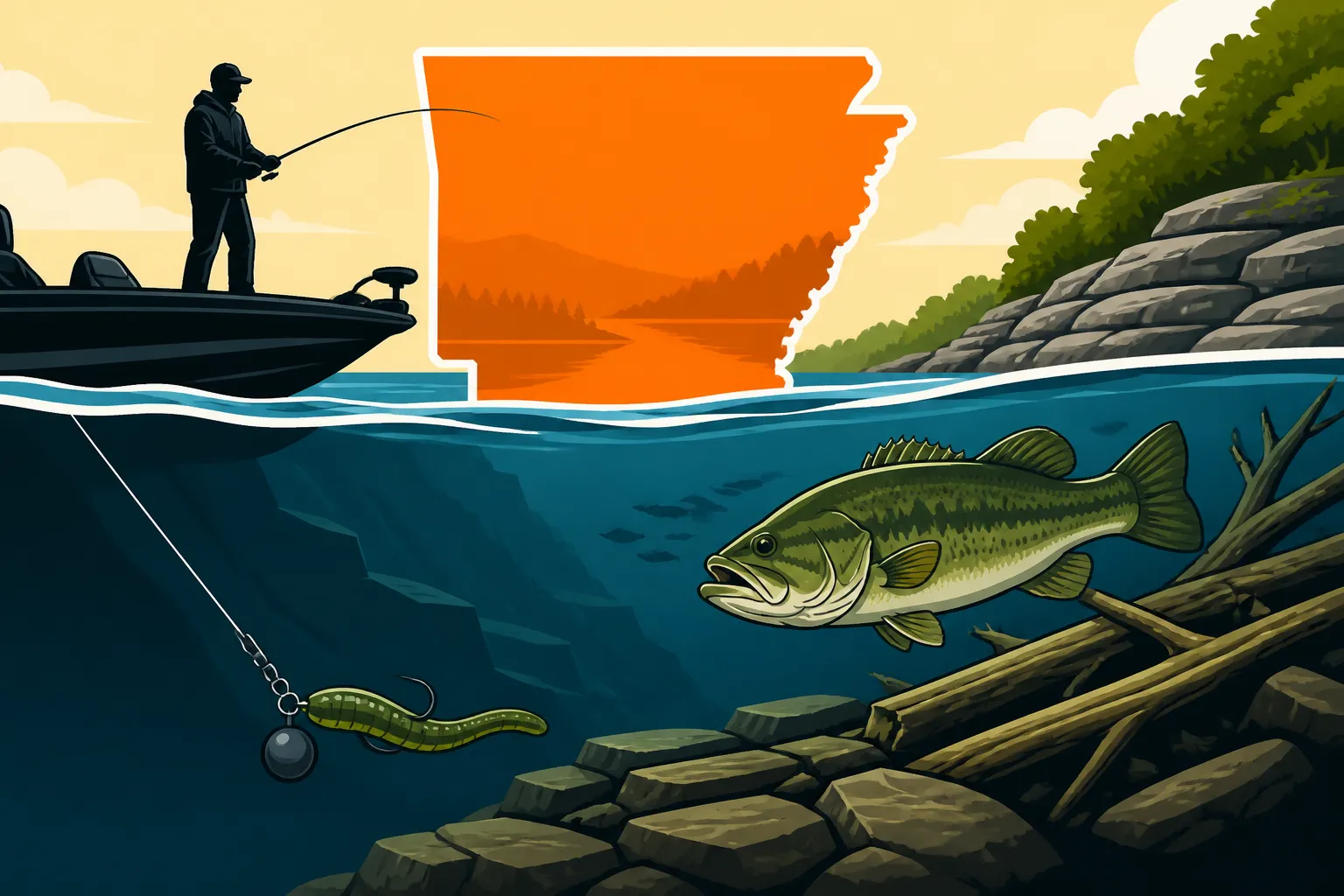
Just because bass are deep doesn't mean they're suspended in open water without a care in the world. They still relate to structure and cover, just on a much grander, submerged scale. Think of it as an underwater landscape mirroring the hills and valleys you see on land. These deep structures offer ambush points, shade, and safety. Common deep structures include old creek channels that wind through the lake bed, humps (underwater hills), points (ridges extending into the lake), ledges (sharp drop-offs), and roadbeds from when the lake was initially flooded. Best Bass Fishing Spots on Bull Shoals Lake often highlights these types of features.
Underwater cover is just as vital. This can be brush piles placed by anglers or natural occurrences, standing timber (trees that were left when the lake was flooded), submerged rock piles, or even old foundations of houses. These elements provide crucial ambush points and protection. A bass might be hugging the side of a deep rock pile or sitting under the canopy of a submerged cedar tree. Learning to identify these structures and cover on your electronics is paramount. It’s like searching for a needle in a haystack, but with the right tools, you can pinpoint the most likely spots. You're not just looking for "deep water," you're looking for structured deep water where a bass would logically hold.
Equipping for Depth: Essential Gear and Electronics
Tackling deep water for bass isn't just about different techniques; it often requires specialized gear. You're dealing with greater line stretch, increased water resistance, and the need to feel subtle bites from a long distance. Furthermore, the days of guessing where fish are in deep water are long gone thanks to incredible advancements in marine electronics. Without the right tools to see what's below, you're essentially fishing blind.
Rods, Reels, and Line Choices for Deep Water
When fishing deep, you need gear that can handle the demands. Longer rods, typically 7' to 7'6", with a medium-heavy or heavy action, are often preferred. The extra length helps with casting heavier baits a long distance and gives you more leverage to set the hook on a fish that might be 30 feet down. A fast tip is crucial for detecting those light bites, while a strong backbone ensures you can drive the hook home and pull the fish out of heavy cover. For reels, a high-quality baitcasting reel with a smooth drag and strong gearing is essential. The gear ratio might vary depending on the technique; a faster retrieve can be good for taking up slack, while a slower one provides more torque for retrieving heavy lures or fighting big fish. You can find a fantastic selection of these specialized rods and reels on Amazon.
Line choice is critical. Fluorocarbon line, with its low stretch and near-invisibility underwater, is a favorite for deep applications. It offers excellent sensitivity, allowing you to feel those faint taps, and its sinking properties help your lures get down to depth faster. You'll want to use heavier test lines, often 12-20 lb, to handle the abrasive nature of deep cover and the pulling power of a big bass. Monofilament can be used in some situations, especially for topwater or suspending lures if fishing just above deep structure, but its stretch can hinder hooksets at extreme depths. Braided line, with zero stretch and incredible strength, is also a great option, especially when paired with a fluorocarbon leader for stealth. Just remember, braid can be more visible, so a leader is key in clear waters.
The Indispensable Role of Sonar and Mapping
Let's be honest, trying to fish deep structure without good electronics is like trying to navigate a new city without a map. It's next to impossible. Modern marine electronics have revolutionized deep water fishing. A good fish finder with down imaging, side imaging, and 2D sonar capabilities is an absolute game-changer. These tools allow you to literally "see" the underwater world: identifying creek channels, ledges, humps, and even individual fish and bait balls. How to Position a Boat for Bass Fishing often emphasizes the use of electronics.
Side imaging is particularly useful for scanning large areas quickly, helping you locate brush piles or rock formations off to the sides of your boat. Once you identify a promising piece of structure or cover, you can switch to down imaging or 2D sonar to get a more detailed view directly beneath your boat, helping you pinpoint the exact location of fish. Mapping features, often integrated with your unit, provide contour lines and depth changes, giving you a topographical view of the lake bottom. You can mark waypoints on your GPS for productive spots, allowing you to return to them precisely. Brands like Garmin and Lowrance offer incredible units that can be game-changers, and you can research many models and features on Amazon to find one that fits your budget and needs. Investing in quality electronics is probably the single most impactful step you can take for effective deep structure fishing.
Mastering the Depths: Effective Techniques and Lures
Once you’ve located the bass and rigged up appropriately, it’s time to present your lure in a way that triggers a strike. Deep water fishing often requires a slower, more methodical approach, but there are several highly effective techniques to consider, each with its own strengths depending on the conditions and the specific type of deep structure you're targeting.
Vertical Jigging and Drop Shotting
Vertical jigging is a fantastic technique when you've pinpointed bass on your electronics, especially when they're tightly grouped or relating directly to a specific piece of cover like a brush pile or a rock pile. The idea is to present a lure directly to the fish by dropping it straight down. Heavy jigs, usually 3/4 oz to 1 oz, with a plastic trailer like a creature bait or a bulky worm, are excellent choices. The key is to lift and drop the rod tip, making the jig "hop" on the bottom or through the suspended fish, mimicking a crawfish or a stunned baitfish. Strikes often come on the fall, so paying close attention to your line is crucial. You can even find jigs specifically designed for deep water on Amazon.
The drop shot rig is another incredibly effective vertical presentation, particularly for finicky bass or when targeting bass suspended off the bottom. With a drop shot, your weight is at the bottom, and your hook (and lure) is tied directly to the main line a foot or two above the weight. This allows your plastic worm or finesse bait to sit horizontally in the water column, tantalizingly quivering with the slightest movement of your rod tip, while the weight maintains bottom contact. This rig allows for incredibly subtle presentations, and it's perfect for when bass are not aggressively chasing but can be coaxed into biting a stationary, natural-looking offering.
Deep Cranking and Carolina Rigging
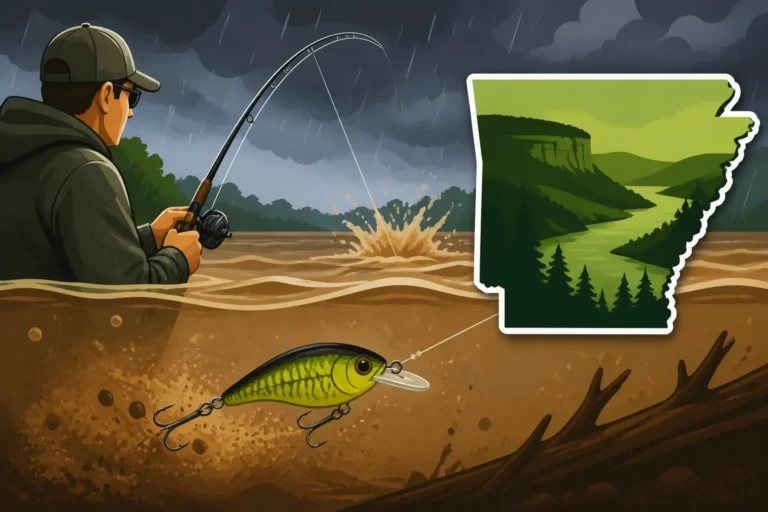
Deep cranking is all about covering water and enticing aggressive bass that might be patrolling ledges, points, or humps. These specialized crankbaits are designed with large bills that allow them to dive to extreme depths, some reaching 20-25 feet or more. The technique involves making long casts, letting the crankbait dive to its maximum depth, and then steadily retrieving it, allowing the bill to deflect off the bottom or cover. This deflection is often what triggers a reaction strike. The vibration and flash of a deep crankbait can call bass from a good distance, making it an excellent search bait. Experiment with different colors and retrieve speeds until you find what the bass prefer that day. How to Fish a Crankbait for Bass goes into more detail on this method.
The Carolina rig is a classic for a reason: it's incredibly versatile and effective for covering deep structure. This rig consists of a heavy sliding weight, a bead, a swivel, and then a leader (usually 2-4 feet long) tied to a hook with a soft plastic bait. The heavy weight keeps contact with the bottom, allowing you to drag your lure over humps, ledges, and through timber, while the leader allows your bait to float freely behind it, presenting a very natural, unencumbered appearance. It's excellent for fishing shell beds or hard bottom transitions. The key is to drag the rig slowly, feeling for subtle changes in bottom composition or the tell-tale "thump" of a bass. How to Fish a Carolina Rig for Bass is a great resource if you want to dive deeper into this effective technique. Both of these techniques are excellent choices for targeting bass in Arkansas's larger reservoirs during the warmer months.
Strategic Approach: Planning Your Deep Water Attack
Fishing deep structure isn't just about dropping a lure and hoping for the best; it requires a thoughtful, strategic approach. You need to consider the time of year, how bass move through their seasonal patterns, and how to effectively break down a large body of water to find those sweet spots. It’s about being observant and adaptable, using all the information available to you.
Seasonal Shifts and Deep Water Bass
While deep structure fishing is often associated with summer, bass will use deep water features throughout the year, though their exact locations and activity levels will shift. In the post-spawn period, bass often retreat to nearby deep-water staging areas to recover before moving to their full summer patterns. During these times, they might be found on the first major breaklines adjacent to spawning flats. Post-Spawn Bass Fishing Patterns can give you an excellent overview of this transition. As summer progresses, the thermocline deepens, and bass will follow the most comfortable temperatures and oxygen levels, often congregating on offshore humps and ledges.
In the fall, as water temperatures begin to cool, bass might start to move shallower, but they will still use deep structure as migration routes or holding areas, especially on days with bluebird skies after a cold front. Even in mild winters, especially on deep, clear lakes, bass can be found grouped up on deep structure, albeit often in a more lethargic state. Understanding these seasonal movements helps you anticipate where bass will be and tailor your approach accordingly. It's not a one-size-fits-all approach; the deep structure that's hot in July might be less productive in October. Summer Bass Fishing Patterns and Fall Fishing Patterns for Bass and Crappie are great resources to understand these seasonal changes.
Putting a Plan into Action
Before you even launch your boat, start with your lake map. Identify major creek channels, large points, humps, and steep drops. Look for areas where several of these features converge, as these are often high-percentage spots. Pay attention to how the main lake channel runs, as bass often relate to its edges. When you get on the water, don't just idle aimlessly. Use your electronics to systematically scan these identified areas. Start by running over a main lake point that drops into a creek channel, for instance. Use your side imaging to look for brush piles or isolated rocks off the main contour.
Once you mark fish or promising cover, deploy a marker buoy (or multiple) to help you keep track of your casting zone. Then, select your most effective technique for that situation – a Carolina rig for dragging across a long point, a deep crankbait for covering a ledge, or a jig or drop shot for vertical presentations on a brush pile. The key is to stay persistent and observant. Deep water fishing can be a grind sometimes, but the rewards are often big, unpressured bass. And remember, always keep an eye on weather and water temperatures, as even subtle changes can impact how bass position themselves on deep structure.
| Deep Water Structure/Cover | Best Techniques | Key Gear Considerations | When to Use |
|---|---|---|---|
| Creek Channels/Roadbeds | Deep Cranking, Carolina Rigging | Long casting rods, fluorocarbon line | Covering large areas, finding active bass |
| Humps/Ledges | Deep Cranking, Carolina Rigging, Vertical Jigging | Heavy jigs, sensitive rods, powerful electronics | Bass patrolling edges, ambush points |
| Brush Piles/Standing Timber | Vertical Jigging, Drop Shotting, Texas Rig | Weedless presentations, strong line, precise boat control | Targeting specific cover, finicky bass |
| Rock Piles/Boulders | Vertical Jigging, Carolina Rigging | Durable lures, abrasion-resistant line | Bass relating to hard cover, crawfish imitation |
How to Evaluate Deep Structure Potential
It's not enough to simply find a deep point or a brush pile; you need to evaluate its potential. What makes one deep structure more productive than another? Often, it's a combination of factors. The presence of baitfish is a huge indicator – if your electronics light up with schools of shad or other forage, bass are likely to be nearby. Also, look for "hard spots" on your sonar; these indicate rock or shell beds, which attract crawfish and other invertebrates, which in turn attract bass. Soft bottom, while not always barren, is generally less productive for bass.
Consider the "transition zones." Bass often hold on the edges where a flat meets a drop-off, or where a hard bottom transitions to a soft bottom. These are natural travel lanes and ambush points. Furthermore, structure that has nearby access to both very deep water and shallower feeding grounds offers bass the best of both worlds, allowing them to move up to feed and retreat quickly to safety. The subtle nuances of deep structure can make all the difference, and the more time you spend deciphering your electronics and observing patterns, the more successful you'll become at cracking the code of deep water bass fishing in Arkansas.
Disclaimer
This article is for general informational purposes only and does not constitute professional advice. Laws, prices and regulations vary by location and change over time. Consult a qualified professional for guidance on your specific situation.