How to Dry Fly Fish for Trout
If you've ever stood by an Arkansas trout stream, watching fish rise gently to invisible insects, and felt a pang of longing to join that delicate dance with a fly rod, you're not alone. Dry fly fishing for trout can seem like a mystic art, full of complicated knots, peculiar terminology, and an almost impossible level of precision. Many anglers, myself included, have felt intimidated by the perceived learning curve, clinging instead to tried-and-true subsurface methods. But I'm here to tell you that mastering the basics of dry fly fishing is absolutely achievable, and the rewards—that heart-stopping moment a trout sips your carefully presented artificial fly from the surface—are unlike anything else in the sport. This guide will break down the essentials, helping you understand the magic, gather your gear, learn the techniques, and ultimately, experience the thrill of dry fly fishing for trout in Arkansas's beautiful waters.
What Makes Dry Fly Fishing So Special (and Challenging)?
There's something uniquely captivating about dry fly fishing. It's often seen as the purest form of fly fishing, a direct imitation of nature's bounty that floats delicately on the water's surface, mimicking an insect the trout are actively feeding on. But with that beauty comes a distinct set of challenges that can either frustrate or exhilarate you.
The Allure of the Surface Take
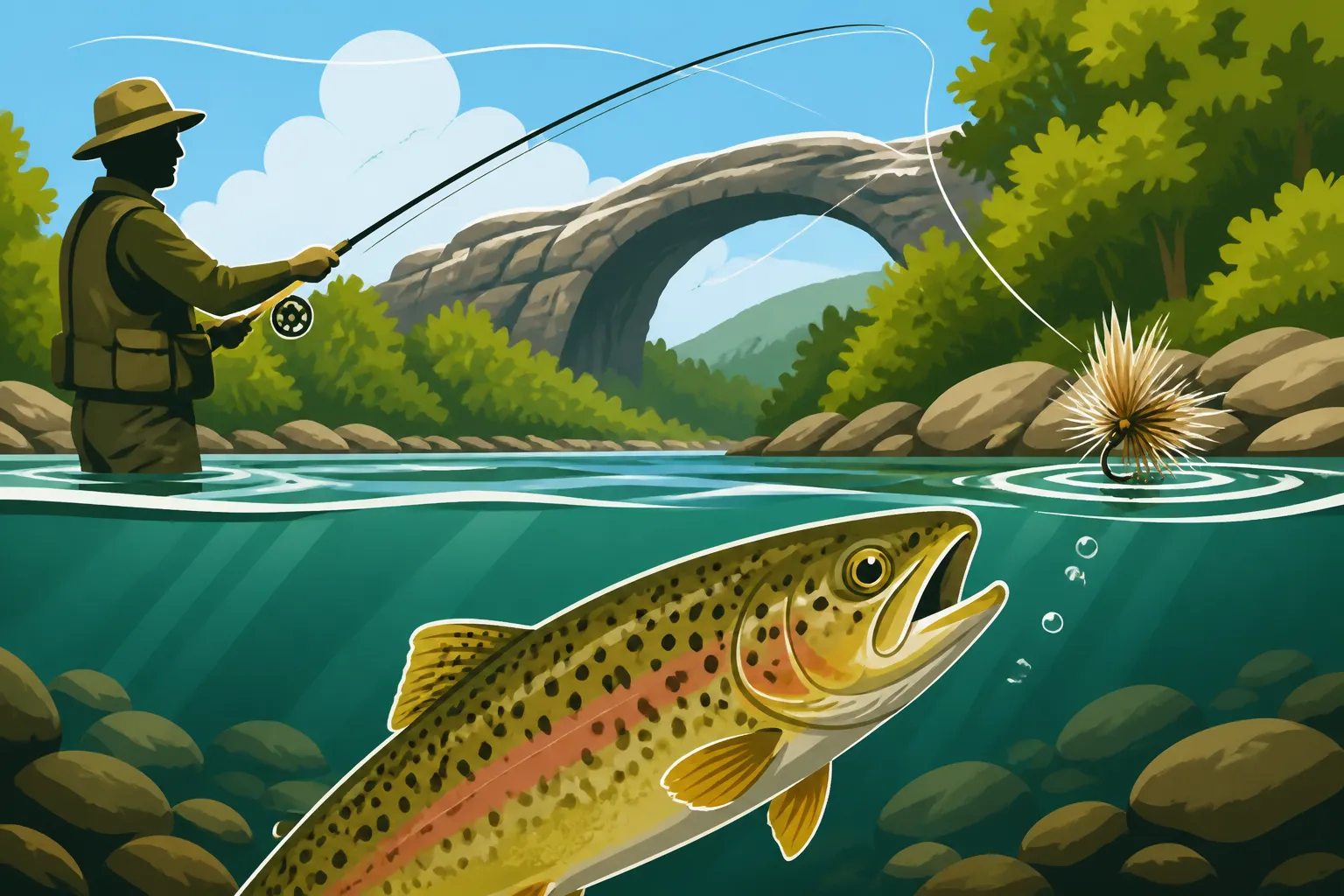
Imagine casting your tiny, feathered imitation, watching it drift naturally downstream with the current, and then, without warning, a perfect ripple forms around it, and your fly simply vanishes. That's a "take," and it's the moment every dry fly angler lives for. Unlike the often subtle tugs of subsurface nymphing, a dry fly take is visual, immediate, and utterly captivating. You see the fish commit, sometimes in a splashy, aggressive attack, other times with a calm, almost imperceptible sip. It's a game of observation, patience, and precise execution that can truly make you feel like you're part of the river's ecosystem. The anticipation of seeing a trout rise is a thrill that keeps many of us coming back, even when the fish are being incredibly finicky. It’s a moment that connects you deeply to the natural world, a direct interaction with the trout’s feeding behavior that’s hard to replicate with other methods.
Why Dry Flies Can Be Intimidating for Beginners
For many newcomers, dry fly fishing presents a few hurdles that can feel insurmountable. First, the flies themselves can be tiny, making them tricky to tie on, especially with cold fingers or failing eyesight. Then there’s the emphasis on "matching the hatch," which means identifying the specific insect species currently emerging and presenting a fly that perfectly imitates it. This requires a keen eye and some entomological knowledge, which can be daunting. And perhaps the biggest challenge for beginners is achieving a "drag-free drift." This means your fly must float downstream at the exact same speed as the natural current, without being pulled or pushed unnaturally by your fly line. Any unnatural movement, known as "drag," will almost certainly spook a discerning trout. It takes practice, finesse, and understanding of how the current interacts with your line and fly. But don't worry, we'll break down these challenges into manageable steps.
Gearing Up for Your First Dry Fly Adventure
Getting the right equipment doesn't have to be overwhelming or break the bank. While there's an endless array of specialized gear out there, a solid foundational setup will serve you well on Arkansas's trout streams. Think about what you'll need for delicate presentations and fighting feisty fish.
The Right Rod, Reel, and Line for Trout
For dry fly fishing, you'll generally want a lighter, more forgiving setup than you might use for heavier nymphing or streamer fishing. A 7 to 8.5-foot fly rod in a 3 or 4-weight is often ideal. These lighter rods allow for delicate presentations of small flies and protect lighter tippets from breaking when a trout strikes. The flexibility in a softer rod acts like a shock absorber. The reel's primary purpose is to hold your line, but a smooth drag system is always a plus for handling larger fish. Don't feel pressured to get the most expensive reel; many reliable options exist that will perform beautifully.
As for fly line, a weight-forward (WF) floating line matched to your rod's weight is essential. This type of line helps with casting distance and turnover, ensuring your dry fly lands softly. You'll also want to consider a line with a long, fine front taper, which aids in gentle presentations. Investing in a good quality floating line is one of the best choices you can make, as it significantly impacts your casting experience and ability to achieve those crucial drag-free drifts. Many reputable brands offer excellent weight-forward floating lines that beginners will find easy to cast and control, allowing you to focus more on presentation and less on fighting your gear. When buying online, look for reputable brands on sites like Amazon that offer detailed descriptions of their line tapers. If you're looking for more guidance on beginner setups, check out our guide on Best Beginner Fly Fishing Setup for Trout.
Leaders, Tippet, and the Importance of Presentation
The connection between your fly line and your fly is critical: the leader and tippet. A tapered leader, typically 7.5 to 9 feet long, gradually transitions from thick butt section (connecting to your fly line) to a fine tip. This taper helps transfer casting energy smoothly, allowing your fly to land softly on the water. Attached to the end of your leader is the tippet, a short piece of even finer monofilament or fluorocarbon line. For dry fly fishing, you'll generally use tippet in the 5X to 7X range, with 6X being a very common and versatile choice for Arkansas trout. The "X" rating denotes diameter, with higher numbers meaning thinner line. Thinner tippet is less visible to wary trout and allows for more natural fly movement, crucial for a drag-free drift. Always carry a spool of tippet in a couple of different sizes, as conditions and fly sizes will dictate what you need. A fresh leader and tippet can make a world of difference in your presentation, so don't hesitate to replace them if they become frayed or kinked.
The importance of good presentation cannot be overstated in dry fly fishing. It's not just about getting the fly to the fish; it's about getting it there naturally. Your leader and tippet play a huge role in this, providing that subtle, almost invisible connection. Think of it as delivering a delicate meal to a very discerning diner. If the plate looks unnatural or moves awkwardly, they're not going to eat. That's why leaders and tippets are designed to dissipate energy and allow the fly to land gently, mimicking a natural insect. Learning how to tie a good Surgeon's Knot or Blood Knot to connect tippet to your leader is also an essential skill, as a poorly tied knot can hinder your presentation and even cost you a fish.
Essential Dry Flies for Arkansas Waters
While the world of dry flies is vast and varied, a handful of reliable patterns will get you started on Arkansas's famous trout streams like the White River and Norfork Tailwater. The key is to have a selection that covers various insect sizes and general profiles. Think about what insects are commonly found here.
Here's a simple starter kit:
- Adams (Parachute and Traditional): A classic generalist pattern that imitates a wide range of mayflies. Sizes 12-18 are good to start. The parachute version sits lower in the water, making it often more effective.
- Elk Hair Caddis: A buoyant caddisfly imitation, excellent for faster water and when caddis are hatching. Sizes 12-16.
- Griffith's Gnat: A tiny, bushy fly that imitates clusters of midges, a staple food source for trout, especially in colder months. Sizes 16-22.
- Blue-Winged Olive (BWO): A small mayfly pattern, crucial for specific hatches often occurring on cloudy days or in spring and fall. Sizes 16-20.
- Stimulator: A larger, bushier attractor pattern that can imitate stoneflies or larger caddis, or simply draw attention. Sizes 10-14.
Carrying a small fly box with these patterns in various sizes will cover most situations you encounter. Don't feel you need to "match the hatch" perfectly every time; sometimes, an attractor pattern like a Stimulator or a brightly colored dry fly is enough to pique a trout's interest. Remember, presentation often trumps pattern. You can find many of these classic patterns on Amazon, often in assortments that give you a good starting variety. If you're wondering which flies specifically excel on tailwaters, our guide on Best Fly Patterns for Tailwater Trout offers great insight.
| Fly Pattern | Primary Imitation | Common Sizes (Arkansas) | Key Characteristics |
|---|---|---|---|
| Parachute Adams | Mayflies (generalist) | 12-18 | White parachute post, dark body, visible to angler |
| Elk Hair Caddis | Caddisflies | 12-16 | Deer/elk hair wing, buoyant, good in riffles |
| Griffith's Gnat | Midges (clusters) | 16-22 | Small, bushy, imitates tiny insects or egg-laying clusters |
| Blue-Winged Olive | Mayflies (specific) | 16-20 | Small, olive body, dark wings, important during hatches |
| Stimulator | Stoneflies, Caddis | 10-14 | Larger attractor, buggy profile, good for searching |
Mastering the Art of the Cast and Presentation
Casting a fly rod is a graceful, rhythmic motion that takes practice, but it's not nearly as hard as it looks. The goal for dry fly fishing isn't necessarily distance, but rather accuracy and a delicate landing.
The Basic Overhead Cast Explained
The foundation of fly casting is the basic overhead cast. It involves a smooth, controlled motion that loads the rod with energy, allowing it to propel the line forward. Think of your arm as a lever, moving from 10 o'clock (backcast) to 2 o'clock (forward cast), with a brief, crisp stop at both ends. The pause between the backcast and forward cast is crucial, allowing the line to fully unroll behind you before you send it forward. Many beginners rush this pause, resulting in a collapsed cast. Focus on smooth acceleration and abrupt stops. Practice in your yard with just a leader and some yarn tied on for a "fly." You'll quickly get a feel for the rhythm. Remember, it's more about timing and technique than brute strength. Getting the basics down will open up a world of possibilities on the water. For a full breakdown, check out our guide on How to Cast a Fly Rod for Beginners.
Mending Your Line for a Drag-Free Drift
Once your fly lands, the real work begins. Your goal is for the fly to drift downstream at the same speed as the natural current, completely "drag-free." However, currents often vary in speed across the stream, creating conflicting forces on your fly line that can pull your fly unnaturally. This is where "mending" comes in. Mending is the act of repositioning your fly line on the water without moving your fly. If the current in front of your fly is faster, you might "upstream mend" by lifting your rod tip and throwing a loop of line upstream. If the current behind your fly is faster, you'd "downstream mend." These subtle adjustments ensure your fly remains in the sweet spot of a drag-free drift for as long as possible, increasing its chances of being taken by a trout. It takes practice to read the currents and anticipate when a mend is needed, but it's arguably the most important skill in dry fly fishing.
Reading the Water and Spotting Rising Trout
Before you even cast, take a moment to observe the water. Look for "rises" – the distinctive rings on the surface indicating a trout has come up to eat an insect. Are they subtle sips or splashy jumps? This tells you a lot about what they're eating and how aggressively. Also, pay attention to current seams, eddy lines, and structure like submerged logs or rocks. Trout often hold in these areas, waiting for food to be delivered to them by the current. Remember that trout, especially in popular waters like the White River or the Norfork Tailwater, are highly accustomed to seeing flies, both natural and artificial, so your presentation needs to be spot-on. If you spot a rising trout, try to determine its feeding lane and cast your fly a few feet upstream of it, allowing for a natural drift into its strike zone. Understanding where fish hold and how they feed is a fundamental skill for any angler. If you want to learn more about the seasonal patterns of trout, our guide on the White River Fly Fishing Season Guide for Arkansas Anglers can be quite helpful.
Matching the Hatch (and What to Do When There Isn't One)
The term "matching the hatch" often strikes fear into the hearts of new fly anglers, but it's a concept that's simpler than it sounds. It means presenting a fly that closely resembles the size, shape, and color of the insects that trout are actively feeding on at that moment.
Identifying Common Arkansas Hatches
Arkansas's tailwaters, fed by cold, consistent flows, provide excellent habitat for a variety of aquatic insects. Mayflies, caddisflies, and midges are the primary food sources. You'll often see small, dark Blue-Winged Olives (BWO) hatching in spring and fall, especially on cloudy days. Caddisflies, recognized by their tent-shaped wings and skittering flight, can hatch in huge numbers throughout the warmer months. Midges are tiny, almost invisible insects that are present year-round, and trout will often feed on them selectively when nothing larger is hatching. Observing the size and color of natural insects floating on the water or flying nearby will give you clues. Carry a small bug identification chart or even a clear cup to scoop up naturals for a closer look. Over time, you'll start to recognize these insects and associate them with specific fly patterns. Paying attention to what's going on around you is half the battle.
Attractor Patterns: Your Go-To When Trout Are Picky
There will be plenty of days when no obvious "hatch" is occurring, or the trout simply aren't keying in on a specific insect. This is when attractor patterns truly shine. Flies like the Stimulator, Royal Wulff, or even a brightly colored foam beetle don't perfectly imitate any single insect. Instead, they're designed to grab a trout's attention with their general "buggy" profile, bright colors, or large size. Think of them as the fishing equivalent of a billboard: they're meant to be noticed. Attractor patterns are excellent "searcher" flies, allowing you to cover water and entice a strike when trout aren't being particularly selective. They can also be a great choice for beginners, as they often float well and are easy to track on the water. Don't be afraid to experiment with these patterns, especially in pocket water or when fishing less-pressured stretches. Sometimes, a trout just needs a little something different to pique its curiosity.
Seasonal Considerations for Dry Fly Success
The time of year dramatically influences dry fly opportunities in Arkansas.
- Spring (March-May): This is often prime time for larger mayfly hatches, like Sulphurs and Hendricksons, in addition to BWOs and early caddis. The trout are waking up and actively feeding.
- Summer (June-August): While the midday sun can make dry fly fishing tough, early mornings and late evenings can be fantastic for caddis and terrestrial patterns like hoppers and beetles. Cooler water in the tailwaters like the Norfork Tailwater Trout Rules and Season keeps trout active even when it's warm.
- Fall (September-November): Many of the spring hatches return, with excellent BWO and caddis activity. Cooler temperatures make for comfortable fishing. This is often regarded as one of the best times for dry fly fishing.
- Winter (December-February): Midge fishing can be surprisingly good on mild winter days. While not a classic "hatch," tiny dry flies imitating adult midges can be very effective, especially on the calmer sections of the White River.
Understanding these seasonal trends will help you anticipate what flies to bring and when to hit the water. Each season offers unique dry fly challenges and rewards, making year-round dry fly opportunities in Arkansas. Our comprehensive Arkansas Fishing Seasons Guide can give you even more insights into what to expect throughout the year.
Tips for Dry Fly Fishing in Arkansas's Premier Trout Waters
Arkansas is blessed with some incredible trout fisheries, particularly the tailwaters below our major dams. These rivers offer consistent conditions that are perfect for fly fishing, including excellent dry fly opportunities.
Navigating the White River for Dry Fly Opportunities
The White River, especially below Bull Shoals Dam, is world-renowned for its trout fishing, and dry fly opportunities abound. The sheer volume of aquatic insects, coupled with the consistent water temperatures, means trout are almost always looking up. However, the White River is also subject to generation schedules from the dam, which means water levels and current speeds can fluctuate dramatically.
When the water is low and wading is possible, look for slower currents, eddy lines, and areas with exposed gravel bars. These are prime spots for hatches and rising fish. Focus on presenting your dry fly with a long, drag-free drift in these calmer sections. During higher water generation, the faster currents can make dry fly fishing more challenging, but not impossible. Look for softer seams along the banks or in protected pockets where trout can hold out of the main current and still intercept emerging insects. Consider using slightly larger, more visible dry flies in these conditions, as the trout will have less time to inspect them. Floating downstream in a drift boat with a skilled guide can significantly improve your success, allowing you to cover more water and access prime dry fly lies that might be unreachable from the bank. If you're interested in Trout Fishing Below Bull Shoals Dam on the White River, there's plenty more to learn.
Norfork Tailwater and Bull Shoals Tailwater Tactics
The Norfork Tailwater, while shorter than the White River, is another fantastic dry fly destination. Its smaller size and generally clearer water can make the trout incredibly spooky, demanding even more precise presentations and delicate tippets. But when a hatch is on, the fishing can be exceptional. Like the White River, the Norfork's flow is regulated by dam generation, so always check the generation schedule before you go. Low water periods are ideal for wading and offer the best dry fly opportunities. Focus on classic mayfly patterns like BWOs and Sulphurs, and don't underestimate the effectiveness of midge patterns, especially during cooler months or when nothing else is happening.
The Bull Shoals Tailwater, the section of the White River directly below Bull Shoals Dam, shares many characteristics with the Norfork. The fishing can be phenomenal, with plentiful hatches and very healthy trout. The common thread for both these tailwaters is the need for stealth and precision. Trout here see a lot of fishing pressure, so they're incredibly discerning. Light leaders and tippets are a must, as is a commitment to achieving truly drag-free drifts. Sometimes, a tiny change in your casting angle or a subtle mend can be the difference between a refusal and a successful hook-up. Remember, the trout here are well-fed and experienced, so every detail of your presentation matters. For specific regulations in these areas, make sure to read up on Arkansas Trout Permit Rules. Many anglers find that the Best Time to Fish the White River in Arkansas for Trout is during the spring and fall hatches, but with careful observation, dry fly success can be found year-round.
Disclaimer
This article is for general informational purposes only and does not constitute professional advice. Laws, prices and regulations vary by location and change over time. Consult a qualified professional for guidance on your specific situation.