How to Catch Crappie in Cold Water
There’s nothing quite like the crisp air of a winter morning on an Arkansas lake, but let’s be honest, fishing when the mercury drops can be a real head-scratcher. Those crappie that were practically jumping into the boat in spring seem to vanish, leaving you wondering where they went and how to entice them. If you’ve ever felt frustrated trying to locate and catch crappie in chilly waters, you’re not alone. This guide is here to unravel the mysteries of cold water crappie fishing, giving you the insights and techniques to keep your stringer full, even when the thermometer dips.
Understanding Crappie Behavior in Cold Water
When the water temperature plummets, crappie don't just disappear; they simply change their habits dramatically. Understanding these shifts is the first step to successful winter angling. It's a whole different ballgame compared to their aggressive, shallow-water antics during warmer months.
The Crappie's Winter Retreat
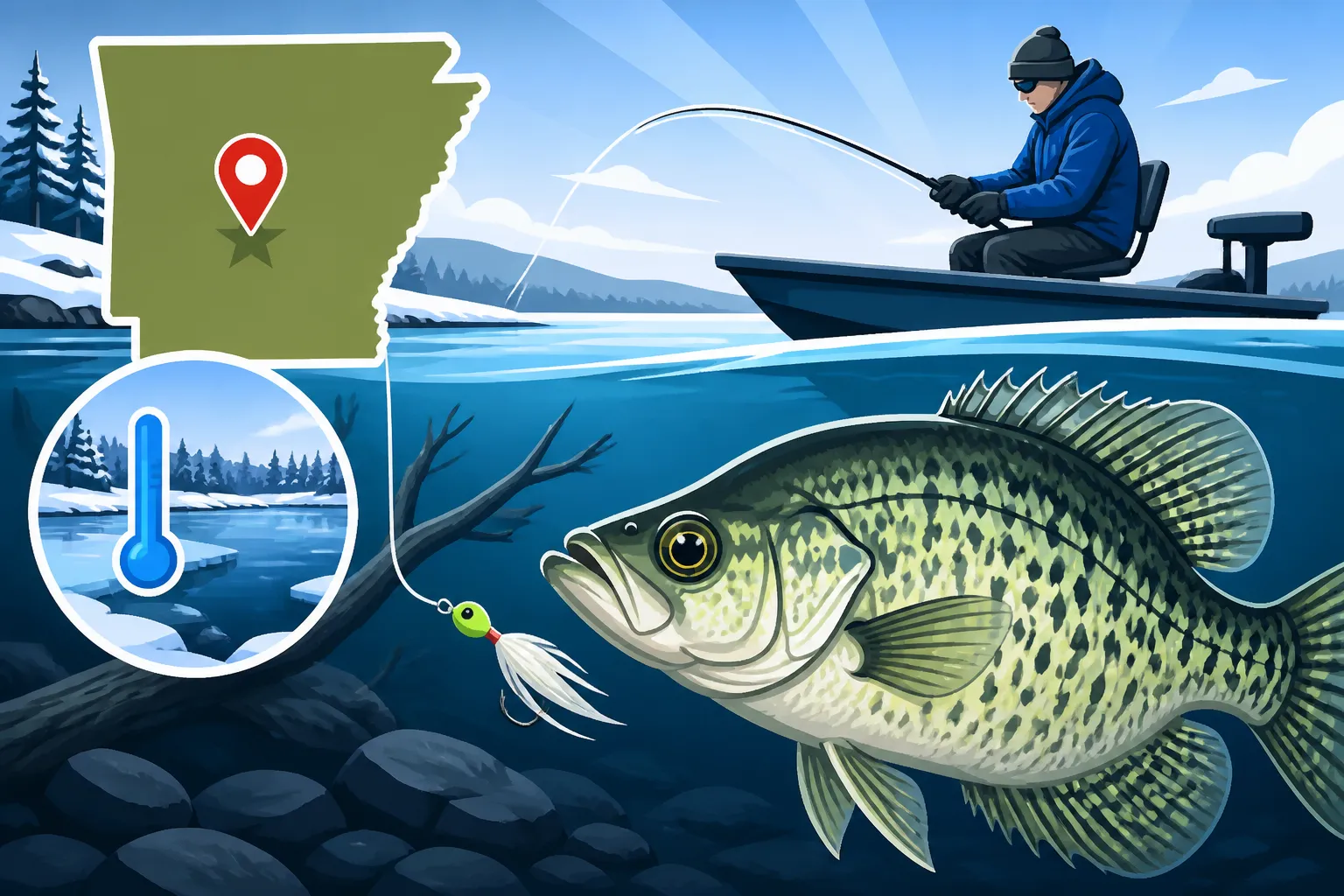
As cold fronts push through and water temperatures consistently drop below, say, 50 degrees Fahrenheit, crappie's metabolism slows way down. They don't need to eat as often, and their movements become much more lethargic. Instead of roaming the shallows, they tend to migrate to deeper, more stable water, often congregating tightly around specific types of structure. Think of it like they're trying to find a cozy, deep hideout where the temperature is more consistent and they can conserve energy.
You'll find them hunkering down in the comfort of deeper main lake channels, especially on large Arkansas reservoirs like Lake Ouachita or Greers Ferry Lake. They might hold at the bottom of steep drops, along old creek channels, or in the very heart of dense cover. This isn't about chasing bait; it's about minimizing effort and maximizing warmth and safety. Their bites will be much more subtle, requiring a different approach and a lot more patience from the angler. It's a far cry from the frenzied feeding you might experience When Do Crappie Spawn in Arkansas.
Reading Water Temperature and Structure
Success in cold water crappie fishing hinges on your ability to find those subtle temperature breaks and the specific structures crappie cling to. A reliable fish finder with a temperature gauge isn't just a luxury; it's practically a necessity. You're looking for areas that might be just a degree or two warmer, as even a slight increase can make a huge difference in where crappie decide to hold. Sometimes, this means finding warmer inflows or sun-exposed banks in deeper coves.
Crappie in cold water often stack up, sometimes suspended, but usually directly related to structure. They'll gravitate towards standing timber, especially where it meets a deep channel swing or a sharp ledge. Brush piles, whether natural or man-made, are absolute magnets. Bridge pilings and even subtle changes in bottom contour can hold significant numbers of fish. Learning How to Find Crappie in Deep Water with your electronics, spotting those faint arches or blobs on the screen, is critical. Mark these spots on your GPS because crappie will often return to the same winter haunts year after year.
Essential Gear and Bait for Cold Water Crappie
Cold water crappie fishing demands a shift not only in technique but also in your gear. What worked perfectly in summer might be too clumsy or insensitive for those faint winter bites. Precision and sensitivity become your best friends.
Rods, Reels, and Line for Sensitivity
Because cold-water crappie bites are incredibly light, you need gear that can transmit even the faintest tap to your hands. Light-action or ultralight spinning rods, typically between 6 to 8 feet in length, are ideal. These rods have a forgiving tip that allows you to detect those subtle takes and absorb sudden lunges from a hooked fish. Pair your sensitive rod with a small, smooth spinning reel that has a good drag system. You'll want something that allows for long casts with light baits and provides a consistent retrieve.
When it comes to line, consider a quality fluorocarbon line or a highly sensitive monofilament. Fluorocarbon is an excellent choice because it has less stretch than mono, providing superior sensitivity, and it's nearly invisible underwater, which is a huge advantage in the clear waters often found in winter. Lines in the 4 to 6-pound test range are usually sufficient. You want to avoid heavy lines that can dampen sensitivity or create too much drag. Many anglers find great options for these specialized rods and reels on platforms like Amazon, where a wide range of brands and styles are available for comparison. If you're looking for more specific recommendations, check out a guide on Best Rod Setup for Crappie Jigging.
The Right Baits and Lures
In cold water, crappie are less likely to chase down a fast-moving meal. They prefer something slow, easy, and right in front of their faces. This is where live bait often shines.
- Live Minnows: Hands down, live minnows are usually the most effective bait for cold water crappie. Their natural movement is irresistible to lethargic crappie. Hook them lightly through the lips or just behind the dorsal fin to keep them lively. Present them on a small jig head or under a slip bobber for maximum appeal.
- Small Jigs: If you prefer artificials, tiny jigs are the way to go. Think 1/32 to 1/16 ounce. Action is key here, but it needs to be very subtle. Colors can vary, but often more natural shades like black, brown, or grey work well in clear winter water. Chartreuse, white, or black/blue can also be effective, especially on cloudy days or in slightly stained water. The key is to impart minimal action—just enough to make the tail shimmer. For detailed rigging, see How to Rig a Jig for Crappie Fishing.
- Scent Attractants: Don't underestimate the power of scent in cold water. Adding a dab of crappie-specific scent to your jig can make a huge difference, encouraging those sluggish crappie to hold on longer, giving you more time to detect the bite.
- Jigging Spoons or Blade Baits: For deeper crappie, especially those suspended in open water or tightly schooled near the bottom, small jigging spoons or blade baits can be effective. Drop them down to the fish, then jig them with short, sharp snaps, letting them flutter back down. The flash and vibration can trigger a reaction strike, even from less-active fish.
Cold Water Crappie Fishing Techniques
Once you've located the crappie and rigged your gear, the real art of cold water fishing comes into play: presentation. It's all about being slow, deliberate, and incredibly patient.
Vertical Jigging and Slow Trolling
The mantra for cold water crappie is "less is more." Their metabolism is slow, so they're not going to expend a lot of energy chasing down a bait. You need to put the bait right in front of their faces and keep it there.
- Vertical Jigging: This is a fantastic technique, especially when you've pinpointed a brush pile or a school of fish on your electronics. Position your boat directly over the structure or school and drop your jig or minnow straight down. The key is to use extremely slow, subtle movements. Think of it as barely twitching your rod tip, just enough to make the bait "breathe." Let it sit, barely move it, and then let it sit again. Crappie will often take the bait on the pause. Remember, patience is paramount; a five-second pause can feel like an eternity, but it's often when the fish bites. You can even experiment with dead-sticking a bait just above the crappie you see on your screen.
- Slow Trolling (Spider Rigging): For covering more water and enticing scattered crappie, slow trolling, often called "spider rigging," is highly effective. This involves deploying multiple rods (up to the legal limit, of course) from the front or sides of your boat, presenting baits at various depths and distances. Use a very slow trolling motor speed, barely moving forward, to drag jigs or minnows past structure. The goal is to imitate a natural, unhurried meal. This method allows you to experiment with different depths and lure colors until you find what the crappie are keying in on. Learning How to Tightline for Crappie can be incredibly useful when slow trolling or vertical jigging.
- Bobber Fishing: Don't discount the humble bobber. When crappie are suspended over a known brush pile or around standing timber, a slip bobber allows you to suspend a live minnow or a small jig at a precise depth. The bobber acts as a visual strike indicator and helps keep your bait in the strike zone longer with minimal effort.
Interpreting Bites and Setting the Hook
This is arguably the most challenging aspect of cold water crappie fishing. Forget those aggressive "thumps" or rod-bending strikes you get in spring. In cold water, a crappie bite can be incredibly subtle.
- The "Mushy" Feel: Often, it won't feel like a bite at all. Instead, your line might just feel "heavy," like you've hooked a piece of moss or picked up some debris. This increased weight is often a crappie gently mouthing the bait.
- Line Twitches or Movement: If you're watching your line closely, you might see a slight twitch, a subtle slackening, or a slow movement to the side that isn't caused by current or wind. These are all indicators that a crappie has taken your bait.
- The "Tick": Sometimes, you'll feel a very light "tick" or "tap" – almost imperceptible. This is why sensitive gear is so important.
- Setting the Hook: Resist the urge to yank. With such light bites, an aggressive hookset can pull the bait right out of the crappie's mouth. Instead, use a gentle, sweeping motion of your rod upward and to the side. Apply steady pressure to ensure the hook finds purchase. Because crappie have papery mouths, a soft hookset also minimizes tearing, helping you land more fish.
Best Locations and Times for Winter Crappie in Arkansas
Knowing how to fish for cold water crappie is great, but knowing where and when to find them in Arkansas waters is what truly fills the livewell.
Targeting Specific Structures
As mentioned, cold water crappie are structure-oriented. They want cover that offers protection and a stable environment. In Arkansas, you'll find them holding tight to:
- Deep Brush Piles and Submerged Trees: These are prime real estate. Crappie will often suspend within or just above the branches. Lakes like Lake Conway, known for its timber, or the deep coves of Bull Shoals Lake are excellent for this. Finding these can sometimes be a challenge, but a good fish finder is invaluable.
- Deep Ledges and Channel Bends: Where a deep flat drops off into a river channel or a lake bed, crappie will line up along that edge. They'll use these highways to move with baitfish, but stay close to the drop-off for comfort. The Arkansas River, with its distinct channel, can be fantastic for this.
- Bridge Pilings: The concrete and rock associated with bridge supports offer deep cover and often attract baitfish. The pilings on Beaver Lake or Lake Ouachita can hold schools of crappie.
- Standing Timber: In lakes with inundated forests, like Lake Millwood, crappie will suspend within the denser sections of standing timber, especially where it’s deeper.
Old fishing maps or even talking to local bait shop owners can often reveal known wintering holes. Don't be afraid to explore new spots with your electronics; sometimes the best spots are those less pressured. For more ideas on where to search, check out our guide to the Best Crappie Lakes in Arkansas.
Optimal Conditions and Timing
While winter fishing can be tough, certain conditions can make it more productive.
- Stable Weather: Crappie prefer stable conditions. A few days of consistent weather, even if it's cold, is generally better than periods of wild temperature swings.
- Sunny Afternoons: After a few days of clear, sunny weather, the upper layers of water, especially in shallow coves or dark-bottomed areas, might warm up a degree or two. This subtle warming can sometimes draw crappie shallower, making them slightly more active in the mid-afternoon.
- Mid-Day Fishing: Forget the dawn patrol during winter crappie fishing. The warmest part of the day, typically from late morning to mid-afternoon, is often your best bet. The sun has had time to penetrate the water, and crappie might become a bit more willing to bite.
- Overcast Days: Paradoxically, sometimes heavily overcast days, especially those with stable temperatures, can provide consistent fishing. The diffused light can make crappie feel more comfortable moving around, even if they remain deep.
Even in cold conditions, Arkansas has incredible crappie fishing. Remember that while Statewide Crappie Daily Limit Is 20 Fish in Most Arkansas Waters, there are length limits to consider, such as crappie must be Crappie Must Be 9 Inches or Longer to Keep in Arkansas.
Cold Water vs. Warm Water Crappie Fishing
To summarize the key differences, here’s a quick comparison of what to expect when chasing crappie in cold versus warm water:
| Feature | Cold Water Crappie Fishing | Warm Water Crappie Fishing |
|---|---|---|
| Water Temperature | Below 50-55°F (often 40s) | Above 60°F (often 70s-80s) |
| Crappie Location | Deep, concentrated near structure (channels, brush piles) | Shallow to mid-depths, roaming flats, docks, timber |
| Crappie Metabolism | Slow, lethargic, less active | Fast, aggressive, active feeding |
| Bite Intensity | Very subtle (light tap, mushy feel, line twitch) | Aggressive (distinct thumps, rod bends) |
| Preferred Baits | Live minnows, tiny jigs (1/32-1/16 oz), jigging spoons | Spinnerbaits, larger jigs, crankbaits, live minnows |
| Retrieve/Action Speed | Extremely slow, subtle movements, long pauses | Moderate to fast retrieves, aggressive jigging |
| Sensitivity Needed | High (light rods, sensitive line, keen observation) | Moderate |
| Best Time of Day | Mid-day (late morning to mid-afternoon) | Dawn/Dusk, sometimes all day |
| Patience Level | Essential, requires significant patience and focus | Less critical, often faster action |
No matter the season, the thrill of reeling in a slab crappie is unmatched. By adjusting your approach for cold water, you can extend your fishing season and enjoy the quiet solitude of Arkansas’s beautiful winter landscapes while still catching plenty of fish.
Disclaimer
This article is for general informational purposes only and does not constitute professional advice. Laws, prices and regulations vary by location and change over time. Consult a qualified professional for guidance on your specific situation.