Best Line Weight for Trout Fly Fishing
One of the most common head-scratchers for new fly anglers, and even some seasoned ones, is figuring out the right line weight for the trout they're chasing, especially here in Arkansas with our diverse waters. It can feel like a daunting task, wading through all the numbers and recommendations, and frankly, making the wrong choice can lead to a really frustrating day on the water, whether you're breaking off fish or struggling to cast. This guide is here to untangle that confusion, helping you understand how to choose the best line weight for trout fly fishing in Arkansas so you can spend more time enjoying the tug of a fish and less time fussing with your gear.
Understanding Fly Line Weights: What Do the Numbers Mean?
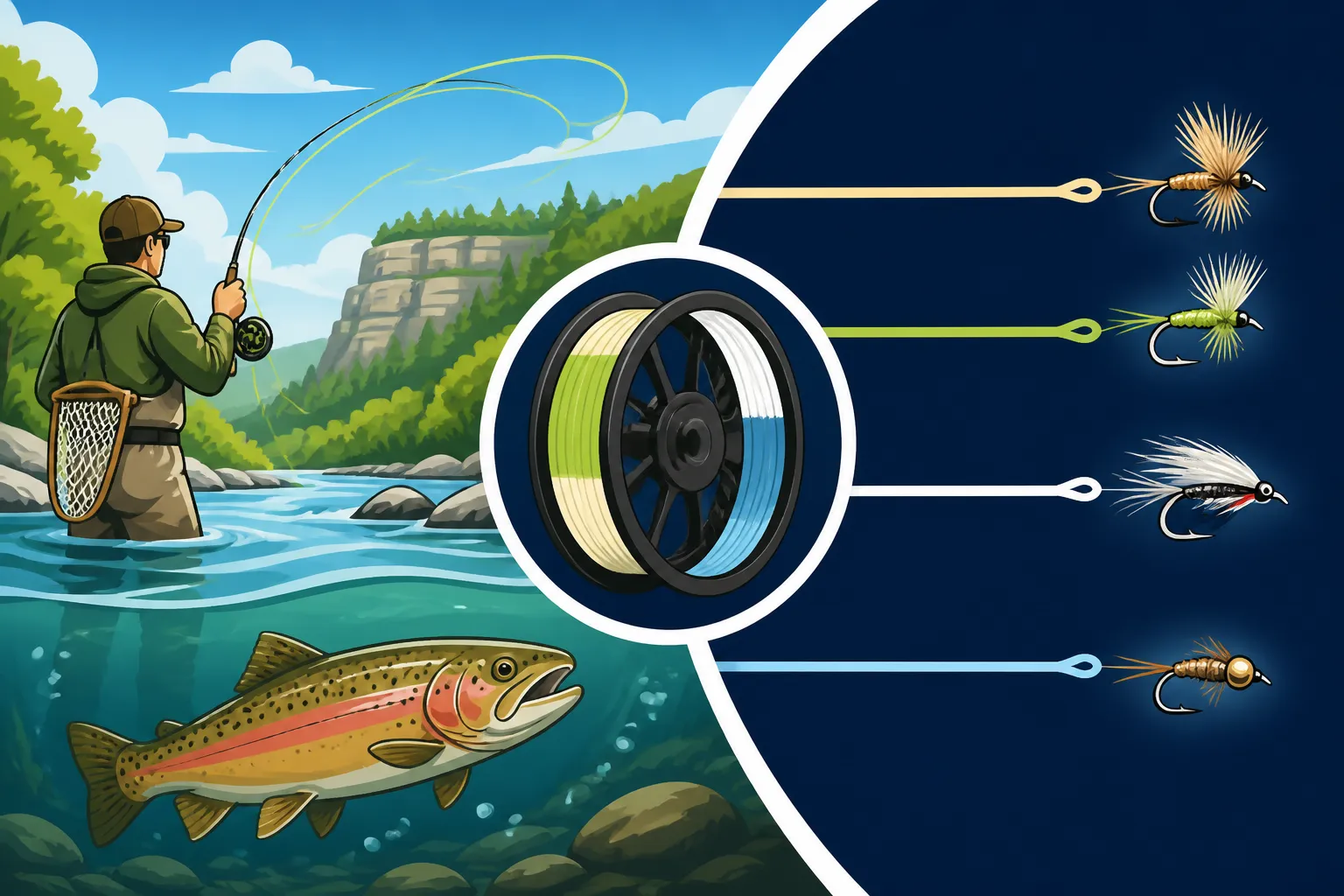
If you're new to fly fishing, the whole "line weight" thing can feel a bit counterintuitive. Unlike spin fishing where the lure's weight pulls the line out, in fly fishing, it's the weight of the line itself that carries your nearly weightless fly to its destination. The numbers (like 3-weight, 5-weight, 7-weight) refer to the actual physical weight of the first 30 feet of fly line, dictating how heavy and robust your entire rod, reel, and line system needs to be to cast effectively. It’s all about balance in your setup.
Choosing the right line weight is critical for two main reasons: casting efficiency and protecting your leader and tippet. If your line is too heavy for your rod, casting becomes a chore; too light, and you won't load the rod properly, making accurate casts nearly impossible. Moreover, a heavier line is usually paired with a stiffer rod, which can make fighting smaller fish feel like reeling in a wet rag and potentially put too much stress on lighter tippets. On the flip side, a light setup can make landing a trophy fish a much longer, more exhausting battle for both you and the fish, increasing stress on the fish and the likelihood of a break-off. It’s all a delicate dance between power and finesse.
The Balancing Act: Rod, Reel, and Line
Think of your fly rod, reel, and line as a perfectly matched team. Each component is designed to work in harmony with the others, primarily around that crucial "line weight" number. A 5-weight rod is engineered to flex and cast a 5-weight line optimally. Mismatched gear—say, a 5-weight rod with a 3-weight line—will feel clunky and inefficient. You won't get the rod to load properly, and your casts will suffer. Similarly, putting a 7-weight line on a 5-weight rod will likely feel like you're trying to cast a lead pipe with a noodle, straining your rod and your arm.
The reel's job, in most trout fishing scenarios, is primarily to hold your line and provide a smooth drag system for fighting fish. While a reel should generally match the rod's weight class (a 5-weight reel for a 5-weight rod), its weight distribution is also important to balance the entire setup in your hand. A well-balanced system reduces fatigue and enhances your casting stroke, making those long days on the White River or a smaller Ozark stream much more enjoyable. You can often find great value in combo kits online at retailers like Amazon that come pre-matched to take the guesswork out of this balancing act for beginners.
Common Line Weights for Arkansas Trout
When you're chasing trout in Arkansas, you'll generally find yourself reaching for line weights in the 3- to 7-range. Each has its specific strengths and ideal applications.
- 3-Weight Line: This is your finesse setup. Ideal for very small streams, tiny flies, and panfish or smaller trout where presentation is paramount. Think delicate dry flies on calm pools. While you might not use it often on our bigger tailwaters, it’s perfect for those hidden creeks in the Ozarks or Ouachitas where accuracy and a gentle landing are key.
- 4-Weight Line: A step up from the 3-weight, offering a bit more versatility. It's still excellent for delicate presentations but can handle slightly larger flies and a bit more wind. If you primarily fish smaller to medium-sized rivers with average-sized trout and enjoy dry fly fishing or light nymphing, a 4-weight could be your sweet spot.
- 5-Weight Line: This is often called the "all-around" or "gold standard" for trout fishing, and for good reason. A 5-weight rod with a 5-weight line is incredibly versatile. It can handle most trout sizes you'll encounter, cast a wide range of fly sizes (from small dries to moderate streamers), and punch through a bit of wind. For many anglers tackling the diverse waters of Arkansas, from the Little Missouri River to sections of the Caddo River, the 5-weight is a fantastic choice if you're looking for one rod to do it all.
- 6-Weight Line: Moving into slightly heavier territory, a 6-weight is excellent when you anticipate larger trout, need to cast heavier nymph rigs, or want to throw bigger streamers. It provides more lifting power for fighting robust fish and extra oomph for casting in breezy conditions or making longer casts on wider rivers. If you're specifically targeting the larger brown trout found on the White River below Bull Shoals Dam, this could be a great primary or secondary setup.
- 7-Weight Line: While perhaps less common as a primary trout setup unless you're specifically going after trophy trout or larger migratory fish, a 7-weight offers significant power. It excels at launching large, heavy streamers, dealing with strong winds, or when fishing very swift currents where you need to muscle a fish in. It's also a good crossover rod if you occasionally target species like smallmouth bass or even light saltwater applications. On our major tailwaters known for larger trout, like the White River or Norfork Tailwater, a 7-weight can be a real asset, especially if you're consistently using big flies.
When looking for gear, remember that specific fly line brands often specialize in different tapers and coatings. Companies like Scientific Anglers or Rio are well-regarded, and their products are widely available on sites like Amazon. Doing a bit of research on their specific lines can help you find one that best matches your casting style and fishing preferences.
Matching Line Weight to Arkansas's Diverse Waters
Arkansas is a treasure trove of trout fishing opportunities, from the famous cold tailwaters of the White River and Norfork River to the smaller, wilder streams. The best line weight for your trip will often depend heavily on where you plan to cast your line and what species you're hoping to entice.
For example, when considering "Trout Fly Fishing Basics for Tailwaters", you'll quickly realize that the conditions on a wide, powerful river like the White River demand a different approach than a tiny, overgrown creek. The sheer size of the water, the potential for larger fish, and the need to cast further or handle heavier rigs all play a role.
Tailwater Giants: White River and Norfork
The White River and Norfork Tailwater are world-renowned for their trophy trout, particularly brown trout. These are big, powerful rivers, and the fish can be exceptionally large. Here, you're often dealing with deeper currents, longer casts, and potentially heavier fly setups, including multiple nymphs with split shot or larger streamers.
- For General Tailwater Fishing (Nymphs & Dries): A 5-weight is often the workhorse for many anglers on these rivers. It offers a good balance of delicate presentation for dries (like those tiny midges or Sulphurs) and enough backbone to cast moderate nymph rigs. You can certainly catch some impressive fish on a 5-weight, but you'll need to play them carefully. This is a versatile choice for anglers who like to switch between techniques and target average-sized trout.
- For Larger Trout & Streamer Fishing: If your goal is to specifically hunt for those "Trophy Brown Trout Records on the White River" or you prefer to throw large, meaty streamers, a 6-weight or even a 7-weight becomes much more appropriate. The added power allows you to cast heavy flies with greater ease and distance, especially when you're battling the wind that can whip down the river valleys. More importantly, these heavier setups give you the leverage needed to quickly and effectively fight larger trout, reducing stress on the fish and increasing your chances of a successful release. When you're fishing with larger flies or heavier setups, having a stronger rod and line is crucial.
You'll want a rod that can handle the specific demands of the environment. For these bigger waters, a medium-fast to fast-action rod will give you the power and casting distance you often need. Remember to check out the Norfork Tailwater Trout Limits on the Norfork Tailwater in Arkansas before you go, as specific regulations can impact your fishing strategy.
Smaller Streams and Wild Trout: Ozark and Ouachita Gems
Arkansas also boasts numerous smaller, wilder trout streams, particularly in the Ozark and Ouachita mountain regions. These are often characterized by tight quarters, overhanging trees, and smaller, naturally reproducing trout. Delicate presentations and accuracy are far more important than brute casting distance here.
- For Small Stream Finesse (Dries & Small Nymphs): A 3-weight or 4-weight line is ideal for these scenarios. The lighter line allows for very delicate casts, preventing your fly from "splatting" on the water and spooking wary fish. These rods are usually shorter, making them easier to maneuver in brushy areas. You'll primarily be using smaller dry flies or lightweight nymph rigs, and the softer action of these lighter rods helps protect your light tippet from breaking when a feisty wild rainbow or brown strikes. Think about the precision required when fly fishing a tiny spring creek, where every cast counts.
- Versatility in Medium Streams: If you're exploring medium-sized streams that offer a mix of open pools and tighter runs, a 4-weight can be a great compromise. It still provides that delicate touch but offers a little more capability if you encounter a slightly larger fish or need to cast a bit further across a wider pool. This setup is perfect for pursuing the "Smallmouth Bass in Arkansas's Ozark Streams" where you might encounter trout as well.
The action of the rod is also important here. A slower or medium-action rod will give you better feel and more precise short-range casting, which is often what you need in these intimate settings.
| Line Weight | Ideal Water Type | Target Fish Size / Species | Preferred Fly Type | Key Benefit |
|---|---|---|---|---|
| 3-Weight | Very Small Streams, Spring Creeks | Panfish, Small Wild Trout | Tiny Dry Flies, Small Nymphs | Ultra-delicate presentation, extreme accuracy |
| 4-Weight | Small to Medium Rivers/Streams | Small to Medium Trout, Panfish | Dry Flies, Light Nymphs | Delicate presentation, slightly more versatile |
| 5-Weight | Medium to Large Rivers, Tailwaters | Average to Large Trout, Light Bass | All-around: Dries, Nymphs, Small Streamers | Versatility, good balance of power/finesse |
| 6-Weight | Large Rivers, Tailwaters | Large to Trophy Trout, Bass | Heavier Nymphs, Streamers | More power for big fish & bigger flies, wind |
| 7-Weight | Large Rivers, Tailwaters (Trophy Hunting) | Trophy Trout, Larger Bass | Large Streamers, Heavy Nymphs | Maximum power for big fish & heavy rigs, long casts |
Choosing the Right Line Weight for Specific Techniques
It’s not just about the water and the fish; the particular fly fishing technique you plan to employ can also heavily influence your line weight choice. Different techniques demand different qualities from your line and rod setup, whether it's the gentle landing of a dry fly or the aggressive casting of a heavy streamer.
When exploring different strategies, it's worth checking out resources like our "Best Fly Patterns for Tailwater Trout" to see how various flies might dictate your gear choices.
Dry Fly Fishing: Precision and Presentation
Dry fly fishing is all about delicacy. You're trying to present a small, buoyant fly on the surface of the water in a way that perfectly mimics a natural insect. This requires a gentle touch and precise placement to avoid spooking the fish.
- Ideal Line Weights: For most dry fly situations in Arkansas, especially on smaller streams or for finicky fish on the White River, a 3-weight or 4-weight line is typically preferred. These lighter lines have less mass, allowing for softer landings of your fly. They also pair with more flexible rods that facilitate delicate roll casts and pinpoint accuracy in tight spots. The reduced line slap on the water means your fly looks more natural, increasing your chances of a take.
- Considerations: If you're throwing larger terrestrial dry flies (like hoppers or cicada patterns) on wider rivers where a bit more casting distance is needed, a 5-weight can still perform beautifully. The key is practicing your casting stroke to ensure a soft presentation, regardless of the line weight. Look for weight-forward (WF) lines with a longer front taper, which aids in softer presentations.
Nymphing: Driving Deeper
Nymphing involves presenting subsurface flies that imitate aquatic insect larvae or pupae. This technique often requires getting your flies down quickly in the water column, sometimes with the help of split shot or weighted flies, and managing line drift to achieve a natural presentation.
- Ideal Line Weights: For general nymphing, particularly on medium to large rivers like the White or Norfork where you might be running indicator rigs with multiple nymphs and split shot, a 5-weight or 6-weight is highly effective. The heavier line helps turn over these weighted rigs more easily, and the slightly stiffer rod provides better "feel" for detecting subtle strikes, which are common in nymphing. It also gives you more authority to mend your line effectively against currents to get that perfect, drag-free drift. If you're going for deep, heavy nymphing rigs in strong currents, a 6-weight can offer that extra bit of power.
- European Nymphing (Contact Nymphing): For specialized techniques like Euro Nymphing, where you're often holding most of your line off the water, the actual fly line weight becomes less critical. Instead, anglers often use very light, thin lines or even just a long leader, as the focus is on direct contact with the fly and detecting subtle takes. However, the rod itself will still be rated for a specific line weight (often a 2- or 3-weight extra-long rod), which dictates its backbone and sensitivity. When shopping for specialty nymphing lines or leaders, be sure to check retailers like Amazon for dedicated Euro Nymphing setups.
Streamer Fishing: Aggression and Action
Streamer fishing is perhaps the most active and aggressive form of fly fishing for trout. You're imitating baitfish or other larger prey, and the technique involves casting large, often weighted, flies and stripping them back to give them an enticing, lifelike action. This can often entice the biggest, most aggressive fish.
- Ideal Line Weights: If you love to hurl large articulated streamers, especially for big brown trout on the White River, a 6-weight or 7-weight is your best bet. These heavier lines are designed to carry the bulk and weight of larger flies through the air, even in windy conditions. The stiffer rod that typically accompanies these line weights provides the necessary power for casting, working the streamer, and, crucially, fighting powerful fish that smash a streamer. A heavier line will also stand up better to the constant stripping and aggressive retrieves without tangling or wearing out quickly.
- Line Taper and Density: Beyond just line weight, for streamer fishing, consider a weight-forward line with a more aggressive front taper to help turn over those bulky flies. You might also want to explore sinking tip or full sinking lines if you need to get your streamers down deep quickly in strong currents. The "Arkansas Tailwater Trout Fishing Guide" will often highlight the effectiveness of streamers for bigger fish in certain conditions.
No matter the technique, having a good quality leader and tippet is essential. A properly tapered leader helps transfer the energy from your fly line to your fly, ensuring a smooth turnover and good presentation. Matching your tippet strength to the size of your fly and the fish you're targeting is crucial to prevent break-offs while maintaining stealth. You can often find a wide array of premium leaders and tippets from brands like Umpqua or Seaguar on Amazon, which can significantly enhance your fishing experience.
Final Thoughts on Your Arkansas Trout Setup
Navigating the world of fly line weights for trout fishing in Arkansas doesn't have to be overwhelming. The most important takeaway is that balance is key. Your rod, reel, and line should work together as a cohesive system, chosen based on the type of water you'll be fishing, the size of trout you expect to encounter, and the specific techniques you plan to employ.
While a 5-weight setup is truly the versatile workhorse for many Arkansas trout scenarios, don't shy away from going lighter for delicate presentations on small streams or heavier for chasing those monster browns on the tailwaters. Many experienced anglers will have multiple setups to cover all their bases, but if you're just starting out, picking a versatile 5-weight for general use is a fantastic entry point. If you want to learn more about setting up your gear, read our guide on the Best Rod Setup for Trout Fly Fishing.
Remember, fishing is about enjoying the outdoors and the experience. Don't let gear choices become a source of frustration. Experiment, learn what feels right for your casting style, and most importantly, get out there and enjoy the incredible trout fishing that Arkansas has to offer! Whether you're making your first cast on the White River or exploring a remote Ozark stream, the right line weight will make all the difference in your enjoyment and success.
Disclaimer
This article is for general informational purposes only and does not constitute professional advice. Laws, prices and regulations vary by location and change over time. Consult a qualified professional for guidance on your specific situation.