Best Time of Year for Crappie Fishing
Have you ever spent a beautiful day out on an Arkansas lake, confidently casting for crappie, only to come up completely empty-handed? It's a truly frustrating experience, making you wonder if the fish simply vanished! The truth is, crappie are masters of seasonal changes, and understanding their behavior throughout the year is absolutely key to consistently finding them and filling your livewell. This comprehensive guide is going to walk you through the very best times to target crappie in Arkansas, breaking down what they’re doing and where they’re likely to be during each season, so you can turn those frustrating blanks into memorable days on the water.
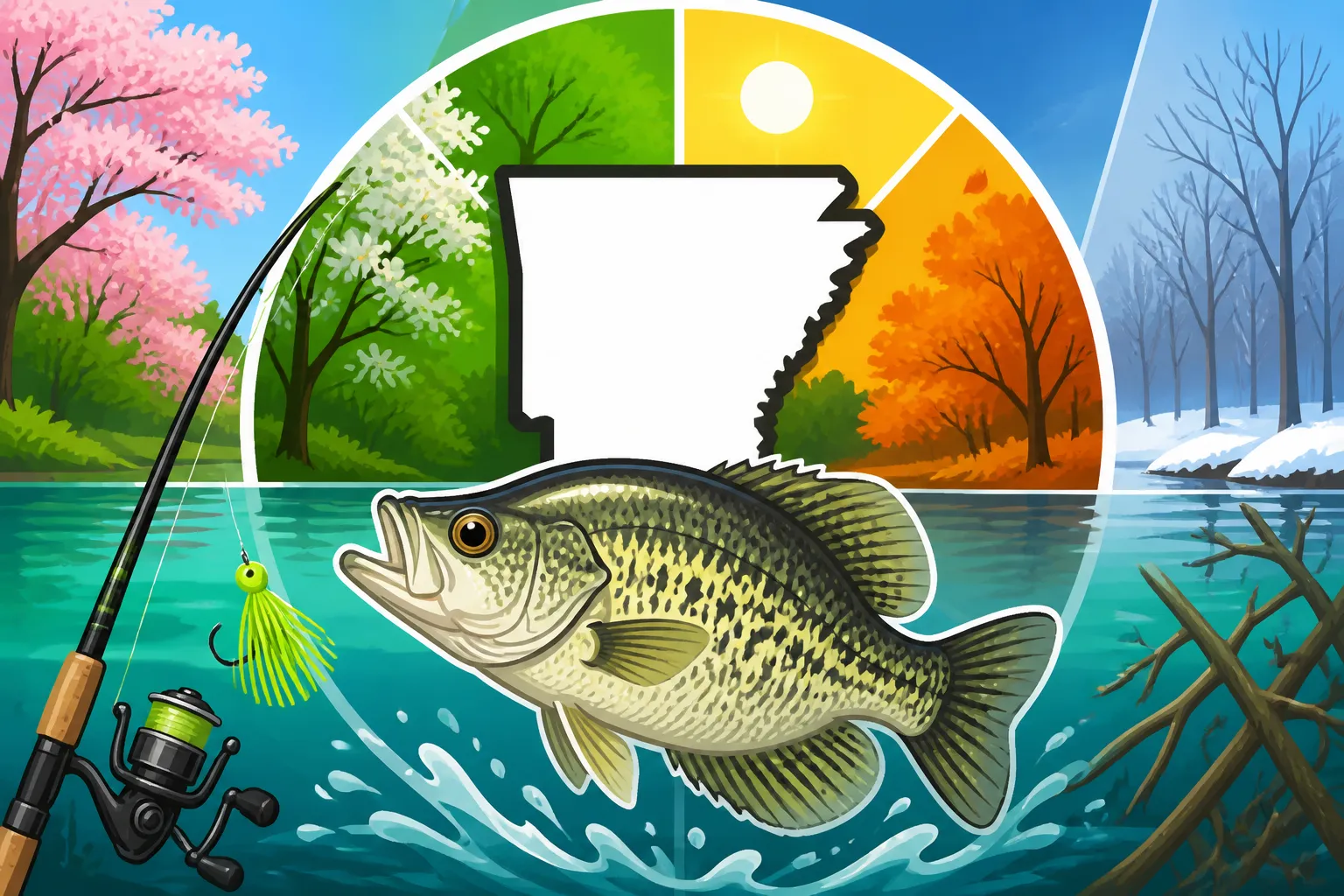
Understanding the Crappie Calendar in Arkansas: Why Timing is Everything
Crappie, whether you're chasing the black or white variety, are incredibly sensitive to their environment, especially water temperature and daylight hours. These factors dictate everything from their feeding habits to their spawning rituals, and if you're fishing against their natural rhythm, you're in for a tough day. Many anglers just head out when they have time, but the seasoned crappie pros know that matching your tactics to the season is far more effective. It's not just about what bait you use, but when and where you present it. Arkansas has some phenomenal crappie fisheries, from the sprawling depths of Lake Ouachita to the timber-filled waters of Lake Conway, and each body of water will see these seasonal shifts play out.
Just like us, crappie have their preferred times for certain activities. During some parts of the year, they'll be shallow and aggressive, practically begging for a bait. Other times, they'll retreat to deep, dark hideaways, requiring a much more patient and precise approach. Ignoring these natural cycles is like trying to convince a teenager to wake up early on a Saturday — you might get lucky, but it's usually an uphill battle! By learning the crappie calendar, you gain a significant advantage, allowing you to predict their movements and adjust your strategy accordingly. This insight is what separates an average fishing trip from a truly epic one.
Spring: The Crappie Spawn Bonanza
Ah, spring in Arkansas! For crappie anglers, this is often considered the holy grail, the time of year when dreams of full stringers become reality. As the dormant winter waters begin to warm, crappie shake off their lethargy and start moving with a purpose: to reproduce. This period can be incredibly productive, but it’s not a single, monolithic event; it unfolds in distinct phases.
The Pre-Spawn Build-Up
Before the actual spawn kicks off, crappie enter a "pre-spawn" phase that is characterized by aggressive feeding. As the water temperatures in the shallows climb from the low 50s into the mid-60s, these fish know it’s time to bulk up for the energy-intensive act of spawning. You’ll find them moving from their deeper winter haunts towards shallower cover, congregating in staging areas like channel bends, points, and the outer edges of brush piles near deeper water. They’re hungry and looking for easy meals.
During this time, crappie are often suspended in the water column, actively chasing baitfish. This is a fantastic time for casting jigs or slowly trolling minnows near structure. You might find large schools of fish in these staging areas, and once you locate them, the action can be fast and furious. The key is to pay close attention to water temperature and try to find those areas where the sun has warmed the water just enough to draw the fish in, but not so much that they've committed to the actual nesting grounds yet. This phase can last a few weeks, offering some of the most exciting fishing of the year.
The Spawning Frenzy
This is what most anglers think of when they talk about spring crappie fishing: the spawn itself. In Arkansas, When Do Crappie Spawn in Arkansas, this typically happens when water temperatures reach a consistent range between 60 and 68 degrees Fahrenheit. Males move into the shallowest waters, often just a few feet deep, to fan out nests around submerged cover like stumps, logs, grass beds, and even rocky banks. The females then move in to lay their eggs, and the males guard the nests.
During the spawn, crappie are less focused on actively feeding and more on defense. However, they are still highly susceptible to a bait or jig presented directly into their nest or nearby. This means sight-fishing can be incredibly effective in clear water, or simply fan-casting to visible cover in stained water. Small jigs, especially those in white, chartreuse, or black-and-chartreuse, presented under a bobber are deadly. Live minnows, fished similarly, are also irresistible. Look for areas with dark bottoms that absorb heat, and plenty of woody cover. While the daily limit is generous, remember to respect the fish during this crucial time and only keep what you'll eat, allowing plenty to reproduce. For specific limits, check Statewide crappie daily limit is 20 fish in most Arkansas waters and Crappie must be 9 inches or longer to keep in Arkansas. Some lakes, like Lake Monticello and Lake Cargile, have special rules, so always check Are crappie limits different at Lake Monticello and Lake Cargile?
Post-Spawn Recovery and Relocation
Once the hectic business of spawning is over, crappie need a little R&R. The females, especially, are exhausted and will retreat to slightly deeper water to recover, often holding on the first significant drop-off or suspended over brush piles adjacent to the spawning flats. The males might hang around the nests for a short period, continuing to guard fry, but eventually, they too will move off.
This post-spawn period can be a bit trickier than the peak spawn, as the fish are more spread out and less aggressively feeding. They're still catchable, though! Focus on transition areas – the routes fish take from shallow to deep water. Look for crappie suspended just off the bottom or around structure in 8-15 feet of water. Slow presentations are key here, perhaps a small jig tipped with a minnow, or even just a plain minnow on a hook. The fish are recouping energy, so they're not going to chase a fast-moving bait. Persistence and good electronics to locate submerged cover are your best friends during this recovery phase. Many of the crappie you catch now will be of good size, having successfully completed their spawning duties.
Summer: Deep Water and Structure Seekers
When the brutal Arkansas summer heat sets in, and the surface water temperatures climb into the 80s, crappie don't just disappear. They simply adjust their preferred environment, seeking out cooler, more stable conditions. This often means moving much deeper, typically to the thermocline (the layer where warm surface water meets cooler deep water), or burying themselves in dense cover. Summer crappie fishing can be fantastic, but it requires a change in tactics.
Finding Crappie in the Heat
During the dog days of summer, crappie will actively search for the cooler, more oxygen-rich waters. This usually means they'll descend to depths of 15-30 feet, sometimes even deeper, depending on the lake and time of day. They'll gravitate towards deep brush piles, submerged timber, bridge pilings, creek channels, and even shaded bluff walls. Your electronics become absolutely invaluable here. A good fish finder can help you pinpoint these deep structures and, more importantly, identify schools of crappie holding tight to them.
Vertical jigging or tight-lining with live minnows are extremely effective methods. How to Find Crappie in Deep Water can be challenging, but once you locate a productive brush pile, you can often catch several fish from it. Drop your bait or jig directly into the cover, watching your electronics to make sure you're getting right to the fish. If you don't have electronics, slowly trolling or drifting minnows at varying depths until you find the bite is a solid strategy. Remember, in hot weather, crappie aren't going to expend much energy chasing, so your presentation needs to be slow and right in their strike zone.
Night Fishing for Summer Crappie
One of the best-kept secrets for summer crappie in Arkansas is night fishing. As the sun sets, the surface waters cool slightly, and crappie will often move up in the water column or closer to baitfish schools that are attracted to lights. Many anglers use submersible green or white lights off their boats or docks. These lights attract zooplankton, which then attract baitfish, and eventually, crappie come to feed on the baitfish. It creates a whole food chain right at your boat!
When night fishing, anchor over a deep brush pile or creek channel, deploy your lights, and let them work their magic for about 30 minutes to an hour. Then, use small jigs or live minnows, fishing them at various depths until you find where the crappie are holding. The fishing can be incredibly consistent and comfortable, as you avoid the intense daytime heat. It’s also a unique experience, with the quiet of the night broken only by the splashes of feeding fish. For those who brave the summer sun, remember to stay hydrated and protect yourself from the sun!
Fall: Feeding Frenzy Before Winter
As summer's grip loosens and the crisp air of autumn descends upon Arkansas, crappie fishing experiences another resurgence. This season, much like spring, offers a fantastic opportunity for anglers, but for different reasons. The cooling water temperatures signal to crappie that winter is coming, and they need to pack on calories. This drives them into another aggressive feeding pattern.
Autumn Migration to Shallower Feeds
When the water temperatures begin to drop from the 80s back into the 70s and 60s, crappie will start to migrate from their deep summer sanctuaries. They follow schools of baitfish, which also become more active as the water cools, moving into shallower areas of the lake, often around creek channels, points, and even shallow flats that have abundant submerged timber or weeds. They're still relating to structure, but that structure might be shallower than what they preferred in summer.
This autumn movement makes crappie more accessible to anglers, including those fishing from the bank in some areas. They become more aggressive in their pursuit of food, making them more willing to chase down a bait. It's a fantastic time for both artificial lures and live bait.
Targeting Fall Crappie
During the fall, crappie can be found at a variety of depths, but they're typically more spread out than during the spawn. Trolling small crankbaits or jigs can be very effective for covering water and locating active schools. Spider rigging, where multiple rods are deployed from the front of the boat to present baits at different depths and distances, is also a popular and productive method. How to Rig a Jig for Crappie Fishing is a good skill to hone for this season.
Look for schools of baitfish on your electronics, as crappie will almost certainly be nearby. They’ll often suspend just below the baitfish schools, picking off stragglers. The cooler temperatures mean the fish are more active, but not as frenzied as during the pre-spawn. They’re still conserving energy to some extent, so a slower, more deliberate retrieve with your jigs or a patient approach with live minnows is usually best. Don't forget to check out some of the Best Crappie Lakes in Arkansas during this prime season, as they'll really be turning on!
Winter: Challenging but Rewarding
Winter fishing for crappie in Arkansas can be a true test of patience and skill, but it's by no means impossible. In fact, for those willing to brave the colder temperatures, winter can offer some surprisingly good fishing and often yields larger, healthier fish. The key is understanding that crappie are far less active in cold water; their metabolism slows down, and they become lethargic.
Slow and Deep: Winter Crappie Habits
As water temperatures plummet into the 40s and low 50s, crappie retreat to the deepest, most stable parts of the lake. They'll stack up tightly in large schools around significant deep structure like channel bends, submerged humps, deep brush piles, and bridge pilings. They're trying to conserve energy, so they won't move much or chase baits very far.
Your approach needs to be incredibly slow and precise. Vertical jigging or tight-lining tiny jigs (1/32 oz or 1/16 oz) or small live minnows directly to the fish is the most effective method. Use your electronics to locate these tight schools of fish. Once you find them, you'll need to drop your bait right into their faces. Don't expect aggressive strikes; often, it's just a subtle "thump" or a slight feeling of added weight on your line. How to Catch Crappie in Cold Water requires a delicate touch and sensitive equipment, so consider a lighter rod and line.
Ice-Free Winter Fishing Strategies
Arkansas rarely sees extensive ice cover on its major lakes, meaning you can typically fish year-round. This is a huge advantage for crappie anglers! While fish are deep, the lack of ice means boat access is usually possible. Targeting areas where creeks or rivers feed into the lake can also be productive, as these areas sometimes have slightly warmer water or more consistent current, attracting both baitfish and crappie.
Another strategy is to look for shad schools in deep water. Crappie will often be suspended directly within or just below these baitfish concentrations. Patience is paramount in winter. You might not get a bite for 10-15 minutes, then suddenly catch three or four fish in quick succession. Dress warmly, bring a thermos of hot coffee or tea, and be prepared for a slower pace of fishing, but the reward of a fresh crappie fillet in the dead of winter is well worth the effort.
Seasonal Crappie Fishing Strategies at a Glance
To make it a bit easier to visualize, here's a quick rundown of the general crappie patterns throughout the year in Arkansas:
| Season | Water Temperature (Approx.) | Location | Key Behavior | Preferred Techniques |
|---|---|---|---|---|
| Early Spring | 50s – 60s F | Staging areas near spawning flats, creek channels | Aggressive feeding (pre-spawn) | Casting jigs, slow trolling minnows |
| Late Spring | 60s – 68 F | Very shallow cover (stumps, grass, docks) | Spawning, nest guarding | Small jigs under bobbers, live minnows (vertical) |
| Summer | 75s – 90s F | Deep structure (brush piles, channels, bridges) | Seeking cool, oxygenated water; lethargic | Vertical jigging, tight-lining minnows, night fishing |
| Fall | 60s – 70s F | Transition areas, shallower cover, creek mouths | Feeding heavily (pre-winter) | Trolling jigs/crankbaits, spider rigging, casting jigs |
| Winter | 40s – 50s F | Deepest holes, main lake channels, dense cover | Lethargic, tightly schooled, conserving energy | Ultra-slow vertical jigging, dead-sticking live minnows |
Essential Gear and Techniques for Year-Round Crappie Success
No matter the season, having the right gear can make a huge difference in your crappie catching success. While specialized gear can certainly help, a few versatile items will serve you well throughout the year in Arkansas. And remember, you don't need to break the bank to get quality fishing gear; places like Amazon offer a wide range of options for every budget.
Rods, Reels, and Line
For crappie, a light to medium-light action rod is generally preferred. This allows you to feel those subtle bites, especially in colder water when crappie are less aggressive. A 6 to 7-foot spinning rod is a popular choice, offering good casting distance and control. Pair it with a small spinning reel spooled with 4-6 pound test monofilament or fluorocarbon line. Monofilament is forgiving and great for beginners, while fluorocarbon offers less stretch and better sensitivity, which can be an advantage when How to Tightline for Crappie in deeper water. Braided line with a fluorocarbon leader can also be an excellent choice for maximum sensitivity and strength while still being virtually invisible to the fish.
Having a few different rod and reel setups can be helpful, especially if you plan on trying various techniques like trolling (where longer rods are often preferred) or vertical jigging (where a shorter, more sensitive rod might be ideal). A good quality rod and reel that feels comfortable in your hands will enhance your fishing experience immensely, regardless of the season.
Baits and Lures for All Seasons
Crappie are not overly picky eaters, but their preferences can certainly shift with the seasons. The ultimate crappie bait for many anglers, year-round, is the simple live minnow. They are natural forage and almost always effective, especially when fished on a simple hook under a bobber or tight-lined. Keep your minnows lively by using a good aerator.
When it comes to artificials, small jigs are king. A 1/16 oz or 1/8 oz jig head paired with a soft plastic body (like a tube, grub, or paddle tail) in various colors will catch crappie almost anywhere. Popular colors include chartreuse, white, black, pink, and various combinations. The best color can vary day by day and by water clarity, so it’s always a good idea to have a selection. You can find excellent multi-packs of crappie jigs and soft plastics on Amazon to build your arsenal. Don't be afraid to experiment with different sizes and shapes of soft plastics. Sometimes, a subtle change can make all the difference. Small crankbaits, particularly those designed for shallow to medium depths, can also be very effective for trolling, especially in fall.
Ultimately, mastering crappie fishing in Arkansas is about observation, adaptation, and patience. By paying attention to the calendar and understanding how these fantastic fish react to changes in their environment, you’ll be well on your way to more successful and enjoyable days on the water.
Disclaimer
This article is for general informational purposes only and does not constitute professional advice. Laws, prices and regulations vary by location and change over time. Consult a qualified professional for guidance on your specific situation.