Smallmouth Bass Size and Growth Rates
It's incredibly frustrating when you're out on the water, casting your heart out for smallmouth bass, and all you seem to reel in are the smaller ones. You look at photos of giant bronzebacks online and wonder, "Do fish like that even exist in Arkansas, and if so, how do they get so big?" This guide is here to shed some light on the fascinating world of smallmouth bass size and growth rates in our beautiful Arkansas waters, helping you understand what to expect and how to find those larger, more mature fish.
Understanding Smallmouth Bass Growth in Arkansas Waters
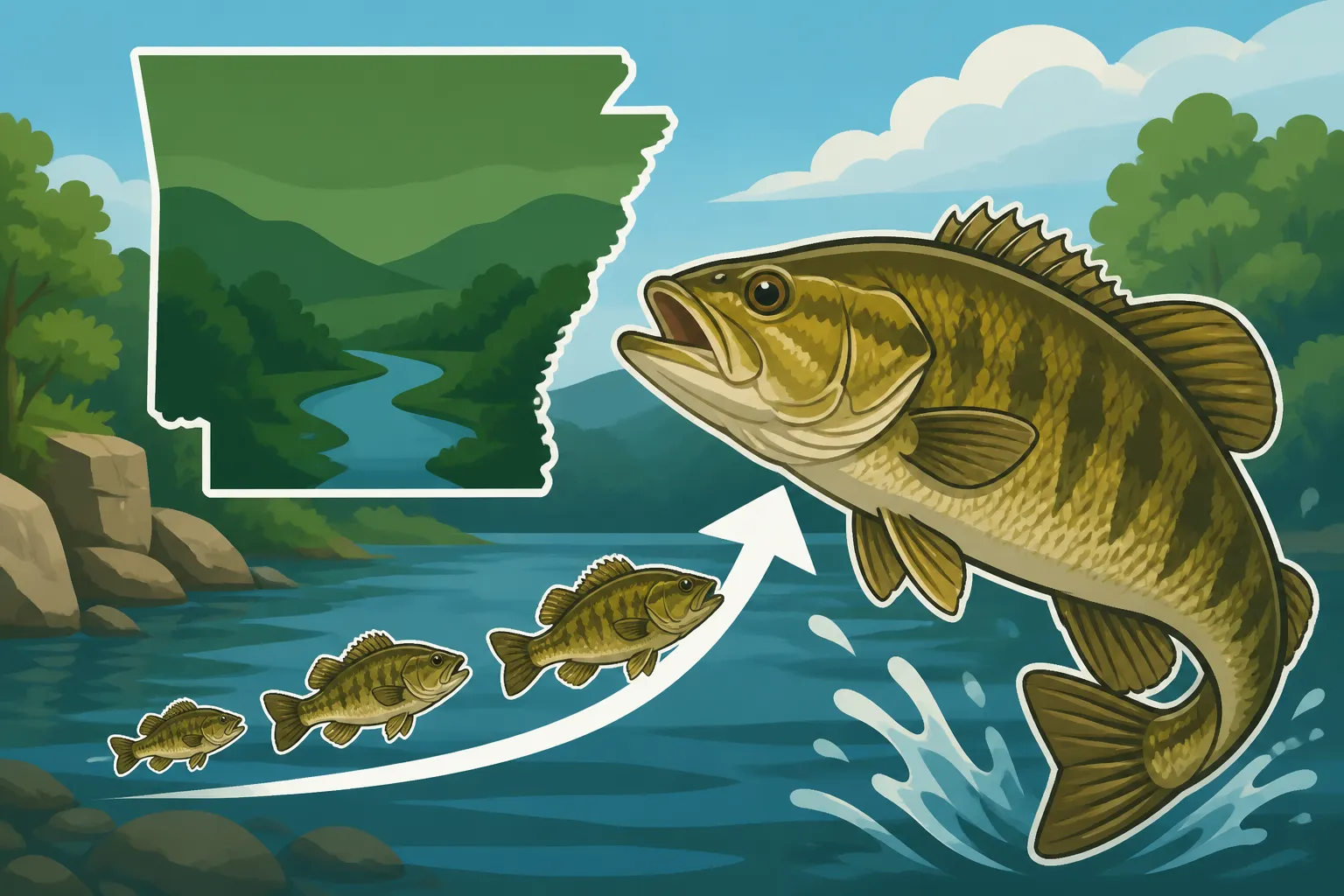
Smallmouth bass, often affectionately called bronzebacks, are a prized game fish throughout Arkansas. Their acrobatic fights and cunning nature make them a challenge and a joy to catch. But just how big do they get, and what makes some grow larger than others? It's not as simple as just "getting older"; there are many factors at play.
Factors Influencing Growth Rates
The growth rate of a smallmouth bass isn't a fixed measurement; it's a dynamic process influenced by a host of environmental and biological factors. Think of it like kids growing up – some shoot up seemingly overnight, while others take their time. For smallmouth, it largely comes down to their surroundings and how much food they can find.
Water temperature plays a huge role. Smallmouth thrive in cooler, clear waters, and fluctuations can impact their metabolism and feeding habits. In areas with consistently good water temperatures, they can feed more actively and grow faster. Habitat is another critical component. Streams and rivers with ample rock structure, deep pools, and current breaks offer ideal ambush points for feeding and provide shelter from predators. If these habitats are abundant, the fish feel safer, spend more time foraging, and can grow without undue stress. Conversely, a lack of good cover or extreme temperatures can stunt growth, as fish expend more energy seeking shelter or dealing with stress rather than growing.
Perhaps the most significant factor is food availability and competition. A smallmouth bass is an opportunistic predator, eating everything from crawfish and minnows to insects and smaller fish. If a particular river or lake has a robust forage base – plenty of protein-rich food – smallmouth will grow faster and larger. Conversely, if there's too much competition for food, or if the prey base is scarce, their growth will be slower. You might find a high number of small fish in such areas, all competing for limited resources. It’s a constant battle for survival and sustenance that directly translates to how big they can get.
Typical Size Ranges for Arkansas Smallmouth
When you're fishing for smallmouth in Arkansas, it's helpful to have a realistic expectation of what you might catch. While every angler dreams of a monster, the reality is that many of the fish you encounter will fall into a predictable size range.
Most of the smallmouth bass caught in Arkansas will typically measure between 10 to 14 inches. These are healthy, feisty fish that provide excellent sport on light tackle. In terms of weight, a smallmouth in this size range usually weighs from 0.75 to 1.5 pounds. They're often 2 to 4 years old, just hitting their stride as active predators. These are the workhorses of the smallmouth population, consistently biting and putting up a good fight. Don't underestimate the joy of catching several of these energetic fish in a day!
However, Arkansas is also home to some truly impressive smallmouth, especially in certain river systems and lakes known for their cooler, clearer waters and abundant food sources. A "good" smallmouth in Arkansas is often considered to be in the 15 to 18-inch range, weighing 2 to 3 pounds. These fish are usually 5 to 7 years old and have been successful predators for quite some time. Anything above 18 inches or exceeding 4 pounds starts to approach "trophy" territory, and these fish are considerably rarer. They represent older, wiser, and more elusive individuals who have survived countless challenges. Catching one of these larger smallmouth is a memorable experience that often requires persistence and skill.
Here's a quick look at general size expectations:
| Age (Years) | Typical Length (Inches) | Typical Weight (Pounds) | Notes |
|---|---|---|---|
| 1-2 | 6-9 | 0.25-0.5 | Juveniles, rapid growth if food is plentiful |
| 3-4 | 10-14 | 0.75-1.5 | Common catch size, strong fighters |
| 5-7 | 15-18 | 2-3 | "Good" size, showing maturity and robust health |
| 8+ | 19+ | 4+ | Trophy potential, rare and highly sought after |
This table provides a general guideline, but remember that growth can vary significantly from one body of water to another due to the factors we just discussed. A smallmouth in a nutrient-rich lake might grow faster than one in a less productive stream, even if they're the same age.
Average Size vs. Trophy Potential
Every angler wants to land a monster, but it's important to differentiate between what's a common catch and what truly qualifies as a trophy smallmouth in Arkansas. The thrill of the chase is often in the pursuit of that exceptional fish, but appreciating the average ones makes the trophy moments even sweeter.
What is a "Good Size" Smallmouth in Arkansas?
For many anglers, a "good size" smallmouth in Arkansas is a fish that truly tests their gear and their patience. While a 10 to 14-inch smallmouth is a fantastic catch and provides plenty of action, most anglers start feeling that extra buzz when they hook into something a bit larger. We're talking about those smallmouth in the 15 to 18-inch range. These fish are powerful, often much thicker through the shoulders, and they jump and dive with an intensity that can surprise even experienced fishermen.
These mid-range fish, weighing in at 2 to 3 pounds, are often considered the sweet spot for a successful day of smallmouth fishing. They're not so rare that they're impossible to find, especially if you're fishing in waters known for healthy smallmouth populations like the Buffalo River or Crooked Creek. Catching several of these in a single outing can make for an incredibly rewarding trip. They represent a healthy, thriving fishery, and their presence indicates good habitat and food availability. Plus, their size makes for excellent bragging rights among fishing buddies! Smallmouth Bass Fishing in Arkansas's Ozark Streams is a great resource if you're looking for where these types of fish typically reside.
It's also worth noting that what constitutes a "good size" can vary slightly depending on the specific body of water. Some smaller, less fertile streams might consider a 14-inch smallmouth a true giant, while on a larger river with more abundant resources, an 18-inch fish might be the benchmark for a "good one." It's all relative, but the general consensus leans towards that 15 to 18-inch class as a highly respectable catch in the Natural State.
The Quest for Trophy Smallmouth
Now, let's talk about the true titans of the smallmouth world in Arkansas – the trophy fish. These are the ones that make your heart pound just thinking about them. A "trophy" smallmouth in Arkansas is typically defined as a fish that pushes past the 19-inch mark, or more impressively, tips the scales at 4 pounds or more. Five-pound smallmouth are exceptional and incredibly rare catches. These are the fish that have survived for many years, navigating predators, harsh weather conditions, and countless lures and baits.
The pursuit of these trophy smallmouth is a different game altogether. You won't typically find them in large numbers; instead, they hold specific, prime territories, often in deep pools with complex structure, strong current breaks, or around abundant food sources. They are wary and experienced, making them difficult to fool. Anglers specifically targeting trophy smallmouth often employ specialized techniques, larger baits that mimic their preferred forage (like big crawfish or substantial swimbaits), and spend countless hours meticulously working prime areas. It's a testament to patience, skill, and understanding the fish's behavior. Smallmouth Bass Size and Growth Rates also gives a good overview of the challenges in finding these fish.
Catching a truly massive smallmouth in Arkansas is often a once-in-a-lifetime event for many anglers. It's the kind of fish that warrants a replica mount and a story you'll tell for years. While the state record smallmouth is considerably larger, even a 4 or 5-pound bronzeback is an absolute giant for Arkansas waters. This quest for the largest fish requires dedication, careful study of their habits, and often a bit of luck, but the reward of landing such a magnificent specimen is unparalleled. Many serious anglers even choose to practice catch-and-release with these larger, older fish to ensure they can continue to spawn and contribute to the fishery's future health.
Arkansas Regulations and Their Impact on Growth
It might not be the most exciting topic, but understanding fishing regulations in Arkansas is crucial for anyone hoping to catch good-sized smallmouth bass. These rules aren't just there to make your life difficult; they're carefully designed by wildlife agencies to ensure healthy fish populations, which directly impacts the average size and growth potential of the fish you encounter.
Minimum Length Limits and Why They Matter
One of the most common regulations you'll encounter when fishing for smallmouth bass in Arkansas is the minimum length limit. For instance, on many of Arkansas's moving waters, like those famous Ozark streams, there's a 12-inch minimum length for smallmouth bass. This means any smallmouth you catch that measures less than 12 inches must be immediately released back into the water. While it might be a bummer to release a feisty 10-inch fish, these regulations are incredibly important.
The primary reason for minimum length limits is to protect juvenile fish and allow them to reach reproductive maturity and spawn at least once, if not multiple times. Smallmouth bass typically begin spawning around 2 to 3 years of age. By allowing fish to grow beyond, say, 12 inches, they've had the chance to contribute to the next generation. This ensures a sustainable fishery and helps prevent overharvesting of younger fish before they've had a chance to reproduce. If too many young fish are removed, the population can decline, and the average size of the remaining fish will shrink over time due to less competition.
These limits also indirectly encourage larger growth. By ensuring a robust population of breeding fish, there's a continuous supply of new recruits. While not a slot limit, the minimum length essentially creates a "protected class" of younger fish. This allows them to continue growing, eventually becoming those 15-inch or larger fish that anglers truly covet. It's a long-term strategy that pays dividends for the overall health and quality of the smallmouth bass fishery, ensuring there's something good to catch for years to come. Checking the current regulations, especially for specific rivers or lakes, is always a good idea before you head out, and a quick search on Amazon for a measuring board is a great investment. For more details, see Smallmouth Bass Rules on Arkansas's Moving Waters Statewide.
Daily Creel Limits and Sustainable Fishing
Beyond minimum length limits, Arkansas also implements daily creel limits for smallmouth bass. On many moving waters, the daily limit for smallmouth is two fish. This means that once you've kept two smallmouth bass that meet the minimum length requirement, you must stop keeping smallmouth for the day, even if you continue to catch more. Again, these limits are in place for the health of the fishery, and they have a direct impact on the growth and overall quality of the fish.
Daily creel limits are a critical tool for preventing overharvesting. Imagine if there were no limits; a few highly skilled or lucky anglers could remove a significant number of mature fish from a localized area in a short amount of time. This would quickly deplete the breeding stock and older, larger fish that contribute valuable genetics to the population. By capping the number of fish an individual can take, these regulations distribute the harvest more evenly among anglers and, more importantly, leave plenty of fish in the water to continue growing and reproducing.
Ultimately, these regulations aim for sustainable fishing. They ensure that enough fish survive to spawn, maintaining a healthy population structure that includes a range of age and size classes. When a population is well-managed, individual fish often have better access to food and habitat, leading to faster growth rates and a higher likelihood of encountering those larger, more desirable smallmouth. Adhering to these limits is not just about following the law; it's about being a responsible angler who contributes to the long-term health and vitality of Arkansas's incredible smallmouth bass fisheries.
Where to Find Larger Smallmouth Bass in Arkansas
So, now that we understand how smallmouth grow and the regulations that protect them, the big question remains: where do you actually find those larger fish in Arkansas? It's not a secret formula, but rather a combination of knowing the right waters and understanding the subtle habits of these exceptional fish.
Key Rivers and Streams Known for Quality Smallmouth
Arkansas is blessed with an abundance of clear, cool-water rivers and streams, particularly in the Ozark and Ouachita mountains, that are prime habitat for smallmouth bass. These aren't just places to catch fish; they're places where smallmouth thrive and grow to impressive sizes. One of the most famous, of course, is the Buffalo River, a National Park Service gem. Its pristine waters, abundant rock structure, and healthy crawfish populations create an ideal environment for smallmouth to grow large. Anglers often report catching smallmouth over 15 inches, with genuine trophy potential in the deeper pools.
Another stellar location is Crooked Creek, known for its consistent smallmouth fishery. It's often overlooked compared to the Buffalo, but it regularly produces quality bronzebacks. The Little Red River, while primarily known for its trout, also holds some excellent smallmouth in its warmer sections and tributaries. Look for areas with ample current, large boulders, and undercut banks. The Cossatot River and parts of the Caddo River in the Ouachitas also offer fantastic opportunities, especially for those willing to hike into more remote sections. These waters generally maintain cooler temperatures, have good oxygen levels, and offer a rich food base, all contributing to better growth rates for smallmouth bass. Arkansas's Best Rivers for Trout, Bass, and Catfish offers an excellent overview of these fishing destinations.
When choosing a spot, look for waters that are less pressured, if possible, and have those key characteristics: clear water, rocky bottoms, plenty of current, and deep pools. These are the places where smallmouth can grow old, wise, and very, very large. Often, the best spots require a bit of effort to reach, whether it's floating by canoe or kayak, or wading through some trickier terrain. But that extra effort is usually rewarded with a better chance at hooking into a quality smallmouth.
Best Practices for Targeting Bigger Fish
Catching the average smallmouth is fun, but if you're specifically targeting the bigger, more mature fish, you'll need to adjust your approach. Larger smallmouth are not just bigger versions of smaller fish; they are often more cautious, experienced, and hold different positions in the water. One of the best practices is to focus on understanding their preferred habitat within a given body of water. Trophy smallmouth often relate to specific, prime pieces of structure – a large submerged boulder, a deep current seam where food is funneled, or a substantial log jam. They might not be in the same spots as the smaller, more abundant fish.
Timing is another crucial factor. While smallmouth can be caught throughout the day, the largest fish are often most active during low-light conditions, such as dawn, dusk, or even on overcast days. These periods provide them with a predatory advantage and make them feel more secure. Using larger baits and lures can also be effective. While smaller smallmouth will hit almost anything, bigger fish are often looking for a more substantial meal. Think larger tubes, big jigs with bulky trailers, or crankbaits that mimic a sizable crawfish or baitfish. Live bait, like a hefty crawfish or a large shiner, can also be irresistible to a trophy bronzeback. Many experienced anglers swear by slowly working these larger offerings through prime holding water.
Finally, patience and persistence are your greatest allies. You might not get as many bites when targeting trophy smallmouth, but the bites you do get are usually from higher-quality fish. Be methodical, cover water thoroughly, and pay attention to every detail of the environment. Remember that these older, larger fish are a testament to successful survival, and convincing them to bite is a challenge worth taking on. For more ideas on how to specifically target these bigger fish, checking out guides on Bass Fishing Techniques for Beginners can also provide a solid foundation for more advanced tactics.
Disclaimer
This article is for general informational purposes only and does not constitute professional advice. Laws, prices and regulations vary by location and change over time. Consult a qualified professional for guidance on your specific situation.