Where to Find Smallmouth Bass in Arkansas
Chasing smallmouth bass in Arkansas can feel like a real treasure hunt, especially if you're used to casting for their largemouth cousins. These feisty, bronze-backed fighters have specific tastes when it comes to their home, and simply hitting any old body of water won't cut it. This guide is here to unravel the mystery, helping you pinpoint exactly where these incredible game fish thrive in the Natural State, giving you a much better chance at a successful and thrilling outing.
Understanding Smallmouth Bass Habitats in Arkansas
Smallmouth bass are particular about their living arrangements, and understanding their preferred environment is the first step to finding them. Unlike largemouths who love thick cover and murky water, smallmouths are creatures of clarity and current. They seek out conditions that allow them to ambush prey efficiently and stay healthy.
The Allure of Cooler, Clearer Waters
Smallmouth bass are often found in waters that have a noticeably higher level of clarity and tend to run cooler, especially in the summer months. This preference isn't just about aesthetics; it's deeply tied to their survival and feeding habits. Clear water allows them to spot their prey from a distance, utilizing their keen eyesight to full advantage. Imagine trying to hunt in a dimly lit room versus one with bright sunshine – that's the difference clear water makes for a smallmouth.
Furthermore, cooler water holds more oxygen, which is crucial for active, hard-fighting fish. You won't typically find healthy smallmouth populations baking in shallow, stagnant ponds on a hot August afternoon. They gravitate towards areas where there's a constant flow or deep, thermally stable pockets. This current also brings them a continuous supply of food, from insects to baitfish, without them having to expend too much energy searching. It creates natural conveyor belts of sustenance, making these areas prime hunting grounds.
Rocky Structures and Bottoms are Key
If you're looking for smallmouth, you need to think like a rock climber – because they certainly do! These fish absolutely adore rocky environments. We're talking about everything from small gravel beds to substantial boulders, ledges, and even sheer rock bluff walls. This preference is multifaceted. Firstly, rocky bottoms provide excellent camouflage for a fish that relies on ambush predation. They can blend into the shadows and crevices, darting out to snatch unsuspecting minnows or crayfish.
Secondly, these structures create vital current breaks. In rivers and streams, smallmouth will often sit just out of the main flow, conserving energy while waiting for food to be swept past them. A large boulder can create a perfect eddy right behind it, offering a comfortable resting spot. In lakes, rocky points and humps provide transition zones and deep-water access, acting as highways for baitfish and crawfish. These areas are also teeming with the invertebrates that form the base of the food chain, making them natural larders for hungry bass. You'll rarely find smallmouth in soft, muddy, or heavily vegetated bottoms; they prefer hard structure that offers protection and an abundant food supply.
Prime River and Stream Locations for Smallmouth Bass
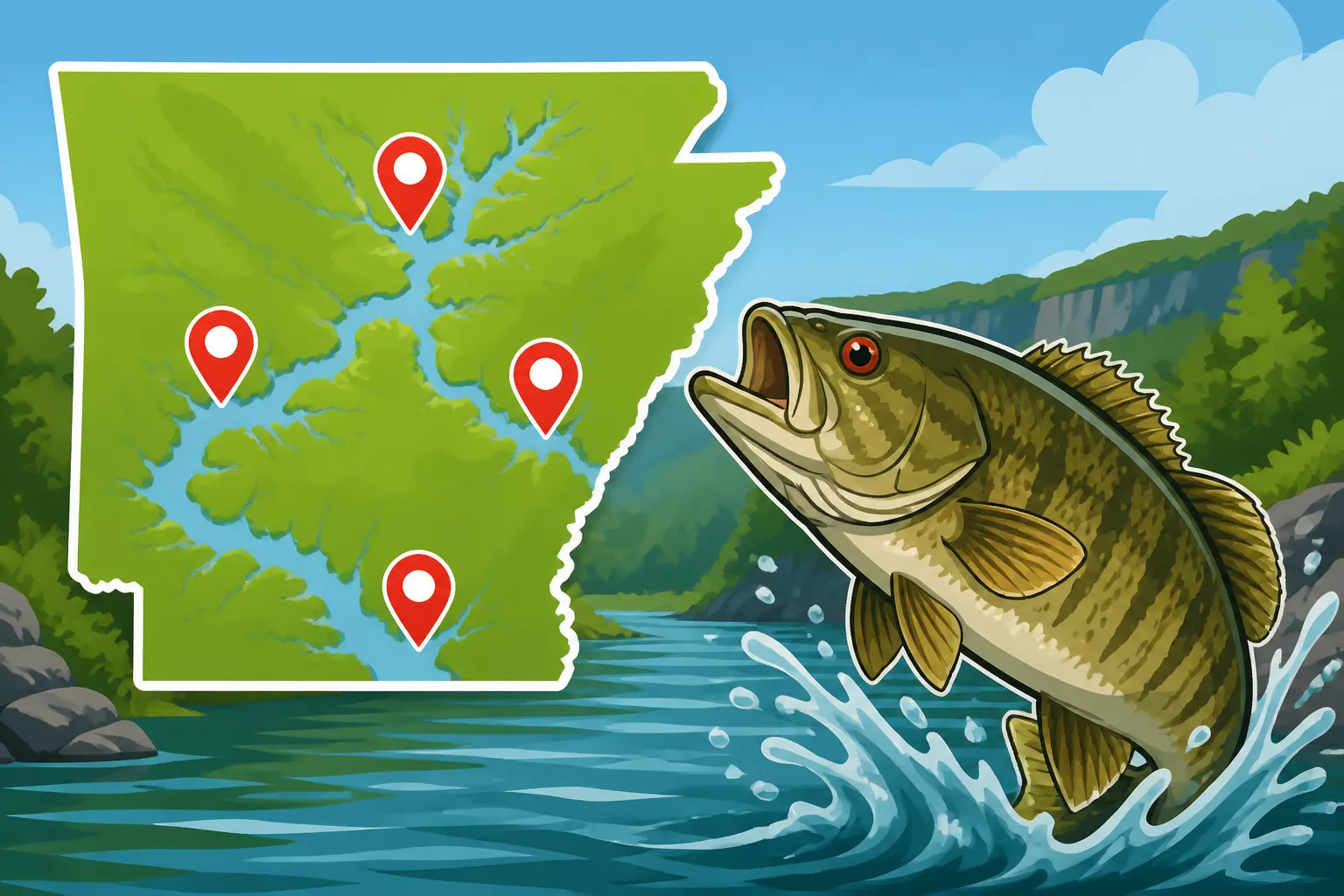
Arkansas is a gem for smallmouth enthusiasts, particularly in its northern and western regions, which are blessed with flowing water originating from the Ozark and Ouachita Mountains. These waterways are the bread and butter for many anglers seeking bronze.
The Ozark and Ouachita Mountain Streams
When we talk about smallmouth bass in Arkansas, our minds immediately turn to the pristine, free-flowing rivers of the Ozarks and Ouachitas. These aren't your slow-moving, muddy delta streams; these are characterized by crystal-clear water, abundant rock structure, and a healthy current.
The Buffalo National River is practically legendary. As the first national river, its protected status means it runs wild and free, offering incredible smallmouth fishing. You'll find long, clear pools interspersed with exciting shoals and riffles. Access can sometimes be tricky, requiring a canoe or kayak for the best spots, but the reward is worth it. Think about floating leisurely down, casting towards submerged logs and rocky banks. The scenery alone is worth the trip, and a chunky smallmouth is the cherry on top.
The White River, specifically its upper, free-flowing sections before it turns into the cold tailwater below the major dams, holds a strong smallmouth population. Many associate the White with trout, but upstream, it's a completely different fishery. Look for stretches around the headwaters where the current is more pronounced and the bottom is rocky. Then there's the Kings River, another jewel in the Ozarks, known for its consistent smallmouth action and stunning beauty. It's often wadable in many spots during lower flows, making it accessible for those without a boat.
Don't forget the upper reaches of the Little Red River, again, above the cold-water impoundment. Here, you'll find classic smallmouth habitat. Further west, the Little Missouri River in the Ouachitas, particularly in its clearer, rockier sections, can produce some excellent smallmouth. Its wild nature makes it a true adventure. Beyond these major players, numerous smaller, unnamed creeks and tributaries feed into these systems. These can be incredible spots for the adventurous angler willing to hike in and explore. They often hold less pressure and provide a more intimate fishing experience. Just be sure to check local regulations, as Smallmouth Bass Limit Rules on Arkansas's Moving Waters Statewide are strictly enforced to protect these precious fisheries.
Identifying Productive River Sections
So, you've found a promising river – now what? Not every foot of water will hold smallmouth. Learning to read the water is paramount. Look for changes in current and depth, as these are natural attractors.
Current seams are where faster water meets slower water. Smallmouth will often sit in the slower water, waiting for food to drift by in the faster current. These are prime ambush points. Similarly, eddies – pockets of calm water created by obstructions like large boulders or fallen trees – offer a resting place out of the main flow while still providing easy access to passing prey.
Pools are the deeper, slower sections of a river, often found after a riffle or shoal. Smallmouth will retreat to these areas for safety and comfort, especially during brighter parts of the day or in colder weather. However, it's the structure within or around these pools that really counts. Look for submerged logs, large boulders, or ledges that create hiding spots. Riffles and shoals – the shallower, faster-moving sections – are feeding zones where smallmouth will move up to chase baitfish or pick off insects.
Overhanging cover from trees or undercut banks provides shade and protection, especially when the sun is high. Any downed trees or log jams in the water create complex cover that attracts both smallmouth and their prey. Finally, keep an eye out for rock gardens – areas with a scattered collection of rocks and boulders on the bottom. These are classic smallmouth havens, offering endless nooks and crannies. Learning to identify these features will dramatically increase your success rate, no matter which Arkansas river you choose to explore.
Reservoir and Lake Spots for Smallmouth Bass
While rivers get a lot of the smallmouth glory, Arkansas's major reservoirs also host thriving populations, though often requiring a different approach. These are typically deep, clear, and rocky lakes built on those same Ozark and Ouachita Mountain river systems.
The Big Lakes with a Smallmouth Presence
Some of Arkansas's largest and most famous lakes are fantastic for smallmouth, especially if you know where to look. These aren't the muddy, timber-filled lakes of the delta; they're highland reservoirs carved into rocky terrain.
Bull Shoals Lake is arguably the crown jewel for smallmouth fishing in Arkansas, if not the entire region. This massive reservoir, stretching across the Arkansas-Missouri border, is known for its incredibly clear water and endless rocky bluffs, points, and humps. Smallmouth here often grow to impressive sizes, living in the lake's depths and along its extensive structure. Bull Shoals Lake Fishing Guide for Bass and Crappie provides more details on what makes this lake so special. Fishing here requires a boat and good electronics to locate submerged structures, but the rewards are significant.
Norfork Lake, another stunning Ozark impoundment, also boasts a robust smallmouth fishery. Like Bull Shoals, it's characterized by deep, clear water and abundant rock. While Norfork is perhaps most famous for its striped bass, the smallmouth here are plentiful and aggressive, often inhabiting similar rocky main lake points and humps. Norfork Lake: One of Arkansas's Best Striped Bass Fisheries still features plenty of smallmouth, often caught incidentally by striper anglers, proving their presence.
Beaver Lake, located further west near Fayetteville, also has a decent smallmouth population, though perhaps not as prolific as Bull Shoals or Norfork. It shares the same clear water and rocky shoreline characteristics of its Ozark counterparts. Anglers here can find smallmouth around bluff ends, main lake points, and deeper creek channels. While they might be fewer in number compared to largemouth, the smallmouth caught from Beaver Lake are usually solid, healthy fish. You'll find that these larger bodies of water require different tactics, often involving targeting deeper structure and more precise presentations.
Targeting Reservoir Smallmouth
Fishing for smallmouth in reservoirs demands a strategic shift from river tactics. These fish are often deeper and roam more widely, making electronics an essential tool. You're looking for underwater versions of their riverine homes – rocky structure, changes in depth, and current breaks (even subtle ones caused by wind or thermoclines).
Deep points that extend into the main lake are prime targets. Smallmouth will patrol these areas, especially where there's a quick drop-off. Similarly, main lake humps or submerged islands offer excellent habitat. These can be magnets for baitfish, which in turn attract hungry smallmouth. Look for these structures using your sonar, paying close attention to any rock piles or broken bottom features. Bluff ends where vertical rock walls drop into deep water are also key areas. Smallmouth will relate tightly to these sheer faces, especially on sunny days, moving up and down the water column to feed.
Transition areas where different types of bottom meet – for instance, where rock gives way to gravel, or gravel to sand – can also be productive. These subtle changes often signify feeding lanes or areas where crawfish congregate. Finesse techniques are often the most effective for reservoir smallmouth. Vertical jigging small spoons or blade baits over deep structure can be deadly. Drop-shotting soft plastics, especially tube jigs or small worms, allows for a slow, subtle presentation that appeals to finicky fish. When buying these, always check online retailers like Amazon for a wide selection and competitive pricing, as having a variety of colors and sizes can make a real difference. For more active fish, small crankbaits that dive to the appropriate depth, or jerkbaits worked over submerged points, can trigger aggressive strikes. Remember, patience and persistence are key when tackling reservoir smallmouth, as they can sometimes be spread out across vast amounts of water.
Essential Gear and Tactics for Arkansas Smallmouth
Once you've zeroed in on the right locations, having the proper gear and understanding effective tactics will greatly enhance your chances of success. Smallmouth are known for their powerful, acrobatic fights, and being prepared means you can land more of these awesome fish.
Rods, Reels, and Line Choices
The right setup for smallmouth bass fishing is often about sensitivity and balance, allowing you to feel subtle bites and handle strong runs.
For most smallmouth scenarios, particularly with lighter baits in clear water, a medium-light to medium power spinning rod is an excellent choice. Look for one with a fast action tip, which provides the sensitivity needed to detect those faint taps and a quick backbone for solid hooksets. A rod in the 6'6" to 7'2" range offers a good balance of casting distance and maneuverability. Pair this with a reliable spinning reel in the 2000-3000 size, spooled with 6-10 lb fluorocarbon line. Fluorocarbon is fantastic for smallmouth due to its low visibility in clear water and its excellent sensitivity, allowing you to feel every bump and tick on the bottom.
If you're throwing slightly heavier baits or fishing in areas with more cover, a medium power casting rod (again, with a fast action) can be a good option. For line, many experienced anglers prefer braided line (10-20 lb) with a fluorocarbon leader (6-10 lb). The braid offers incredible casting distance and no stretch for powerful hooksets, while the fluorocarbon leader maintains the stealth factor right near your bait. The importance of sensitivity cannot be overstated; smallmouth bites can be incredibly subtle, feeling like nothing more than a slight weight on your line. A sensitive rod and low-stretch line are your best friends here. You can often find great quality fishing line on platforms like Amazon, offering a wide range of brands and types to match your preference.
Go-To Baits and Lures
Smallmouth bass are opportunistic predators, but they often respond best to baits that mimic their natural forage – crawfish, minnows, and various insects. Having a selection of these key baits is crucial.
Tube jigs are practically legendary for smallmouth. Their subtle spiraling fall perfectly imitates a dying baitfish or a crawfish trying to escape. Rigged on an internal jig head, they're incredibly versatile for dragging, hopping, or swimming. Pair them with natural colors like green pumpkin, watermelon, or brown for the best results. Similarly, grubs (single-tail or double-tail) on a light jig head are dynamite, especially when fished around rocky bottoms.
When the fish are active, small crankbaits (diving to 4-10 feet) that mimic shad or minnows can be very effective, especially those with a tight wobble. Jerkbaits, twitched and paused, are incredible for suspending fish or triggering reaction strikes, particularly in cooler water. Don't overlook topwater lures like small poppers or walking baits on calm mornings or evenings when smallmouth are aggressively feeding on the surface. There's nothing quite like a smallmouth blowing up on a topwater lure!
For finesse presentations, especially in clear water or when fish are pressured, small swimbaits (2-3 inches) on a jig head or creature baits (like small crawfish imitations) on a lightweight Texas or Carolina rig can be very productive. Having a diverse tackle box, filled with a range of sizes and colors, is key. Many anglers find it convenient to stock up on these essentials through online retailers like Amazon before heading out, ensuring they have everything they need for a successful trip.
The Importance of Stealth and Presentation
Smallmouth bass, especially in clear Arkansas waters, can be incredibly wary. Your approach and how you present your bait can make or break your day.
Stealth is paramount. Avoid loud noises in your boat or on the bank. Make long casts to avoid spooking fish, especially in shallow, clear water. Position your boat quietly and upstream if possible in rivers, letting the current carry your bait naturally into productive zones. Think about what a fish would see or feel – heavy footsteps on the bank, a boat motor roaring overhead, or a shadow cast over their position can send them darting for cover.
Matching the hatch means selecting baits that closely resemble what the smallmouth are currently feeding on. If you see tiny minnows, use a small, silver jig. If you see crawfish scurrying, use a brown or orange tube jig. Observe the water and try to identify the local forage.
Finally, reading the water – that intuitive skill of knowing where a fish might hold – comes with practice. Look for those current seams, eddies, rock piles, and submerged timber we discussed earlier. Present your lure in a way that looks natural, whether it's slowly dragging a tube jig along the bottom, or twitching a jerkbait with realistic pauses. Remember, smallmouth are predators, so a well-presented lure that looks like easy prey will almost always get their attention. Pay attention to how the current affects your lure and adjust your retrieve accordingly.
| Location Type | Primary Characteristics | Best Tactics & Lures | Common Access | Key Considerations |
|---|---|---|---|---|
| Rivers/Streams | Clear, rocky, flowing water, diverse structure | Tube jigs, grubs, small crankbaits, topwater, spinnerbaits | Wade, Kayak, Canoe, Small Jon Boat | Stealth, reading current, natural presentation, seasonal flows |
| Reservoirs/Lakes | Deep, clear water, rocky points, humps, bluffs | Drop-shot, vertical jigs, jerkbaits, deep-diving crankbaits | Boat (w/ electronics), Shore (limited) | Locating deep structure, finesse techniques, weather changes |
Disclaimer
This article is for general informational purposes only and does not constitute professional advice. Laws, prices and regulations vary by location and change over time. Consult a qualified professional for guidance on your specific situation.