Best Lures for Largemouth Bass Fishing
It's a common dilemma, isn't it? You're out on an Arkansas lake, the sun's just right, but those elusive largemouth bass seem to be playing hard to get. Every angler knows the frustration of throwing everything in their tackle box without a bite. This guide is all about cutting through the noise and helping you discover the most effective lures for largemouth bass fishing in Arkansas, giving you the confidence to entice those trophy fish.
Understanding Largemouth Bass Behavior and Feeding Habits
Before we even talk about specific lures, it’s vital to understand what makes a largemouth tick. These incredible fish aren't just swimming around aimlessly; they have distinct behaviors influenced by factors like water temperature, time of year, and available forage. If you can understand why they bite, you'll have a much better chance of picking the right lure.
Why Bass Strike: Instincts and Opportunities
Largemouth bass are opportunistic predators with strong instincts. They strike for a few primary reasons:
- Hunger: This is the obvious one. They're looking for a meal, and if your lure imitates their natural prey convincingly, you're in business. Think about what they naturally eat in Arkansas waters: shad, crawfish, bluegill, and even smaller bass. If your lure looks, moves, or even smells like one of these, it's a prime target.
- Territorial Aggression: Especially during the spawn, bass become highly protective of their beds. A lure encroaching on their space, even if it doesn't look like food, can trigger a violent strike. This is where bright, erratic lures can be very effective, as they look like a threat that needs to be removed.
- Reaction Strikes: Sometimes, a bass isn't necessarily hungry or territorial, but a sudden, unexpected movement or flash from a lure can trigger an automatic, instinctual strike. This often happens when a lure quickly passes through their strike zone, giving them no time to think, only to react. This is a common tactic in pressured waters or when fish are sluggish.
Understanding these motivations allows you to select a lure that appeals to the bass's current mood. Are they actively feeding on baitfish in open water? Are they tucked deep in cover protecting their home? Or are they just lethargic, needing a wake-up call? The more you observe and adapt, the more success you'll find on Arkansas's beautiful waterways, from Lake Ouachita: Arkansas's Largest Lake for Bass and Crappie Fishing to smaller local ponds.
Seasonal Bass Behavior in Arkansas Waters
The time of year in Arkansas drastically changes how and where largemouth bass behave, and thus, which lures shine.
- Spring (Pre-spawn and Spawn): This is a magical time! As water temperatures rise into the 50s and 60s Fahrenheit, bass move to shallower waters. They're aggressively feeding to bulk up for the spawn (pre-spawn) and then become highly protective during the spawn itself. You'll find them around submerged timber, docks, and rocky banks. Lures that mimic crawfish or slow-moving baitfish are excellent. Shallow-running crankbaits, jigs, and soft plastic creatures are fantastic choices. For more on this, check out When Do Bass Spawn in Arkansas Reservoirs.
- Summer: The dog days of summer mean hot water. Bass often move to deeper, cooler water, seeking shade under thick cover like lily pads, submerged brush piles, or along ledges and drops. Early mornings and late evenings can still bring them shallow. Deep-diving crankbaits, Texas-rigged worms, topwater lures (for low light), and jigs are summer staples. Don't miss our guide on How to Find Bass in Summer Heat.
- Fall: As water temperatures cool down, bass become incredibly active again, often mimicking spring-like feeding frenzies as they fatten up for winter. They'll chase baitfish in open water and around points. Crankbaits, spinnerbaits, jerkbaits, and soft plastic flukes are deadly in the fall.
- Winter: Fishing can be tough, but not impossible. Bass move to the deepest, most stable water they can find, often near vertical structure or deep points. They become sluggish. Slow presentations with jigs, spoons, and subtle shaky head worms are your best bet. Think small movements, long pauses.
Knowing these seasonal shifts is like having a secret weapon in your tackle box. It tells you when to use what, instead of just guessing.
Top Lure Categories for Largemouth Bass in Arkansas
Alright, let's dive into the specifics! While there are countless lures out there, most fall into a few key categories, each with its own strengths. Having a solid understanding of these will help you choose wisely whether you're fishing a clear Ozark stream or a murky Delta lake.
Soft Plastics: The Versatile Workhorses
Soft plastics are, hands down, one of the most versatile and effective lure categories for largemouth bass. They come in an astonishing array of shapes, sizes, and colors, allowing for endless customization to match conditions and preferences.
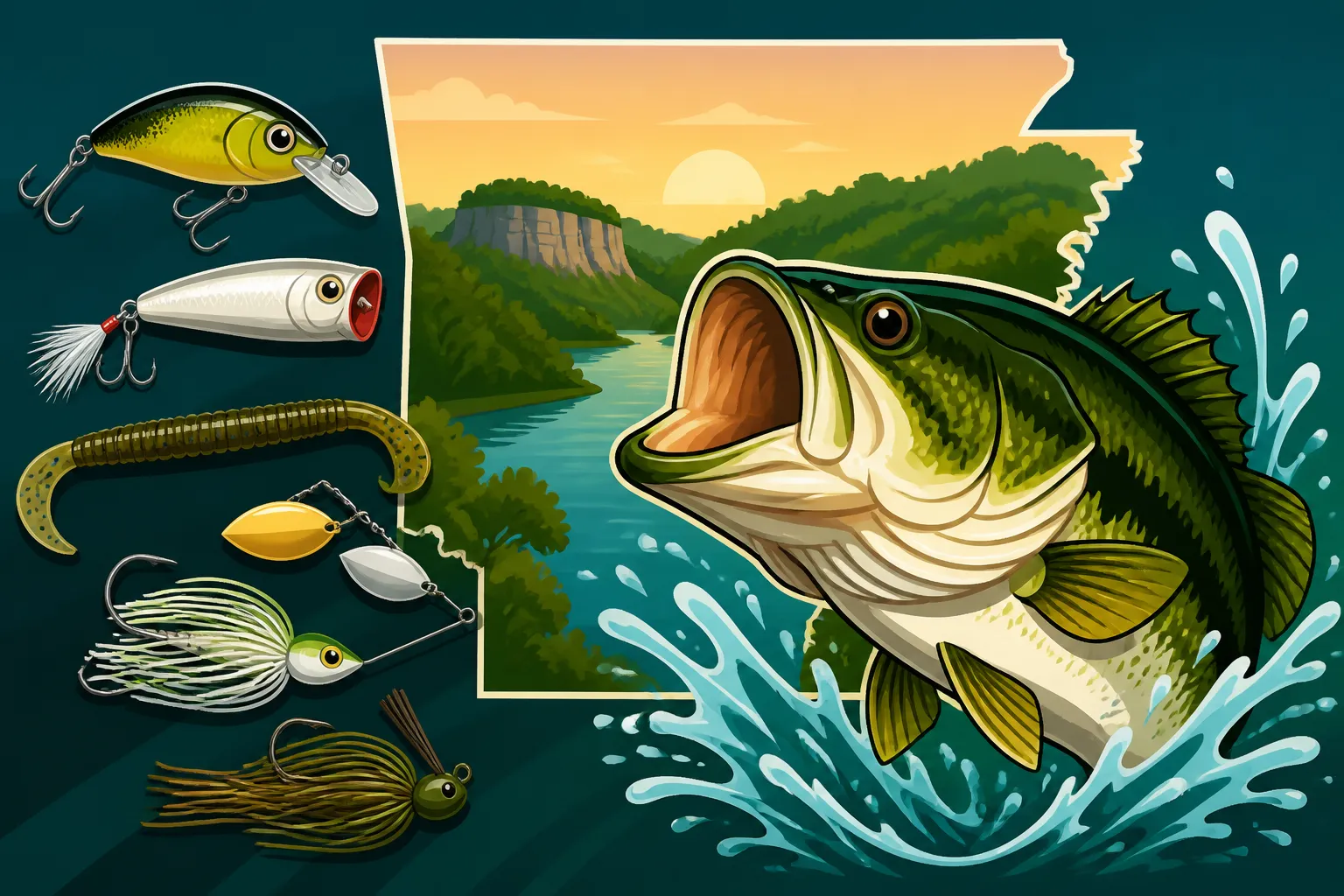
- Plastic Worms: The classic. From straight-tail worms to ribbon-tail varieties, these are incredibly effective. A Texas rig is probably the most common way to fish them, allowing you to slip through heavy cover without snagging. Try a green pumpkin or junebug color in most Arkansas waters. They are fantastic when bass are finicky or holding tight to cover. You can find massive variety packs and specific brands on Amazon to experiment with different sizes and tail actions.
- Creature Baits & Jigs: These baits, often fished with a lead jig head, imitate crawfish, a primary food source for bass in Arkansas. Their flapping appendages and subtle movements are irresistible to bass looking for a meal near the bottom. Jigs are phenomenal around submerged timber, rock piles, and docks. Pairing a jig with a soft plastic trailer that matches its color and adds bulk can make all the difference. Many anglers have a go-to jig for specific Arkansas lakes, especially for those bigger bass.
- Senkos and Stick Baits: The simplicity of a Senko is its genius. These cylindrical, soft plastic sticks have a unique shimmy on the fall that bass absolutely cannot resist. Wacky rigged or Texas rigged, they are exceptional when fished slowly around cover. They have a subtle, natural presentation that works wonders when the bite is tough. They don't have a lot of built-in action, so how you retrieve them matters, but their shimmy on the fall is legendary.
| Lure Type | Best Application | Key Advantages | Common Colors |
|---|---|---|---|
| Plastic Worms | Heavy cover, sluggish fish, Texas rigging | Weedless, versatile, subtle action | Green Pumpkin, Junebug |
| Creature Baits | Bottom-feeding bass, imitating crawfish | Excellent around structure, strong vibration/flaps | Black/Blue, Watermelon |
| Senkos/Stick Baits | Finicky fish, slow fall presentation, shallow cover | Unique shimmy on the fall, natural look | Green Pumpkin, Black |
Crankbaits: Covering Water and Triggering Strikes
Crankbaits are fantastic for covering a lot of water quickly and triggering aggressive reaction strikes. They come in various lip designs that dictate their diving depth and action.
- Shallow-Diving Crankbaits: These run just under the surface or a few feet deep. They're excellent for fishing flats, shallow points, and sparse cover, especially in spring and fall. Their erratic deflections off cover can be irresistible. Think about the many shallow coves and creek channels you find in lakes like Lake Conway or Beaver Lake; these are prime spots for a shallow crank.
- Medium-Diving Crankbaits: These dive 5-12 feet, hitting that mid-depth range where bass often suspend or hold on ledges. They're workhorses for covering drops, submerged points, and open water schools of baitfish. They often have a tight wobble, mimicking a frantic baitfish.
- Deep-Diving Crankbaits: When bass go deep in summer or winter, a deep-diver is essential. These lures can reach depths of 15-25 feet or more, bumping off the bottom and provoking strikes from otherwise lethargic bass. They're perfect for targeting deep structure and ledges on large reservoirs. It takes a powerful rod and reel setup to throw these, but the rewards can be massive.
When selecting a crankbait, consider the bill shape, which determines its diving depth and action. Larger, more vertical bills mean deeper dives and a wider wobble. Smaller, more horizontal bills mean shallower dives and a tighter wobble. Color choice should also mimic local baitfish, so shad patterns are often a safe bet.
Spinnerbaits and Chatterbaits: Flash and Vibration
These lures are all about attracting attention with flash, vibration, and erratic movement. They're fantastic search baits, helping you locate active fish.
- Spinnerbaits: With their flashy blades (Colorado, Willowleaf, or Indiana) and pulsating skirt, spinnerbaits are incredibly versatile. They can be slow-rolled deep, burned across the surface, or jigged through cover. They excel in murky water due to the vibration they create and in windy conditions when bass are scattered. They're also relatively weedless, making them great for fishing around grass beds or submerged brush. Many anglers swear by spinnerbaits in the prespawn period, especially in chartreuse or white, when bass are cruising for a meal.
- Chatterbaits (Bladed Jigs): These lures combine the flash of a spinnerbait with the erratic action of a crankbait and the profile of a jig. The unique bladed head creates an intense vibration and side-to-side hunting action that bass find irresistible. They're excellent around grass, docks, and rocky areas. Try a black and blue chatterbait with a matching trailer for a killer presentation. They are truly one of the most effective lures for a reaction strike. You can find some excellent deals on both spinnerbaits and chatterbaits on Amazon, allowing you to stock up on different blade configurations and skirt colors.
Both spinnerbaits and chatterbaits are power fishing tools. They allow you to cover water quickly and are especially effective when bass are aggressive or when fishing stained water where visibility is low.
Topwater Lures: Explosive Action
There’s nothing quite like the heart-stopping excitement of a largemouth bass exploding on a topwater lure. These baits work on the surface, creating commotion that draws strikes from aggressive fish.
- Poppers and Chuggers: These lures have a cupped face that "chugs" or "pops" water when retrieved, creating a disturbance that mimics a struggling baitfish or frog. They're best fished with a retrieve-pause-retrieve cadence. They work wonderfully around shallow cover in low light conditions, such as dawn or dusk.
- Walk-the-Dog Baits: These slender, cigar-shaped lures are designed to be retrieved with a specific rod twitching motion that makes them "walk" from side to side across the surface. This serpentine action is incredibly enticing and can draw strikes from surprising distances. They are particularly effective in calm water, mimicking an injured baitfish.
- Frogs and Toads: Soft plastic frogs, often weedless, are perfect for fishing over dense lily pads, matted vegetation, or heavy cover where other lures would snag immediately. They imitate a frog or mouse struggling on the surface. The strikes are often violent and can be exhilarating. These are a blast to fish on some of Arkansas's weedier lakes during the warmer months.
Topwater fishing is usually best in low light conditions (early morning, late evening, or overcast days) and warmer water temperatures. It's an active way to fish that requires patience, but the rewards are truly unforgettable.
Matching Your Lure to Arkansas Water Conditions and Seasons
Knowing your lures is one thing, but knowing when and where to throw them in Arkansas is the real secret sauce. Every lake, every river, even different sections of the same body of water, can present unique challenges and opportunities.
Water Clarity and Color Considerations
The clarity of the water you're fishing is a huge factor in lure selection.
- Clear Water: In clear waters like sections of Bull Shoals Lake or Beaver Lake, bass rely heavily on their eyesight. This means you want lures with a more natural look, subtle colors, and realistic finishes. Clear or translucent lures, natural baitfish patterns (shad, sunfish), and muted greens and browns tend to work best. Light line and a more finesse presentation are often necessary. If a bass can see your line or a brightly colored, unnatural lure from a mile away, they're less likely to strike.
- Stained or Murky Water: Many Arkansas lakes, especially after a good rain or in the Delta region, can be stained or murky. Here, bass rely more on vibration and profile than sight. Lures that create a lot of disturbance – like spinnerbaits, chatterbaits, and loud crankbaits – are excellent. Bright, contrasting colors such as chartreuse, white, black, and blue patterns stand out better in low visibility. The idea is to make your lure easy for the bass to find, even if they can't see it clearly. This is where those thumping blades and rattling chambers really earn their keep.
Matching Lures to Common Arkansas Forage
Arkansas largemouth bass eat a variety of prey, and matching your lure to what's available can greatly increase your success.
- Shad: Many of Arkansas's large reservoirs, like Greers Ferry Lake and Norfork Lake, are loaded with threadfin and gizzard shad. When you see bass busting on the surface, or if you notice schools of baitfish on your sonar, reach for lures that imitate shad. Chrome or white crankbaits, silver spinnerbaits, white soft plastic flukes, and topwater lures in shad patterns are all excellent choices.
- Crawfish: Crawfish are a year-round staple for bass in many Arkansas rivers and lakes. Jigs with soft plastic trailers, creature baits, and even some crankbaits (especially lipless crankbaits that can be yo-yo'd off the bottom) in red, brown, or green pumpkin colors can be incredibly effective when bass are feeding on crawfish. These work particularly well when bass are holding on rocky bottoms or around submerged timber.
- Bluegill/Sunfish: These panfish are abundant in virtually every Arkansas body of water and are a common meal for larger bass. Lures that mimic the broad profile and green/orange/yellow colors of a bluegill can be fantastic. Squarebill crankbaits, swimbait, and jigs with wider trailers in natural panfish patterns can fool wary bass. Look for areas where bluegill congregate, like around docks, weed edges, or brush piles, and present your bluegill imitation there.
By understanding what the bass are likely eating in your specific fishing spot and matching your lure's size, shape, and color to that forage, you present them with an irresistible meal they're already accustomed to hunting.
Advanced Lure Strategies and Presentation Tips
It’s not just about the lure; it’s about how you present it. Even the best lure will be ineffective if fished incorrectly. Here are some pro tips to up your largemouth bass game in Arkansas.
Varying Your Retrieve and Cadence
This is one of the most crucial lessons I ever learned: don't be a robot! Bass rarely want a perfectly uniform retrieve.
- Speed Changes: Experiment with different retrieve speeds. Sometimes bass want a lightning-fast retrieve that triggers a reaction strike, while other times a super slow, methodical retrieve is key, especially in cold water or when fish are sluggish. Try reeling a crankbait quickly, then pausing for a second before continuing. That sudden stop can make a following bass commit.
- Pauses and Twitches: For soft plastics, jigs, and topwater lures, pauses are your best friend. After casting, let your lure sink for a bit before starting your retrieve. For topwater, a long pause after a couple of twitches can be deadly. For soft plastics, let them sit on the bottom for several seconds before moving them. The subtle twitch of a rod tip can make a soft plastic worm "dance" enticingly.
- Contact with Cover: Many lures, especially crankbaits and jigs, are designed to deflect off cover. When your crankbait hits a submerged log or rock, it creates an erratic, fleeing action that often triggers an immediate strike. Don't be afraid to purposely bump your lures into structure; it’s often what gets the bite.
- Dead Sticking: Sometimes, doing nothing is the best strategy. "Dead sticking" involves casting a soft plastic (like a Senko or a creature bait) into a likely spot and letting it slowly sink or sit on the bottom with minimal movement. This super-finesse approach can be incredibly effective for pressured or lethargic bass.
Learning to vary your retrieve is like speaking the bass's language. You're trying different dialects until you find the one they respond to. This is where practice on waters like the Best Bass Lakes in Arkansas will really pay off.
Considering Line Type and Size
The line you choose plays a huge role in how your lure performs and how many fish you land.
- Monofilament: A good all-around choice, monofilament offers stretch, which can be forgiving when a bass strikes hard, preventing hooks from tearing out. It also floats, making it ideal for some topwater presentations. Its moderate abrasion resistance is good for light cover.
- Fluorocarbon: Nearly invisible underwater and very sensitive, fluorocarbon is a favorite for finesse techniques with soft plastics and for fishing crankbaits. It sinks, which can help get your lures deeper, and its low stretch provides excellent feel for subtle bites. It's also quite abrasion resistant, making it a good choice around rocky structure. Many serious anglers purchase their fluorocarbon leader material on Amazon for good value.
- Braided Line: Incredibly strong for its diameter and with zero stretch, braid offers maximum sensitivity and power. It's fantastic for fishing heavy cover with jigs and frogs, allowing you to winch big bass out of thick vegetation. However, its high visibility means it's often best paired with a fluorocarbon leader in clear water.
Matching your line to your lure and fishing conditions is essential. Using a heavy braid with a tiny finesse worm in clear water is probably going to spook fish, just as using light mono to rip a frog through matted grass will likely result in a lost fish. Think about the conditions and what the bass are seeing and feeling.
Investing in Quality Gear (and Keeping it Organized)
While the right lure is crucial, it's part of a bigger system. Don't overlook the importance of good rods, reels, and tackle organization.
- Rods and Reels: Different lures perform best with specific rod actions and reel gear ratios. A fast-action rod with a sensitive tip is great for detecting bites on soft plastics, while a slower-action, more parabolic rod is better for keeping trebles hooked up on crankbaits. High-speed reels are great for topwater and burning spinnerbaits, while lower gear ratios give you more torque for deep-diving crankbaits or pulling fish out of heavy cover. You don't need the most expensive gear, but understanding these pairings will make you a more effective angler.
- Tackle Organization: There's nothing worse than wasting valuable fishing time digging through a messy tackle box. Organizing your lures by type, size, and color will save you headaches and allow you to quickly adapt to changing conditions. Clear tackle trays are your best friend here. Consider labeling them for easy identification. This little step will make your fishing trips much more enjoyable and efficient, allowing you to spend more time casting and less time searching. When you're running low on a favorite lure or need a specific replacement hook, it's always easy to restock from Amazon.
By taking the time to understand bass behavior, select the right lures, and present them effectively, you'll dramatically increase your chances of success on the water. Arkansas offers some incredible largemouth bass fishing, and with these tips, you'll be well on your way to catching more and bigger fish.
Disclaimer
This article is for general informational purposes only and does not constitute professional advice. Laws, prices and regulations vary by location and change over time. Consult a qualified professional for guidance on your specific situation.