How to Identify a Largemouth Bass
It’s a tale as old as time for any angler, especially when you’re out on the beautiful lakes and rivers of Arkansas: you reel in a fish, it puts up a fantastic fight, and as you bring it closer, you start to wonder, "Is this a largemouth? Or a smallmouth? Maybe even a Kentucky bass?" It can be genuinely frustrating when you're trying to identify your catch quickly, whether it's for legal limits, your fishing journal, or just bragging rights. This guide is here to cut through that confusion and give you the confidence to precisely identify a largemouth bass, so you'll never be left guessing again.
The Classic Profile: What Makes a Largemouth a Largemouth?
When you’re trying to distinguish between different bass species, especially in the rich waters of Arkansas, it’s easy to get them mixed up. But the largemouth bass, our beloved bucketmouth, has some incredibly distinct features that, once you know them, will make identification a breeze. We’re going to break down its physical traits that truly set it apart from its cousins.
The Tell-Tale Jawline
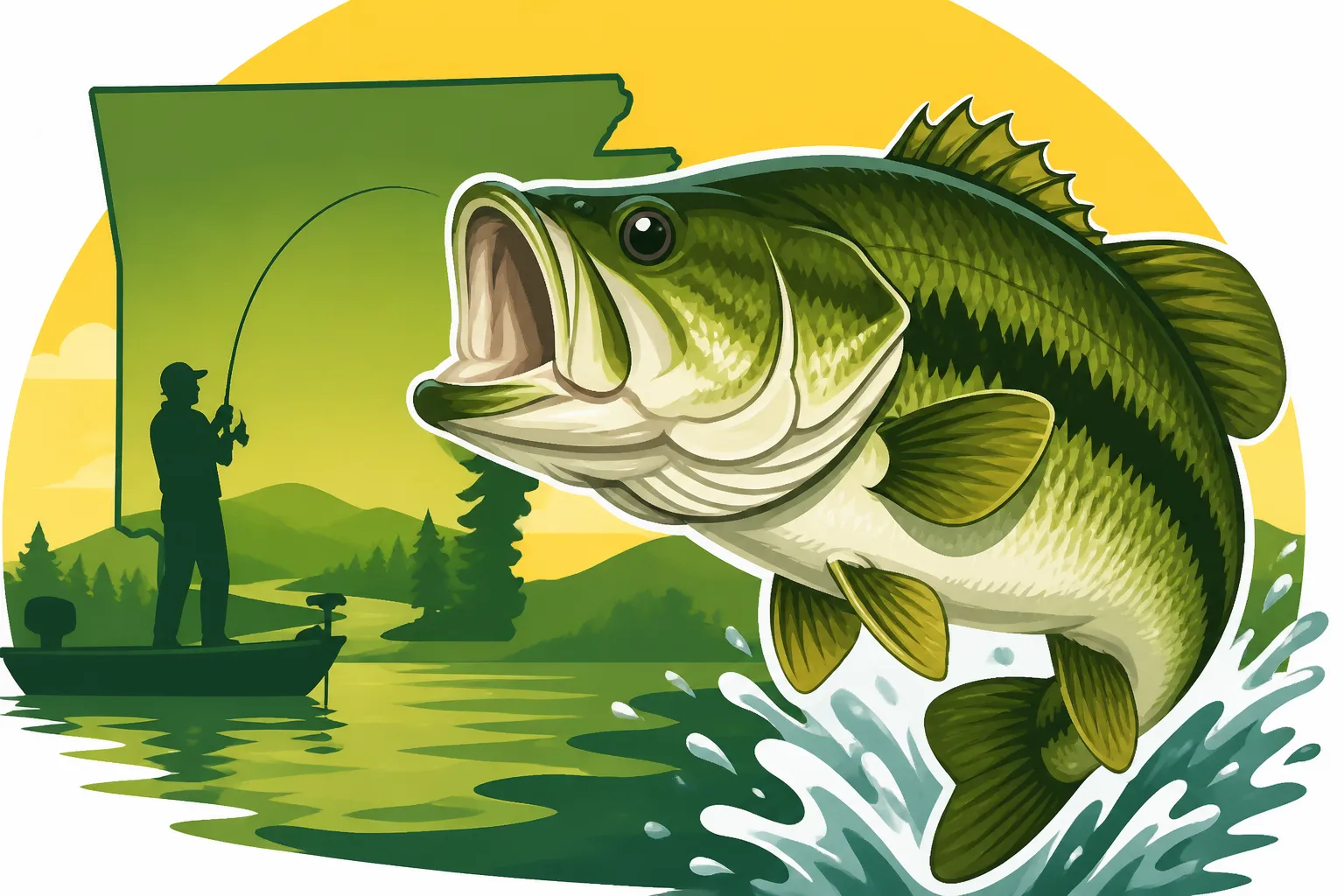
This is, hands down, the number one feature you'll want to check. It's the ultimate identifier and often the first thing experienced anglers look for. Imagine your largemouth as having a perpetually surprised look, with a mouth that seems to stretch forever.
When you gently open the fish's mouth, or even just observe it with its mouth closed, pay close attention to where the corner of its jaw extends relative to its eye. On a largemouth bass, that jaw hinge will consistently extend past the back edge of the eye. It's a significant visual cue, often making the fish look like it has a very long, almost duck-like bill when compared to other bass species. Many times, I've seen new anglers trying to guess, and the moment they check the jaw, a lightbulb goes off. It’s that clear once you know what to look for! This generous jaw allows them to engulf larger prey, a trait that makes them such formidable predators and exciting catches.
The Lateral Line: A Distinctive Streak
Beyond the jaw, your next big clue will be found along the side of the fish's body. The lateral line is a sensory organ that runs horizontally from the gill plate all the way to the tail, helping the fish detect vibrations and movement in the water. For a largemouth bass, this line isn't just a faint mark; it's quite pronounced and often appears as a dark, often somewhat broken or blotchy stripe.
This lateral line is typically dark green to black, and while it runs generally straight, it's not always a perfectly crisp, uninterrupted line. Sometimes it looks like a series of distinct, elongated blotches that merge into a stripe, especially on younger fish or those from clearer waters. In some largemouths, particularly those from murkier environments, the line might appear less defined, almost smudged, but it's always there. This contrasts with other bass that might have a much fainter or completely absent dark lateral line, or one that is much more fragmented into distinct spots rather than a solid-looking stripe. Pay attention to how it fades into the overall body coloration; it's a key part of their camouflage.
Body Shape and Fin Characteristics
Now, let's talk about the overall build of a largemouth bass. They are generally robust and somewhat elongated, but with a deep body that gives them a powerful, football-like appearance, especially as they grow larger. Think of them as muscular, streamlined torpedoes built for ambush. Their body is typically deeper and more compressed laterally (side-to-side) than a smallmouth, giving them that classic "dinner plate" profile from the side.
Their dorsal fin (the fin on their back) is typically deeply notched, appearing almost like two separate fins joined at the base. The front part is spiny, sharp to the touch, and the back part is soft-rayed. This deep division is another good indicator. Their caudal fin (tail fin) is typically broad and powerful, designed for explosive bursts of speed. When you catch a largemouth, you'll feel that power in their tail as they try to shake the hook. There are no major scale differences to focus on here, but the general build and fin structure are consistent identifiers.
Coloration and Markings: Beyond Just Green
While many people think of largemouth bass as simply "green," their coloration is far more nuanced and can actually offer additional clues to identification, as well as tell you a bit about their environment.
Green, Gold, and Mottled Patterns
The primary color of a largemouth bass is indeed green, but it ranges wildly from a dark, almost olive green to a lighter, more yellowish-green, sometimes even with hints of golden brown. This base color is almost always overlaid with a distinct, blotchy, or mottled pattern along their sides, especially above the lateral line. These blotches aren't typically circular spots but more irregular, often vertical bars or smudges that help them blend seamlessly into their surroundings.
It's fascinating to see how a largemouth's coloring can adapt to its environment. A bass living in a clear, rocky lake with lots of submerged timber, like parts of Bull Shoals Lake Fishing Guide for Bass and Crappie, might have a darker, more defined pattern to mimic shadows and wood. Conversely, a bass from a weed-choked pond with turbid water could be a lighter, more uniform green, almost blending into the aquatic vegetation. This adaptability is one of the reasons they're so successful, and it's why you can't rely solely on exact shades of green for identification. However, the presence of that blotchy, camo-like pattern on their sides is a consistent feature.
Belly and Underside
No matter how dark or light the top and sides of a largemouth bass might be, their belly will almost always be a pristine, lighter color. This typically ranges from white to a creamy off-white or even a pale yellow. This stark contrast between the darker back and sides and the light belly is a common trait among many predatory fish, including the largemouth.
This countershading is a fantastic evolutionary advantage. When viewed from below by potential prey, their light belly blends into the brighter surface light coming from above. When viewed from above by aerial predators (like eagles or ospreys), their dark back blends into the darker lake bottom. So, while you're holding your catch, observe that clean, bright underside. It's a reliable feature that, while not unique to the largemouth, consistently presents itself across the species.
Eye Color and Characteristics
While not as definitive as the jawline or lateral line, the eyes of a largemouth bass can also offer subtle hints. Their eyes are typically a yellowish to golden color, sometimes with flecks of black. They are generally proportionate to the size of the head and are positioned for effective forward vision, crucial for their ambush predator lifestyle.
The eye itself is not usually red, as you might see in some other species like a redeye bass (though those are less common in general Arkansas waters). The pupil is, of course, black, and the iris can take on various golden or yellowish hues depending on light conditions and the fish's individual coloring. It's not a primary identification point, but it's part of the overall aesthetic of a largemouth, giving them that focused, intense look as they stare back at you.
Habitat and Behavior Clues
Knowing where a largemouth bass prefers to hang out and how it behaves can often give you strong hints before you even land the fish. Their choices of real estate and their feeding habits are pretty consistent across Arkansas's diverse fisheries.
Where Largemouth Bass Love to Live
Largemouth bass are absolute masters of camouflage and ambush, and their preferred habitats reflect this. They are incredibly structure-oriented, meaning they love to hide around anything that offers cover and a place to ambush unsuspecting prey. Think of them as lurking assassins! This includes dense aquatic vegetation like lily pads, hydrilla, and milfoil, as well as submerged timber – fallen trees, stumps, and brush piles. You'll also find them holding tight to docks, riprap (rocky shorelines), bridge pilings, and any other man-made structure.
Many of Arkansas's best bass lakes, such as Lake Ouachita: Arkansas's Largest Lake for Bass and Crappie Fishing or DeGray Lake: One of Arkansas's Best Bass Fisheries, are absolutely loaded with these types of structures. They thrive in warmer, often shallower waters, though they'll certainly move to deeper, cooler spots when the summer heat really kicks in. If you're consistently catching fish out of thick cover or around prominent structures, there's a very high probability you're dealing with a largemouth. When I'm gearing up for a trip targeting these areas, I'll often browse on Amazon for specific weedless jigs or soft plastics designed to navigate dense cover without snagging.
Feeding Habits and Aggression
Largemouth bass are voracious predators. They have an incredibly diverse diet, which includes smaller fish (like shad and sunfish), crayfish, frogs, and even small birds or rodents that fall into the water. They are known for their aggressive strikes, often inhaling a bait with a powerful smash that leaves no doubt you've got a fish on.
Their feeding behavior is heavily influenced by the season and water temperature. During the Best Water Temperature for Bass Spawn in Arkansas, they'll be shallower and more protective, striking anything that invades their space. In warmer months, they might hold deeper during the day but move to shallower areas at dawn and dusk to feed. If you’re throwing a topwater lure and suddenly experience an explosive strike that nearly rips the rod out of your hands, chances are, you've just met a largemouth. Their opportunistic feeding and willingness to attack a wide variety of baits make them incredibly fun to target.
Size Expectations in Arkansas Waters
When you land a largemouth bass in Arkansas, what size can you realistically expect? Well, that depends heavily on the specific lake or river you're fishing and the overall health of the fishery. Generally, most largemouth you'll catch will fall into the 1 to 4-pound range, which is still a fantastic fight on light tackle! These are the healthy, active fish that make up the backbone of the population.
However, Arkansas is famous for its trophy largemouth bass. Lakes like Monticello and Millwood are particularly renowned for producing giants. A "trophy" largemouth is often considered anything over 5 pounds, and fish in the 8- to 10-pound range are certainly possible, with even larger specimens being caught every year. The state record stands at an incredible 16 pounds, 14 ounces! So, while most of your catches might be smaller, always be ready for that unexpected lunker that can absolutely surprise you. Just make sure you know the Largemouth Bass Daily Limit Statewide is 5 Fish and any specific length limits for the waterbody you're fishing.
Common Confusions: Largemouth vs. Their Cousins
The biggest challenge in identifying a largemouth bass often comes from confusing it with its close relatives: the smallmouth bass and the Kentucky (spotted) bass. They all belong to the Micropterus genus (the black bass), but they have distinct differences that are important to recognize.
Largemouth vs. Smallmouth Bass
This is perhaps the most common identification dilemma. You've landed a green fish, and it put up a great fight – but is it a largemouth or a smallmouth? The key is to go back to that jawline and lateral line.
- Jawline: As discussed, the largemouth's jaw extends past the back edge of its eye. A smallmouth bass, true to its name, has a noticeably smaller mouth, with its jaw typically ending before or, at most, directly under the center of its eye. This is the absolute easiest and most reliable distinction.
- Lateral Line: A largemouth has that distinct, often broken dark lateral line. A smallmouth, on the other hand, usually has vertical bars or tiger stripes along its sides, often darker brown or bronze, and its lateral line is much less distinct, often just a faint, almost invisible, broken line.
- Body Shape & Color: Smallmouth bass are generally more elongated and torpedo-shaped, often with a bronze, brown, or gold coloration, giving them their nickname "brown bass." They tend to prefer cooler, clearer, rocky waters and faster currents, which is why you'll find them in Arkansas's Ozark streams and colder lakes like Bull Shoals. You can learn more in Largemouth Bass vs Smallmouth Bass: What's the Difference?.
Largemouth vs. Kentucky (Spotted) Bass
Kentucky bass, also known as spotted bass, are a bit trickier because they often share habitats with largemouths and have a similar greenish hue. However, there are crucial differences:
- Jawline: Like the smallmouth, the Kentucky bass's jaw usually does not extend past the back of its eye. It typically stops directly under the eye. So, if you're holding a green bass with a mouth that seems just a bit too small for a largemouth, it might be a Kentucky.
- Lateral Line & Belly Spots: A Kentucky bass will also have a prominent lateral line, similar to a largemouth, but often with more distinct, diamond-shaped spots below it, leading to a "spotted" belly. If you run your hand along the belly, it will feel rough due to small, rough scales. A largemouth's belly is typically smooth.
- Tongue Patch: This is the definitive test for a Kentucky bass. If you can, gently open the fish's mouth and feel for a small, rough patch of teeth on its tongue. Largemouth and smallmouth bass do not have this patch. If you find it, it's a Kentucky bass, without a doubt. This might require a small fish handling tool, which you can easily find on Amazon, to safely check.
- Habitat: Kentucky bass are incredibly adaptable, often thriving in clear, flowing rivers as well as reservoirs. They are often found in areas with moderate current or rocky bottoms.
Here’s a quick comparison table to help you keep these three fantastic species straight:
| Feature | Largemouth Bass | Smallmouth Bass | Kentucky (Spotted) Bass |
|---|---|---|---|
| Jawline | Extends past the back edge of the eye | Ends before or directly under the center of the eye | Ends directly under the eye, or slightly behind it |
| Lateral Line | Distinct, often broken or blotchy dark stripe | Faint or absent, often with vertical "tiger" bars | Distinct, usually with rows of spots below it |
| Tongue | Smooth | Smooth | Has a rough patch of teeth |
| Body Shape | Robust, deep body, somewhat football-shaped | More elongated, torpedo-shaped | Similar to largemouth, but often more slender |
| Coloration | Green with mottled or blotchy patterns | Bronze, brown, or gold with vertical bars | Green with distinct spots below lateral line |
| Habitat Pref. | Weeds, timber, warm, often murky water | Rocky areas, clear, cooler water, moderate current | Wide range, often in rocky, clear water, current |
With these distinguishing features in mind, you'll be able to confidently identify your largemouth bass catches on your next Arkansas Fishing Trip. Knowing your fish is not just about bragging rights; it's also about understanding the species you're targeting and ensuring you adhere to specific regulations, which can sometimes vary by species and location. Happy fishing, and may your next catch be a true bucketmouth!
Disclaimer
This article is for general informational purposes only and does not constitute professional advice. Laws, prices and regulations vary by location and change over time. Consult a qualified professional for guidance on your specific situation.