Red Flags to Avoid When Booking an Arkansas Fishing Guide
Planning a dream fishing trip in Arkansas, whether it's for the legendary trout on the White River or big bass on Lake Ouachita, is exciting. But nothing can sour that excitement faster than arriving only to discover your chosen fishing guide isn't quite what you expected. It's a frustrating situation that can cost you time, money, and most importantly, a memorable experience. This guide is dedicated to helping you identify and steer clear of common red flags when booking an Arkansas fishing guide, ensuring your angling adventure is everything you hoped for.
Ambiguity Around Pricing and Inclusions
One of the most common and immediate red flags you might encounter when trying to book a fishing guide is a lack of clear, upfront information about what you're actually paying for. It’s not just about the final number, but about understanding all the moving parts that make up that cost. Good guides are transparent because they value your trust and want to avoid any uncomfortable surprises once you're on the water.
Vague or Hidden Costs
Imagine you're chatting with a guide, getting excited about a trip, and they throw out a price that sounds reasonable. But when you press for details, things get fuzzy. They might say, "Oh, that's just for the boat," or "Tackle is extra, but we can arrange something." This kind of vagueness is a huge warning sign. You should know exactly what the base price includes and what potential add-ons might be, like bait, tackle, lunch, or even fuel surcharges for longer runs. A reputable guide wants you to feel confident in the booking process, not like you're walking into a financial mystery.
It’s particularly problematic if they seem reluctant to discuss what's not included. For example, if they don't mention that you'll need to buy your own fishing license or trout permit, that's a key piece of information that could catch you off guard. While they aren't responsible for purchasing it for you, they absolutely should inform you of the requirement. Always ensure you're clear on Arkansas Fishing License Requirements for Guided Trips before you even step foot in the boat.
Unclear Cancellation and Rescheduling Policies
Life happens. Weather changes, especially here in Arkansas. A reliable fishing guide will have a clearly stated policy for cancellations, bad weather, or rescheduling. If a guide just shrugs off your questions about what happens if a storm rolls in or if you have an emergency, that's a major red flag. You need to know if your deposit is refundable, transferable, or if you'll lose it entirely under certain circumstances.
A transparent guide will typically have these policies laid out on their website, in their booking confirmation, or they'll readily explain them over the phone. They understand that unforeseen circumstances arise, and while they need to protect their business, they also want to be fair to their clients. Before you commit, make sure you're comfortable with their stance on these issues. This is especially true for those planning destination trips where travel costs are also a factor; you need to know your options if the weather decides not to cooperate.
Lack of Professionalism and Poor Communication
Booking a guide isn't just about their fishing skills; it's also about their professionalism and how they interact with you before, during, and after the trip. A guide might be a legendary angler, but if they're a headache to deal with, it can really detract from the overall experience. Professionalism speaks volumes about their reliability and respect for their clients.
Slow or Non-Existent Responses
You've reached out to a guide, perhaps through email, phone, or a booking platform like FishingBooker, and… crickets. Or maybe they reply eventually, but it takes days, and their responses are short, unhelpful, or don't answer your specific questions. This is a huge red flag. While guides are often on the water and can't respond immediately, a consistent pattern of slow or poor communication suggests disorganization or a lack of client focus.
A good guide understands that prompt and clear communication is part of the service. They'll get back to you in a reasonable timeframe and provide thorough answers. If you're constantly chasing them down for information or feel like you're pulling teeth to get details, consider that a sign that the booking process, and potentially the trip itself, might be frustrating. This communication breakdown could extend to important pre-trip information like meeting points or what to bring, which can leave you feeling unprepared and anxious.
Unprofessional Demeanor or Unsolicited Advice
During your initial conversations, pay attention to the guide's tone and overall demeanor. Are they polite and patient, or do they seem rushed, irritable, or even condescending? While everyone has off days, a consistently gruff or arrogant attitude is a red flag. You're hiring them for an experience, and that includes their personality. You don't want to spend a full day on the water with someone who makes you feel unwelcome or inexperienced.
Another red flag is a guide who gives unsolicited, critical advice before you've even met. If they immediately start questioning your gear choices, your experience level, or tell you what you're doing "wrong" without being asked, it's a sign they might not be the most patient or encouraging teacher. A truly great guide will assess your skill level on the water and offer helpful, constructive guidance. Remember, you're looking for someone to enhance your trip, not to make you feel uncomfortable. For advice on what to bring, consider looking at What to Bring on a Guided Arkansas Fishing Trip to be prepared.
Questionable Experience and Credentials
You want a guide who knows their stuff, has a track record of success, and operates legally and safely. Digging into their experience and credentials can reveal important insights, and a guide who is cagey about these details is a cause for concern.
Lack of Online Presence or Verifiable Reviews
In today's digital age, most legitimate fishing guides will have some kind of online presence. This could be a website, social media pages, or listings on reputable booking platforms like FishingBooker. If a guide has virtually no digital footprint, or if what's there looks outdated and unprofessional, it can be a red flag. It makes it harder to verify their claims and see what others are saying about them.
Equally important are verifiable reviews. Look for reviews on independent platforms rather than just testimonials on their own website. While a few negative reviews aren't necessarily a deal-breaker (everyone has an off day), a complete absence of reviews, or an overwhelming number of vague, overly positive, and suspiciously similar reviews, can be a red flag. It’s also important to check if their claims about fishing particular locations, such as the famous White River Fishing Guides: Arkansas's Trout Fishing Capital, are supported by testimonials from anglers who have actually fished with them there.
Absence of Proper Licensing or Insurance
This is a critical, non-negotiable red flag. Any professional fishing guide operating in Arkansas should have the necessary state and federal licenses (if applicable, such as a U.S. Coast Guard Merchant Mariner Credential for certain waters) and commercial liability insurance. If a guide evades questions about their licensing or seems hesitant to provide proof of insurance, run, don't walk. This isn't just about legality; it's about your safety and financial protection.
Operating without proper licenses is illegal and could put you at risk. Without insurance, if there's an accident, you could be left with significant medical bills or other damages. A truly professional guide will be proud to tell you they are fully licensed and insured, as it demonstrates their commitment to safety and legitimate business practices. This is one of the most important Questions to Ask Before Hiring an Arkansas Fishing Guide.
Unrealistic Promises and Guarantees
While it's natural for a guide to want to inspire confidence, there's a fine line between enthusiasm and making promises they can't possibly keep. Fishing is called "fishing," not "catching," for a reason, and any guide who suggests otherwise might be setting you up for disappointment.
Guaranteed Catch or Specific Trophy Size
Be very wary of any guide who guarantees you'll catch fish, or even worse, guarantees a specific number or size of fish, especially trophy-sized ones. Fishing conditions change daily: weather, water levels, fish activity – these are all variables beyond any guide's control. A good guide will promise to put you in the best possible position to catch fish, to share their knowledge, and to work hard for you, but they will never guarantee a catch.
If a guide promises you a 40-pound striper on Norfork Lake or a brown trout over 20 inches on the White River, consider that a massive red flag. While these fish exist, and guides certainly specialize in targeting them, guaranteeing such a specific outcome is disingenuous. Focus on guides who emphasize the experience, their knowledge, and their effort, rather than impossible promises. Remember, fishing is about the pursuit, not just the harvest.
Exaggerated Claims About Their Expertise or Secret Spots
While guides certainly have local knowledge and often know spots that others don't, be cautious of those who boast excessively about "secret spots" that no one else knows, or claim to be the only guide who can catch fish in a particular condition. This kind of arrogance can sometimes mask a lack of genuine skill or a desire to overcharge for a perceived exclusive experience.
A confident guide will highlight their experience and knowledge in a factual way, perhaps mentioning their years of experience or their specialty in Arkansas Striped Bass Fishing Techniques or Trout Fishing Below Bull Shoals Dam on the White River. They won't need to resort to hyperbole or belittle other guides to make themselves look good. Seek out guides who speak respectfully of other anglers and the fishery itself, and who are eager to share their knowledge rather than guard it with a sense of superiority.
Other Considerations and What to Look For Instead
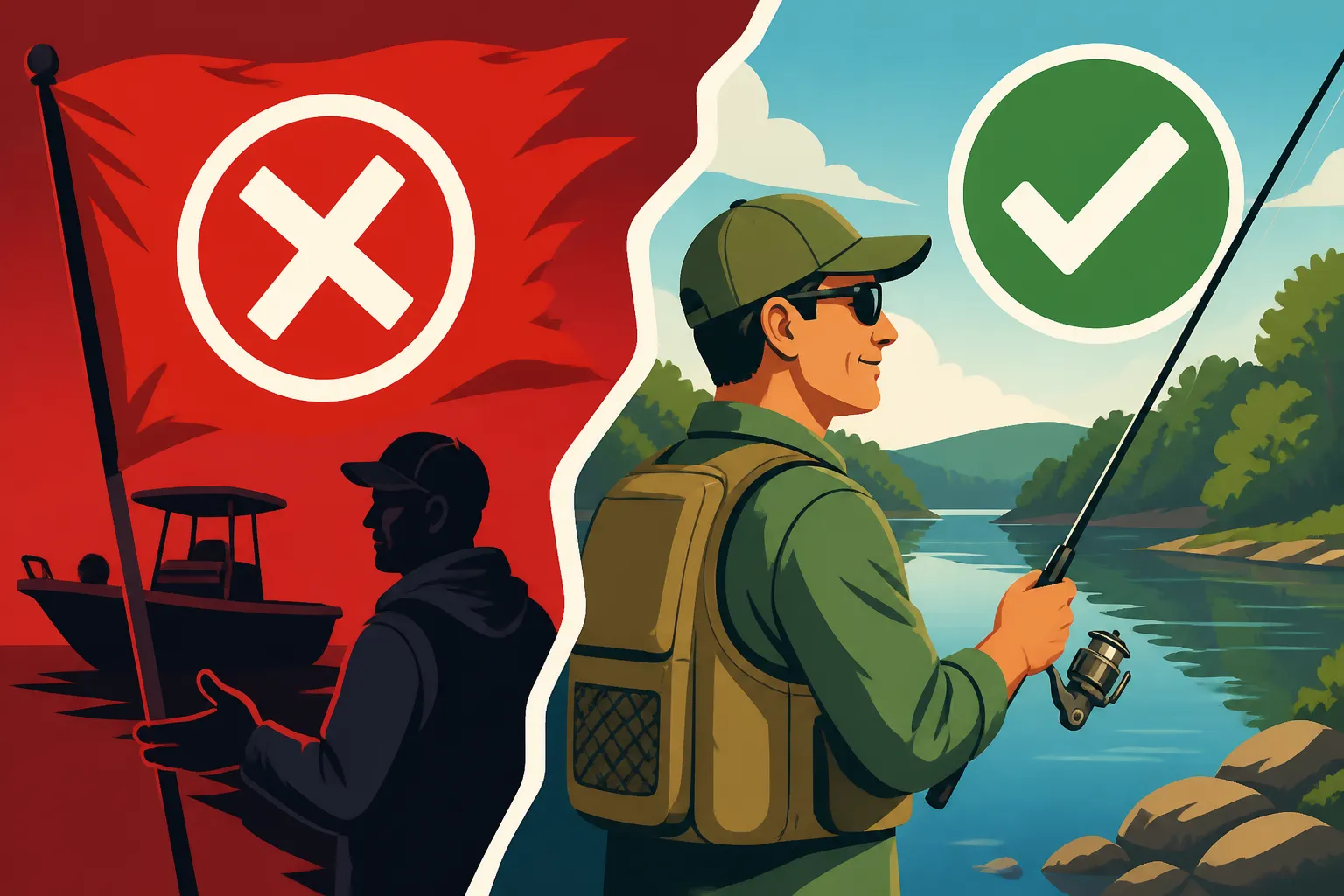
It's not just about avoiding red flags; it's also about knowing what "green flags" signal a great guide. Here's a quick look at what a trustworthy guide typically offers.
| Red Flag Behavior | Green Flag Behavior |
|---|---|
| Vague pricing, hidden costs | Clear, itemized pricing and inclusions upfront |
| No written cancellation policy | Explicit, fair cancellation and rescheduling policies |
| Slow, unhelpful, or rude communication | Prompt, detailed, and polite responses |
| No online presence, few reviews | Professional website, good reviews on platforms like FishingBooker |
| Avoids questions about licenses/insurance | Readily provides license numbers and insurance details |
| Guarantees a catch or trophy fish | Promises effort, knowledge, and a great experience |
| Exaggerated claims, belittles others | Realistic about fishing, respectful, and informative |
| Only takes cash, no clear booking system | Offers multiple payment options, uses a formal booking system |
| Doesn't ask about your experience or preferences | Inquires about your goals, skill level, and preferences |
When you're comparing guides, don't be afraid to ask questions. A good guide will welcome your inquiries because they want you to be fully informed and comfortable. They should be interested in your goals for the trip, whether you're a seasoned angler looking for a trophy or a family hoping for a fun day catching panfish. Guides found on platforms like FishingBooker often have detailed profiles that cover many of these points, making your vetting process a little easier.
Also, consider the type of trip you want. Some guides specialize in fly-fishing, others in spin-fishing, and some offer both. Make sure the guide's expertise aligns with your preferences. If you're a beginner, look for guides who specifically mention being good with novice anglers or families. For more on what these trips entail, check out Guided Fishing Trips in Arkansas: Lakes, Rivers, and What's Included.
Finding the right Arkansas fishing guide can make all the difference in your trip. By being aware of these red flags and knowing what to look for in a reputable guide, you can book with confidence and look forward to a fantastic day on the water, making memories that last a lifetime.
Disclaimer
This article is for general informational purposes only and does not constitute professional advice. Laws, prices and regulations vary by location and change over time. Consult a qualified professional for guidance on your specific situation.