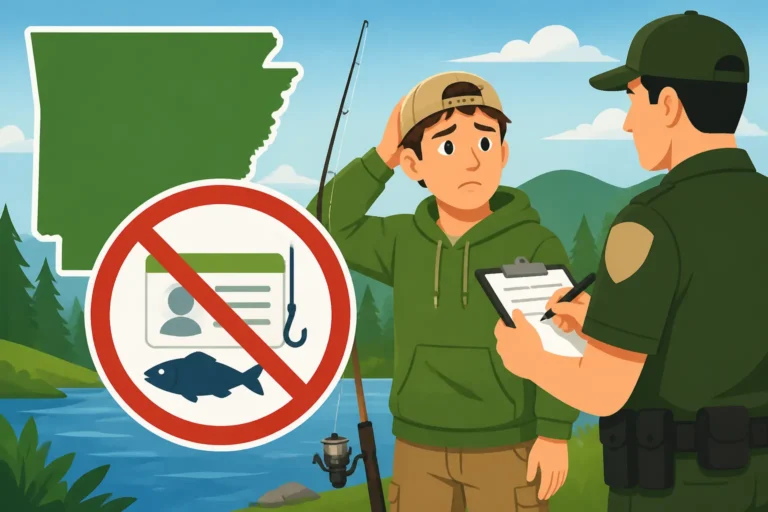
Nonresident Trout Permit Cost in Arkansas
Figuring out the exact costs for fishing when you're visiting a new state can feel like navigating a maze, especially with all the different licenses and permits floating around. For non-residents eager to cast a line for Arkansas's renowned trout, there's often confusion about whether a special permit is needed and, more importantly, how much it's going to set you back. This comprehensive guide is designed to cut through that confusion, clearly outlining the nonresident trout permit cost in Arkansas, who needs it, and how to get it, so you can focus on the fishing, not the paperwork.
Understanding the Nonresident Trout Permit Requirement
Arkansas is blessed with some of the finest trout fishing in the country, particularly in its cold-water tailwaters. But this world-class fishery comes with specific management needs and, consequently, specific permit requirements. For out-of-state anglers, understanding these nuances is crucial before you even think about hitting the water.
Why a Separate Permit for Trout?
You might wonder why, after purchasing a general fishing license, there's an additional hoop to jump through just for trout. The simple truth is that maintaining premier trout fisheries, like those found below our major dams, requires a significant investment. The Arkansas Game and Fish Commission (AGFC) actively manages these cold-water environments, which are often artificially created or sustained by dam releases. This includes extensive stocking programs, habitat improvements, and ongoing research to ensure healthy fish populations.
Think about the iconic White River or the Norfork Tailwater; these aren't natural trout streams in the same way a mountain brook might be. They depend on continuous cold-water releases from dams and the AGFC's dedicated efforts to thrive. The funds generated by specific trout permits go directly towards these vital conservation and management efforts, helping to sustain the very fishing opportunities that draw anglers from all over. Without these additional resources, our stunning trout fisheries simply wouldn't be what they are today.
Who Needs the Nonresident Trout Permit?
This is a critical point for any non-resident planning an Arkansas fishing adventure: if you are an angler from outside Arkansas and you intend to retain (keep) any trout you catch from designated trout waters, you must possess a nonresident trout permit. It’s as straightforward as that. This applies regardless of your age, though children under 16 often have different general fishing license requirements in Arkansas, the trout permit specifically pertains to the act of keeping trout.
Let's clarify: if you're practicing strictly catch-and-release fishing, and you have no intention of keeping any trout, you technically only need your general Arkansas Fishing License Requirements for Out-of-State Anglers. However, if there's even a slight chance you might decide to keep a legal-sized trout for dinner, or if you're not absolutely certain about the regulations for a specific area, it's always safer and wiser to obtain the trout permit. Designated trout waters include famous stretches like the White River below Bull Shoals Dam and Norfork Dam, the Little Red River, and parts of the Spring River, among others. Always refer to the Arkansas Fishing Regulations Guide to confirm specific regulations for your chosen fishing spot.
Breaking Down the Nonresident Trout Permit Cost
Now, let's get down to the numbers. Understanding the precise cost is essential for budgeting your trip and ensuring you're fully compliant with Arkansas fishing laws. It's a two-part process for non-residents: a base fishing license and then the trout permit as an add-on.
The Standard Nonresident Trout Permit Price
For non-residents looking to keep trout in Arkansas, the trout permit itself comes at a flat rate of $20.00. This is an annual permit, meaning it's valid for the entire calendar year from the date of purchase. It's important to recognize that this $20.00 is not a standalone license; it's an endorsement that must be purchased in addition to your general Arkansas nonresident fishing license.
To put this into perspective, for Arkansas residents, the cost of a similar trout permit is significantly less, underscoring the additional revenue needed from non-residents to support these specific fisheries. This $20 fee helps cover the costs of the AGFC's specialized trout management programs, ensuring that the streams and rivers remain healthy and well-stocked for everyone to enjoy. So, while it's an extra cost, it's an investment in the quality of the fishing experience you're seeking. You can learn more about this specific permit by checking out the article on the Nonresident trout permit price is $20 in Arkansas.
How the Trout Permit Complements Other Licenses
This is where many non-residents can get a little confused, so let's break it down clearly. The $20 nonresident trout permit is always an add-on to a primary fishing license. You cannot just buy the trout permit by itself and go fishing. You must first purchase either an annual nonresident fishing license or a shorter-term option, like the 3-day nonresident license, depending on the length of your stay.
For instance, if you're planning a full week of fishing, you'd typically opt for the Nonresident Annual Fishing License Cost in Arkansas, which is $60.00. Then, if you intend to keep trout during that week, you'd add the $20.00 trout permit, bringing your total to $80.00. If your trip is shorter, say a quick weekend getaway, you might choose the Arkansas Nonresident 3-Day Trip License for $22.00. In this scenario, adding the $20.00 trout permit would bring your total cost to $42.00. It's crucial to consider the duration of your trip when deciding which base license to purchase, as the $20 trout permit cost remains constant regardless of your base license duration.
Here’s a quick breakdown of common nonresident fishing license scenarios with the trout permit:
| License Type | Base License Cost | Trout Permit Cost | Total Cost for Keeping Trout | Duration |
|---|---|---|---|---|
| Nonresident Annual License | $60.00 | $20.00 | $80.00 | 1 Year |
| Nonresident 3-Day Trip License | $22.00 | $20.00 | $42.00 | 3 Consecutive Days |
As you can see, the $20 trout permit is a consistent additional cost for non-residents who plan to keep trout. This structure ensures that anglers specifically benefiting from the trout fisheries contribute directly to their upkeep.
Where and How to Purchase Your Nonresident Trout Permit
Getting your nonresident trout permit in Arkansas is a fairly straightforward process, designed for convenience so you can spend less time on logistics and more time on the water. You have a couple of main avenues to choose from, each with its own benefits.
Online Purchase Options
For many anglers, especially those planning their trip in advance or who prefer digital convenience, purchasing your nonresident trout permit and base fishing license online is by far the easiest method. The official Arkansas Game and Fish Commission (AGFC) website is the primary portal for this. The process is intuitive: you'll select your non-resident fishing license, and then during the checkout process, you'll be prompted to add any necessary permits, including the trout permit.
Once purchased, your license and permit are typically issued instantly in a digital format. You can often print a physical copy at home, save it as a PDF on your smartphone, or even just have the confirmation email accessible. This means you can get everything sorted before you even leave home, avoiding any last-minute rushes or worries when you arrive in Arkansas. It's a quick, secure, and hassle-free way to ensure you're legal and ready to fish. The AGFC has a dedicated system for this, and you can find more details on how to do this by checking out the article on How to Buy an Arkansas Fishing License Online.
In-Person Retailers
If you prefer a physical transaction, or if you're already in Arkansas and realize you need a trout permit, you can purchase it at various authorized license vendors across the state. These typically include major retailers like Walmart, Bass Pro Shops, and Academy Sports + Outdoors, all of which usually have dedicated sporting goods departments where licenses are sold. Additionally, many local bait and tackle shops, marinas, and even some general stores in smaller towns are authorized AGFC license vendors.
The benefit of purchasing in person is that you get a physical license and permit printed on the spot. This can be reassuring for some anglers who prefer a tangible document to present to a game warden. However, it's always a good idea to call ahead to smaller, local shops to confirm their hours and that they are indeed an authorized vendor, especially if you're driving out of your way. While you're there, these stores are also great places to stock up on local bait, tackle, and any other gear you might need. After you've secured your permit and stocked up on bait, you might still need a few fishing accessories like a tackle box or a new fishing line, which you can easily find on Amazon if your local shop doesn't have exactly what you're looking for.
Common Questions and Scenarios for Nonresident Anglers
Navigating fishing regulations can be tricky, and non-residents often have specific questions that pop up. Let's tackle some of the most common scenarios to ensure you're fully prepared for your Arkansas trout fishing adventure.
Is the Trout Permit Always Necessary in Trout Waters?
This question comes up a lot, and it's an important one to clarify. As we discussed, the nonresident trout permit is specifically required if you intend to retain (keep) any trout you catch in designated trout waters. If your plan is to engage in strictly catch-and-release fishing, and you are absolutely certain you will not keep any trout, then the trout permit is generally not required. Your basic nonresident fishing license would suffice for catch-and-release only.
However, there's a strong recommendation here: many experienced anglers, even those who primarily practice catch-and-release, often purchase the trout permit anyway. Why? Because sometimes, an unexpected situation arises. You might catch a fish that is injured and cannot be safely released, or you might simply decide, mid-trip, that you'd like to take home a couple of legal-sized trout for dinner. Having the permit in hand ensures you're covered for any eventuality, preventing a potential violation. It's a small extra cost for complete peace of mind, allowing you to react to the moment rather than being restricted by a missing permit. Always make sure you understand the rules for Do you need a trout permit to keep trout in Arkansas? before your trip.
What if I Don't Get a Trout Permit and Keep a Trout?
Fishing without the proper permits, even if it's an honest mistake, can lead to unpleasant consequences. If you're a non-resident fishing in designated trout waters and you're caught retaining trout without the specific $20 trout permit, you could face significant penalties. Game wardens in Arkansas are diligent, especially in popular trout fishing areas like the White River or Norfork Tailwater, and they are well-versed in checking for proper licensing.
The penalties can include substantial fines, forfeiture of your catch, and even confiscation of your fishing gear. These fines are often much higher than the cost of the permit itself, making the initial investment seem trivial in comparison. Furthermore, receiving a citation for a fishing violation can put a damper on your entire trip and potentially affect your ability to obtain licenses in other states in the future. Ignorance of the law is generally not considered a valid excuse. So, it's always best to be prepared and purchase the necessary permits upfront to avoid any legal troubles. You can dive deeper into the potential repercussions by reading our guide on Penalties for Fishing Without a License in Arkansas.
Combining Permits for Multi-Species Trips
Arkansas offers incredible diversity, meaning you might plan a trip that involves targeting multiple species—perhaps chasing a big largemouth bass one day and then switching gears for rainbow trout the next. The good news is that your base nonresident fishing license covers the vast majority of non-trout species, including bass, crappie, catfish, and panfish, across most of the state's waters.
So, if your itinerary includes fishing for bass on a lake like Lake Ouachita or DeGray Lake, and also trying your luck for trout on the White River, you would simply need your general nonresident fishing license (either annual or 3-day) plus the $20 trout permit. The trout permit is specific to retaining trout, and your general license handles everything else. This streamlined approach means you don't need a separate license for every different species; just the base license and the trout permit if trout are on your keeping list. Be sure to check species-specific rules and Arkansas Fish Size and Daily Limits for whatever you're targeting.
Maximizing Your Nonresident Trout Fishing Experience
To truly make the most of your Arkansas trout fishing adventure as a non-resident, a little planning goes a long way. Beyond just securing your permits, thinking about your gear and itinerary can elevate your entire trip.
Planning Your Trip with Permit in Mind
When you’re an out-of-state angler, every minute on the water counts. That’s why purchasing your fishing license and trout permit well in advance is such a smart move. Doing so through the AGFC website ensures that you won't have to waste precious fishing time dealing with paperwork or hunting down a vendor upon arrival. Imagine driving all the way to the Norfork Tailwater, eager to start fishing, only to realize you forgot the trout permit. That’s a frustration no one needs! Getting it done ahead of time also allows you to factor the exact cost into your trip budget without any surprises.
Consider the length of your trip carefully. If you're planning several visits throughout the year, the Nonresident Annual Fishing License Cost in Arkansas combined with the trout permit will likely be more economical than multiple 3-day licenses. If it's a one-off, shorter trip, the Arkansas Nonresident 3-Day Trip License plus the trout permit is probably your best bet. Planning ahead also lets you research which specific trout waters you want to hit, like the famous Bull Shoals Tailwater, and understand their unique regulations and trout limits, such as the Trout Limits on the Norfork Tailwater in Arkansas.
Essential Gear for Arkansas Trout Fishing
Once your permits are secured, it's time to think about what you'll need to actually catch those beautiful Arkansas trout. The gear you bring will significantly impact your success and comfort. For spin fishing, a light to medium-light rod (5'6" to 7' long) paired with a small spinning reel spooled with 4-6 lb test line is generally ideal. Popular lure choices include small inline spinners like Rooster Tails or Panther Martins, spoons, or even small jerkbaits. Many anglers also find success with PowerBait or salmon eggs fished on a small hook with a split shot or bobber.
If fly fishing is your passion, a 4-weight to 6-weight fly rod outfit is versatile for most of Arkansas's trout waters. Nymphs, midges, and various emerger patterns are often incredibly effective, especially on the White River and its tributaries. Waders and wading boots are practically a necessity for getting into the best spots on many of these rivers, especially if you plan to wade fish. Beyond the specific fishing gear, don't forget essentials like a good pair of polarized sunglasses to spot fish and protect your eyes, a wide-brimmed hat, sunscreen, and layers of clothing, as weather on the rivers can change quickly. For those needing to stock up, many of these items, from specialized flies to high-quality waders, can be conveniently purchased and shipped directly from Amazon to your home before your trip, ensuring you arrive fully equipped and ready to fish. You can also explore local offerings or consider hiring an experienced White River Fishing Guides: Arkansas's Trout Fishing Capital who often provide all necessary gear.
Disclaimer
Please remember that fishing regulations, including license costs and permit requirements, can change. While every effort has been made to provide accurate and up-to-date information, it is always your responsibility to verify current regulations directly with the Arkansas Game and Fish Commission (AGFC) before you go fishing. This article is intended for informational purposes only and should not be considered legal advice.