How to Tell a Kentucky Bass from a Largemouth at Bull Shoals
Kentucky bass and largemouth bass physical differences at Bull Shoals Lake help anglers identify caught Micropterus species.
Know what’s on the line.
Gamefish and panfish profiles — identification, behavior, feeding habits, and species-specific strategies for every catch.
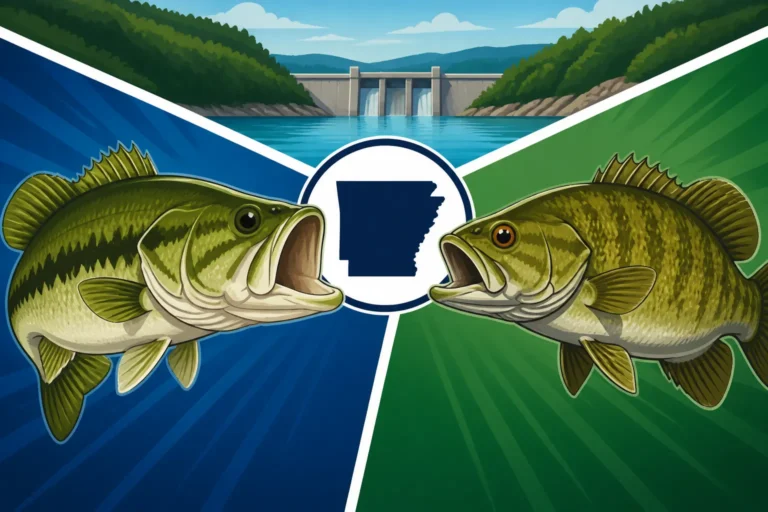
Kentucky bass and largemouth bass physical differences at Bull Shoals Lake help anglers identify caught Micropterus species.

Kentucky bass physical identification features, tongue tooth patches, jaw traits, and prime Arkansas lake and river habitats.
Smallmouth bass fishing on Bull Shoals Lake requires knowing seasonal migrations, clear water habits, and rocky structures.

Arkansas smallmouth and largemouth bass flavor differences compared using diet, water temperature, and habitat.
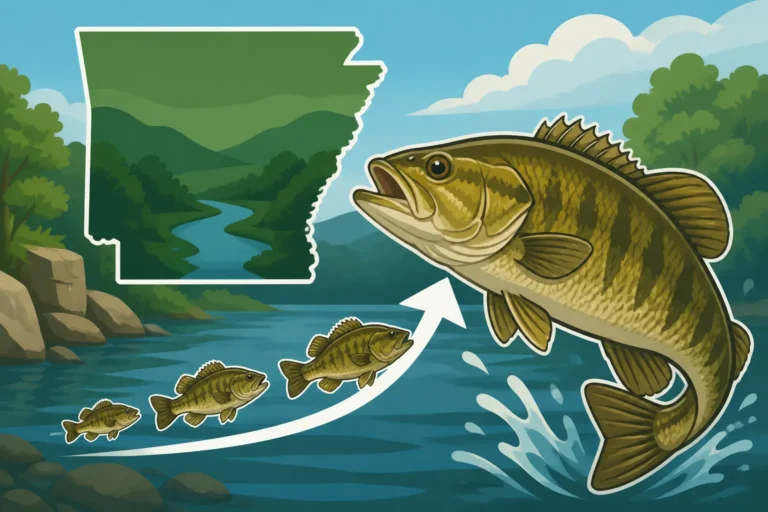
Smallmouth bass growth rates and typical size ranges in Arkansas waters explained by environmental and biological factors.
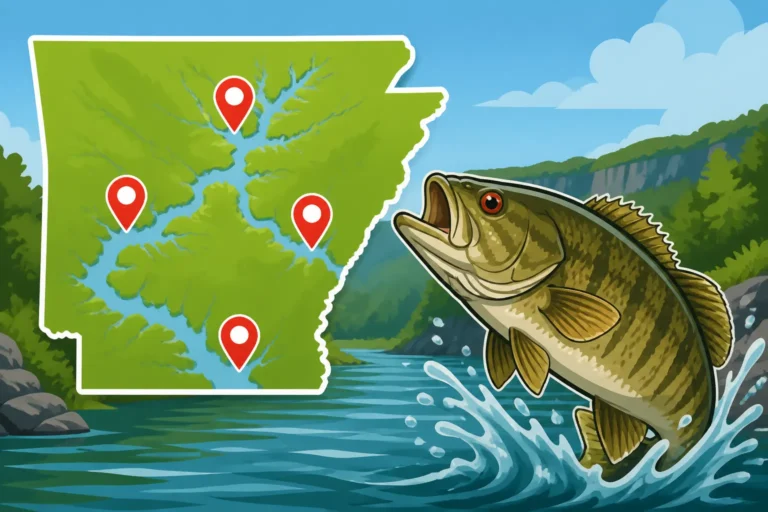
Smallmouth bass habitats in Arkansas include clear mountain streams, rocky bottoms, and cool currents found in the Ozark and Ouachita regions.

Arkansas anglers compare largemouth and smallmouth bass fighting styles, examining strikes, aerial acrobatics, and raw power.
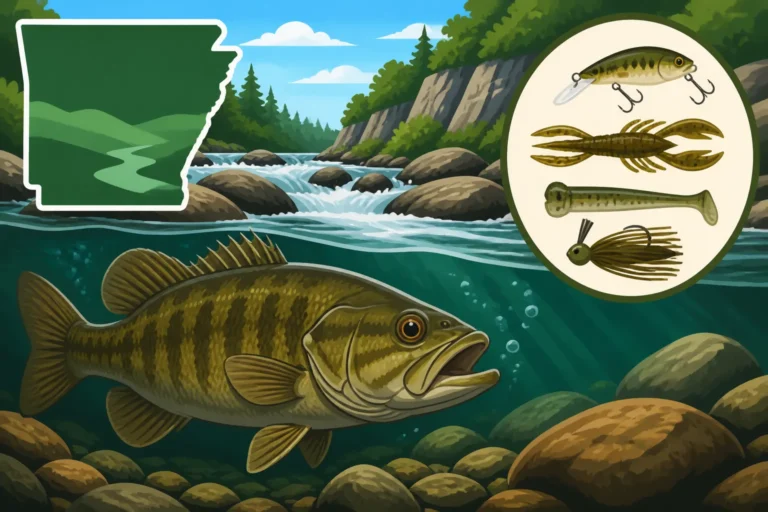
Smallmouth bass in Arkansas rocky streams like the Buffalo or Crooked Creek require specific baits matched to moving water.
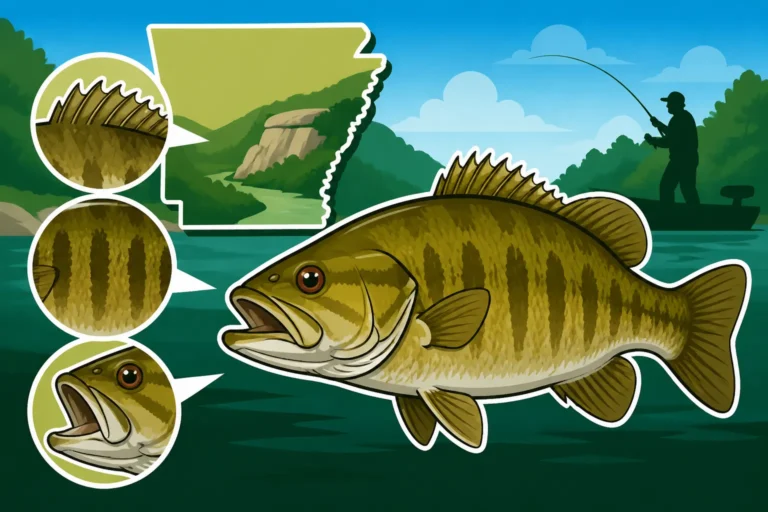
Smallmouth bass identification methods help anglers distinguish this hard-fighting species from other bass in Arkansas streams.
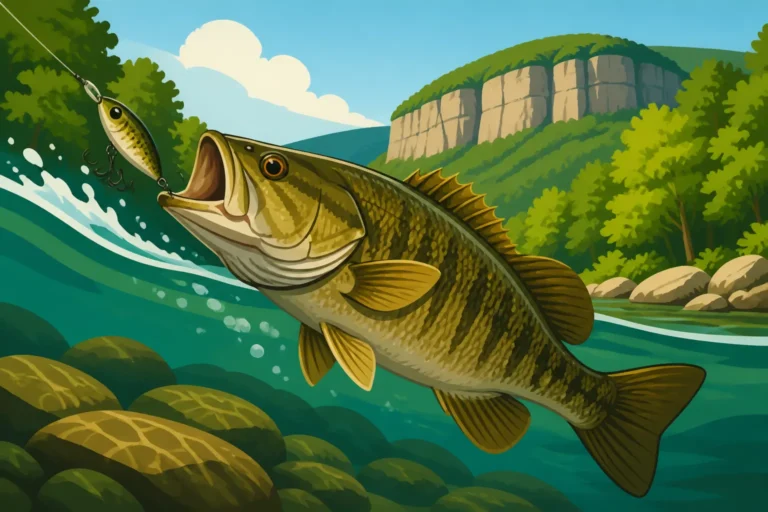
Smallmouth bass fishing in Arkansas Ozark rivers requires knowing river habitats, rocky structures, water temperatures, and gear.