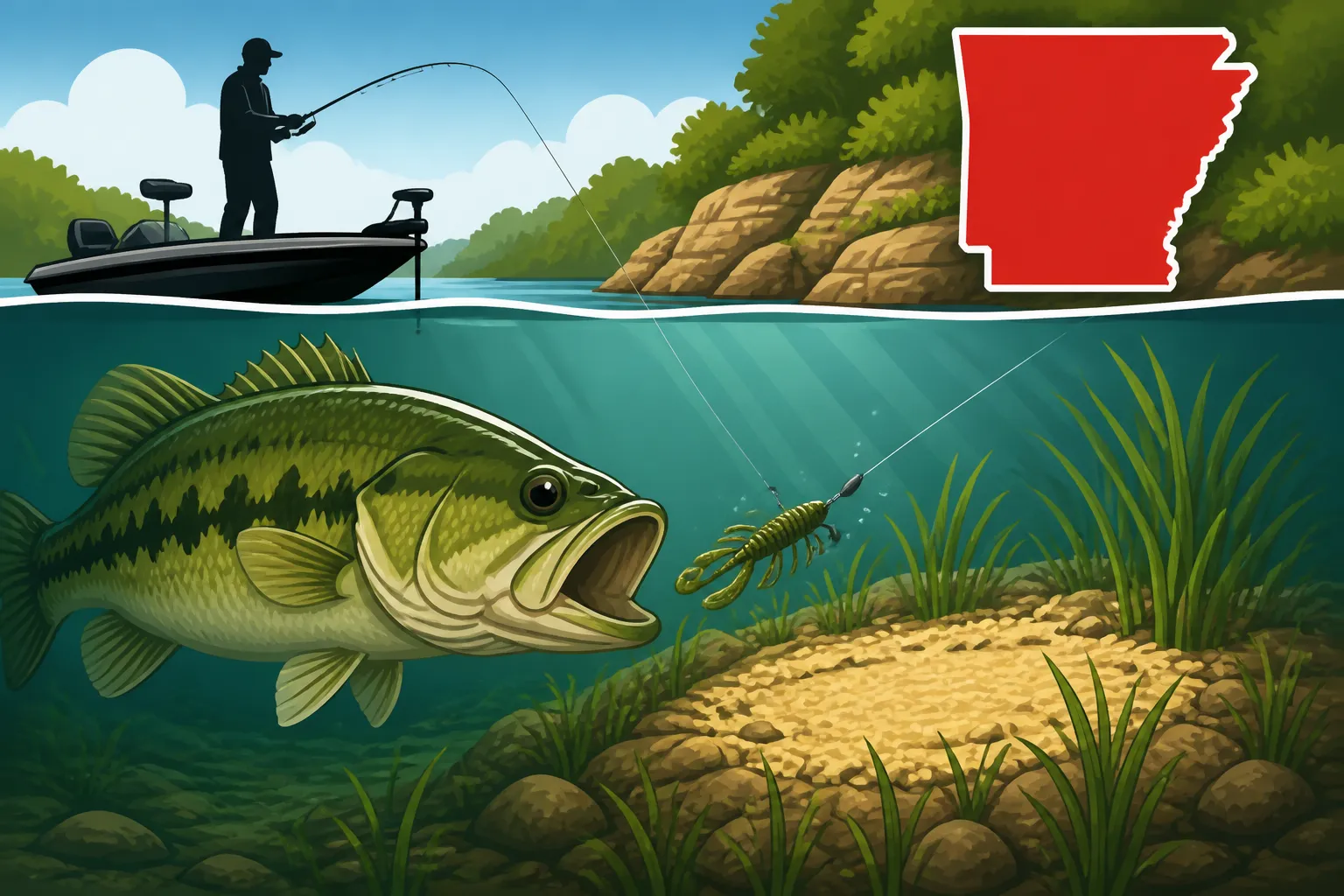
How to Fish a Bass Spawn Bed
There's nothing quite like the thrill of spotting a big bass guarding her bed in the clear waters of an Arkansas lake. It's a truly unique, often frustrating, but ultimately rewarding experience. Many anglers struggle to convert those visible fish into actual bites, feeling like they're doing everything right but still coming up empty. This guide is all about breaking down the art and science of fishing a bass spawn bed, helping you understand the bass's mindset and presenting your bait in a way that triggers a strike, turning those frustrating observations into successful catches on your next Arkansas fishing adventure.
Understanding the Bass Spawn in Arkansas Waters
Before you can even think about fishing a bass spawn bed, you've got to understand why they're there in the first place and what conditions trigger this incredible natural event. It's more than just a calendar date; it's a symphony of water temperature, daylight, and instinct that kicks off one of the most exciting times for bass anglers in Arkansas.
When the Bass Spawn Season Arrives
The bass spawn is primarily a springtime affair in Arkansas, typically starting when water temperatures consistently reach the mid-60s Fahrenheit. You'll often see this beginning in late March in the southernmost parts of the state, progressing northward into April and even early May in the cooler regions or deeper lakes like Beaver Lake or Bull Shoals. It's not a sudden on-off switch; rather, it's a gradual process that can last several weeks in different areas of a single large reservoir. Think of it as a rolling event, with different pockets of water warming up at different rates.
For instance, a shallow, protected cove on Lake Ouachita might see bass on beds a week or two earlier than a more exposed, deeper main lake point. Factors like water clarity, recent rainfall, and even the direction a bank faces (north-facing banks often warm slower) can influence the timing. Knowing When Do Bass Spawn in Arkansas Reservoirs is key, but truly understanding the nuances of how water temperature affects fish behavior is even more critical.
The Role of Water Temperature and Lunar Phases
Water temperature is, without a doubt, the most significant factor. Largemouth bass will start moving to shallower staging areas when temperatures hit the low 60s, a period often referred to as the pre-spawn. They're feeding heavily, building energy for the strenuous act of spawning. Once the water consistently settles into that 62-68 degree range, the females will move onto the beds. Males typically arrive first to clear and guard the nests. Best Water Temperature for Bass Spawn in Arkansas is a critical piece of information every bed fisherman should know.
While temperature is king, many seasoned anglers swear by the moon's influence. Full and new moon phases during the prime temperature window are often associated with major spawning pushes, or "waves." It's not always a guaranteed bite, but it can concentrate fish activity and make finding beds easier. These lunar cycles seem to encourage more bass to move up shallow to do their business. Combine a stable weather pattern, warming water, and a new or full moon, and you've got a recipe for some serious bed fishing action.
Locating Those Elusive Bass Spawn Beds
Finding bass on beds can feel like looking for a needle in a haystack, especially if you're new to it. But once you train your eyes and understand where bass prefer to nest, you'll start seeing them everywhere. It takes patience, a good pair of polarized sunglasses, and a keen eye for subtle details in the water.
Ideal Locations for Nests
Bass are looking for a few key things when they select a nesting site: protection, a stable bottom, and access to deeper water nearby. You'll primarily find beds in shallow, protected coves, pockets, and along gradual sloping banks. Think about areas where the water is calm and there's less current or wave action to disturb the nest. Marinas, boat docks, and areas with submerged timber or brush are often prime spots.
North-facing banks, despite warming slower, often hold fish later into the spawn, while south-facing banks heat up faster and can hold earlier spawners. Look for transitions where soft bottom meets hard bottom, or where gravel patches are present. Bass prefer hard bottom for their nests, as it's easier to keep clean and provides a stable foundation for the eggs. Areas with lily pads or emergent vegetation can also hide beds, offering both concealment and cover for fry once they hatch. Exploring different types of structure, from rock piles to sandy flats, will help you understand the preferences of bass in specific Arkansas Fishing Spots.
Visual Cues: Spotting the Beds and Fish
This is where the polarized sunglasses become your best friend. A bass bed typically looks like a lighter, circular, or oval-shaped depression on the bottom. It's essentially a cleared-out spot where the male bass has fanned away silt, debris, and smaller rocks to expose a cleaner, often lighter-colored bottom. These beds can range from dinner-plate size to several feet in diameter, depending on the size of the bass.
You'll often see the bass, usually the male, hovering directly over or very near the bed. The female might be on the bed, nearby, or cruising in and out of the area. Sometimes she'll be a massive dark shape, barely moving, while the male darts around, chasing off anything that gets too close. It's crucial to approach these areas slowly and quietly, using your trolling motor sparingly or drifting with the wind if possible, to avoid spooking the fish. Once you spot a bed, observe it for a few minutes to see the fish's behavior and determine if it's actively guarding.
Essential Gear and Baits for Bed Fishing
Fishing for bass on beds is a sight-fishing game, which means precision, stealth, and the right tools are paramount. You're trying to irritate a fish into striking, not necessarily entice it with a natural presentation. This often calls for specific types of rods, lines, and lures that allow for pinpoint accuracy and durability.
Rods, Reels, and Line Choices
For bed fishing, you generally want a sensitive rod with enough backbone to get a good hookset and control a fish once it bites. A medium-heavy to heavy power spinning or casting rod, typically 6'10" to 7'6" in length, is a good starting point. The extra length helps with longer pitches and controlling the fight.
- Spinning gear: Great for lighter baits and longer, more subtle presentations, especially if the fish are finicky or the water is extremely clear. A 2500-4000 series reel spooled with 10-15 lb braided line and a 12-17 lb fluorocarbon leader is a common setup. The braid gives you casting distance and sensitivity, while the fluorocarbon leader is virtually invisible in the water.
- Casting gear: Preferred for heavier baits, thicker cover, or when you need more power to quickly pull a big fish away from snags. A medium-heavy to heavy power casting rod with a high-speed reel (7.1:1 gear ratio or higher) is ideal. Spool it with 15-20 lb fluorocarbon for maximum sensitivity and invisibility, or 30-50 lb braided line with a 17-25 lb fluorocarbon leader for abrasion resistance.
Fluorocarbon is often the line of choice for its low visibility and sensitivity. The goal is to present your bait as naturally as possible while still maintaining control. You can find a great selection of high-quality fluorocarbon lines on platforms like Amazon, ensuring you're ready for clear Arkansas waters.
Top Baits for Irritating Bedding Bass
The trick with bed fishing isn't necessarily to mimic natural prey, but to annoy the bass into striking. You want a bait that can sit in the strike zone, stand out, and withstand repeated attacks.
Here's a table of popular bed fishing baits:
| Bait Type | Description & Purpose | Ideal Use Case |
|---|---|---|
| Creature Baits | Soft plastic baits with multiple appendages (flaps, legs, antennae) that create a lot of subtle action. Mimic crawfish or small critters. | Versatile; good for pitching directly onto the bed and letting it sit or subtly twitching. |
| Flukes/Senkos | Soft plastic stick baits or jerkbaits that have a natural fall and subtle quiver. Mimic baitfish or worms. | Excellent for a more natural, slow fall into the bed. Can be twitched or dragged. |
| Jigs | Rubber-skirted jigs often paired with a craw or creature trailer. Have a compact profile and can be heavy, allowing for precise placement. | Great for heavy cover or when bass are really defending aggressively. Creates a thumping action on the bottom. |
| Tubes | Hollow soft plastic baits with tentacles. Imitate crawfish or small baitfish. | Fantastic for pitching and letting them slowly spiral down onto the bed. Can be gently shaken. |
| Worms (Soft Plastic) | Traditional plastic worms, often Texas-rigged or Carolina-rigged. A classic for a reason, they have a natural, slithering action. | Best for a subtle, natural presentation. Work well when fish are wary. |
When selecting colors, bright, "sight-fishing" colors like white, chartreuse, pink, or even black and blue can be very effective. These colors are highly visible to you, allowing you to see the bait and observe the bass's reaction, and they also stand out to the bass, increasing the "irritation" factor. Having a good variety of these on hand, easily purchased from retailers like Amazon, will prepare you for any situation on the water.
Techniques for Presenting Baits on a Bed
This is where the real magic (and sometimes the real frustration) happens. Simply casting at a bed often won't do the trick. You need a methodical approach, patience, and the ability to read the fish's body language.
Precision Casting and Placement
The first rule of bed fishing is precision. You need to land your bait exactly where you want it – typically right on the bed or just a few inches past it. Overcasting and dragging the bait through the bed on the initial fall can spook the fish. Practice your pitching and flipping techniques, aiming for soft, accurate landings.
Once the bait is on or near the bed, let it sit for a few seconds. Sometimes, the mere presence of an intruder is enough to trigger a reaction. If nothing happens, gently twitch or shake the bait without moving it too far from the bed. The goal is to make the bait appear like a nuisance that won't leave. Watch the bass closely. If it flares its gills, charges the bait, or moves it off the bed with its tail, you're getting a reaction.
Repeat casts are often necessary. It's not uncommon to make 10, 20, or even 50 casts to the same bed before a fish finally decides to bite. Each time, try to land it in a slightly different spot on or around the bed, subtly varying your retrieve or the length of time you let it sit. Having the right rod for How to Fish a Texas Rig for Bass or How to Fish a Carolina Rig for Bass will give you the control and sensitivity needed for these precise presentations.
Reading the Bass's Reaction
This is the most critical part of bed fishing. The bass will tell you what it thinks of your bait, and you need to pay attention.
- Flares and Nudges: If the bass flares its gills, nudges the bait with its nose, or pushes it off the bed with its tail, it's telling you "get out!" This is a good sign. It means the fish is agitated and defending its territory. Keep irritating it.
- Circling and Hovering: If the bass is circling the bait, hovering over it, or just staring at it intently, it's assessing the threat. Don't move the bait too much. Just a subtle twitch might be enough to push it over the edge.
- Ignoring: If the bass swims away and doesn't acknowledge your bait, either your presentation is off, or it's not in an aggressive mood. Try a different bait color, a different action, or come back later.
- The Bite: When the bass finally commits, it often won't feel like a typical "thump." It might be a slight pressure, a subtle sideways movement of your line, or your line simply swimming off. Set the hook hard! The bass is usually trying to move the intruder, not eat it, so the bite can be very light.
Sometimes, you might need to try a "drop-shot" rig to present a worm or creature bait directly above the bed. This allows the bait to hover tantalizingly in the bass's face without actually sitting on the bottom, which can be effective if they're particularly finicky. Remember, patience is your greatest virtue when bed fishing.
Ethical Considerations and Best Practices
While bed fishing can be incredibly exciting, it also comes with a responsibility to the resource. We want to enjoy this sport for generations to come, and that means being mindful of the impact of our actions.
Catch and Release: Protecting the Spawn
The primary goal of bed fishing should always be catch and release, especially for the larger, egg-laden females. These fish are vital for the future of the bass population. While it's thrilling to catch them, removing them from their beds can leave the eggs vulnerable to predators like bluegill, sunfish, or even other bass.
When you do catch a bass from a bed, handle it as gently and quickly as possible. Minimize its time out of the water, especially the female. Use needle-nose pliers or a dehooking tool to remove the hook quickly. If possible, wet your hands before handling the fish to protect its slime coat. Release it right back to the bed as soon as you've taken a quick photo. Many anglers even avoid taking females entirely, focusing only on the smaller, more aggressive males if they choose to keep any fish. Understanding Arkansas Fish Size and Daily Limits is important, but for bed fishing, voluntary release often goes beyond the legal minimums.
Minimizing Disturbance to the Nest
Your goal is to catch the fish, not to destroy the nest or spook other fish in the area. Approach beds quietly, using your trolling motor on low speed or drifting. Avoid unnecessary noise or splashing. If you catch a fish from a bed and it doesn't immediately return to guard, it's often best to leave that bed alone for a while and come back later, giving the fish a chance to resume its duties.
Some anglers even choose to avoid bed fishing altogether due to concerns about stressing the fish or impacting reproduction. Others argue that responsible catch and release has minimal long-term effects. The key is to be informed and make choices that align with your personal ethics and conservation values. Remember, the health of Arkansas's incredible bass fisheries, like those at Lake Ouachita: Arkansas's Largest Lake for Bass and Crappie Fishing or Bull Shoals Lake Fishing Guide for Bass and Crappie, depends on all of us doing our part.
Disclaimer
This article is for general informational purposes only and does not constitute professional advice. Laws, prices and regulations vary by location and change over time. Consult a qualified professional for guidance on your specific situation.