Best Line for Vertical Jigging Crappie
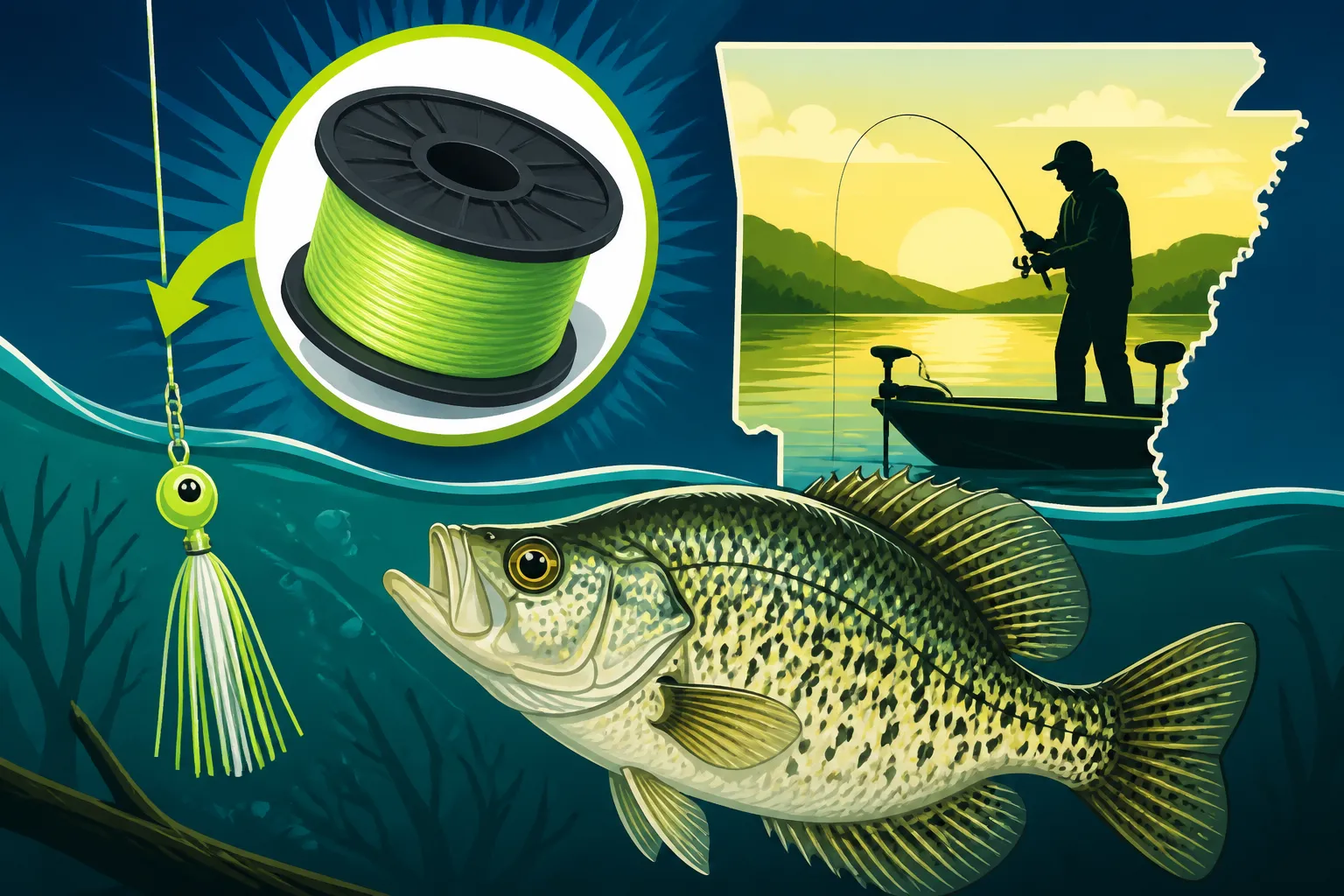
Choosing the right fishing line for vertical jigging crappie in Arkansas can feel like a riddle sometimes. You want something that offers incredible sensitivity to detect those subtle "thumps" and "ticks" crappie are famous for, yet it also needs to be strong enough to pull a slab crappie out of brush piles without breaking off your favorite jig. It's a delicate balance, and getting it wrong can lead to missed bites and lost fish. This guide is here to untangle the confusion and help you select the ideal line to maximize your crappie catch rates across our beautiful Arkansas waters.
Understanding the Unique Demands of Vertical Jigging for Crappie
Vertical jigging for crappie isn't just another way to fish; it's a precise technique that demands a lot from your gear, especially your line. Unlike casting and retrieving, where you're often covering water and letting the fish find your bait, vertical jigging involves dropping a jig straight down to the fish you've located, often suspended or tucked tightly into structure. This means direct contact is key, and every little nuance, from the subtle action of your jig to the faintest bite, needs to be communicated clearly up your line and through your rod.
Imagine you're out on Lake Ouachita, scanning your electronics for those tell-tale schools of crappie holding tight to submerged timber. Once you spot them, you're dropping your tiny jig right into their living room. If your line is too stretchy, too visible, or simply too thick, you might as well be fishing with a bungee cord and a clothesline. The unique demands boil down to three main factors: sensitivity, low visibility, and manageable stretch. Sensitivity is paramount because crappie often bite incredibly soft, sometimes just "breathing" on the jig. Low visibility helps prevent spooking these often wary fish, especially in clearer waters or under intense fishing pressure. Finally, manageable stretch—not too much, not too little—helps absorb sudden lunges while still allowing for a solid hookset.
Exploring Monofilament The Traditional Choice for Crappie Anglers
For decades, monofilament line has been the go-to for countless crappie anglers, and for good reason. It’s affordable, easy to tie, and offers a good balance of characteristics that can be very forgiving, especially for beginners. The "mono" in monofilament refers to a single strand of nylon, which gives it its distinct properties.
One of mono's biggest advantages for crappie fishing is its stretch. While some might see stretch as a negative for sensitivity, it actually acts as a shock absorber. When a crappie suddenly jerks its head or you set the hook a little too hard, that stretch can prevent your tiny hook from tearing free from their delicate mouths. This forgiveness is a huge plus, particularly when you're pulling fish out of thick cover like cypress knees in the White River National Wildlife Refuge or dense brush piles at Lake Conway. It allows for a more controlled fight and reduces the chances of breaking off.
However, monofilament isn't without its drawbacks. Its inherent stretch can indeed reduce sensitivity, making it harder to feel those light crappie bites, especially in deeper water or when fishing with lighter jigs. You might be watching your line for a twitch rather than truly feeling the bite. It also has a tendency to float, which can be a problem in windy conditions when trying to maintain a vertical presentation. For vertical jigging, the goal is often to get your jig down quickly and keep it there, and a floating line can make that more challenging. Despite this, for many, the ease of use and affordability still make it a solid choice. You can often find large spools of good quality monofilament on Amazon for a very reasonable price, allowing you to re-spool frequently, which is a great habit for any angler.
The Rise of Fluorocarbon Low Visibility and High Sensitivity
Fluorocarbon has truly changed the game for many crappie anglers, offering a significant upgrade in certain key areas, particularly when it comes to vertical jigging. Made from a polymer called polyvinylidene fluoride (PVDF), it boasts characteristics that make it almost invisible underwater and surprisingly sensitive.
The "invisible" factor is a huge selling point. Fluorocarbon has a refractive index very close to that of water, meaning light passes through it rather than reflecting off it. This makes it incredibly difficult for fish to see, which can be a massive advantage when fishing clear waters or targeting pressured crappie. If you’ve ever seen crappie shy away from your line in crystal-clear water, you know how frustrating that can be. Switching to fluorocarbon can often be the difference between a frustrating day and a successful one. This stealth factor is especially critical when vertical jigging directly over a school of fish; you don't want a visible line to spook the ones you're trying to catch.
Beyond its low visibility, fluorocarbon offers superior sensitivity compared to monofilament. It has far less stretch, allowing vibrations from your jig hitting structure or a crappie breathing on it to transmit directly to your rod tip. This enhanced feedback means you'll feel more bites, leading to more hooksets and more fish in the boat. The reduced stretch also results in more powerful hooksets, which is beneficial when fishing with smaller hooks or trying to penetrate a crappie's bony mouth. While generally more expensive than monofilament, many anglers opt for fluorocarbon as a main line or at least a leader, recognizing its clear advantages. You'll find many reputable brands offering high-quality fluorocarbon line available for purchase on Amazon, often in various test strengths suitable for crappie.
Braided Line When Strength and Feedback are Paramount
Braided line is another popular option that has gained significant traction among crappie anglers, especially those who prioritize raw strength, incredible sensitivity, and long-term durability. Unlike mono or fluorocarbon, braided line consists of multiple synthetic fibers woven together, creating a line that's exceptionally strong for its diameter and has virtually no stretch.
The lack of stretch in braided line is its defining characteristic and its biggest advantage for vertical jigging crappie. When a crappie so much as looks at your jig, you're going to feel it. This unparalleled sensitivity is invaluable when targeting finicky fish or when fishing in deeper water where other lines might lose their feel. It allows for instant feedback, quicker reactions, and more precise control over your jig. You’ll be amazed at how many more subtle bites you can detect, turning what might have been a slow day into a productive one. When you're trying to figure out How to find crappie in deep water, braided line can be a real game-changer for feeling those light bites.
Furthermore, braided line boasts incredible strength-to-diameter ratios. This means you can use a much thinner line than you would with mono or fluorocarbon, which reduces water resistance, allows your jig to sink faster, and improves casting distance if you ever decide to switch techniques. Its abrasion resistance is also a major plus, especially when jigging around sharp timber or rocky bottom structure that can fray other lines. However, braid's high visibility and tendency to "cut" into itself on a reel can be downsides. Because of its visibility, most anglers opt to tie a fluorocarbon leader to their braided mainline, creating a stealthy connection to the jig. This combination gives you the best of both worlds: the strength and sensitivity of braid, with the low visibility of fluorocarbon. If you're looking for a wide variety of braided line options, from various brands and strengths, checking out Amazon can provide you with plenty of choices.
Matching Line to Jig Weight and Conditions in Arkansas
Choosing the "best" line isn't a one-size-fits-all answer. It truly depends on the specific conditions you're fishing in and the jigs you're using. Arkansas offers a diverse range of fishing environments, from the clear, deep waters of the Ozark reservoirs like Beaver Lake to the murky, timber-filled oxbows of the Delta. Understanding how different lines perform in these varying scenarios is crucial for maximizing your success.
When you're fishing with incredibly light jigs, say 1/32 oz or 1/64 oz, especially in shallow, clear water, you need a line that won't overpower the jig's action or spook the fish. This is where a very light test fluorocarbon or even a low-diameter monofilament might shine, prioritizing invisibility and a natural presentation. However, if you're dropping a heavier 1/8 oz jig down to crappie holding in 20 feet of water around thick brush, the game changes. Here, the sensitivity and strength of braided line with a fluorocarbon leader will be invaluable. The braid helps you feel those deep bites, and the leader offers the necessary stealth. Remember to consider your rod setup as well; Best Rod Setup for Crappie Jigging goes hand-in-hand with line choice.
Line Type Comparison for Vertical Jigging Crappie
| Feature | Monofilament | Fluorocarbon | Braided Line (with leader) |
|---|---|---|---|
| Visibility | Moderate to High | Very Low (nearly invisible) | High (leader recommended) |
| Stretch | High (shock absorption) | Low (good sensitivity) | Virtually None (maximum sensitivity) |
| Sensitivity | Low to Moderate | Good to Excellent | Excellent |
| Abrasion Res. | Moderate | Good | Excellent |
| Sinking/Float | Floats | Sinks (faster than mono) | Floats (very thin for sink rate) |
| Knot Strength | Good, easy to tie | Good, can be stiff | Excellent (needs good knots) |
| Cost | Low | Moderate to High | Moderate to High |
| Best Use Case | Forgiving, shallow water, beginners | Clear water, finicky fish, deeper water | Deep water, heavy cover, maximum feel |
For many experienced crappie anglers, a common and highly effective setup is 6-10 lb test braided line as a main line, tied to a 4-6 lb test fluorocarbon leader. This combination provides the best of both worlds: the castability and incredible sensitivity of braid, coupled with the low visibility and good abrasion resistance of fluorocarbon right at the business end where the fish see it. This versatile setup can be adapted for various scenarios, whether you're targeting crappie suspended in open water or picking them out of submerged timber. You can often purchase bulk spools of your preferred braid and fluorocarbon on Amazon, ensuring you always have fresh line.
Popular Line Weights and Types for Arkansas Crappie
When it comes to the specific pound test you should be using for crappie in Arkansas, there's a range that most anglers stick to, typically from 4 to 10 lb test. Going much heavier than 10 lb test can start to hinder the natural action of your small jigs and make them less appealing to crappie. On the other hand, going much lighter than 4 lb test, while offering maximum stealth, significantly increases your risk of break-offs, especially around the unforgiving underwater structures that crappie love to call home.
For monofilament, a 4 to 6 lb test is usually the sweet spot. A 4 lb test mono provides a good balance of finesse and strength for light jigs in open water, while 6 lb test gives you a little more backbone when fishing around slightly heavier cover. Remember that mono's stretch means that even 6 lb test might feel like less when you're trying to pull a crappie from a snarl of branches.
With fluorocarbon, you can often get away with a slightly higher pound test due to its lower visibility and reduced stretch. Many crappie anglers prefer 6 lb test fluorocarbon as a main line, especially when fishing clearer lakes like Beaver or Greers Ferry. It offers excellent sensitivity and a great balance of strength without sacrificing invisibility. If you're using it as a leader with braided line, 4 to 6 lb test is ideal, ensuring the leader is the least visible part of your setup. This is also a good choice when you're learning Crappie Jigging Basics for Beginners.
For braided line, a 6 to 10 lb test main line is incredibly popular. Because braid is so thin and strong, a 6 lb test braid has the breaking strength of much heavier monofilament, while a 10 lb test braid is almost indestructible for crappie fishing purposes. The ultra-thin diameter of braid allows your jig to fall quickly and naturally, and the zero stretch means you feel everything. If you're concerned about breaking off a good fish in a thick cover, opting for 8 or 10 lb braid, paired with a fluorocarbon leader, gives you immense confidence. It's truly a setup that can handle surprising situations, and many anglers stock up on their favorite braid brands from online retailers like Amazon to ensure they're always ready.
Ultimately, the best line for vertical jigging crappie is the one that gives you confidence and helps you feel those subtle bites. Whether you lean towards the forgiving nature of monofilament, the stealth of fluorocarbon, or the unparalleled sensitivity of braid, understanding the pros and cons of each will empower you to make an informed decision and enhance your crappie fishing experience in Arkansas. Getting familiar with How to rig a jig for crappie fishing with these different line types will also be beneficial.
Disclaimer
This article is for general informational purposes only and does not constitute professional advice. Laws, prices and regulations vary by location and change over time. Consult a qualified professional for guidance on your specific situation.