Shoal Fishing Spots on the Caddo River in Arkansas
Trying to find those perfect shoal fishing spots on a vibrant, moving river like the Caddo can feel like searching for a hidden treasure, especially when you're dreaming of those feisty smallmouth bass. It’s easy to get overwhelmed by vast stretches of water, wondering where to even begin. This guide is designed to cut through that confusion, giving you the lowdown on the Caddo River's best shoal fishing locations and the proven strategies to make your next trip a success.
Understanding Shoal Fishing on the Caddo River
The Caddo River, winding its way through the beautiful Ouachita Mountains of Arkansas, isn't just a picturesque waterway; it's a fantastic fishery, particularly known for its shoals. These shallow, rocky areas are veritable magnets for fish, offering a unique set of challenges and rewards for anglers. If you've ever found yourself wondering why some spots seem to hold more fish than others, especially in a river environment, understanding the dynamics of shoals is key.
What Makes Caddo River Shoals Prime Fishing Territory?
Shoals on the Caddo River are typically characterized by their rocky bottoms, often a mix of gravel, cobblestones, and larger boulders, combined with faster-moving water. This combination creates an incredibly rich and diverse ecosystem. The rapid current churns the water, oxygenating it and dislodging various aquatic insects and small baitfish, which then become an easy meal for larger predators. Think of it as a natural conveyor belt of food.
Beyond the food supply, these rocky structures provide crucial cover and ambush points for game fish. The varied depths, eddies, and pockets behind larger rocks offer sheltered areas where fish can rest, conserving energy while waiting for prey to drift by. For an angler, this means identifying these subtle current breaks and underwater structures is paramount. It's not just about casting into the fastest water; it's about understanding how the current interacts with the riverbed.
The Caddo River's clear waters, a common feature in many Ozark and Ouachita Mountain streams, also make these shoals especially productive. Clarity allows sunlight to penetrate deeper, fostering more aquatic vegetation and insect life, which in turn supports a healthier baitfish population. However, clear water also means fish are more wary, demanding a stealthier approach and careful lure presentation from the angler. These clear waters are one of the reasons the Caddo River truly stands out.
Key Fish Species to Target in Caddo River Shoals
When you're fishing the shoals of the Caddo, you're primarily after one species: the smallmouth bass. These bronze beauties thrive in the oxygen-rich, rocky currents of rivers like the Caddo. They are aggressive feeders and incredibly strong fighters, known for their acrobatic jumps once hooked. Smallmouth bass often position themselves just out of the main current, behind rocks or in deeper seams, ready to dart out and ambush anything edible that floats by.
Another common inhabitant of the Caddo River's shoals is the spotted bass, sometimes referred to as Kentucky bass. While similar in appearance to largemouth bass, spotted bass share more behavioral traits with smallmouths, preferring moving water and rocky habitats. They might not grow as large as some of the trophy smallmouths, but they offer a spirited fight and are a welcome catch. You can often find them in the same areas as smallmouths, sometimes even competing for the same forage.
Beyond the bass species, you'll also encounter various panfish in the calmer pockets and edges of shoals. Rock bass, sometimes called goggle-eyes, are a frequent catch, offering a fun fight on light tackle. Green sunfish and bluegill are also present, especially where the current slows down a bit, and they can be a great target for younger anglers or anyone looking for consistent action. While often overlooked, these smaller species can provide fantastic sport and are excellent indicators of a healthy shoal environment.
Top Shoal Fishing Spots Along the Caddo River
The Caddo River offers numerous opportunities for shoal fishing, stretching from its headwaters in the Ouachita National Forest down to its confluence with the Ouachita River. Knowing where to access the river and which sections tend to hold the most productive shoals is crucial for planning your trip.
Access Points and Specific Shoal Locations
One of the most popular and accessible stretches of the Caddo River for shoal fishing is near Caddo Gap. This area features several public access points and outfitters, making it easy to launch a canoe or kayak, or even find spots for wade fishing. Look for shoals downstream from the historic Caddo Gap bridge, where the river narrows and picks up speed. The varied rock formations here create excellent current breaks and deeper runs. This section is particularly renowned for its consistent smallmouth bass action.
Further downstream, around Glenwood, you'll find more fantastic shoal fishing. The river here continues its clear, rocky character, with numerous riffles and runs that transition into deeper pools. Access points often include bridge crossings and designated public recreation areas. When scouting, pay close attention to bends in the river where the outside curve creates deeper scour holes adjacent to shallow shoals – these are often prime ambush points for larger bass. Many anglers also find success working the shoals near the Highway 84 Bridge east of Glenwood, where the river bottom is a classic mix of gravel and small boulders. If you're planning on using a guide to explore these access points, consider checking with services listed on FishingBooker for local experts who know these specific stretches like the back of their hand.
For those looking for a slightly more adventurous experience, the upper stretches of the Caddo, closer to the Ouachita National Forest, offer pristine, less-pressured shoals. These areas typically require more effort to access, often involving a hike or a longer float. Near Norman and upstream, the river is narrower, with a higher concentration of steep, rocky shoals and tighter bends. These remote areas can yield some truly exceptional fishing, though navigating them requires some experience. Remember to always respect private property boundaries and seek permission where necessary. You can also explore options for Caddo River Fishing Access Points in Arkansas to get more detailed directions.
Navigating the Caddo: Wade vs. Kayak/Canoe Access
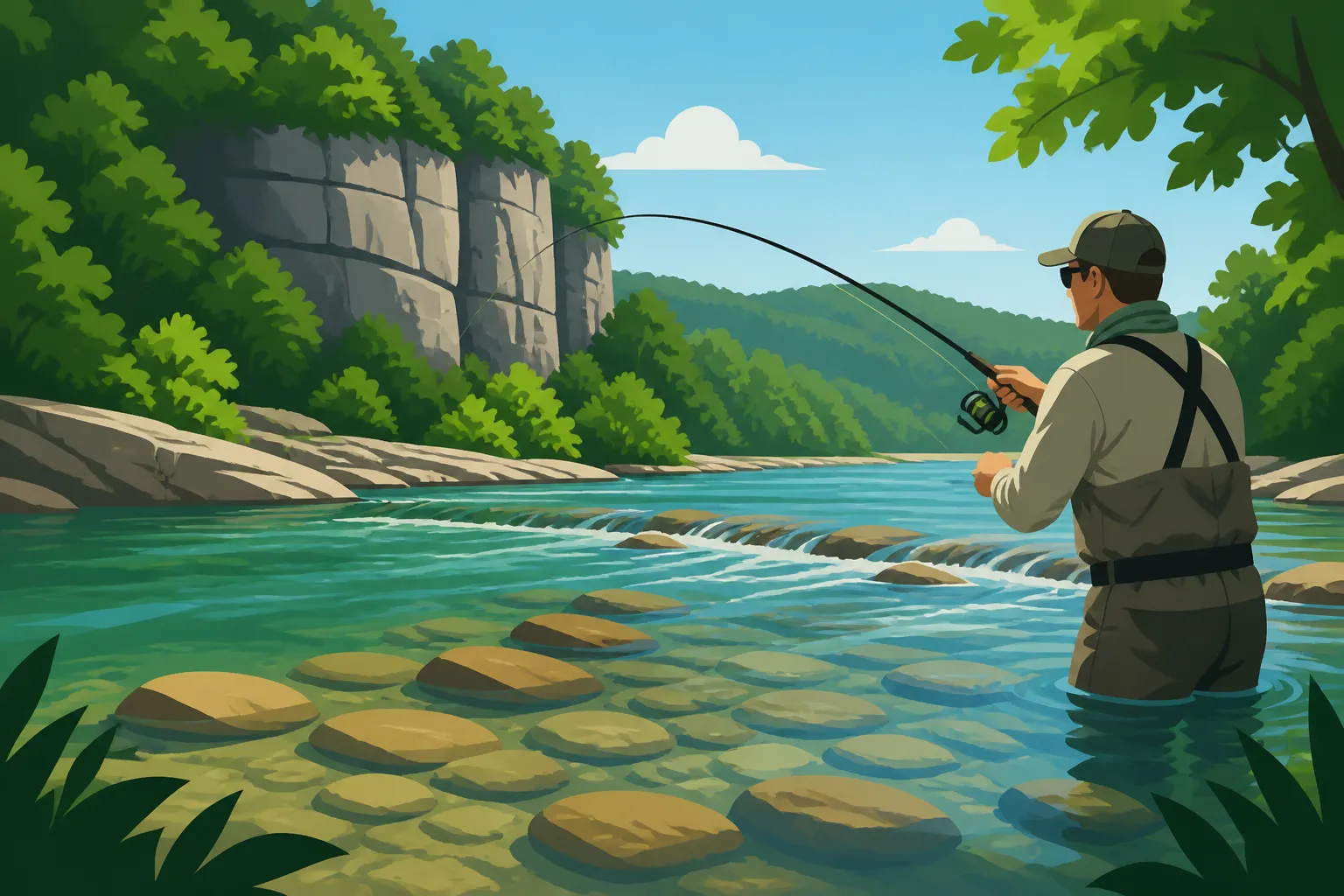
Deciding how to access the Caddo River's shoals is a big part of planning your fishing trip, and both wade fishing and floating in a kayak or canoe have their distinct advantages. Wade fishing is fantastic for thoroughly working a specific shoal or a series of rapids. It allows you to move slowly and deliberately, reading every ripple and current break. For productive wade fishing, look for areas with stable, gravelly bottoms and relatively shallow depths, typically up to your waist. Always wear sturdy wading boots with good grip, as the rocks can be slick, and consider a wading staff for added stability.
However, the Caddo River can be quite extensive, and wade fishing alone might limit your ability to reach more remote or consistently productive shoals. This is where kayaks and canoes shine. A float trip allows you to cover significantly more water, moving from one shoal to the next, accessing stretches that are inaccessible by foot. It also enables you to carry more gear, snacks, and water for a full day on the water. Many local outfitters in areas like Caddo Gap or Glenwood offer rentals and shuttle services, making a float trip a convenient and popular option.
When floating, it's a good practice to paddle or float downstream through the faster, shallower shoals and then anchor or beach your craft just above a promising section. From there, you can exit your boat and wade fish that particular shoal, giving it the focused attention it deserves. Always be mindful of river levels; during periods of heavy rain, the current can become dangerously swift, and some shoals may become too deep or turbulent to fish safely. Conversely, during very low water, some sections might be too shallow to float comfortably, requiring you to drag your boat. You'll want to review local river conditions and forecasts before heading out.
Essential Techniques and Tackle for Caddo River Shoal Fishing
Successfully fishing the Caddo River's shoals requires a specific approach. It's not just about what you throw, but how you present it. The fast current and wary fish mean precision and stealth are key.
Best Lures and Baits for Shoal-Dwelling Fish
When targeting smallmouth and spotted bass in the Caddo River's shoals, small to medium-sized artificial lures are generally most effective. Crankbaits are a perennial favorite, especially those designed to dive to shallow depths (2-6 feet) with a tight wobble. Colors like crawfish patterns, natural greens, and browns, or even a classic firetiger, tend to work well in the clear water. Look for models from brands like Rapala's Shad Rap or Strike King's KVD 1.0. Cast these upstream and retrieve them just fast enough to get them wiggling, allowing the current to help carry them past likely holding spots.
Soft plastic baits, particularly tube jigs and small grubs, are incredibly versatile. Rigged on a jig head (1/8 to 1/4 ounce, depending on current speed), these can be bounced along the bottom, mimicking crawfish or small baitfish. A natural-colored tube jig in green pumpkin or watermelon seed, fished with a slow drag-and-hop retrieve, can be deadly around submerged rocks and current eddies. The key is to maintain bottom contact without getting snagged too often. You can find more specific advice on Best Bait for Smallmouth Bass in Rocky Streams.
Another highly effective lure type for shoals is the inline spinner. Brands like Mepps and Panther Martin have been catching fish for decades for a reason. Their flash and vibration are irresistible to smallmouth bass. Cast them quartering upstream or perpendicular to the current and retrieve them steadily. The blade should spin freely, creating a disturbance that draws strikes. Silver, gold, or copper blades with natural-colored skirts often produce excellent results in the Caddo's clear waters. For a different approach, topwater lures like small poppers or walk-the-dog baits can be incredibly exciting during low-light conditions or when fish are actively feeding on the surface, especially in the calmer water just above or below a shoal.
Reading the Water and Presentation Strategies
Successfully fishing shoals means learning to "read the water." This isn't just a fancy phrase; it's about understanding how the current moves and where fish are likely to position themselves. Look for subtle current breaks, which are areas where the fast-moving water meets slower water. These can be created by large boulders, fallen trees, or even depressions in the riverbed. Fish will often hold in the calmer water behind these structures, expending less energy while waiting for food to be delivered by the main current.
When you identify a promising current break or seam, position yourself to cast slightly upstream of it. This allows your lure to drift naturally into the strike zone with the current, mimicking real prey. For crankbaits and spinners, a quartering cast upstream followed by a steady retrieve works well. For soft plastics or jigs, a similar cast, allowing the bait to sink and tumble naturally, is ideal. The goal is a subtle, lifelike presentation that doesn't spook the fish in the clear water.
Maintaining a light line (6-8 lb test monofilament or fluorocarbon) is crucial in the clear Caddo River. Fluorocarbon, in particular, is an excellent choice as it's nearly invisible underwater and offers good abrasion resistance against rocks. A medium-light to medium action spinning rod, around 6'6" to 7' long, provides the sensitivity to detect subtle bites and the backbone to fight strong smallmouths in the current. Always pay attention to your line; any twitch or sudden stop could indicate a bite. If you're a beginner, guides found on platforms like FishingBooker can teach you these nuances firsthand, helping you refine your Bass Fishing Techniques for Beginners.
Seasonal Considerations for Caddo River Shoal Fishing
The Caddo River is a year-round fishery, but the productivity of its shoals varies significantly with the seasons. Understanding these fluctuations can help you plan your trip for optimal success.
Spring and Fall: Peak Shoal Action
Spring is arguably the prime time for shoal fishing on the Caddo River. As water temperatures begin to rise, typically from late March through May, smallmouth and spotted bass become incredibly active. They move into shallower areas, including shoals, for pre-spawn feeding. This is when they are most aggressive, gorging on crawfish and baitfish in preparation for spawning. During this period, crankbaits, jigs, and even spinnerbaits can be incredibly effective. Look for water temperatures in the 50-60 degree Fahrenheit range for peak activity.
Fall, from September through November, offers another excellent window for shoal fishing. As water temperatures start to drop, bass engage in a powerful feeding spree, stocking up on calories before the lean winter months. They become very concentrated in and around shoals, where baitfish are often forced into shallower, more constricted areas. Topwater action can be phenomenal during early fall mornings and evenings, while crankbaits and jigs remain consistent producers throughout the day. The vibrant fall foliage along the Caddo also makes for a beautiful backdrop to your fishing adventure. You can find general information on Best Time of Year to Fish in Arkansas to align with these seasonal patterns.
Summer and Winter Challenges and Opportunities
Summer on the Caddo River, from June through August, can be a mixed bag for shoal fishing. While the river remains popular for floating and recreation, the bass can become more lethargic during the heat of the day. The best times to target shoals in summer are typically early mornings and late evenings, when water temperatures are cooler and fish are more active. During midday, bass will often retreat to deeper pools adjacent to shoals or seek shade under overhanging trees. Look for deeper current seams within the shoals where cooler, oxygenated water might be present. Small, subtle baits like finesse jigs or natural-colored soft plastics often outperform larger, more aggressive lures in the summer heat.
Winter, from December through February, presents the toughest challenge for shoal fishing, but also offers unique rewards for dedicated anglers. Water temperatures drop significantly, making fish less active. Bass will often move into the deepest, slowest pools and runs of the river, conserving energy. However, on warmer, sunny winter days, especially if there's a slight bump in water temperature, some fish might move onto the edges of shoals to feed for short periods. Slow-moving baits like jig-and-pig combinations or suspending jerkbaits fished meticulously slow can entice strikes. Success in winter often requires patience and persistence, and perhaps a bit of luck. Always check Arkansas Fishing Regulations Guide before heading out, especially during less common fishing seasons.
Here's a quick comparison of effective techniques and baits for different Caddo River shoal conditions:
| Condition | Target Species | Recommended Lures/Baits | Presentation Strategy | Notes |
|---|---|---|---|---|
| Spring (Pre-Spawn) | Smallmouth, Spotted Bass | Shallow crankbaits (crawfish, firetiger), Tube jigs, Small spinnerbaits | Cast upstream, retrieve steadily, bounce jigs off bottom | Aggressive fish, cover water quickly. Look for active feeding zones. |
| Summer (Hot Day) | Smallmouth, Spotted Bass | Finesse jigs, Small worms (Texas rig), Inline spinners (small) | Slow, subtle retrieves, target shaded areas or deep seams | Fish early/late, focus on cool, oxygenated water. |
| Fall (Pre-Winter) | Smallmouth, Spotted Bass | Topwater (poppers, walking baits), Medium crankbaits, Jigs, Swimbaits | Fast retrieve early/late, slower retrieve midday. Cover lots of water. | Fish are actively feeding; excellent topwater action in low light. |
| Winter (Cold Water) | Smallmouth, Spotted Bass | Suspending jerkbaits, Jig-and-pig, Small soft plastics | Extremely slow retrieves, target deepest pools near shoals | Patience is key, focus on warmest parts of the day. |
| Clear Water | All | Natural colors (green pumpkin, brown), Fluorocarbon line | Stealthy approach, longer casts, subtle presentations | Fish are wary, visibility is high. |
| Moderate Current | All | Crankbaits, Inline spinners, Weighted jigs | Cast upstream, let current carry, steady retrieve | Use jig weights appropriate for current speed to maintain bottom contact. |
| High Water/Turbid | All | Larger profile baits, Vibrating jigs, Bright colors (chartreuse) | Focus on eddies and calmer pockets, fish closer to cover | Fish may be closer to banks or in slack water; good for searching larger areas. |
Exploring the Caddo River's shoals is a truly rewarding experience for any angler. With the right knowledge of the river's unique features, targeted species, seasonal patterns, and effective techniques, you'll be well on your way to a memorable day on the water, reeling in those hard-fighting smallmouth and spotted bass. Don't forget to check out Arkansas Fishing License Rules and Costs before you go, so you're fully prepared for your adventure.
Disclaimer
The information provided in this guide is for general informational purposes only and is not intended as legal, financial, or professional advice. Fishing regulations, conditions, and best practices can change rapidly. Always consult the latest regulations from the Arkansas Game and Fish Commission and local authorities before engaging in any fishing activities. Exercise caution and good judgment when on or near the water.