Crappie Fishing Spots on Bull Shoals Lake, Arkansas
Trying to pinpoint the best crappie fishing spots on a massive, complex lake like Bull Shoals can feel like searching for a needle in a haystack. With its sprawling arms, countless coves, and hidden underwater structures, it's easy to get overwhelmed and spend more time looking than actually fishing. This guide is here to cut through that frustration, offering clear, actionable advice on where to find and how to catch crappie on one of Arkansas's most beloved lakes.
Navigating Bull Shoals Lake for Crappie Success
Bull Shoals Lake, nestled in the scenic Ozark Mountains, is a renowned fishery, but its sheer size and varied terrain can be intimidating for crappie anglers. Understanding its unique underwater topography and how crappie relate to it is the first step toward consistent success. This isn't your average farm pond; it's a vast, deep reservoir that demands a strategic approach.
Understanding the Lake's Unique Structure
Bull Shoals is a man-made reservoir, created by damming the White River, and its origins mean a complex underwater landscape. You'll find everything from long, tapering points that drop into deep channels to massive stands of flooded timber and intricate rock formations. Crappie, being structure-oriented fish, will use these features extensively throughout the year. During higher water levels, entire forests become submerged, creating incredible cover. As water levels fluctuate, those same trees can become exposed, making their hidden portions excellent targets for crappie. You'll often discover areas where old creek beds run along bluff lines, creating natural highways for crappie movement, or large flat areas with scattered brush piles that serve as congregating points.
It's a common misconception that crappie are only in shallow water. On a lake like Bull Shoals, they can be found at incredible depths, especially during the hotter and colder months. Learning to read your electronics to identify these submerged features—be it a massive brush pile someone painstakingly sank years ago, a rocky ledge, or the remnants of a flooded cedar forest—will drastically improve your chances. This lake truly offers a diverse set of habitats for crappie, from shallow, sheltered coves to vast, open water main lake points with depths plunging to over 100 feet.
Key Environmental Factors Affecting Crappie
Just like us, crappie are highly sensitive to their environment, and knowing these factors can help you predict their behavior and location. Water temperature, clarity, and even subtle currents play a huge role in where you'll find them on any given day. Bull Shoals typically boasts very clear water, which means crappie can be a bit more skittish and prone to holding tighter to cover, or retreating to deeper water during bright conditions.
Temperature is perhaps the most critical factor. In spring, as the water warms, crappie push into shallower coves for their spawn. In summer, they dive deep to escape the heat, seeking out thermoclines and cooler, oxygen-rich water. Fall sees them moving back shallower as temperatures cool and they gorge themselves for winter, and then in winter, they suspend in deep water, often congregating in massive schools. Heavy rains can muddy up certain creek arms, which can either push crappie out or draw them in as they hunt in the stained water. Keeping an eye on the lake's conditions, often reported by local marinas or fishing reports, will give you a significant advantage. This consistent monitoring of conditions allows you to adjust your strategy on the fly, rather than sticking to a plan that the fish have already moved on from.
Prime Crappie Fishing Locations on Bull Shoals
When it comes to Bull Shoals, crappie are everywhere, but some areas are consistently more productive than others. It's about understanding the types of places they prefer and then using your knowledge to narrow down the search. Remember, a "spot" isn't just a point on a map; it's a combination of structure, depth, and conditions.
Main Lake Points and Deep Water Structure
Bull Shoals is riddled with long, tapering main lake points that extend far out into the reservoir, often dropping off into deep river channels. These points are absolute magnets for crappie, especially during the cooler months and in summer when crappie are seeking deeper water. Look for points that have some form of cover on them—rock piles, stumps, or even scattered timber. Crappie will often position themselves on the deeper edges of these points, waiting to ambush baitfish that swim by. Some of the major creek arms, like the Big Creek Arm or the Little North Fork Arm, are excellent places to start. These areas feature numerous prominent points where crappie often school up.
Fishing these areas often means using your electronics to locate schools of suspended crappie or identifying submerged structure where they might be holding. Once you find them, vertical jigging or slow-trolling can be incredibly effective. Consider the subtle nuances of these points; sometimes, the crappie will be on the main lake side, sometimes tucked into a protected cove on the secondary point. It often comes down to current, wind, and baitfish presence. Don't be afraid to explore points that are less obvious; sometimes the quiet ones hold the biggest surprises.
Flooded Timber and Brush Piles
Ah, the classic crappie hideout! Bull Shoals has an abundance of flooded timber, particularly in its upper reaches and the back of larger coves. These trees, often cedars or hardwoods, provide invaluable cover, shade, and ambush points for crappie. Fishing these timber stands can be tricky due to snags, but the rewards are often worth the effort. Look for areas with dense timber, especially where it transitions from shallower to deeper water. Crappie will often hold on the sunny side of the timber in cooler water and on the shaded side in warmer water.
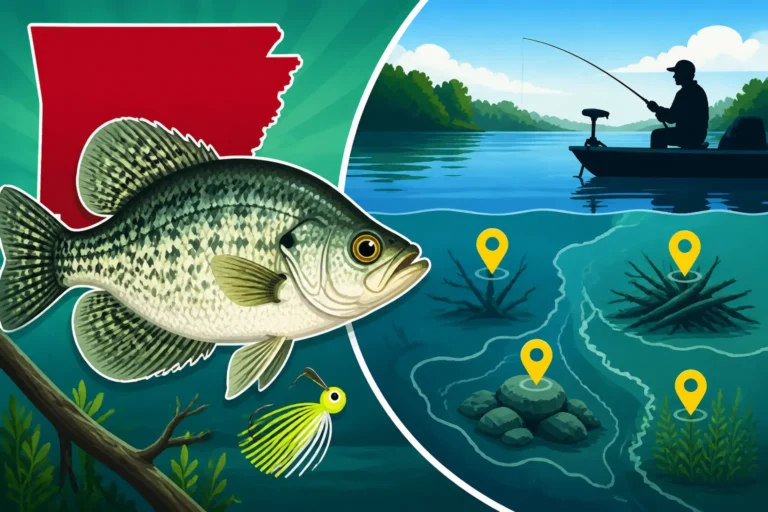
Beyond natural timber, savvy anglers and guides have sunk countless brush piles throughout the lake. These man-made attractors, often constructed from cedar trees or discarded Christmas trees, create irresistible havens for crappie and their forage. Locating these brush piles requires good electronics or local knowledge. If you're exploring, try areas where there are obvious signs of past fishing activity, like small buoys or subtle changes in depth. When you find a good brush pile, fish all around it and at different depths, as crappie will often stack up from top to bottom. If you're struggling to find these on your own, a local guide, who you might find through services like FishingBooker, will often have a wealth of knowledge and GPS coordinates for these crappie hotels.
Docks, Marinas, and Bridges
Don't overlook man-made structures! Docks, especially covered ones at marinas like Bull Shoals State Park Marina or Lakeview Marina, provide shade, cover, and often have lights that attract baitfish at night, which in turn attracts crappie. The pilings and underwater bracing of docks create excellent vertical structure that crappie love to suspend around. Fishing under docks can be incredibly productive, especially during bright sunny days when crappie seek refuge from the glare. Use a quiet approach, sometimes even skipping jigs or small crankbaits far under the docks where other anglers can't reach.
Bridges, particularly their pilings and rip-rap foundations, are also fantastic crappie spots. The current flow around bridge pilings often concentrates baitfish, and the pilings themselves offer deep, vertical cover. Fish both the upstream and downstream sides of the pilings, and pay attention to any subtle current breaks. The rip-rap on bridge banks can also hold crappie, especially during the spawn or when baitfish are pushed up against it. Look for bridges crossing major creek arms or the main lake, as these act as significant fish highways. For those looking for local guides to unlock these hidden gems, sites like FishingBooker offer a convenient way to connect with experienced captains who know the lake inside and out.
Here's a quick overview of some prime crappie fishing zones on Bull Shoals:
| Location Type | Best Seasons | Key Features to Look For | Recommended Techniques |
|---|---|---|---|
| Main Lake Points | Fall, Winter, Summer | Tapering points, deep drops, submerged timber/rocks | Vertical jigging, Trolling |
| Flooded Timber Stands | All Year | Dense cedar or hardwood stands, varying depths, transition zones | Pitching jigs, Spider rigging |
| Man-made Brush Piles | All Year | Submerged cedar trees, Christmas trees, often in coves | Vertical jigging, Live minnows |
| Docks & Marinas | All Year | Shaded areas, pilings, lights at night, structure around docks | Skipping jigs, Slip bobber |
| Bridge Pilings/Rip-Rap | Spring, Fall, Winter | Current breaks, deep vertical structure, rocky banks | Vertical jigging, Casting jigs |
| Large Creek Arms (e.g., Big Creek Arm) | Spring, Fall | Numerous secondary points, timber, spawning flats, brush piles | All techniques |
Effective Crappie Fishing Techniques for Bull Shoals
Finding the fish is only half the battle; knowing how to entice them to bite is the other. On a lake as diverse as Bull Shoals, a variety of techniques will prove fruitful depending on the conditions and the specific spot you're fishing.
Jigging and Spider Rigging
Jigging is perhaps the most versatile and popular method for crappie fishing on Bull Shoals. Whether you're vertical jigging over a brush pile or casting a jig to shallow timber, it's incredibly effective. Small plastic jigs, typically 1/16 to 1/8 ounce, in colors like chartreuse, white, or various shad patterns, are staples. For vertical jigging, use your electronics to position your boat directly over a brush pile or a school of suspended crappie. Drop your jig to the depth where the fish are holding, and use subtle lifts and drops to impart action. This is often the best way to present a bait directly into tight cover or to fish for How to Find Crappie in Deep Water.
Spider rigging, on the other hand, is a fantastic way to cover a lot of water and present multiple baits at once, especially when crappie are scattered or when you're searching for schools in deeper water. This technique involves using multiple long rods (often 8 to 16 feet) spread out from the front of the boat, each rigged with a jig, a minnow, or a combination of both. You slowly troll along contours, creek channels, or over flats, allowing your baits to work at different depths until you find where the crappie are holding. It's an excellent method for anglers who want to maximize their chances and efficiently locate fish, and can be combined with live bait to really tempt those finicky fish. If you're new to it, there are plenty of resources on Crappie Jigging Basics for Beginners that can get you started.
Live Bait Presentations
Sometimes, nothing beats a live minnow, especially when crappie are lethargic or just not responding to artificial lures. Live bait presentations are incredibly effective on Bull Shoals, particularly during colder months or when fish are holding tight to cover. The most common setup is a small hook (size 2-6) with a live minnow, often weighted with a split shot or a small jig head, suspended under a slip bobber. The slip bobber allows you to easily adjust your fishing depth, which is crucial when crappie are holding at a specific level in the water column. You can drift these rigs along bluff lines, over brush piles, or around docks.
Tightlining is another excellent live bait method, where you present a minnow without a bobber, feeling for bites directly through the line. This is particularly effective when fishing vertically in deep water or when presenting a minnow into dense cover where a bobber would get snagged. Remember to use fresh, lively minnows, as their natural movement is often what triggers a crappie to strike. Don't be afraid to experiment with the size of your minnow; sometimes a larger minnow will tempt a bigger crappie. For more tips on this classic approach, check out our guide on Best Live Bait for Crappie Fishing.
Electronics and Structure Fishing
Modern marine electronics are indispensable tools for crappie fishing on Bull Shoals. A good fish finder with down imaging and side imaging capabilities will revolutionize your ability to locate crappie and their preferred structure. Side imaging allows you to scan wide swaths of water to identify brush piles, sunken timber, and schools of baitfish, sometimes even seeing individual crappie holding near cover. Down imaging provides a clearer, photo-like view directly beneath your boat, helping you distinguish between different types of structure and fish.
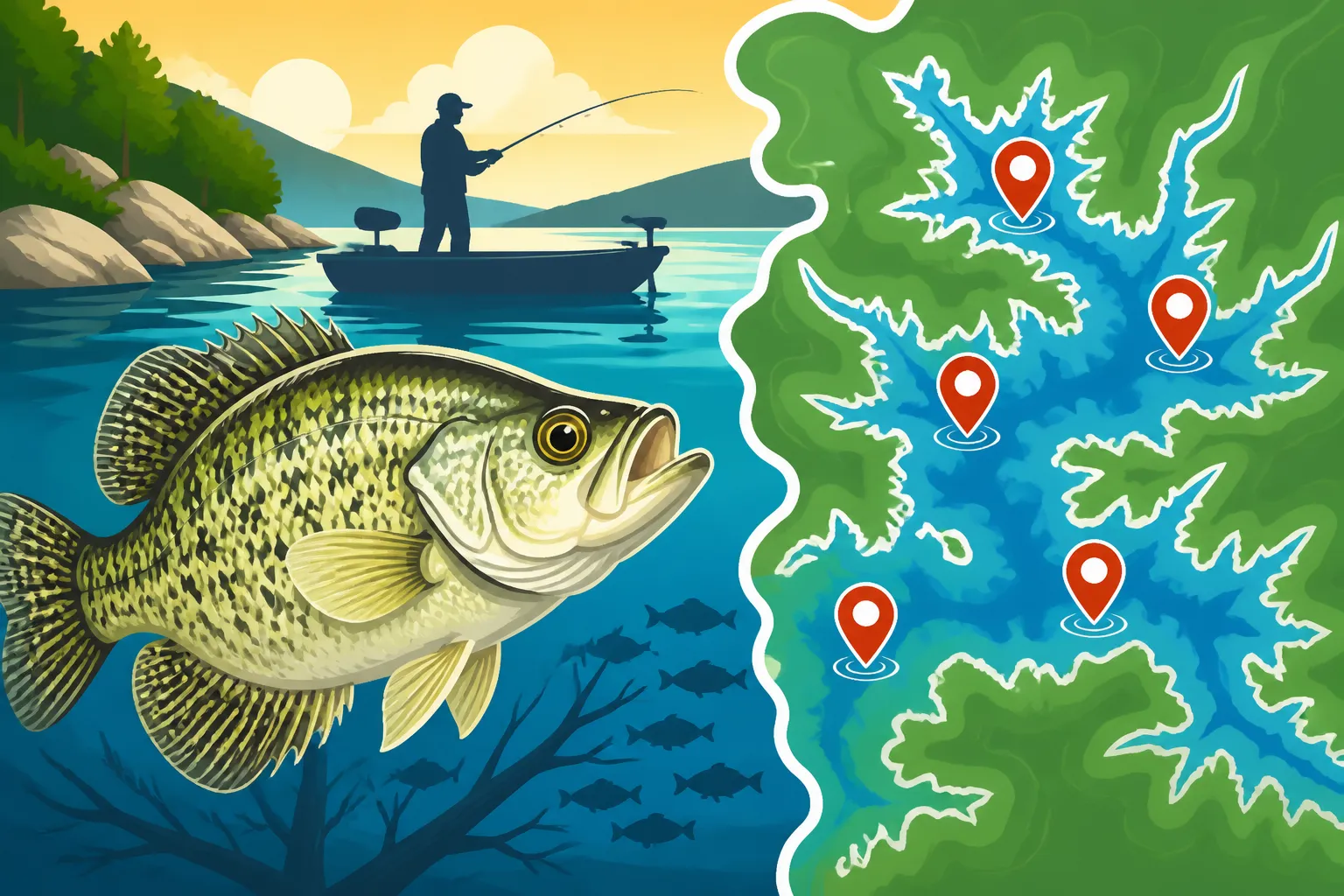
Learning to interpret these sonar readings takes practice, but it's worth the effort. Look for "arches" or "blobs" on your traditional sonar, which indicate fish, and pay attention to how they relate to the bottom or suspended structure. When you spot a brush pile or a school of crappie on your electronics, mark it with a waypoint. This allows you to return to the precise spot repeatedly. Many experienced anglers dedicate time just to "spot-checking," motoring around and using their electronics to find new brush piles or schools of crappie, adding them to their GPS for future trips. This proactive approach can make all the difference on such a vast lake.
Seasonal Crappie Patterns on Bull Shoals Lake
Crappie behavior changes dramatically with the seasons on Bull Shoals, driven primarily by water temperature and their biological imperative to spawn and feed. Understanding these patterns is key to being in the right place at the right time.
Spring Spawn Strategies
Spring is arguably the most anticipated season for crappie anglers, as fish move shallower to spawn. As water temperatures climb into the 50s and low 60s Fahrenheit, crappie migrate from deeper wintering holes into protected coves, creek arms, and shallow flats. They'll seek out submerged brush, stumps, and rocky banks to lay their eggs. This is when you can often find large numbers of crappie in relatively shallow water, sometimes as little as 2-5 feet deep.
During the spawn, focus your efforts on the backs of coves, especially those with some type of woody cover. Pitching small jigs or minnows under a bobber around visible timber, stumps, or along rocky shorelines can be incredibly effective. Remember that male crappie will often be shallower, guarding nests, while females may move in and out of the spawning areas. The exact timing of the spawn varies each year depending on how quickly the water warms, but typically peaks from April to May. For more on this exciting time, check out our guide on When Do Crappie Spawn in Arkansas. Knowing the local regulations for Crappie Size and Daily Limit in Arkansas is also crucial, as generally, Crappie must be 9 inches or longer to keep in Arkansas.
Summer Deep Water Tactics
Once the spawn is over and water temperatures really begin to climb into the 70s and 80s, crappie retreat to deeper, cooler water. They'll often suspend over creek channels, along bluff lines, or on deep main lake points. They're seeking refuge from the heat and congregating around areas where baitfish also school up. This is when your electronics become even more vital, as you'll be looking for schools of crappie anywhere from 15 to 40 feet deep, sometimes even deeper.
Summer crappie fishing often involves vertical presentations. Spider rigging with jigs and minnows, slow trolling crankbaits designed for deeper diving, or simply vertical jigging over brush piles you've located in deep water are all effective strategies. Look for areas with a consistent thermocline, as crappie will often hold just above or within this layer where oxygen levels are optimal. Fishing during the early morning or late evening hours can also be more productive, as crappie may move slightly shallower to feed during these cooler periods. Bull Shoals offers excellent deep-water crappie opportunities, it just requires a different approach.
Fall Migration and Feeding Frenzy
As summer heat gives way to cooler autumn days, crappie on Bull Shoals enter a "feeding frenzy" phase. They sense the coming winter and begin to aggressively feed to build up fat reserves. Water temperatures start to drop, triggering baitfish to move shallower, and crappie follow suit. This can be one of the most enjoyable times to fish for crappie, as they are often very active and willing to strike.
During the fall, you'll find crappie spread out across a variety of depths, but often moving toward the shallower ends of creek arms, secondary points, and flats. They'll still relate to structure like timber and brush piles, but they may be more mobile, actively hunting baitfish. Casting jigs, slow trolling, and using live minnows can all be highly effective. Pay attention to how the baitfish are behaving; if you see schools of shad flickering on the surface or near shore, crappie won't be far behind. This period of intense feeding offers fantastic action, often leading to some of the biggest catches of the year. Many consider fall to be the Best Time to Catch Crappie in Arkansas.
Winter Slow and Steady Approach
Don't let the cold weather deter you; winter crappie fishing on Bull Shoals can be incredibly rewarding, though it demands patience and precision. As water temperatures plummet, crappie move into their deepest wintering holes. They'll often school up in large numbers, suspending over main lake channels, bluff walls, or deep timber. Their metabolism slows down, so presentations need to be much slower and more subtle.
Vertical jigging with tiny jigs (1/32 to 1/16 ounce) or very small minnows is the go-to technique. Use your electronics to locate these schools, and then precisely drop your bait to their depth. Sometimes, the bite can be almost imperceptible, feeling like just a little "tick" on your line, so sensitive rods and thin lines are essential. Look for areas where the lake narrows or where major creek channels converge, as these often act as funnel points for crappie in winter. On sunny winter days, crappie might move slightly shallower on bluff walls that absorb heat, offering brief windows of opportunity. While the action might be slower, the fish you catch are often healthy and robust. Remember to always consult the Statewide crappie daily limit is 20 fish in most Arkansas waters to ensure you're fishing legally.
Disclaimer
Fishing conditions and regulations in Arkansas can change. Always check the latest regulations from the Arkansas Game and Fish Commission before heading out on the water. This guide is for informational purposes only and does not guarantee fishing success.