Where to Catch Smallmouth Bass on Bull Shoals Lake
It's incredibly frustrating when you arrive at a massive lake like Bull Shoals, rod in hand, ready to tackle some smallmouth bass, only to realize its sheer size and intricate shoreline make finding these elusive bronzebacks feel like searching for a needle in a haystack. This guide is here to cut through that confusion, helping you pinpoint the prime locations and tactics for successfully landing smallmouth bass on Arkansas's legendary Bull Shoals Lake.
Understanding the Smallmouth Bass Habitat on Bull Shoals Lake
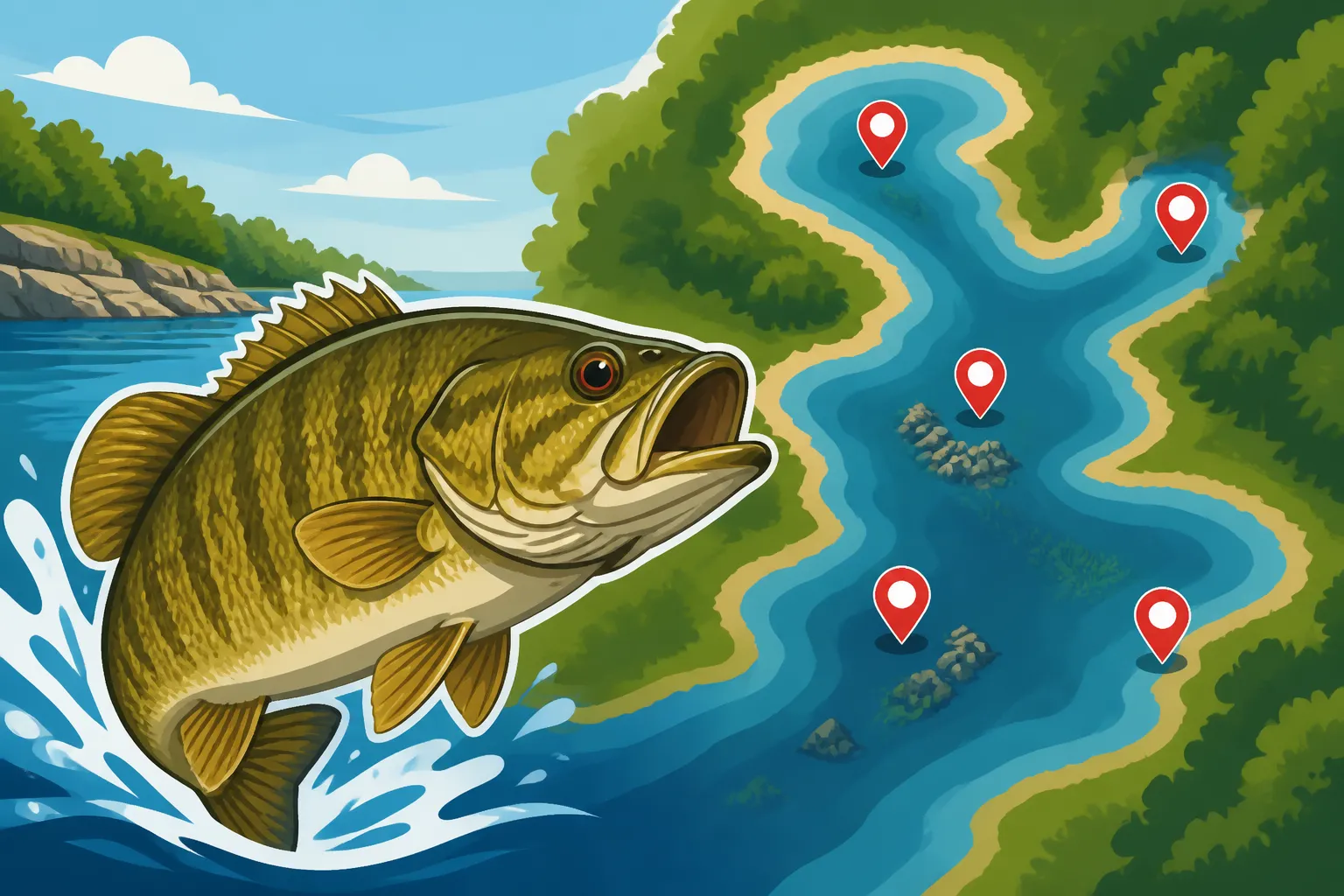
Bull Shoals Lake, sprawling across northern Arkansas and southern Missouri, is a dream come true for many anglers, but it can be especially rewarding for those targeting smallmouth bass. Unlike their largemouth cousins, smallmouth thrive in specific environments, and understanding these preferences is your first step to success. These fish are true connoisseurs of clear, cool water and hard, rocky bottom structures. If you're scanning the shoreline, you're looking for rock—lots of it.
Smallmouth bass on Bull Shoals will gravitate towards bluffs, ledges, chunk rock points, gravel bars, and submerged humps. They love structure where they can ambush prey, and Bull Shoals, being a deep, clear impoundment of the White River, offers an abundance of these features. Think of it from a smallmouth's perspective: they want a place where they can hide from predators, find a quick meal of crayfish or baitfish, and enjoy that refreshing, oxygen-rich water. This means focusing your efforts on the main lake body and the lower portions of the major creek arms, rather than the siltier, shallower upper reaches of the lake. Areas with deep water access right off the bank are often hotspots. If you're struggling to locate them, remember that these fish are often much deeper than you might initially think, especially during the warmer months.
Seasonal Movements and Where to Find Smallmouth
Smallmouth bass, like most fish, are creatures of habit dictated by the seasons and water temperature. Knowing their typical movements throughout the year is crucial for finding them on Bull Shoals Lake. The lake's vastness means these patterns can vary slightly depending on which arm or section you're fishing, but general rules apply.
Spring: Pre-Spawn and Spawning Havens
As water temperatures begin to climb in the spring, typically from late March through May, smallmouth bass will start moving from their deeper wintering holes towards shallower spawning areas. They're looking for hard-bottomed flats, gravel pockets, and rocky points in coves protected from the wind, usually in water ranging from 5 to 15 feet deep. These areas are often close to deeper water, allowing them to retreat quickly if conditions change. The pre-spawn period, when fish are actively feeding to bulk up for spawning, can be incredibly productive. Focus on secondary points and transitions from deep to shallow water.
Once the water hits that sweet spot of 58-65 degrees Fahrenheit, the smallmouth will begin building their nests. Look for them on these same rocky flats and points. They'll often be visible in clearer water, though they can be quite wary. During this time, they're fiercely protective of their nests, making them susceptible to sight fishing with jigs or tubes. If you're planning a trip to Bull Shoals, checking the Best Time for Pre-Spawn Bass Fishing in Arkansas can give you an edge in timing your visit for peak activity.
Summer: Deep Water and Thermocline Tactics
When the Arkansas summer sun really starts to beat down, and water temperatures soar into the 70s and 80s, smallmouth bass retreat to their deep-water sanctuaries. This is where your electronics become invaluable. Smallmouth will typically suspend around the thermocline (the layer where warm surface water meets cooler deep water) or hold tight to deep structure like humps, submerged islands, and bluff ends in 20 to 40 feet of water, sometimes even deeper. The main lake points and channel swings are prime real estate. They're looking for cooler, oxygenated water and baitfish like shad that also follow the thermocline.
This is a time for vertical presentations: drop-shotting, shaky heads, or even spooning directly over deep structure you've identified on your sonar. You might find them schooling near these deep points, chasing baitfish early and late in the day. Many anglers find success by targeting ledges that drop off into the main lake channel, particularly those with scattered rock and brush piles. If you're fishing during this season, understanding Best Lures for Summer Bass Fishing can significantly boost your success.
Fall: Following the Bait
As autumn approaches and water temperatures begin to cool again, smallmouth bass will start to become more active and move shallower, following schools of shad into creek arms and coves. This is often a fantastic time for power fishing techniques, as the smallmouth are aggressively feeding to prepare for winter. Look for them on main lake points, channel banks, and flats in 10-25 feet of water, especially where baitfish are abundant.
The fall bite can be explosive, with fish often busting schools of shad on the surface during low light conditions. Crankbaits, jerkbaits, and swimbaits become highly effective as you imitate their prey. The key is to find the bait. Where the shad are, the smallmouth won't be far behind. This period often extends through late November, offering a final flurry of action before the cold fully sets in.
Winter: Deep and Slow Presentations
Bull Shoals rarely freezes over entirely, allowing for year-round fishing. During the coldest months, smallmouth bass will move to the deepest parts of the lake, often congregating in large schools near vertical bluffs, deep points, and channel bends. They'll be incredibly sluggish, so extremely slow and subtle presentations are necessary. Think jigging spoons, blade baits, or a slowly dragged football jig. They might be anywhere from 30 to 60 feet deep, sometimes even deeper, depending on the specific area and water clarity.
The bite will be subtle, often feeling like just a little extra weight on your line. Patience is paramount, and fishing during warmer winter days or after a few days of stable weather can increase your chances. Identifying distinct breaks in the bottom contour or isolated rock piles in these deep zones using your electronics is key.
Essential Lures and Techniques for Bull Shoals Smallmouth
Landing smallmouth bass on Bull Shoals requires a blend of finesse and power, adapting to the lake's clear water and rocky terrain. Having the right tackle and knowing how to present it can make all the difference.
Finesse Presentations
Given Bull Shoals' clear water, finesse techniques are often your bread and butter, especially when the bite is tough or the fish are deep.
- Drop Shot: This is arguably the most effective deep-water smallmouth technique. A small worm or minnow imitation rigged on a hook above a weight allows for precise depth control and subtle bait action. It’s perfect for suspended fish or those tight to deep structure. Brands like Berkley PowerBait and Roboworm offer excellent drop shot baits.
- Ned Rig: This simple, mushroom-head jig with a small, buoyant plastic (often Z-Man's Finesse TRD) is incredibly versatile. It's excellent for working rocky points, humps, and flats, presenting a tempting, upright profile that smallmouth can't resist.
- Tube Jigs: A classic smallmouth catcher, a tube bait slowly dragged or hopped along the bottom perfectly imitates a crawfish. Green pumpkin, brown, or natural shades are often winners.
- Shaky Head Jigs: Similar to a Ned rig but often with a slightly larger profile, a shaky head worm is another great option for slowly dissecting rocky bottoms.
Reaction Baits
When smallmouth are aggressive, especially during pre-spawn, post-spawn, and fall, reaction baits can trigger explosive strikes.
- Jerkbaits: Long, slender hard baits like those from Rapala or Megabass are phenomenal for twitching and pausing over rocky points and flats. Their erratic action mimics injured baitfish, drawing strikes from curious and hungry smallmouth.
- Crankbaits: Medium-diving crankbaits that deflect off rocky cover are excellent for covering water and triggering reaction bites. Choose natural colors that match the lake's baitfish.
- Topwater Lures: During low-light conditions in warmer months, walk-the-dog lures, poppers, or prop baits can entice heart-stopping surface strikes. Target main lake points, humps, and pockets early in the morning or late in the evening.
- Swimbaits: Small swimbaits rigged on jig heads can be deadly when smallmouth are chasing shad. They offer a realistic profile and action that can fool even the most cautious fish.
Using Your Electronics Wisely
Modern sonar and side imaging technology are game-changers for fishing Bull Shoals. Instead of blindly casting, use your fish finder to identify key structures like humps, ledges, and submerged timber. Look for baitfish schools and arcs representing individual fish. Pay attention to changes in bottom composition—a hard, rocky bottom is a smallmouth magnet. The more you learn to read your electronics, the more productive your time on the water will be.
Prime Access Points and Specific Bull Shoals Areas
Bull Shoals Lake is huge, with hundreds of miles of shoreline and numerous access points. Knowing where to launch and which areas generally hold smallmouth can save you a lot of time and gas. For a broader overview, check out the Best Bass Fishing Spots on Bull Shoals Lake.
Northern and Central Lake Regions (Arkansas Side)
The areas closest to the dam and extending north and west offer some of the clearest water and most prominent rocky structures.
- Bull Shoals State Park Marina: Located right near the dam, this area offers excellent access to deep main lake points, bluffs, and channel swings that are prime smallmouth territory.
- Lead Hill/Oakland Area: Moving west from the dam, areas around Lead Hill and Oakland have numerous coves and main lake points with varying depths and abundant rock. This mid-lake section can be very productive, especially in spring and fall.
- Pigeon Creek: This major creek arm, particularly its lower end where it meets the main lake, features extensive rocky points and clear water. Smallmouth will often stage here during the spring and fall transitions.
- Pontiac Area (Missouri Side): While primarily on the Missouri side, the border waters near Pontiac offer similar deep, clear, rocky habitat. Many Arkansas anglers venture into these waters with the appropriate licenses.
Upper Lake and River Arms (Arkansas Side)
While the upper reaches of the lake, particularly where the White River feeds in, tend to be muddier and favor largemouth and spotted bass, there are still smallmouth opportunities, especially in rocky transitions.
- Hwy 125 Bridge Area: Further upstream, closer to the inflow, the riverine sections can still hold smallmouth, particularly in faster-moving water or areas with significant current breaks and rock piles.
- Deeper Channel Swings: Even in the muddier sections, smallmouth will seek out the deepest, clearest pockets within channel swings, often relating to submerged timber or bluff ends.
Choosing a Launch Point
With so many boat ramps available, you can often pick one that puts you closest to your target smallmouth zones. Bull Shoals State Park Marina, Theodosia Marina, and Oakland Marina are popular choices offering amenities and easy access to excellent smallmouth fishing. For a full list, consider checking out Boat Ramps on Bull Shoals Lake for Bass Anglers.
If you're new to the area or prefer local expertise, booking a guide through platforms like FishingBooker can be a fantastic way to quickly learn the lake's nuances and find hot spots that might otherwise take years to discover. Guides specializing in smallmouth bass on Bull Shoals are invaluable resources for understanding the specific patterns and presentations that work best at any given time of year. For those who prefer to fish from shore, Bull Shoals also has some Shore Fishing Access Points on Bull Shoals Lake, though smallmouth are generally harder to reach from the bank compared to largemouth.
Ultimately, catching smallmouth bass on Bull Shoals Lake comes down to persistence, observation, and a willingness to adapt. Focus on the rocky, clear water, pay attention to the seasons, and don't be afraid to experiment with your lure presentations. The reward of a fighting bronzeback in your hands is well worth the effort.
Disclaimer
The information provided in this guide is for general informational purposes only. Fishing conditions, regulations, and fish behavior can change rapidly. Always consult the latest Arkansas Game and Fish Commission regulations before heading out on the water. Stay safe and be aware of weather conditions.