Crappie Size and Daily Limit in Arkansas
Navigating the ins and outs of fishing regulations in Arkansas can feel like trying to untangle a bird's nest of fishing line – especially when it comes to popular species like crappie, where rules can change not just statewide, but even lake by lake. It’s frustrating when you just want to enjoy a peaceful day on the water, but you’re constantly second-guessing whether your catch is legal. This guide is here to clear up all the confusion, providing you with a comprehensive understanding of crappie size and daily limits across the Natural State so you can fish with confidence.
Understanding Statewide Crappie Regulations in Arkansas
When you head out to most lakes and rivers in Arkansas with crappie on your mind, there are a couple of fundamental rules that govern how many fish you can keep and how big they need to be. These are the bedrock regulations set by the Arkansas Game and Fish Commission (AGFC) designed to ensure healthy crappie populations for everyone to enjoy, year after year. It's really the starting point for any crappie angler in the state, and knowing these basics will keep you on the right side of the law.
The Standard Daily Creel Limit
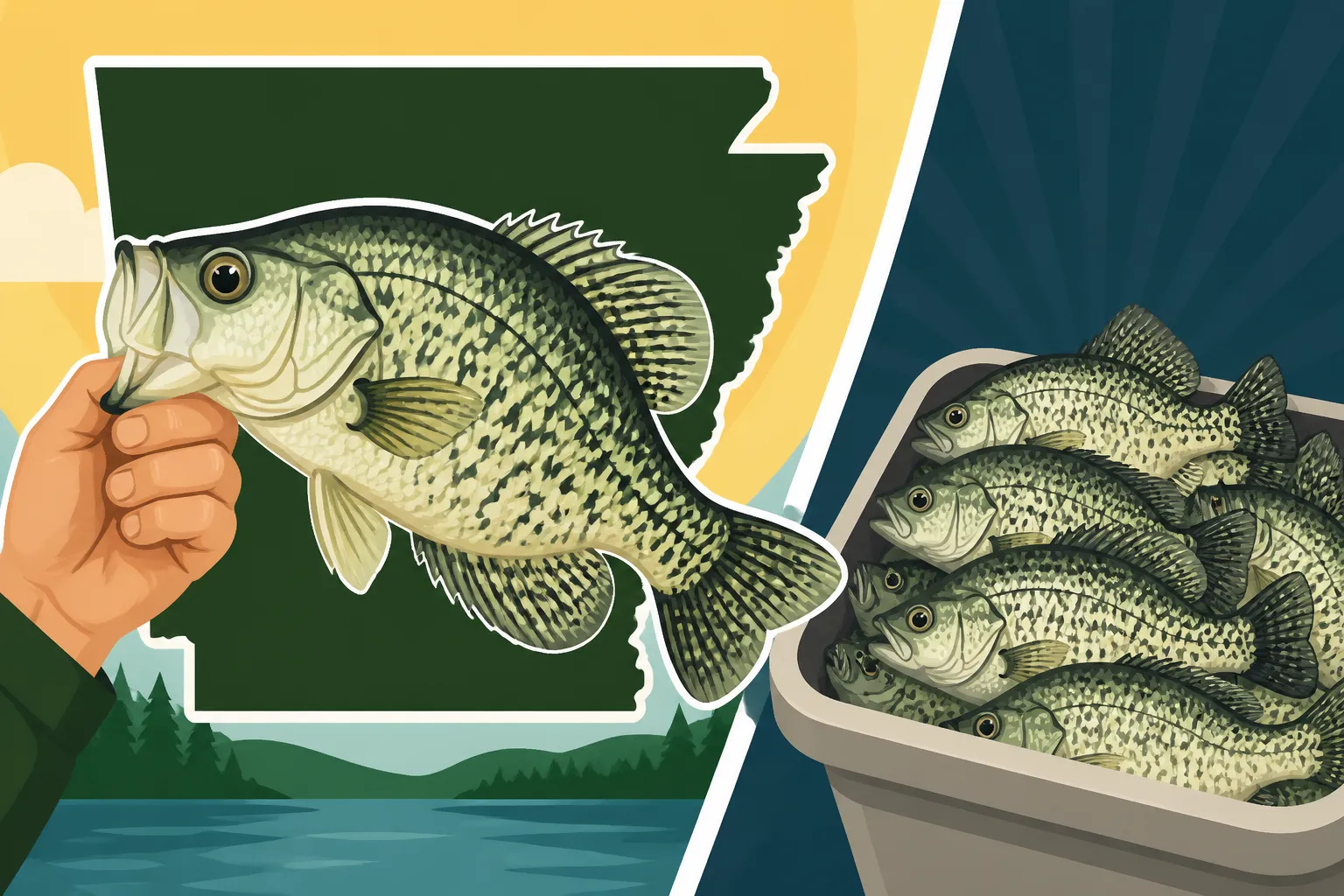
For the vast majority of Arkansas's fishing waters, the daily creel limit for crappie is 20 fish. This means that in a 24-hour period, from midnight to midnight, you are allowed to catch and keep up to 20 crappie. This limit applies whether you're targeting black crappie, white crappie, or a mix of both. It's a generous limit that allows most anglers to go home with a nice mess of fish for dinner, assuming the bite is on!
It's important to understand that this is a daily limit, not a possession limit for your home freezer. In fact, for the 2026-27 season and beyond, Arkansas eliminated statewide possession limits for most species, meaning you no longer have to worry about how many fish you have stored at home as long as they were legally caught under the daily limit. However, the 20 fish per day is still a very real boundary you can't cross. If you're on a multi-day trip, remember that each new calendar day resets your 20-fish allowance, but you can’t just stack up 40 fish in your livewell at the end of day two. Once you've reached your daily limit, you need to stop fishing for crappie for that day or switch to catch-and-release only. This helps distribute the harvest more evenly among anglers and prevents overfishing of local populations. You can dive deeper into how many crappie can you keep per day on most Arkansas lakes when you're planning your trips.
The Minimum Length Requirement
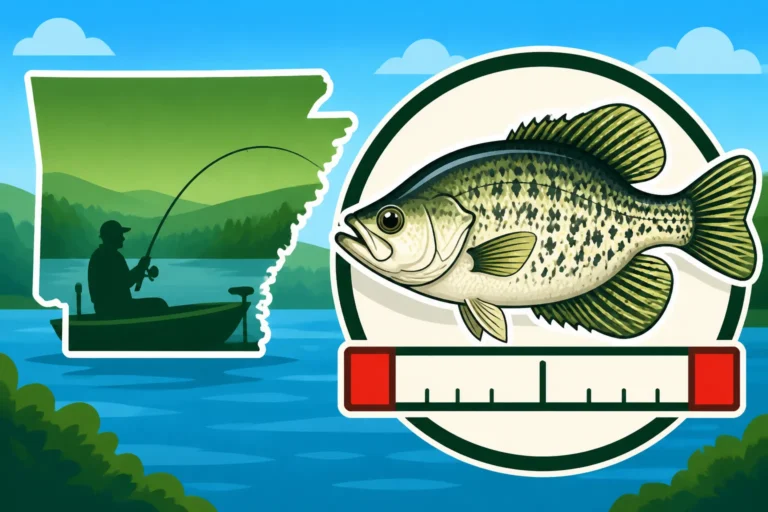
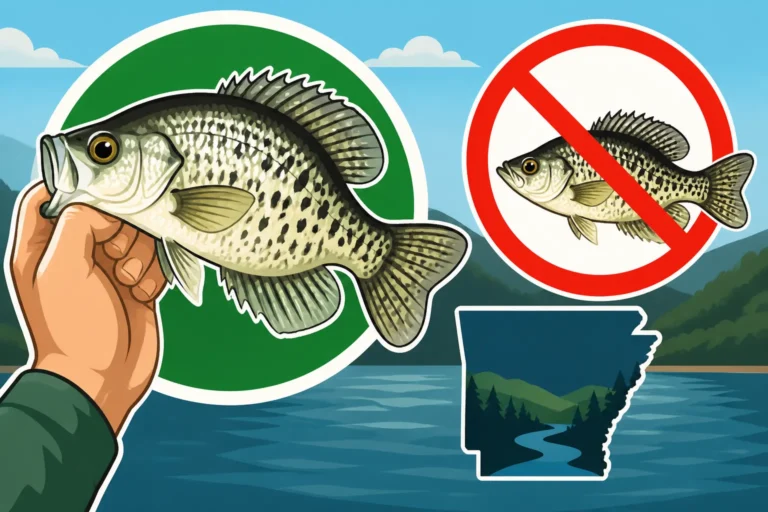
Beyond the number of fish you can keep, there's also a crucial rule about their size: crappie must be 9 inches or longer to keep in Arkansas. This minimum length requirement is in place for a very good reason. Crappie need time to grow and mature to reproductive age, ensuring they have a chance to spawn and contribute to the next generation of fish. By only keeping fish that are at least nine inches, anglers are helping to maintain a sustainable fishery.
Measuring your crappie accurately is key. Lay the fish flat on a measuring board or ruler, ensuring its mouth is closed, and measure from the tip of the jaw (with the mouth closed) to the end of the tail fin (with the tail compressed). If your crappie is even a fraction of an inch short, it must be immediately released unharmed. Many anglers carry a specialized fish ruler, often made of durable plastic or aluminum, that can attach to a boat or a cooler. You can find excellent options on Amazon, which makes quick, accurate measurements much easier in a boat or even from the bank. Always err on the side of caution; if it's borderline, let it go.
Why Crappie Limits Exist
It's easy to sometimes feel like regulations are just there to make things complicated, but with crappie limits, there's a really good reason behind every rule. The Arkansas Game and Fish Commission doesn't just pull these numbers out of thin air; they're based on scientific research, population studies, and a deep understanding of the ecological balance of our lakes and rivers. These limits are a critical tool in managing our precious natural resources for both current and future generations of anglers.
Protecting Crappie Populations
One of the primary reasons for crappie size and daily limits is to protect the overall health and sustainability of crappie populations. Crappie, like all fish, have a specific life cycle and reproductive strategy. By imposing limits on the number and size of fish that can be harvested, the AGFC helps ensure that enough fish remain in the water to reproduce successfully. This is especially vital for crappie, which are known for their prolific spawning, but can also be susceptible to overfishing if left unchecked.
Consider the role of larger, older crappie. These often contribute disproportionately to the spawn, producing more eggs and stronger offspring. If anglers were to only target and keep these larger fish, the genetic diversity and reproductive potential of the population could suffer over time. The minimum size limit helps to protect juvenile fish, allowing them to reach maturity and spawn at least once or twice before they become eligible for harvest. This balanced approach ensures that the "seed stock" for future crappie generations remains robust, providing consistent fishing opportunities for years to come.
Ensuring Quality Fishing Opportunities
Beyond simply protecting the fish themselves, crappie limits also play a huge role in enhancing the quality of the fishing experience for anglers. Nobody wants to fish in a lake where all the fish are tiny, or where the population has been so depleted that it's nearly impossible to catch anything. Regulations, in essence, manage angler expectations and help maintain healthy fisheries where there's a reasonable chance of success.
For instance, the 9-inch minimum length helps ensure that the crappie you do catch and keep are of a respectable size, offering a better fight and a more satisfying meal. It discourages the harvest of small, immature fish that don't offer much in terms of meat. Similarly, the daily limit prevents a few anglers from taking an excessive number of fish, leaving less for others. This promotes a more equitable distribution of the resource, ensuring that everyone who casts a line has a fair shot at a good day of crappie fishing. It's all about balancing harvest with healthy populations, so every angler can have a shot at catching a decent mess of fish.
Navigating Special Regulations for Specific Arkansas Lakes
While the statewide crappie regulations—a 20-fish daily limit and a 9-inch minimum length—cover most waters in Arkansas, it's absolutely crucial to remember that some specific lakes have their own unique rules. These special regulations are put in place by the AGFC to address particular biological or angling conditions within those specific bodies of water. Ignoring these localized rules, even accidentally, can lead to fines and penalties, so it's always worth checking before you wet a line in a new spot. This is why having a copy of the current Arkansas Fishing Regulations Guide is so important, whether it's a physical booklet or the digital version on your phone.
Lake Monticello's Unique Crappie Rules
Lake Monticello, located in southeast Arkansas, is a fantastic crappie fishery, but it operates under different crappie limits than the statewide norm. If you're planning a trip to this popular lake, you need to be aware that the daily crappie limit drops to 15 fish per day. That's a reduction from the standard 20, so you can see why knowing these details matters!
Furthermore, Lake Monticello also has a different length restriction that really sets it apart. While the statewide rule is a simple 9-inch minimum, at Lake Monticello, only 7 of your 15 crappie can be 12 inches or longer. This "slot limit" or "protected slot" is designed to manage the size structure of the crappie population. By encouraging anglers to keep smaller fish (between 9 and just under 12 inches) and limiting the harvest of larger ones, the AGFC helps maintain a healthy balance of crappie sizes, ensuring there are plenty of medium-sized fish for anglers and a strong population of larger breeders. It’s a bit more complex, but it’s a vital management tool. Understanding how the Lake Monticello crappie rule differs from statewide limits can save you a lot of grief.
Lake Cargile's Specific Crappie Regulations
Just like Lake Monticello, Lake Cargile, another popular fishing destination, has its own set of distinct crappie regulations that deviate from the statewide standard. Here, the daily creel limit for crappie is also 15 fish per day. So, if you're accustomed to the 20-fish statewide limit, you'll need to adjust your expectations when fishing this particular lake.
The length limits at Lake Cargile also feature a twist. While the 9-inch minimum length is still in effect, you're only allowed to keep 7 of your 15 crappie that are 12 inches or longer. This is identical to Lake Monticello's slot limit, aiming for the same biological objectives: to protect those valuable larger, spawning crappie while encouraging the harvest of smaller, more abundant fish. Always make sure to count and measure carefully to comply with these specific rules. Failing to do so can quickly turn a fun fishing trip into a stressful encounter with a game warden.
Other Notable Water Bodies with Exceptions
While Lake Monticello and Lake Cargile are prominent examples, they aren't the only waters in Arkansas that might have special crappie regulations. It's always a good practice to check the AGFC's current regulations guide for any lake, river, or tailwater you plan to fish, especially if you’ve never been there before or if it’s been a while. Sometimes, these exceptions are tied to specific management goals for a particular fishery, perhaps due to a unique ecosystem, recent stocking efforts, or even environmental factors.
For instance, while not always specifically for crappie, other waters might have "catch-and-release only" areas for certain species or modified length/creel limits for other panfish. These site-specific rules are often posted prominently at boat ramps or access points, so always keep an eye out for signage. Remember, ignorance of the law is no excuse, and wardens are there to enforce regulations designed to protect our fisheries. A quick check of the AGFC website or a quick call to a local office can save you a lot of hassle and ensure your day on the water is both enjoyable and legal.
Identifying and Measuring Crappie Accurately
So you’ve landed a nice stringer of crappie, and now comes the moment of truth: are they keepers? This is where accurate identification and measurement become absolutely critical. You might think, "A crappie is a crappie, right?" Well, not always. Arkansas is home to two main species of crappie, and while their regulations are generally the same, knowing the difference is part of being a well-informed angler. Plus, making sure your fish meet those crucial length requirements is non-negotiable.
Distinguishing Black Crappie from White Crappie
In Arkansas, you'll primarily encounter two types of crappie: black crappie and white crappie. While they often swim in the same waters and share similar habits, there are some subtle differences that can help you tell them apart. It's not just a fun fact; understanding these distinctions helps you appreciate the biodiversity of our waters, and sometimes their habitat preferences can even inform your fishing strategy. If you're curious, the AGFC offers fantastic resources on Black Crappie vs White Crappie in Arkansas.
The easiest way to tell them apart is to count the dorsal spines. Black crappie typically have 7 or 8 dorsal spines, giving their dorsal fin a more pronounced, spiny look. White crappie, on the other hand, usually have 5 or 6 dorsal spines. Another visual cue is their body shape and markings. Black crappie often have a more mottled, irregular pattern of black spots all over their silvery bodies, giving them a "peppered" appearance. White crappie tend to have more distinct, vertical bars or stripes on their sides, and their body is often a bit more elongated compared to the black crappie's somewhat deeper, more compressed body. While these differences might seem subtle at first, with a little practice, you'll be able to quickly identify your catch.
Proper Measurement Techniques
Okay, so you've identified your crappie. Now, for the all-important measurement. As mentioned earlier, the statewide minimum is 9 inches, and for special regulation lakes like Monticello and Cargile, you’re looking at additional rules for fish 12 inches or longer. There's a right way and a wrong way to measure a fish, and the AGFC is pretty clear on how it's done. You want to avoid any ambiguity that could lead to a citation.
To properly measure a crappie (or any fish in Arkansas), you need to place it on a flat surface, such as a measuring board or ruler. The key is to measure from the tip of the fish's jaw (with its mouth closed) to the absolute end of the tail fin (with the tail compressed). This "total length" measurement is standard. Many anglers use a specialized fish ruler that has a stop for the mouth and clear markings. Some even mark their fishing rods at 9 and 12 inches for quick reference, but always double-check with a proper ruler if you're unsure. You can find convenient, durable options for fish measuring boards on Amazon, which are invaluable for ensuring you're compliant. Always be honest with your measurements; a fish that's barely 8.75 inches is not a 9-inch keeper, and trying to stretch it could cost you more than just a crappie dinner.
Common Pitfalls and Best Practices for Crappie Anglers
Even the most experienced anglers can sometimes fall into traps or make assumptions about regulations. With crappie fishing being so popular in Arkansas, it's easy to get caught up in the excitement and overlook crucial details. Understanding common pitfalls and adopting best practices will not only keep you compliant with the law but also contribute positively to the health of our crappie fisheries. It's about being a responsible steward of the environment while still enjoying your passion.
Avoiding Penalties and Fines
The biggest pitfall, of course, is getting caught with an illegal catch. This could mean having too many crappie, keeping fish that are too small, or exceeding special limits on certain lakes. The penalties for fishing without a license in Arkansas or violating creel and size limits can range from hefty fines to the confiscation of your gear, and even the loss of your fishing privileges. Game wardens in Arkansas are diligent, and they are out there checking.
To avoid these stressful situations, always carry a current copy of the Arkansas Fishing Regulations Guide (or have it readily accessible on your phone). When you arrive at a new lake, particularly one you haven't fished before, take a moment to look for any posted signs at boat ramps or access points that might indicate special regulations. If in doubt, ask a local bait shop owner or check the AGFC website directly. A few minutes of research before your trip can save you a lot of money and grief. Also, invest in an accurate measuring device and use it consistently. It's far better to release a borderline fish than to risk a fine.
Ethical Angling and Conservation
Beyond simply following the letter of the law, ethical angling and conservation practices are paramount for every angler. Crappie are a beloved sportfish, and it's up to all of us to ensure their populations thrive. This means thinking beyond just your immediate catch and considering the broader impact of your actions.
One key aspect of ethical angling is careful handling of fish, especially those you intend to release. If a crappie is undersized or if you've already met your limit, release it as quickly and gently as possible. Minimize its time out of the water, handle it with wet hands to protect its slime coat, and avoid squeezing it, especially around its gills. Using barbless hooks can also make releasing fish easier and less traumatic. Another best practice is to dispose of all trash properly. No one wants to see fishing line, bait containers, or plastic bottles polluting our beautiful lakes. Consider carrying a small trash bag with you and leaving the area cleaner than you found it. By practicing these conservation habits, you help ensure that crappie fishing remains a cherished tradition in Arkansas for many generations to come.
Frequently Asked Questions About Arkansas Crappie Limits
Even after reviewing all the official rules, it's common to have lingering questions, especially when planning a trip or encountering an unexpected situation on the water. Here, we'll address some of the most frequently asked questions about crappie size and daily limits in Arkansas to help you feel even more prepared and confident in your angling adventures.
What Happens if You Exceed the Limit?
Exceeding crappie limits in Arkansas, whether it's the daily creel limit or the specific length restrictions, is considered a violation of state law. If a game warden checks your cooler or livewell and finds you in possession of more fish than legally allowed, or fish that are undersized, you will likely face a citation. This can result in significant fines, which can quickly add up and far outweigh the value of the extra fish.
In addition to fines, there's always the possibility of having your fishing gear confiscated, including your rods, reels, and even your boat in some serious cases. Repeated violations can lead to the suspension or revocation of your fishing license, meaning you won't be able to legally fish in Arkansas for a period of time. It's simply not worth the risk. Always count your fish accurately, measure carefully, and stop fishing for crappie once you've reached your limit. If you accidentally catch an undersized fish, release it immediately and unharmed. Honesty and diligence are your best defense against penalties.
Do Kids Have Different Crappie Limits?
This is a common and understandable question, especially for families introducing youngsters to the joys of fishing. In Arkansas, the crappie size and daily limits apply to all anglers, regardless of age, once they are required to have a fishing license. This means if an adult and a child are fishing together, and the child is old enough to need their own fishing license in Arkansas, then both individuals are subject to the same 20-fish daily limit (or special lake limits) and the 9-inch minimum length requirement.
However, it's important to remember that in Arkansas, residents under 16 years of age do not need a fishing license. Similarly, non-residents under 16 also do not need a license. For these unlicensed young anglers, they are still expected to abide by the same crappie limits as licensed adults. The key takeaway is that the limits are tied to the resource – the crappie population – not specifically to who is holding the rod. So, while kids might not need a license, their catch still counts towards the established limits for crappie, meaning a family of four with two licensed adults and two unlicensed kids can collectively keep 80 crappie statewide in a day (20 fish x 4 people), provided all fish meet the size requirements.
Arkansas Crappie Regulations Overview
Here's a handy table summarizing the key crappie regulations in Arkansas for easy reference. Always double-check the latest AGFC regulations guide for any updates before your trip!
| Regulation Category | Statewide Rule (Most Waters) | Lake Monticello | Lake Cargile |
|---|---|---|---|
| Daily Creel Limit | 20 fish | 15 fish | 15 fish |
| Minimum Length | 9 inches | 9 inches | 9 inches |
| Special Length Rule | None | Only 7 fish 12 inches or longer | Only 7 fish 12 inches or longer |
Remember, these specific lake regulations are critical to follow. For instance, if you're out crappie fishing at Lake Monticello, that 15-fish limit and the 7-fish over 12 inches rule are enforced just as strictly as the statewide guidelines.
Disclaimer
The information provided in this guide is intended for general informational purposes only and is based on publicly available regulations at the time of writing. Fishing regulations, including crappie size and daily limits, are subject to change by the Arkansas Game and Fish Commission (AGFC). It is the angler's sole responsibility to consult the most current and official Arkansas Fishing Regulations Guide or the AGFC website before engaging in any fishing activity. Failure to comply with current regulations may result in legal penalties.