Flathead Catfish in Arkansas Waters
For anglers in Arkansas, there are few fish that stir the imagination quite like the flathead catfish. You might have heard the whispers of massive, whiskered giants lurking in the deep holes of our rivers, and let's be honest, trying to track down one of these elusive beasts can feel like a lifelong quest. This guide is all about demystifying the flathead catfish in Arkansas waters, from how to identify them to the specialized tactics you'll need to successfully hook into one of these truly impressive fish.
Understanding the Flathead Catfish: Arkansas's River Monster
The flathead catfish, often simply called "flathead" or "yellow cat" by locals, is a species that commands respect. They're not your average channel catfish; these fish are built differently, they eat differently, and they fight differently. Many anglers spend years dreaming of landing one of Arkansas's truly monstrous flatheads, and for good reason – they're a challenge!
Identifying a Flathead Catfish
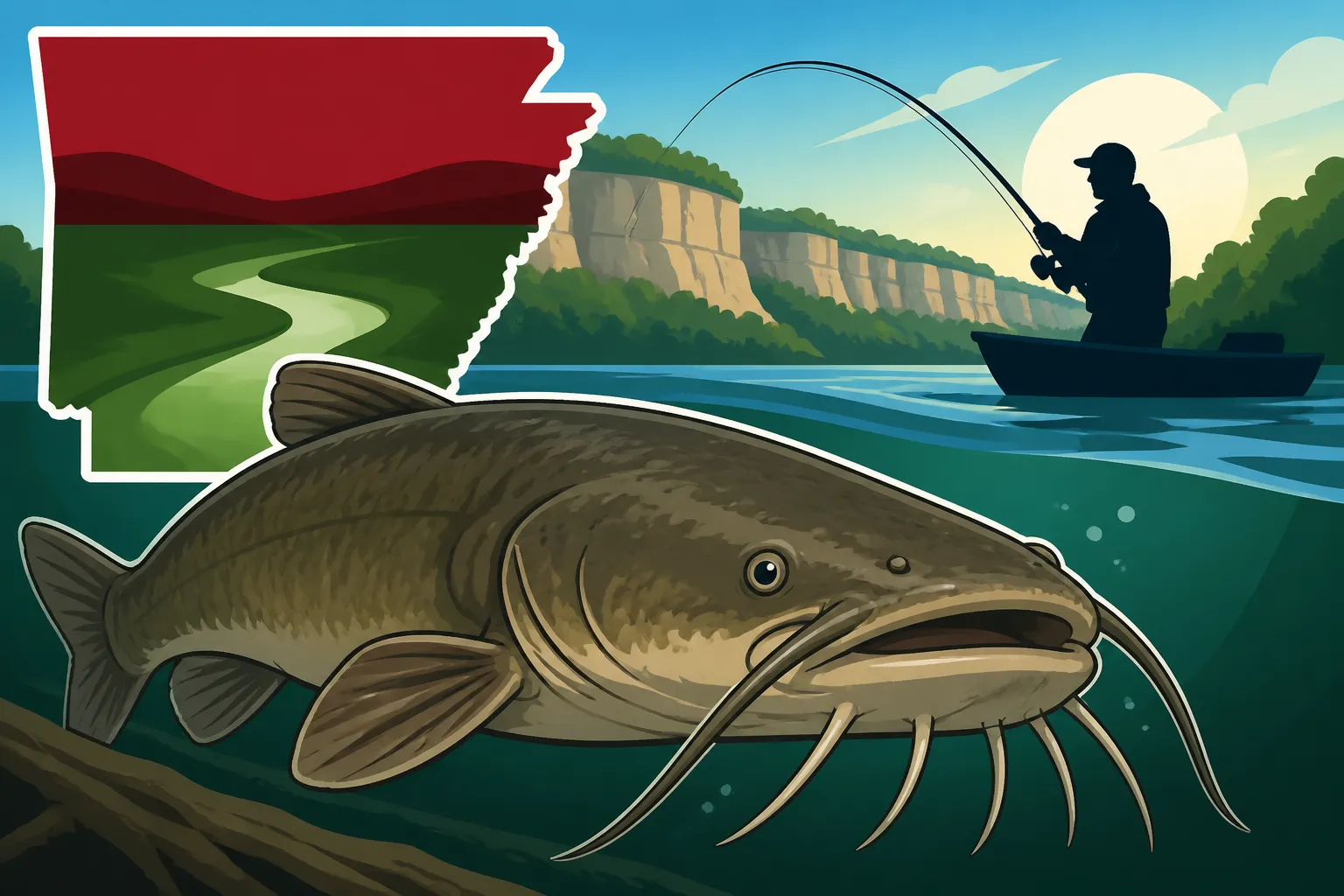
Before you can target them, you really need to know what you're looking for. Flatheads have a distinctive appearance that sets them apart from their channel and blue catfish cousins. Their head is noticeably flattened, as the name suggests, giving them a somewhat snake-like or reptilian profile. Their lower jaw protrudes beyond the upper jaw, a tell-tale sign that differentiates them from the typically equal jaws of channel cats or the upper jaw protrusion of some other species.
Another key characteristic is their coloring. While it can vary depending on the water they inhabit, flatheads generally have a mottled pattern of olive green, brown, and yellow, almost like camouflage. This irregular patterning is different from the more uniform coloration of other catfish. And let's not forget their dorsal fin, which is typically shorter and more rounded than that of a channel cat. If you're trying to figure out "How to Tell Channel, Blue, and Flathead Catfish Apart," pay close attention to these head and color details.
What Makes Flatheads Unique Predators
Flathead catfish are unique among catfish species in Arkansas for a very specific reason: they are almost exclusively piscivorous, meaning they primarily eat other fish. While channel cats and blue cats are opportunistic feeders, chowing down on everything from insects and crayfish to prepared baits, flatheads prefer live prey. This makes them a true apex predator in many of Arkansas's river systems, and it directly influences the most effective fishing techniques.
They're ambush predators, often found lurking in submerged timber, rock piles, or deep scour holes, waiting for an unsuspecting fish to swim by. This predatory nature is what gives them their incredible fighting power and why landing a big one is such an accomplishment. You won't find many flatheads falling for stink bait, and that's a key frustration many new flathead anglers encounter – they approach it like channel cat fishing and come up empty.
Where to Find Flathead Catfish in Arkansas Waters
Arkansas is blessed with an abundance of waters that flathead catfish call home. These aren't pond fish; they thrive in large rivers and reservoirs with plenty of deep water, strong current, and ample structure. Knowing their preferred haunts is half the battle when trying to locate these elusive giants.
Preferred Habitats and Structures
Flatheads absolutely love structure. We're talking about deep logjams, submerged timber, root balls, rocky ledges, bridge pilings, and scour holes created by current. They use these spots not only for ambush points but also for protection from strong currents and for resting. In our major rivers like the Arkansas River or the White River, look for outside bends where the current has carved out deep holes, often littered with snags. These deep, snag-infested areas can be incredibly frustrating to fish, as you're constantly getting hung up, but that's where the flatheads are. It's a trade-off: risk losing gear for the chance at a trophy.
Reservoirs also hold flatheads, particularly in the lower stretches near the old river channels. Look for points, humps, and submerged creek beds that offer depth and cover. Areas where rivers feed into reservoirs can also be productive, as flatheads will congregate in the deeper channels seeking food and shelter. Think about Best Catfish Spots in Arkansas and you'll often find these types of deep, structured areas are mentioned repeatedly.
Top Arkansas Rivers and Lakes for Flatheads
When it comes to prime flathead territory, Arkansas has some real gems. The Arkansas River is arguably the state's flathead factory. Its lock-and-dam system creates a series of pools and tailwaters with abundant deep holes and current-swept structure that flatheads absolutely thrive in. Anglers regularly pull out massive flatheads from the Arkansas River, especially around the lock and dam areas.
Other notable rivers include the White River, particularly its lower stretches, and the Ouachita River, which also boasts some impressive flathead populations. For reservoir fishing, lakes like Lake Ouachita, Lake Hamilton, and even some of the larger flood control lakes can produce big flatheads, especially if you focus on the old river channels winding through them. Just remember, these fish are often nocturnal, so your best bet might be after sundown.
Essential Gear and Rigging for Flathead Fishing
You wouldn't bring a butter knife to a sword fight, and you certainly shouldn't bring light tackle to a flathead fight. These fish are powerful, and they know how to use the current and structure to their advantage. Having the right gear isn't just about catching them; it's about giving yourself a fighting chance against a true freshwater bruiser.
Heavy-Duty Rods and Reels
When targeting flatheads, you need serious backbone in your rod and plenty of pulling power in your reel. Forget your medium-action bass rods. We're talking about heavy or extra-heavy action rods, typically 7 to 9 feet long, designed to handle heavy weights and big fish. A stiff rod is crucial for setting the hook on a tough flathead mouth and for muscling them out of heavy cover.
Matching this with a robust conventional reel (baitcaster) or a large spinning reel is key. Look for reels with a strong drag system and a good line capacity. You'll want to spool it with heavy monofilament or braided line. For many anglers, the struggle of a weak drag giving out or a flimsy rod snapping mid-fight is a common, heartbreaking experience. Don't let that be you! You can find a fantastic selection of heavy-duty catfish rods and reels on Amazon, often with helpful reviews from other serious catfishermen.
Line, Hooks, and Terminal Tackle
Your line choice is critical. Most flathead anglers opt for monofilament in the 30-50 pound test range, or braided line even heavier, sometimes 60-80 pound test or more, especially when fishing around snags. Braided line offers superior strength and sensitivity, which can be a huge advantage when feeling subtle bites in deep water or current.
For hooks, go big and go strong. Circle hooks are almost universally favored for flathead fishing, typically in sizes ranging from 5/0 to 10/0, depending on your bait size. Circle hooks greatly increase your chances of a solid hookset in the corner of the fish's mouth, reducing gut hooking and making catch-and-release much easier. As for weights, you'll need anything from 2 to 8 ounces or more, depending on the current. Think about no-roll sinkers or pyramid sinkers for bottom presentations. Strong swivels and heavy-duty leaders (often 50-80 pound test mono or fluorocarbon) complete your rigging.
Effective Baits and Techniques for Flatheads
Remember how I mentioned flatheads are picky eaters? This is where your strategy truly needs to shift. Unlike their scavenger cousins, flatheads want fresh, lively bait. Successfully catching them comes down to understanding this preference and presenting your bait effectively.
The Power of Live Bait
There's really no debate here: live bait is king for flathead catfish. They're predators, and they want to chase down a meal. Popular live baits in Arkansas include sunfish (bluegill, green sunfish), shad, small carp, and even larger minnows. Always check local regulations regarding the size and type of baitfish you can use, and ensure they are legally obtained.
The key is to keep your bait lively. A healthy, active baitfish sends out vibrations and distress signals that flatheads can't resist. Using a good aerated bait bucket is essential, especially on longer trips. The size of your bait depends on the size of flathead you're targeting; larger flatheads prefer larger meals, so don't be afraid to use a 6-8 inch sunfish if you're after a monster.
Bottom Fishing and Drifting Tactics
The most common technique for flathead catfish is bottom fishing with live bait. This usually involves a Carolina rig or a three-way swivel rig. With a Carolina rig, your weight slides freely above a swivel, which is then tied to a leader and your hook. This allows the flathead to pick up the bait without feeling the weight immediately, increasing your chances of a solid hookset. You can find excellent leader material and robust swivels on Amazon, perfect for building these strong rigs.
Drifting is another highly effective method, especially in rivers. Instead of anchoring, you allow your boat to drift slowly with the current, dragging your bait along the bottom. This covers more water and presents your bait to a wider range of potential flathead ambush points. When drifting, it's crucial to pay close attention to your rod tip for bites and to be ready to quickly set the hook and fight the fish away from snags. Don't be surprised if your biggest flathead hits when you least expect it! You can learn more about specific approaches in guides like Catfish Bottom Fishing Techniques or Trotline Fishing Basics.
Flathead Catfish Regulations and Conservation
As with any species, responsible angling for flathead catfish is paramount. Understanding the regulations and practicing good conservation habits ensures these magnificent fish will be around for future generations of Arkansas anglers to enjoy. It's a privilege to fish for such powerful creatures, and with that comes the responsibility to protect them.
Size and Creel Limits
Regulations for flathead catfish, including length and daily creel limits, are established by the Arkansas Game and Fish Commission (AGFC) and can vary by water body. It’s absolutely vital to check the current AGFC fishing guide before heading out. Generally, there are statewide limits, but specific lakes or river sections might have special regulations. For instance, some waters might have a slot limit, where fish within a certain size range must be released, or a reduced daily limit for larger fish.
These regulations are put in place to manage fish populations and ensure healthy breeding stocks. Ignoring them can lead to significant penalties, not to mention harming the fishery itself. Always carry a copy of the current regulations, or have them readily accessible on your phone, to avoid any issues.
Catch and Release Best Practices
While flathead catfish are delicious table fare, many anglers practice catch and release, especially for the larger, older fish. These big flatheads are the prime breeders, and releasing them helps maintain a robust population. If you do plan to release a flathead, especially a large one, follow these best practices:
- Minimize Fight Time: Try to land the fish as quickly as possible to reduce stress.
- Handle With Care: Use a net designed for large fish, and avoid dragging the fish on rocks or abrasive surfaces. Support its body weight horizontally when holding it for photos, particularly with larger fish, to prevent internal organ damage.
- Remove Hook Quickly: Use pliers or a dehooking tool to remove the hook promptly. Since you're using circle hooks, they're usually in the corner of the mouth, making removal easier.
- Revive If Necessary: If the fish seems stressed or disoriented, hold it gently in the water, facing into the current, until it regains its strength and swims away on its own.
By following these guidelines, you contribute to the sustainability of Arkansas's incredible flathead catfish fishery. It's about respecting the fish and the resource.
Beyond the Basics: Advanced Flathead Tactics
Once you've mastered the foundational techniques, you might be ready to explore some more advanced methods for targeting flathead catfish. These can often lead to bigger catches, but they also require more specialized knowledge and sometimes more gear.
Night Fishing for Flatheads
Flatheads are largely nocturnal predators, so fishing at night can dramatically increase your success rate. As the sun sets, these fish become more active, moving out of their deep daytime hiding spots to hunt in shallower areas or along channel edges. This is where those heavy-duty rods and reels really shine, as you'll be fighting powerful fish in the dark, often close to heavy cover.
When night fishing, safety is paramount. Make sure you have adequate lighting, both on your boat and for your work area. A headlamp is essential, leaving your hands free for baiting hooks or handling fish. Be extra cautious around snags and unseen obstacles. The silence of night fishing, broken only by the splash of a big flathead, is an experience unlike any other. Don't forget to pack plenty of insect repellent!
Jug Fishing and Trotlining
For anglers looking to cover more water or target flatheads on a larger scale, jug fishing and trotlining are traditional and effective methods. These techniques allow you to set multiple baited lines and check them periodically, increasing your chances of connecting with active fish. However, these methods are highly regulated in Arkansas, so it is absolutely critical to understand and adhere to all local rules regarding licensing, marking, bait restrictions, and check times.
Jug Fishing Basics for Catfish and Trotline Fishing Basics are great resources to delve into the specifics of these techniques. Remember, the core principle of live bait still applies here for flatheads. These methods demand patience and diligence, but they can be incredibly rewarding when a big flathead is on the other end of your line.
| Catfish Species | Head Shape | Jaw Protrusion | Typical Coloration | Primary Diet | Common Baits |
|---|---|---|---|---|---|
| Flathead | Distinctly Flattened | Lower jaw extends beyond upper | Mottled olive, brown, yellow | Live fish | Live sunfish, shad, carp |
| Channel | Rounded | Upper jaw often slightly longer | Uniform grey to olive, often spotted (young) | Omnivorous | Cut bait, stink bait, worms, chicken liver |
| Blue | Rounded, larger | Upper jaw slightly longer | Silvery-blue to slate-grey | Omnivorous (more piscivorous than channel) | Cut bait, shad, live bait |
Disclaimer
This article is for general informational purposes only and does not constitute professional advice. Laws, prices and regulations vary by location and change over time. Consult a qualified professional for guidance on your specific situation.