What an Arkansas Guided White River Trip Includes
Planning a fishing trip to Arkansas's famed White River can feel a little overwhelming, especially if you're hoping for a guided experience but aren't quite sure what to expect. Many anglers wonder if they need to bring all their own gear, if lunch is provided, or even what kind of boat they'll be fishing from. This guide is designed to clear up all those questions, giving you a detailed breakdown of what's typically included when you book an Arkansas guided White River trip, ensuring you arrive prepared and ready to focus on catching some incredible trout.
The Basics of a White River Guided Trip
Embarking on a guided fishing trip on the White River is a truly unique experience, offering access to some of the best trout fishing in the country. It's not just about getting on the water; it's about leveraging the deep knowledge of someone who spends their life understanding these currents, these fish, and these techniques. For many, especially those unfamiliar with tailwater trout fishing, a guide is an invaluable asset that transforms a good day into an unforgettable adventure.
The Guide's Expertise and Equipment
When you book a White River fishing guide, you're not just paying for a boat; you're investing in years, often decades, of localized expertise. These guides know the river like the back of their hand – where the big browns hide, the subtle seams where rainbows feed, and how changing water levels from the dams affect fish behavior. They understand the nuances of fly patterns, lure presentations, and bait choices that change by the hour. Their intimate knowledge of the river means they can put you on fish, even on days when the bite is tough, and adjust tactics as conditions shift throughout your trip.
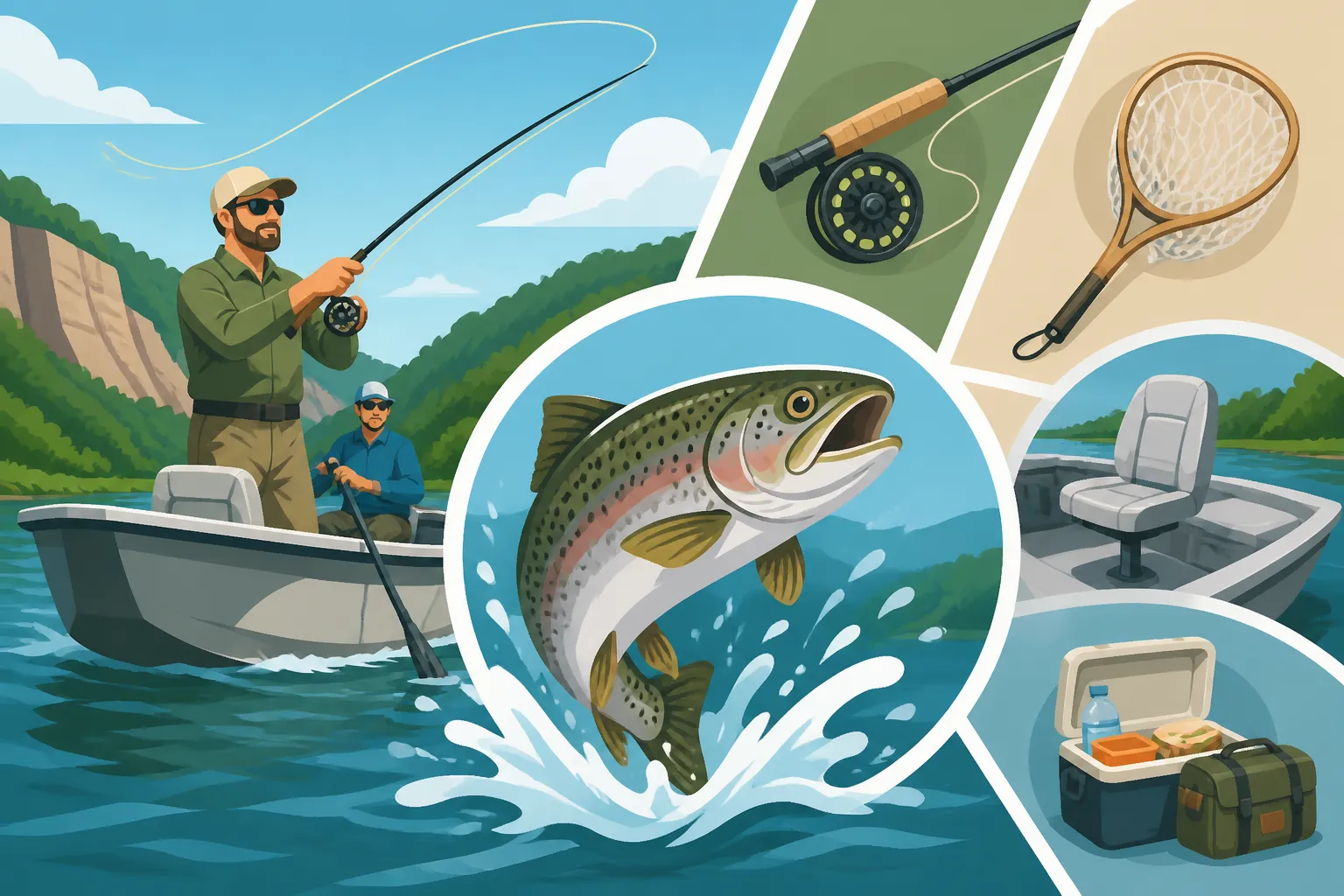
Beyond their knowledge, guides come equipped with specialized boats perfectly suited for the White River. You'll typically find yourself in a custom-built jon boat or a drift boat, designed for stability, comfort, and navigating the often shallow, sometimes swift waters of a tailwater fishery. These boats are set up specifically for fishing, providing ample space for casting, comfortable seating, and often storage for your personal items. The guide is responsible for safely piloting the vessel, allowing you to concentrate fully on your angling, which is a huge relief when you're trying to manage your line and a fighting fish in a moving current.
Duration and Typical Schedule
White River guided trips usually come in a few common durations: half-day, three-quarter day, and full-day options. A half-day trip typically runs about 4-5 hours, often starting early in the morning or later in the afternoon to hit prime bite windows. These are great for beginners, families with younger children, or those on a tight schedule who want a taste of the White River experience without committing to a full day. You'll still get plenty of fishing time, but it's a more condensed experience.
Full-day trips are generally 8-9 hours long and offer the most comprehensive experience. These trips allow for more travel up and down the river, more varied fishing spots, and more time to experiment with different techniques and target multiple species. A typical full-day schedule often starts at daybreak, breaks for lunch on the water or at a riverside access point, and continues fishing into the late afternoon. This extended time allows for a deeper immersion into the river's ecosystem and maximizes your chances of landing a trophy trout. There are also three-quarter day options, often around 6 hours, which offer a nice balance between a quick half-day and a full-day commitment. You can check platforms like FishingBooker to compare different trip lengths offered by various guides.
Essential Inclusions: What Your Guide Provides
One of the greatest benefits of booking a guided trip is the peace of mind knowing that a significant portion of your gear and necessities will be handled. You don't have to worry about packing multiple tackle boxes, bringing every rod you own, or even figuring out what kind of bait trout are hitting that day. This level of provisioning allows you to arrive with minimal fuss and maximum excitement.
Rods, Reels, and Tackle
Your White River guide will almost certainly provide all the necessary rods, reels, and terminal tackle for your trip. This is a huge advantage, as trout fishing, especially on tailwaters, can require specialized gear. Guides typically have a range of spinning rods and reels, as well as fly rods and reels, suited for different techniques like drift fishing, casting lures, or nymphing. They'll have rods of various weights and actions, perfectly balanced for the size of trout you're targeting and the current conditions.
This also extends to terminal tackle. You won't need to fret about leaders, tippets, weights, hooks, or indicators. Guides meticulously maintain a well-stocked supply of these items, ensuring you have the right gear for the specific water conditions and fishing methods they employ. They know what line strength is needed for a particular section of river or what size hook works best for the bait or fly being used. This not only saves you the expense of purchasing specialized gear but also the headache of setting it all up correctly.
Bait, Lures, and Flies
Perhaps the most crucial inclusion is the bait, lures, or flies. The White River is renowned for its diverse trout fishery, and what they're biting on can change dramatically from one day to the next, or even hour to hour. Your guide will have a finger on the pulse of the river, knowing exactly what the trout are keying in on. For spin fishing, this could mean a variety of inline spinners, spoons, small crankbaits, or soft plastics in colors and sizes that are currently effective. For bait fishing, they'll often provide live or prepared baits such as worms, power bait, or salmon eggs.
Fly anglers will find their guide's fly boxes brimming with an array of nymphs, dries, streamers, and emergers. These aren't just generic flies; they're often patterns tied by the guides themselves or local tiers, specifically chosen to imitate the prevalent insect hatches and forage fish in that particular stretch of the White River. Having a guide supply these ensures you're fishing with proven patterns and the most effective presentations, increasing your chances of success without having to guess what's in vogue.
The Boat and Safety Gear
As mentioned before, the boat itself is a significant inclusion. These aren't just recreational craft; they're workhorses designed for the rigors of river fishing. They're typically comfortable, stable, and equipped with features that enhance the fishing experience, such as elevated casting platforms or swivel seats. Your guide will ensure the boat is well-maintained and fueled up for your trip, so you don't have to worry about the logistics of launching or retrieving it.
Safety is paramount on any guided trip, and your guide will provide all the necessary safety equipment. This includes U.S. Coast Guard-approved personal flotation devices (PFDs) for everyone on board. They'll have a range of sizes to fit adults and children comfortably. Additionally, guides carry essential safety tools such as first-aid kits, oars or a paddle for emergency situations, throw bags, and often communication devices. They are experienced in river navigation and emergency procedures, giving you peace of mind that you're in capable hands. You can focus on the fishing, knowing that your safety is a top priority.
| Item Type | Typically Provided by Guide | Angler Responsibility | Why it's Provided by Guide |
|---|---|---|---|
| Fishing Gear | Rods, Reels, Line | Your own specialized gear (optional) | Ensures optimal setup for local conditions and target species. |
| Terminal Tackle (hooks, weights, swivels, leaders) | Matched precisely to baits and techniques used. | ||
| Bait, Lures, Flies | Based on current river conditions and fish preferences. | ||
| Safety Equipment | Life Vests (PFDs) | Required by law, properly sized and maintained. | |
| First-Aid Kit | Personal medications | Emergency preparedness. | |
| Communication Devices | Your cell phone (optional) | For emergency contact on the river. | |
| Boat & Operation | Fishing Boat (Jon boat, drift boat) | Specialized vessel for river conditions. | |
| Fuel | Logistical necessity for the trip. | ||
| Guide's Expertise & Navigation | Core service, knowledge of hotspots and safety. | ||
| On-Water Comfort | Cooler with ice | Your food/drinks | Keeps your refreshments cold. |
| Sunscreen (some guides) | Your preferred brand | Personal preference and skin needs. | |
| Fish Handling | Net, Release Tools | For safe landing and handling of fish. | |
| Fish Cleaning Services | Post-trip convenience for your catch. |
What Anglers Are Expected to Bring (And Why It Matters)
While your guide takes care of a huge chunk of the gear and planning, there are still some crucial items you, as the angler, are responsible for bringing. These are typically personal items, legal necessities, or things that cater to your individual comfort and preferences. Understanding these expectations beforehand will ensure a smooth start to your trip and prevent any last-minute scrambling.
Your Arkansas Fishing License and Trout Permit
This is perhaps the most critical item you must bring yourself. Every angler aged 16 and older is legally required to possess a valid Arkansas fishing license. If you plan to keep trout on the White River, you will also need an additional trout permit, regardless of age. There are no exceptions for guided trips; the guide cannot provide these for you. Think of it like needing a driver's license to operate a car; it's a personal responsibility. You can easily purchase these online through the Arkansas Game and Fish Commission website, at many sporting goods stores, or even by phone. It's always a good idea to buy them a few days in advance to avoid any potential technical glitches on the morning of your trip. Arkansas Fishing License Rules and Costs and Arkansas Trout Permit Rules are excellent resources if you need more details on these requirements. Remember, game wardens do patrol the White River, and fishing without the proper documentation can result in hefty fines, which would certainly put a damper on your otherwise fantastic trip.
Personal Gear: Clothing, Food, and Drinks
When it comes to your comfort, personal items are your responsibility. First and foremost, check the weather forecast for the specific section of the White River where you'll be fishing, but always dress in layers. Temperatures can fluctuate dramatically throughout the day, especially on the river. Even on a warm sunny day, the early mornings can be chilly, and if the dam is generating power, the water can feel quite cold. Bring rain gear, even if the forecast looks clear; pop-up showers are common, and getting wet on the river can quickly make for a miserable experience. Sun protection is vital: hats, sunglasses (polarized are highly recommended for seeing fish and protecting your eyes from hooks), and sunscreen are non-negotiable.
For food and drinks, plan to pack your own. Most guides will provide a cooler with ice, so you just need to bring your preferred snacks, sandwiches, and beverages. If you have any dietary restrictions or preferences, bringing your own provisions ensures you'll have exactly what you need to stay energized throughout the day. While some guides might offer a basic snack or bottled water as a courtesy, it's never guaranteed, so it's best to be self-sufficient in this regard. This attention to personal comfort ensures you can fully enjoy every moment on the water.
Understanding "BYO" Items
Beyond the essentials, there are a few "BYO" (Bring Your Own) items that are optional but can significantly enhance your experience. If you have a favorite fishing hat, lucky fishing shirt, or comfortable fishing gloves, definitely bring them along. Many anglers prefer to use their own specialized camera equipment for capturing memories, as opposed to relying on a guide's phone. What to Bring on a Guided Arkansas Fishing Trip offers an even more comprehensive packing list.
Some anglers, particularly those passionate about fly fishing, might prefer to bring their own specific fly rods or a treasured fly box with their hand-tied patterns. While guides supply excellent gear, there's no harm in bringing your own if you prefer it, just let your guide know beforehand. However, don't feel pressured; the guide's provided equipment is perfectly adequate for a successful day. The key is that anything that falls under "personal preference" or "extra convenience" usually rests with the angler to provide. Understanding this distinction helps manage expectations and ensures you have all your personal comforts covered for a fantastic day on the water.
Beyond the Bare Necessities: Added Value and Services
While the primary goal of a guided trip is to put you on fish, many White River guides offer services and experiences that go above and beyond merely providing gear and transport. These "added value" elements are often what elevate a good fishing trip to an truly exceptional and memorable adventure.
Fish Cleaning and Preparation
After a successful day of fishing and, assuming you've adhered to all the Arkansas Fish Size and Daily Limits and possess the necessary trout permit, you might find yourself with a cooler full of delicious trout. A significant perk offered by many White River guides is the service of cleaning and bagging your catch at the end of the trip. This means you don't have to worry about the messy, time-consuming task of cleaning fish yourself after a long day on the water. Your guide will expertly fillet or gut your trout, often bagging them for easy transport back to your lodging or home.
This service is incredibly convenient, especially if you're staying in a hotel or have a long drive ahead. It transforms your fresh catch into ready-to-cook fillets, making meal preparation a breeze. While this service is commonly included, it's always a good idea to confirm with your guide when booking if fish cleaning is part of their standard package. If you plan to release all your fish, or prefer to clean them yourself, just let your guide know. The goal is to make your post-fishing experience as enjoyable and hassle-free as the fishing itself.
Photography and Memories
In today's digital age, capturing memories is almost as important as the experience itself. Many White River guides are more than happy to act as your personal photographer for the day. They understand that you want to commemorate that trophy brown trout or the sheer joy on your child's face as they land their first fish. Guides often carry waterproof phones or cameras specifically for this purpose and are skilled at taking great photos from the boat, ensuring you get some fantastic shots of your catch and the beautiful river scenery.
They know the best angles, how to hold the fish for a quick, healthy photo before release, and are adept at capturing those candid moments of laughter and excitement. Don't hesitate to ask your guide to snap a few pictures; it's a common request, and they're usually happy to oblige. These photos become cherished keepsakes, allowing you to relive the excitement of your White River adventure long after you've left the water. It's another thoughtful touch that enhances the overall value of a guided trip.
Learning Opportunities and Local Insights
One of the most understated yet valuable inclusions of a guided trip is the immense learning opportunity it presents. A good guide isn't just a boat driver; they are an educator and a storyteller. They're keen to share their knowledge of the river, its history, its ecology, and the nuances of trout behavior. You can learn invaluable fishing techniques, from proper casting and presentation to understanding reading the water and identifying fish-holding structure. They'll explain why they're using a particular fly or lure, how changing water levels affect the bite, and even offer tips for fishing the river on your own in the future.
Beyond fishing, guides often share fascinating local insights and anecdotes about the area. They can point out wildlife, tell stories about the river's past, and offer recommendations for local restaurants or attractions. It's like having a local expert, historian, and fishing professor all rolled into one. This interactive element makes the trip far more enriching than simply going out and catching fish; it's an immersive cultural and educational experience. White River Fishing Guides: Arkansas's Trout Fishing Capital explores this deeper. This level of engagement transforms a simple fishing trip into a truly memorable adventure where you come away not just with fish, but with newfound knowledge and appreciation for the White River.
Group Size, Pricing, and Booking Considerations
Understanding the logistics around group size, how pricing works, and the best ways to book your trip can significantly streamline your planning process. While a guided trip offers incredible value, knowing these details upfront helps set realistic expectations and ensures you get the experience you're looking for without any surprises.
How Group Size Affects Your Trip
Most White River guided trips are designed for small groups, typically one or two anglers. This allows for personalized instruction, ample casting room in the boat, and the guide's undivided attention. While some guides can accommodate a third angler, it usually comes with an additional fee and might make the boat feel a bit more crowded. For optimal comfort and individualized coaching, a two-person trip is often ideal. If you're planning a trip with a larger group or family, you might need to book multiple guides or boats. It's always best to be upfront about your group size when inquiring about a trip so the guide can make appropriate arrangements or recommend the best solution.
The guide-to-angler ratio is crucial because it directly impacts the quality of your experience. With fewer people, the guide can spend more time teaching casting techniques, helping untangle lines, and moving between anglers to offer tips and assistance. This is especially beneficial for beginners or children. Conversely, a larger group might mean less individual attention and more logistical challenges for the guide. Always clarify the maximum number of anglers per boat and any associated costs when booking.
Understanding the Cost Structure
The cost of a guided White River trip isn't just for a few hours in a boat; it covers the guide's extensive expertise, the use of expensive equipment, boat maintenance, fuel, insurance, and all the "hidden" work that goes into preparing for a successful day. Prices typically vary based on the duration of the trip (half-day, three-quarter, or full-day) and the number of anglers. As a general rule, expect to pay more for longer trips and for each additional angler beyond the standard two-person rate.
It's also important to understand that the quoted price usually does not include the guide's gratuity. Tipping your guide is customary and highly encouraged, much like tipping in a restaurant, as it's a significant part of their income. A common range for a good tip is 15-20% of the trip's total cost, but ultimately, it's based on your satisfaction with the experience. Tipping Your Fishing Guide in Arkansas can give you more specific guidance on this. Always clarify what is and isn't included in the quoted price, such as lunch, drinks, or fish cleaning services, although many guides do include basic provisions and fish cleaning. Knowing the full financial picture upfront helps you budget accordingly.
Booking Your Trip: The Role of Platforms and Direct Contact
There are a few primary ways to book an Arkansas White River fishing guide. Many guides operate independently, often through their own websites or by word-of-mouth. You can find their contact information and reach out directly to inquire about availability and rates. This direct approach allows for personalized communication and the opportunity to ask specific questions about their experience and what they specialize in.
Alternatively, you can use online booking platforms like FishingBooker, which aggregate multiple guides and charters in one place. These platforms often provide reviews, pricing, availability calendars, and allow for convenient online booking. They can be a great starting point for comparing different guides, their specialties (e.g., fly fishing versus spin fishing, trophy hunts versus family trips), and their available dates. When using such platforms, read through the guide's profile and reviews carefully to ensure they align with your expectations. Whether you book directly or through a platform, it's always wise to confirm all details in writing and understand the guide's deposit and cancellation policy. How to Book a Fishing Guide in Arkansas offers more detailed steps for securing your adventure. It ensures clarity and avoids any misunderstandings, paving the way for a fantastic White River fishing experience.
Disclaimer
This article is for general informational purposes only and does not constitute professional advice. Laws, prices and regulations vary by location and change over time. Consult a qualified professional for guidance on your specific situation.